France · Île-de-France
Where to Stay in Courbevoie, Île-de-France
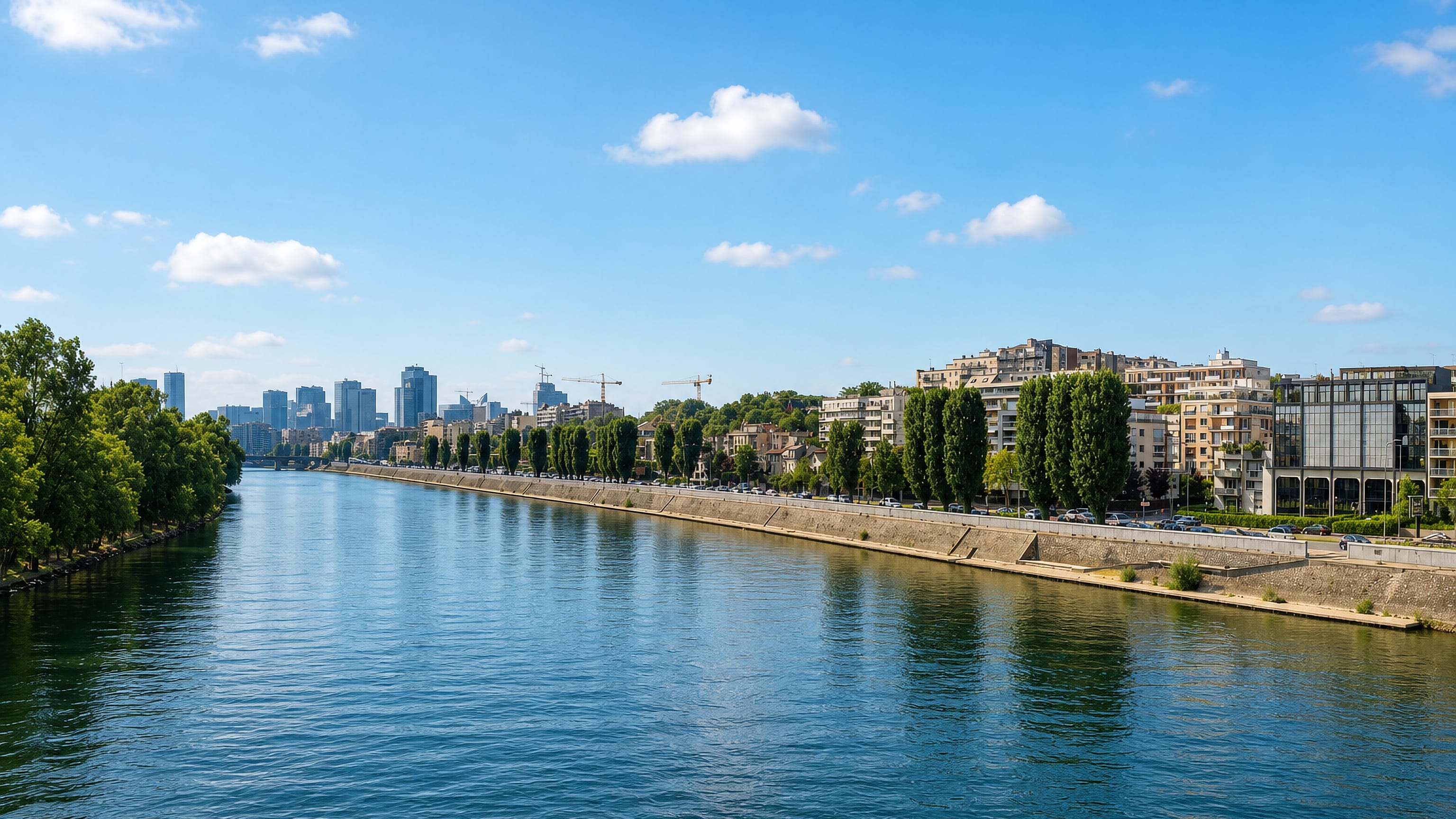
La Défense rises at the edge of Courbevoie, a Hauts-de-Seine commune two kilometres from the Paris city limits on the last loop of the Seine.
Hotel links are affiliate links: booking through them may earn us a commission, at no extra cost to you. It never affects how places are ranked. How this works


Where to stay in Courbevoie
Where visitors usually base themselves, and why.
Rooms in Courbevoie divide along a single line: the towers of La Défense on one side, and the older streets around Église Saint-Pierre-Saint-Paul de Courbevoie on the other. Business fills the first. Hotels built for the offices around Cœur Défense run large and empty out at weekends, which is when the same rooms suit anyone visiting the city rather than working in it.
Bécon is the quieter half. The streets around église Saint-Maurice de Bécon are residential, with fewer beds and a calmer street pattern than the tower district offers. Paris begins two kilometres away.
The Hyatt Regency Paris Etoile and the streets around Église Saint-Ferdinand-des-Ternes sit on the city side of that line, and staying there puts the Arc de Triomphe and the Champs-Elysées within easy reach. Neuilly-sur-Seine lies between the two, quieter than either. Puteaux and Suresnes continue the ring. The Musée d'histoire urbaine et sociale de Suresnes gives one of them a reason of its own.
If you are here for the Louis Vuitton Foundation, the Jardin d'Acclimatation or the Musée d'Ennery, the Courbevoie side keeps all of them on one short run. The Grande Arche is the marker.
Find hotels in Courbevoie
Direct booking searches for these neighbourhoods.
La Défense
Cœur Défense and the Grande Arche stand at the head of the grand axisFind hotels in La DéfenseResidential nights around église Saint-Maurice de BéconBécon
A calmer street pattern than the tower district, still inside Courbevoie. Few places to stay nearby — book ahead.Find hotels in BéconStays that want the Arc de Triomphe and the Champs-Elysées on footThe Ternes side of Paris
The Hyatt Regency Paris Etoile and Église Saint-Ferdinand-des-Ternes stand at the city end of the grand axisFind hotels in The Ternes side of ParisHotel links are affiliate links: booking through them may earn us a commission, at no extra cost to you. It never affects how places are ranked. How this works
Things to do in Courbevoie
Ranked by global recognition; descriptions from Wikidata (CC0).
Museums & Galleries
1- Musée d'histoire urbaine et sociale de Suresnes
Churches & Religious Sites
4- Église Saint-Pierre-Saint-Paul de Courbevoie Heritage
- église Notre-Dame-de-Pitié (Puteaux) Heritage
- église Saint-Urbain de La Garenne-Colombes Heritage
- église Saint-Maurice de Bécon Heritage
Landmarks & Notable Places
1- Cœur Défense
worth knowingacross 3 categories in Courbevoie
About Courbevoie
Office towers come first.
What is Courbevoie known for?
La Défense stands on the western outskirts of Paris beyond the last loop of the Seine, and Cœur Défense is one of the blocks that fills it, with the Grande Arche closing the grand axis further on. The old commune survives underneath. Église Saint-Pierre-Saint-Paul de Courbevoie and église Saint-Maurice de Bécon keep the parishes that were here before the offices arrived.
What are the main landmarks in Courbevoie?
The Grande Arche closes the axis. It stands at the western end of the line drawn by the Champs-Elysées, the Place de la Concorde and the Arc de Triomphe, and Cœur Défense rises among the blocks around it. Two churches hold the older commune. Église Saint-Pierre-Saint-Paul de Courbevoie and église Saint-Maurice de Bécon serve the parishes, and Église Notre-Dame-de-Compassion stands nearby.
Memorials and small museums fill out the list, from the Mémorial de la France combattante to musée Dapper, the Musée arménien de France and the Musée de la Contrefaçon.
What is the history of Courbevoie?
Two parishes came first. Église Saint-Pierre-Saint-Paul de Courbevoie and église Saint-Maurice de Bécon served a commune that sat a short way outside Paris, close to the city but not yet part of its continuous fabric. Only two kilometres separate its centre from the city limits. That proximity decided everything that followed, because the axis running out from the Arc de Triomphe had to land somewhere, and it landed here.
War intervened first. The Mémorial de la France combattante and the Fusillés de la cascade du bois de Boulogne record the occupation years on either side of the commune. La Défense was then laid out to an evolving central plan on the western outskirts of Paris, beyond the last loop of the Seine.
Cœur Défense belongs to that build. The Grande Arche finished the composition at the western end of the grand axis formed by the Champs-Elysées, the Place de la Concorde and the Arc de Triomphe. The archives followed the offices.
La contemporaine and the Atelier de l'histoire keep the paper record, and the Musée d'histoire urbaine et sociale de Suresnes tells the same story from the neighbouring commune. Puteaux, Neuilly-sur-Seine and Colombes changed in step.
Where is Courbevoie?
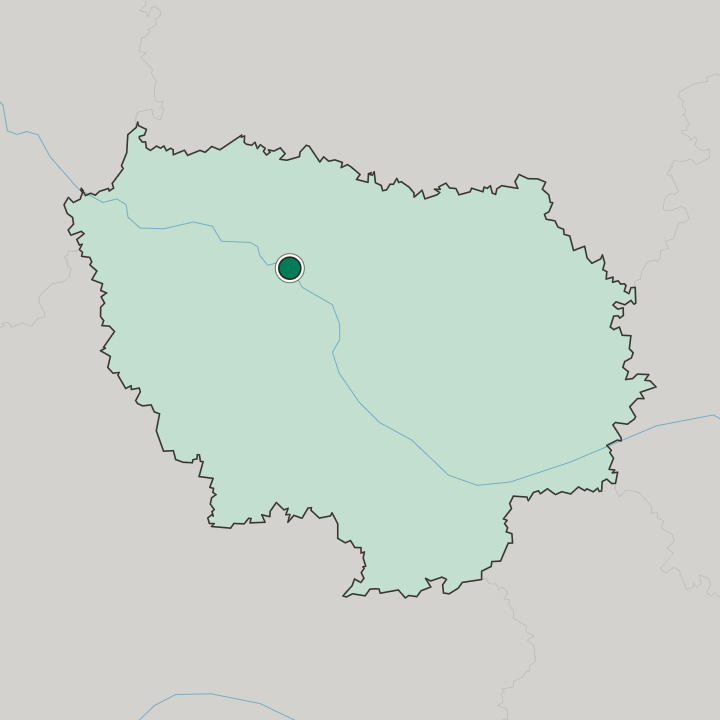
Courbevoie covers a compact stretch of Hauts-de-Seine just over eight kilometres from the centre of Paris, with its own centre only two kilometres from the city limits. The Seine bends past it. La Défense stands on the western outskirts beyond that loop, and Puteaux, Suresnes and Neuilly-sur-Seine hold the ground around it, with La Garenne-Colombes and Colombes further out.
Bécon takes the quieter end of the commune. Île-de-France runs on in every direction, and nothing between here and Paris is anything other than city.
What is the climate of Courbevoie?
The year runs mild. A temperate band covers the whole of Île-de-France, so neither the cold nor the heat interferes much with the walk up the axis from the Arc de Triomphe to the Grande Arche. Wet days send visitors to musée Dapper, the Musée arménien de France or the Musée de la Contrefaçon.
The Jardin d'Acclimatation takes the fine ones.
How do you get to Courbevoie?
Two kilometres separate Courbevoie from Paris. The commune's centre sits that close to the city limits, and just over eight kilometres from the middle of Paris, so arriving from the capital means moving along the grand axis rather than out of town. Neuilly-sur-Seine lies on that approach, and Puteaux and Suresnes on the others.
La Garenne-Colombes adjoins the far edge. Once here, the Grande Arche and Cœur Défense are visible from most of the commune, which makes finding the way in simpler than the map suggests.
Common questions
What is the best area to stay in Courbevoie?
La Défense: Weekday business in the office towers, and quiet weekends in the same rooms. Bécon: Residential nights around église Saint-Maurice de Bécon. The Ternes side of Paris: Stays that want the Arc de Triomphe and the Champs-Elysées on foot.
Good for
More cities in Île-de-France
Updated October 2026