France · Occitanie
Where to Stay in Albi, Occitanie
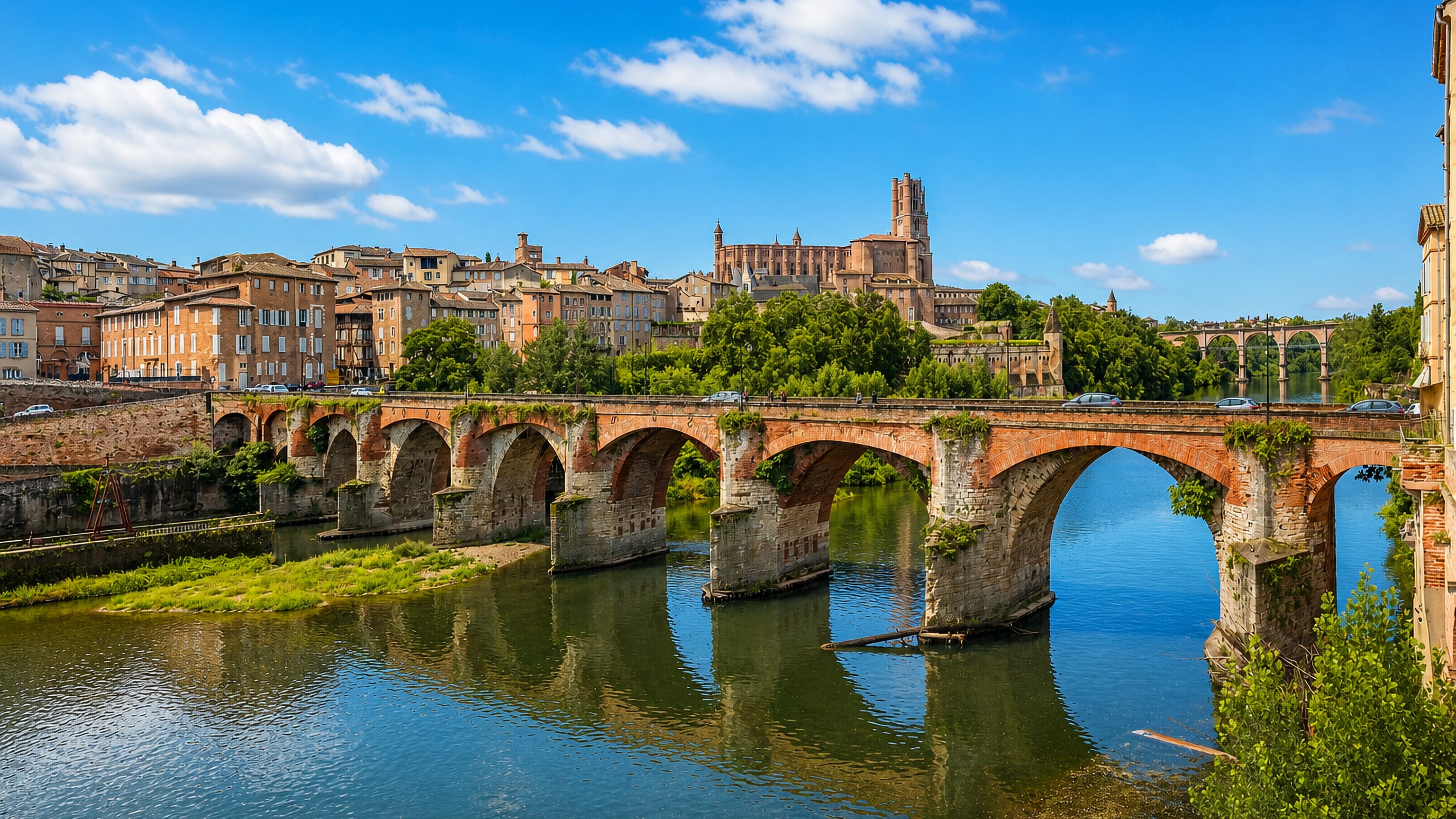
Albi is a city on the River Tarn in southern France, its old town of red brick crowned by the great Sainte-Cécile Cathedral.
Hotel links are affiliate links: booking through them may earn us a commission, at no extra cost to you. It never affects how places are ranked. How this works


Where to stay in Albi
Where visitors usually base themselves, and why.
In Albi the question is whether you sleep inside the old town or outside it. The red-brick streets around the Sainte-Cécile Cathedral keep the museums, the market, and the river within a walk, and staying in the centre suits anyone here for the architecture and the art. The lanes glow warm at dusk.
Rooms fill the old brick houses of the centre. Out toward the newer quarters, the town spreads into wider streets and easier roads. A room beyond the old town trades the cathedral view for parking, space, and a quick road out across the Tarn.
The outskirts run quiet and green. If you want the brick and the museums, stay in the centre; if you want space and the car, take a room outside. Neither choice puts the brick heart of Albi far away.
Find hotels in Albi
Direct booking searches for these neighbourhoods.
The old town
Around the Sainte-Cécile Cathedral and the Palais de la Berbie, within a walk of the riverFind hotels in The old townStays wanting parking and the Toulouse roadNewer quarters
Beyond the old town in the wider modern streets, a quick road out across the TarnFind hotels in Newer quartersHotel links are affiliate links: booking through them may earn us a commission, at no extra cost to you. It never affects how places are ranked. How this works
Things to do in Albi
Ranked by global recognition; descriptions from Wikidata (CC0).
Museums & Galleries
2- Musée Toulouse-Lautrec
- Musée Lapérouse
Churches & Religious Sites
5- Collégiale Saint-Salvy (Albi) Heritage
- Temple réformé d'Albi Heritage
- Église Saint-Michel de Lescure-d'Albigeois Heritage
- église Notre-Dame du Breuil Heritage
- église Saint-Jean de Rayssac Heritage
Castles & Historic Sites
3- Palais de la Berbie UNESCO
- Château de Cantepau Heritage
- Albi (Samian Ware Discovery Site)
Stadiums & Sports
2- Stadium Municipal d'Albi
- Stade Mazicou
Landmarks & Notable Places
8- Maison Enjalbert Heritage
- Maison des Viguiers, Albi Heritage
- Maison au 1 rue Sainte Cécile à Albi Heritage
- Tour du Boutge Heritage
- Maison, 12 rue d'Engueysse, Albi Heritage
Show 3 more →
- Maison, 16 rue Saint-Julien, Albi Heritage
- Maison, 10 rue Saint-Julien, Albi Heritage
- Maison, 3 rue des Foissants, Albi Heritage
worth knowingacross 5 categories in Albi
About Albi
Albi is known for building in brick.
What is Albi known for?
The whole old town rises in warm red brick above the Tarn, from the fortress-like Sainte-Cécile Cathedral to the Palais de la Berbie, once the bishops' stronghold. The painter Toulouse-Lautrec was born in these streets. Brick and art made the city's name.
What are the main landmarks in Albi?
The Sainte-Cécile Cathedral towers over Albi. The largest brick church in the world, its fortress walls and painted vaults are the wonder of the city, and the old bishops' Palais de la Berbie stands beside it above the river. Museums fill the old palace.
The Palais de la Berbie holds the Musée Toulouse-Lautrec, while the Collégiale Saint-Salvy and the Musée Lapérouse keep the town's older stories.
What is the history of Albi?
Albi grew rich and then grew rebellious. In the Middle Ages the town gave its name to the Albigensians, the Cathar heretics whose faith spread across the south until a bloody crusade stamped it out. Heresy marked the town forever.
To master the region, the Church raised the vast Sainte-Cécile Cathedral, a fortress of red brick built to overawe, and beside it the bishops built their stronghold, the Palais de la Berbie. Wealth returned with the woad trade. The blue dye of the pastel plant made the merchants of Albi rich, and they built fine brick mansions like the Maison des Viguiers along the narrow streets.
Art came to crown it all. Here in 1864 the painter Henri de Toulouse-Lautrec was born, and the Palais de la Berbie now holds the Musée Toulouse-Lautrec and its great collection of his work, while the Collégiale Saint-Salvy keeps the oldest church in the town. The old brick city was named a treasure of the world.
Its cathedral still rules the skyline above the Tarn.
Where is Albi?
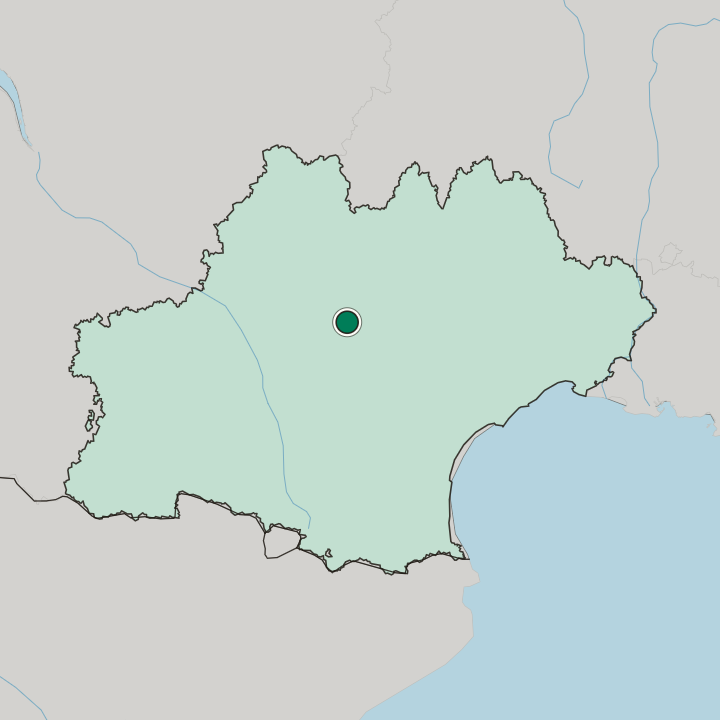
Albi sits on a bend of the River Tarn. The city spreads across the red hills of the Tarn department in Occitanie, southern France, where the river cuts a wide valley through rich farmland. Vineyards and fields ring the town.
The Tarn carries the city's trade downstream.
What is the climate of Albi?
Albi enjoys a warm southern climate. Hot, dry summers ripen the vines and the fields, while the winters stay mild and wet under the influence of the Mediterranean and the Atlantic alike. Storms break the summer heat.
The seasons run gentle in the valley.
How do you get to Albi?
Albi lies northeast of Toulouse. Trains and roads run down to the great city in about an hour, and the highways cross the Tarn valley nearby, bringing visitors to the brick town. Buses reach the villages of the department.
Most arrive by road or rail from Toulouse.
Common questions
What is the best area to stay in Albi?
The old town: Visitors here for the cathedral, museums, and market. Newer quarters: Stays wanting parking and the Toulouse road.
Good for
More cities in Occitanie
Updated October 2026