France · Occitanie
Where to Stay in Nîmes, Occitanie
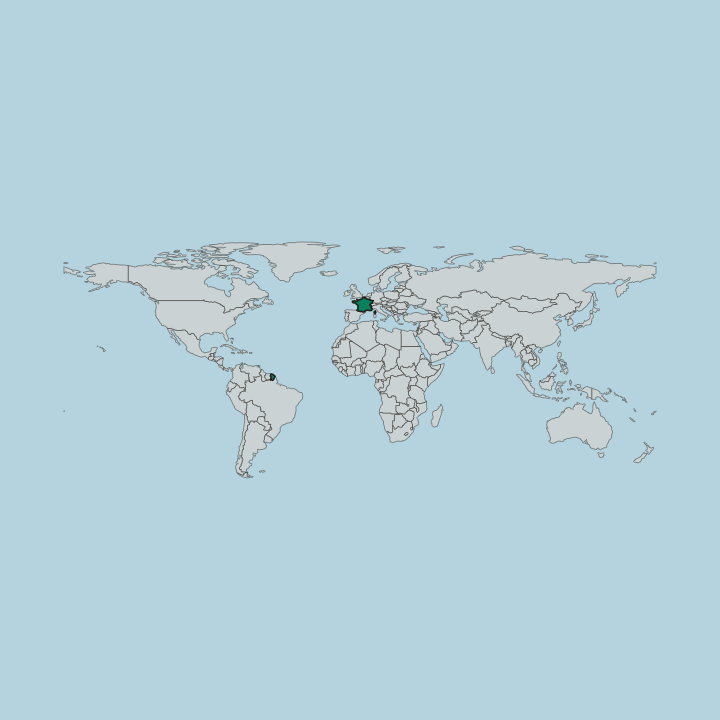
Roman stone anchors Nîmes, a city in Occitanie in southern France, known for the Maison Carrée and its great amphitheatre.
Hotel links are affiliate links: booking through them may earn us a commission, at no extra cost to you. It never affects how places are ranked. How this works


Where to stay in Nîmes
Where visitors usually base themselves, and why.
Most visitors base themselves in the old town, where the Maison Carrée, the Amphitheater of Nîmes, and the modern Carré d'art gallery sit within one walkable stretch of paved lanes. The arena is at the door. Around the amphitheatre the cafés and shops fill the squares, and the pace holds late into the evening near the Maison Carrée.
Rooms here go early in summer. For a quieter base among old façades, travellers choose the streets of Vieux Nîmes near the Cathedral quarter, where the Musée du Vieux Nîmes keeps the city's textile past and the Église Saint-Paul rises above the roofs. The hillside offers a third choice.
Up toward the Jardins de la Fontaine and the Tour Magne, the ground climbs past the temple of Diana into gardens and green shade above the centre. If you want museums on the doorstep, the blocks around the Musée de la Romanité and the Musée des beaux-arts put the collections a short walk apart.
Find hotels in Nîmes
Direct booking searches for these neighbourhoods.
The old town around the arena and the Maison Carrée
The Maison Carrée, the Amphitheater of Nîmes, and the Carré d'art gallery stand within one walkable stretch of the paved old-town lanes.Find hotels in The old town around the arena and the Maison CarréeTravellers wanting old façades and a quieter baseVieux Nîmes near the Cathedral
The lanes of Vieux Nîmes gather old textile-town façades below the Église Saint-Paul, with the Musée du Vieux Nîmes at their heart.Find hotels in Vieux Nîmes near the CathedralVisitors wanting gardens and green shade above the centreThe hillside by the Jardins de la Fontaine and the Tour Magne
The slope past the temple of Diana and the Tour Magne climbs into the terraced Jardins de la Fontaine above the Roman town.Find hotels in The hillside by the Jardins de la Fontaine and the Tour MagneTravellers who want the collections on the doorstepThe museum quarter near the Musée de la Romanité
The blocks around the Musée de la Romanité and the Musée des beaux-arts set the city's Roman and fine-art collections a short walk apart.Find hotels in The museum quarter near the Musée de la RomanitéHotel links are affiliate links: booking through them may earn us a commission, at no extra cost to you. It never affects how places are ranked. How this works
Things to do in Nîmes
Ranked by global recognition; descriptions from Wikidata (CC0).
Museums & Galleries
3- Carré d'art
- Musée de la Romanité
- Musée des beaux-arts de Nîmes
Churches & Religious Sites
8- temple of Diana Heritage
- Nîmes, St Baudile church Heritage
- Église Saint-Paul de Nîmes Heritage
- Nîmes, St Perpétue church Heritage
- Église Saint-Charles de Nîmes Heritage
Show 3 more →
- église Notre-Dame-des-Enfants Heritage
- Église Notre-Dame-du-Suffrage-et-Saint-Dominique Heritage
- Église de Saint-Césaire-lès-Nîmes Heritage
Castles & Historic Sites
3- Maison Carrée UNESCO
- Amphitheater of Nîmes Heritage
- Nemausus
Stadiums & Sports
1- Stade Jean-Bouin (Nîmes)
Landmarks & Notable Places
8- Tour Magne Heritage
- Maison Romane Heritage
- Avocaterie des pauvres Heritage
- Maison des Atlantes, Nîmes Heritage
- Maison de Paul Rabaut Heritage
Show 3 more →
- Hôtel du Louvre Heritage
- maison, 28 boulevard Gambetta Heritage
- maison, 4 rue de la Curaterie Heritage
worth knowingacross 5 categories in Nîmes
About Nîmes
What is Nîmes known for?
Nîmes is known for the most complete Roman buildings in France. The Maison Carrée, a temple that outshines any surviving in Rome, stands near the Amphitheater of Nîmes, whose double tier of arches still frames the old town. Water gave the city its name.
The spring of Nemausus fed the Roman colony, the Tour Magne watches from the hill above, and the Musée de la Romanité keeps the finds close by.
What are the main landmarks in Nîmes?
Nîmes keeps its landmarks from the Roman colony. The Maison Carrée and the Amphitheater of Nîmes anchor the old town, while the Tour Magne and the temple of Diana crown the hill above the Jardins de la Fontaine. Glass answers stone across the square.
The Carré d'art faces the Maison Carrée, the Musée de la Romanité holds the ancient finds, and the Église Saint-Paul and the Musée des beaux-arts round out the centre.
What is the history of Nîmes?
Nîmes began as Nemausus, a settlement named for the spring god of a Celtic people before Rome absorbed it. Water shaped the site before Rome did. Veterans of Rome's eastern campaigns were settled here, and the colony they raised gave the city its Maison Carrée, its amphitheatre, and the Tour Magne set high on the hill to guard the wall.
Rome left in stone. Long after the empire faded, the arena was fortified and lived in as a walled town, and the temple that became known as the temple of Diana crumbled slowly beside the sacred spring. The old faith gave way to the new.
Churches such as the Église Saint-Paul rose in the medieval and later town, while the textile trade that made the cloth called denim, from serge de Nîmes, drove the merchant houses of Vieux Nîmes. The Roman ground endured beneath it all. In modern times the Jardins de la Fontaine framed the spring and the temple of Diana, the Carré d'art rose facing the Maison Carrée, and the Musée de la Romanité was raised beside the arena to hold two thousand years of the city's past.
Where is Nîmes?
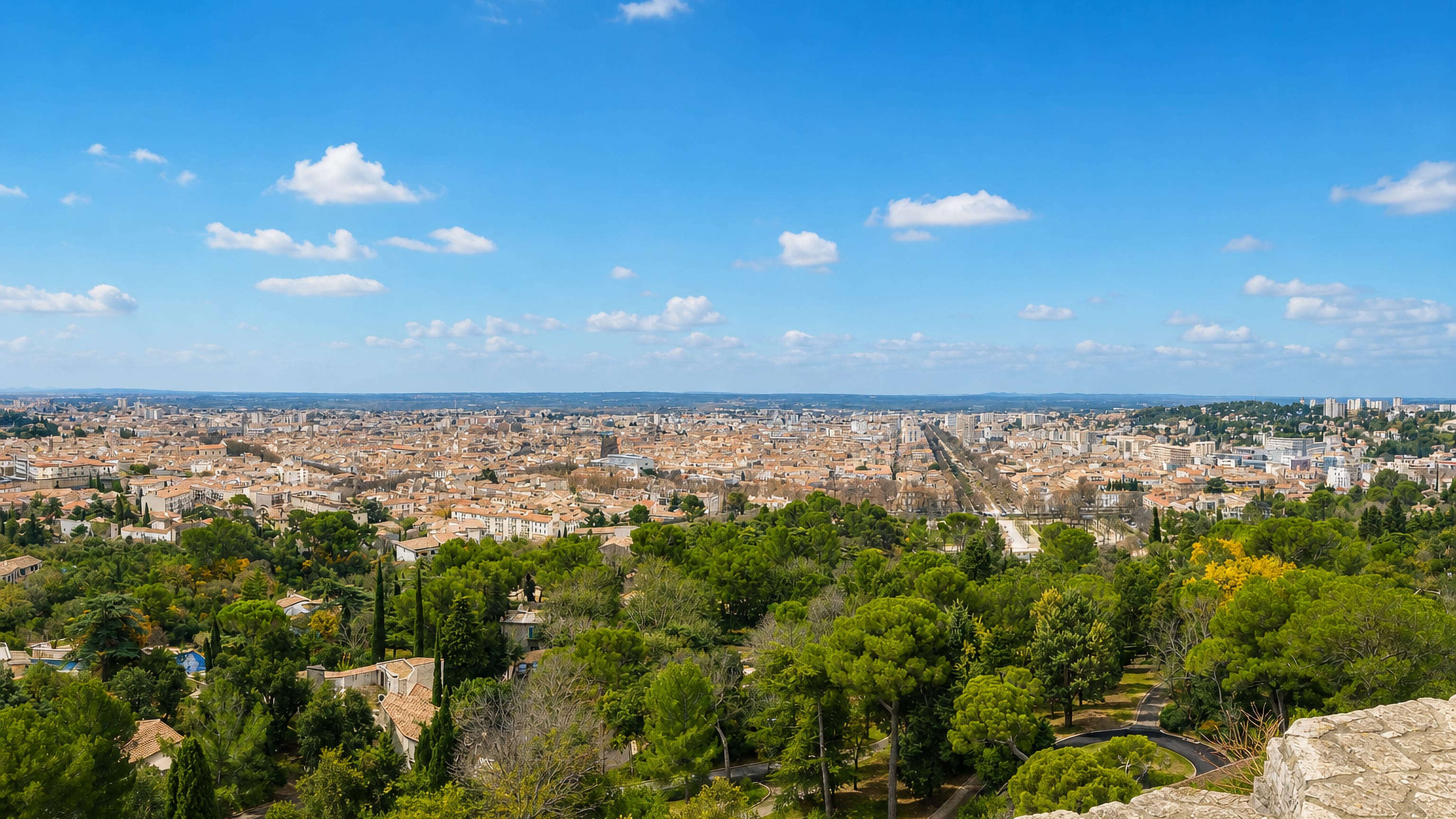
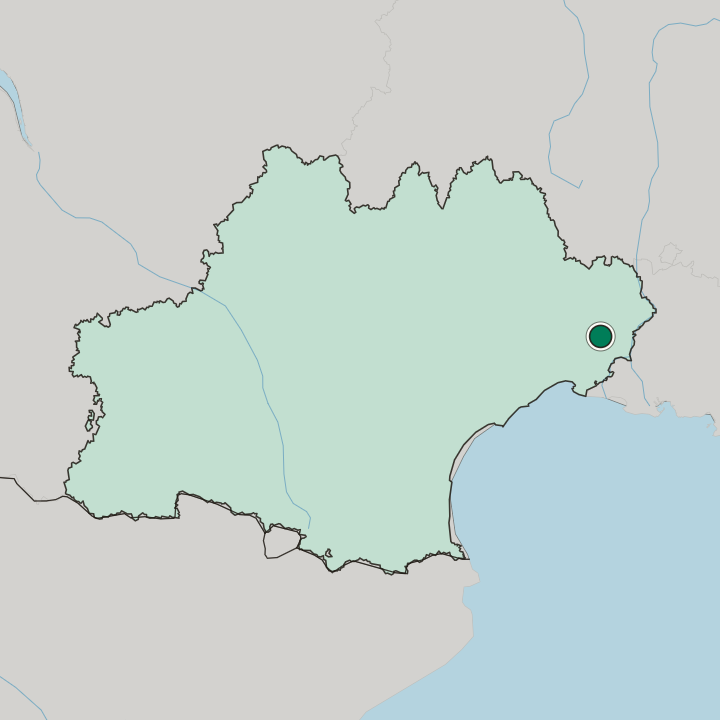
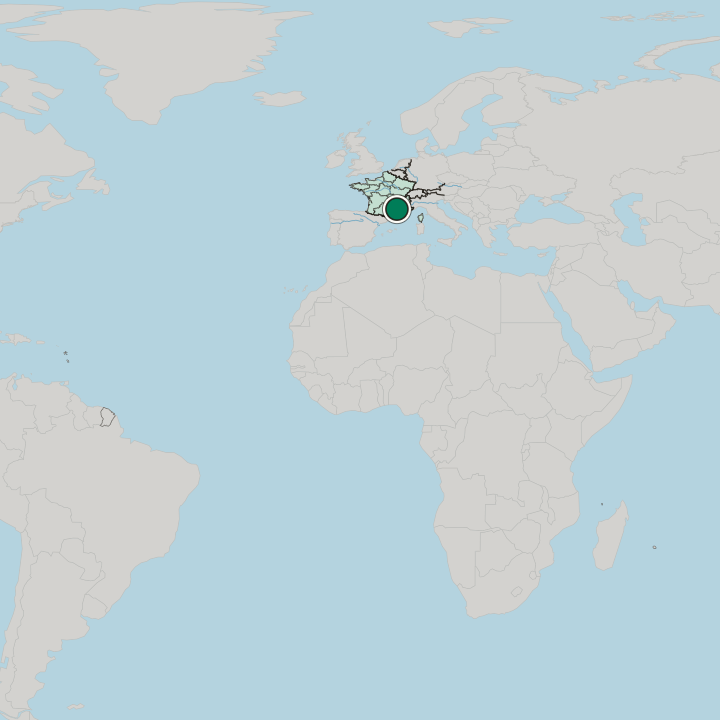
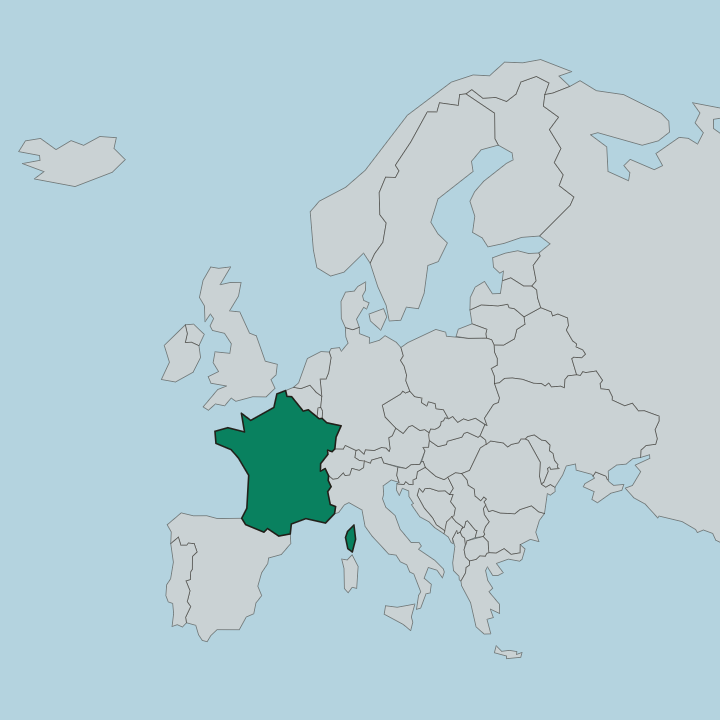
Nîmes lies in southern France, on a low plain between the Mediterranean Sea and the foothills of the Cévennes. The city is the prefecture of the Gard department in Occitanie, and dry limestone hills rise at its northern edge above the Jardins de la Fontaine. The garrigue reaches to the door.
From the height of the Tour Magne the plain runs south toward the sea, with the Cévennes standing back to the north.
What is the climate of Nîmes?
Nîmes has a Mediterranean climate of hot dry summers and mild wet winters. The sun holds long over the plain, and the dry garrigue scrub that surrounds the city browns under the summer heat between the Cévennes and the sea. Autumn can turn fierce.
Heavy rains sweep off the Cévennes in the shorter days, and the mistral clears the sky between storms across the Gard.
How do you get to Nîmes?
Nîmes sits on the main rail line along the Mediterranean corridor of southern France. Fast trains run to the city from Paris, Marseille, and Montpellier, and a station on the high-speed bypass links it to the wider network. The old centre is walkable.
A regional airport serves the Gard nearby, and roads climb north toward the Cévennes and south to the sea.
Common questions
What is the best area to stay in Nîmes?
The old town around the arena and the Maison Carrée: First-time visitors wanting the Roman monuments on foot. Vieux Nîmes near the Cathedral: Travellers wanting old façades and a quieter base. The hillside by the Jardins de la Fontaine and the Tour Magne: Visitors wanting gardens and green shade above the centre. The museum quarter near the Musée de la Romanité: Travellers who want the collections on the doorstep.
Good for
More cities in Occitanie
Updated September 2026