France · Occitanie
Where to Stay in Toulouse, Occitanie
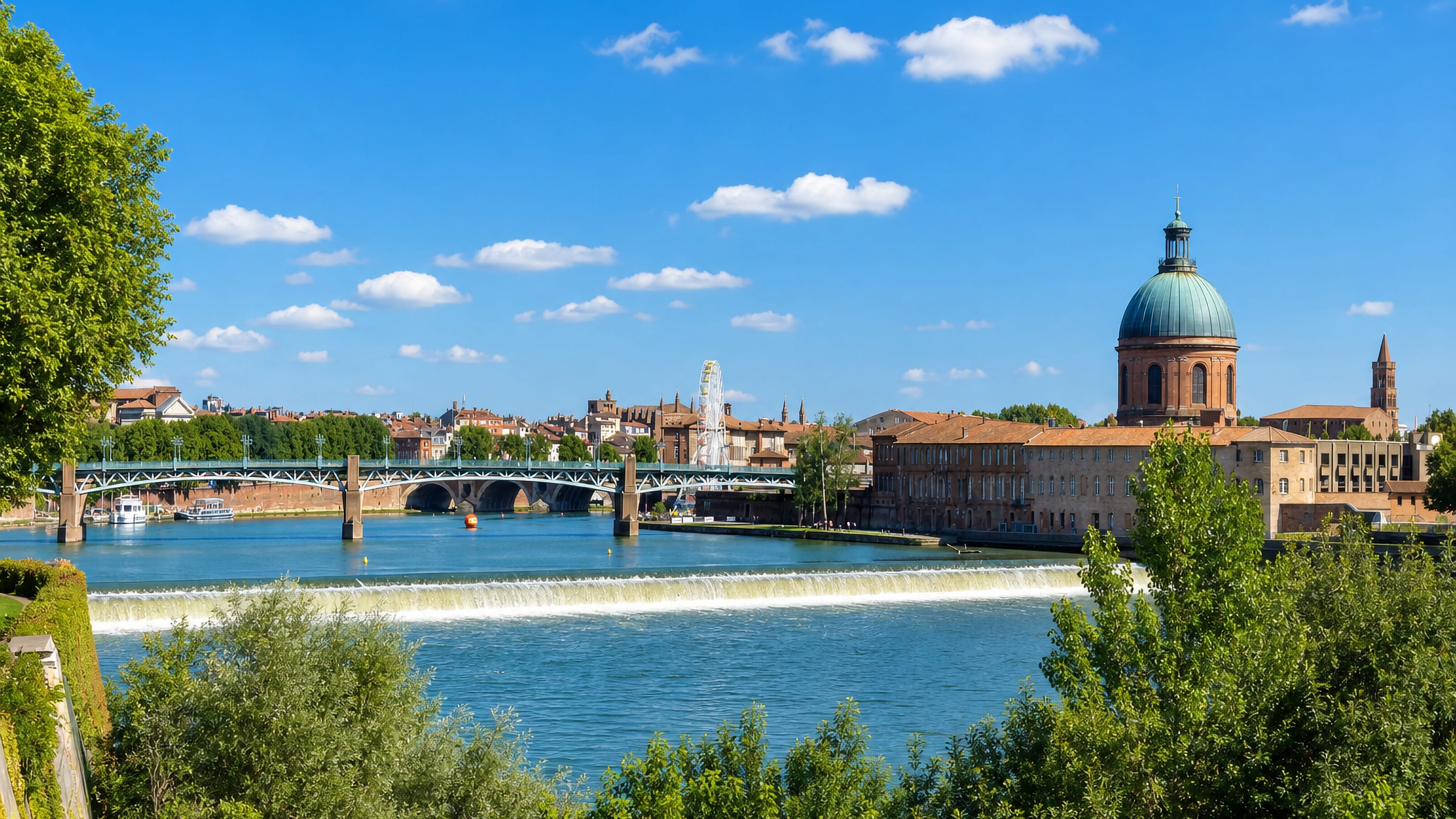
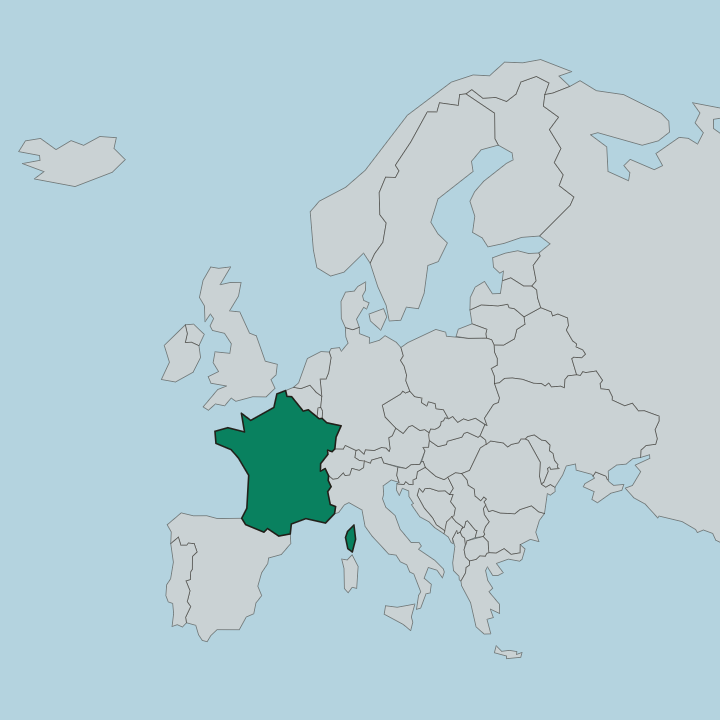
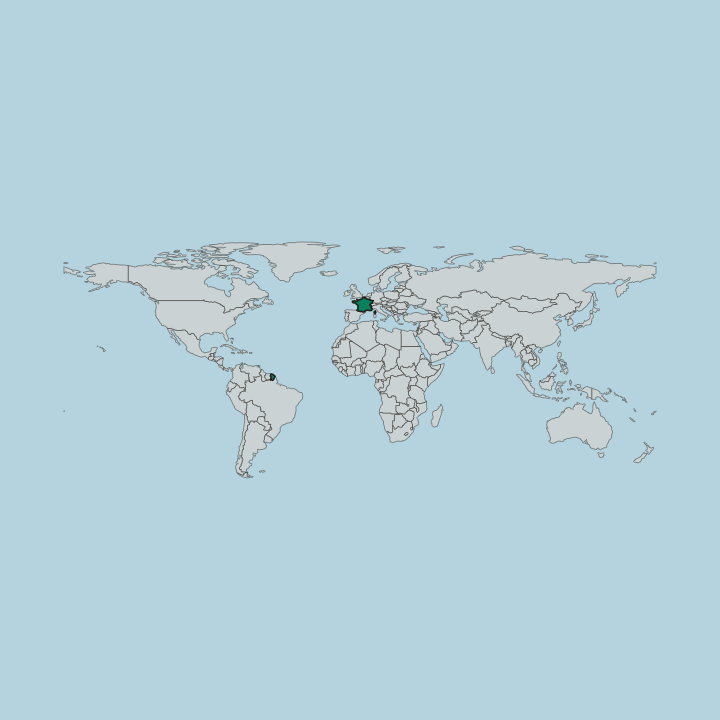
Pink brick lines the quays of Toulouse, a city on the River Garonne in Occitanie, southern France, known for the Basilica of St. Sernin and its violets.
Hotel links are affiliate links: booking through them may earn us a commission, at no extra cost to you. It never affects how places are ranked. How this works


Where to stay in Toulouse
Not every neighbourhood fits every trip — here's what each one is good for.

 ToulouseFrance
Dalbade
Museums crowd Dalbade. Toulouse Cathedral, the Musée des Augustins and Notre-Dame de la Dalbade all stand on its register.Where to stay → ToulouseFrance
Compans
Compans-Caffarelli is the business district of Toulouse, in Haute-Garonne, where company offices and grandes écoles share ground with Saint-Sernin.Where to stay →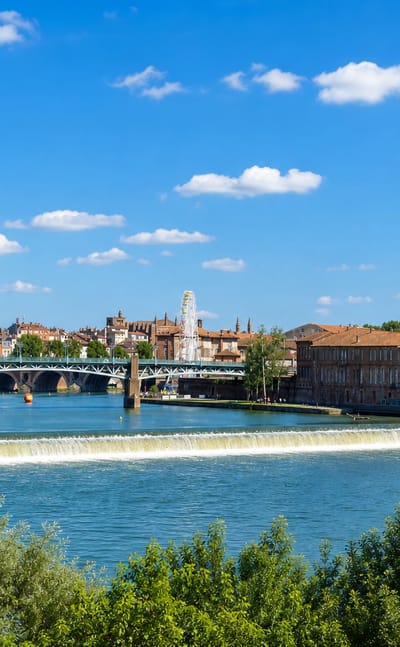 ToulouseFrance
Bonnefoy
Two Virebent houses in terracotta stand in Bonnefoy, a Toulouse district that also lists Église St Sylve and église Saint-André de Michoun.Where to stay →ToulouseFranceCroix-Daurade
Croix-Daurade holds Borderouge. The Toulouse district lists the Église Saint-Caprais and the église Saint-Sauveur de Borderouge.Where to stay →ToulouseFranceLardenne
Lardenne wears a second name: Nivôse. The Toulouse district keeps the Église Saint-Michel and the Cité de la Cépière on a short register.Where to stay → ToulouseFrance
Rangueil
Rangueil is the university quarter of Toulouse: a residential area holding the Université Paul Sabatier, ISAE SUPAERO and the INSA de Toulouse.Where to stay →ToulouseFranceLe Mirail
Le Mirail began in 1958 as a Toulouse expansion project under the then-mayor Louis Bazerque, drawn up to answer a housing shortage.Where to stay →ToulouseFranceSaint Martin du Touch
Saint Martin du Touch is a district of Toulouse, entered in the registers as Fructidor, with two churches carrying the Saint-Martin name.Where to stay → ToulouseFrance
Pech-David
The belvédère de Toulouse looks out from Pech-David, a district of Toulouse whose register runs to riding, walking and kite-flying ground.Where to stay →Hotel links are affiliate links: booking through them may earn us a commission, at no extra cost to you. It never affects how places are ranked. How this works
Find hotels in Toulouse
Direct booking searches for these neighbourhoods.
Saint-Sernin old town
The pink-brick medieval core around the Basilica of St. Sernin and Notre-Dame du Taur, close to the Musée Saint-Raymond and the university quarter.Find hotels in Saint-Sernin old townQuays and galleries by the GaronneLa Daurade riverbank
The waterfront around Notre-Dame de la Daurade and the Musée des Augustins, a short walk from the Collection Bemberg and the Garonne bridges.Find hotels in La Daurade riverbankModern art and better-value rooms across the riverSaint-Cyprien
The residential left-bank quarter around Les Abattoirs, trading the cathedral crowds for space and contemporary galleries.Find hotels in Saint-CyprienHotel links are affiliate links: booking through them may earn us a commission, at no extra cost to you. It never affects how places are ranked. How this works
Things to do in Toulouse
Ranked by global recognition; descriptions from Wikidata (CC0).
Museums & Galleries
3- Les Abattoirs Heritage
- Georges Labit Museum Heritage
- Maison Seilhan Heritage
Churches & Religious Sites
8- Basilica of St. Sernin Heritage
- Toulouse Cathedral Heritage
- Notre-Dame de la Daurade Heritage
- Notre-Dame du Taur Heritage
- Notre-Dame de la Dalbade Heritage
Show 3 more →
- Saint Nicolas' Church, Toulouse Heritage
- église Saint-Pierre des Cuisines Heritage
- Église Saint-Pierre des Chartreux de Toulouse Heritage
Castles & Historic Sites
3- Château de Reynerie Heritage
- Roman amphitheatre of Purpan-Ancely Heritage
- place Étienne-Esquirol
Stadiums & Sports
3- Piscine Alfred-Nakache of Toulouse Heritage
- Stade des Minimes
- Hippodrome de la Cépière
Landmarks & Notable Places
3- maison en terre cuite de Virebent, 27 avenue de la Colonne Heritage
- Maison en terre cuite de Virebent, rue de Bornier Heritage
- propriété La Redorte Heritage
worth knowingacross 5 categories in Toulouse
About Toulouse
What is Toulouse known for?
Toulouse is known for its rose-brick skyline, the aerospace industry, and rugby along the River Garonne. The rose-brick Basilica of St. Sernin, the largest Romanesque church of its kind, anchors the old town, while Toulouse Cathedral and Notre-Dame de la Daurade hold the riverbank. Violets flavour its bonbons and liqueurs.
Museums fill the centre, from the Musée des Augustins to the Muséum de Toulouse. The city stands halfway between the Atlantic and the Mediterranean.
What are the main landmarks in Toulouse?
The main landmarks in Toulouse gather along the River Garonne and through the old brick town. The rose-brick Basilica of St. Sernin stands as one of the great Romanesque churches, joined by Toulouse Cathedral, Notre-Dame de la Daurade, and Notre-Dame de la Dalbade. Galleries pack the old core of Toulouse.
The Musée des Augustins, the Musée Saint-Raymond, and the Muséum de Toulouse hold art, antiquity, and natural history, while Les Abattoirs shows modern work across the water.
What is the history of Toulouse?
Toulouse grew on the banks of the River Garonne as a Roman settlement before rising to become the seat of the counts of the region. The Romans left their mark in the amphitheatre of Purpan-Ancely and in the collections now held by the Musée Saint-Raymond. Brick shaped the city that followed.
Lacking good building stone, the town raised its churches and townhouses in the local rose-coloured clay, giving Toulouse the pink skyline that still defines it. The medieval city became a centre of learning and religion, its university among the oldest in France and the Basilica of St. Sernin a major stop on the pilgrim roads. Wealth from the pastel dye trade filled the centre with grand brick houses.
Prosperity ebbed and returned. Trade along the Garonne and, in a later age, the aerospace works on the city's edge kept Toulouse growing well beyond its walls, until the medieval core around Toulouse Cathedral and Notre-Dame de la Daurade sat at the heart of a far larger city spreading north of the Pyrenees across Occitanie.
Where is Toulouse?
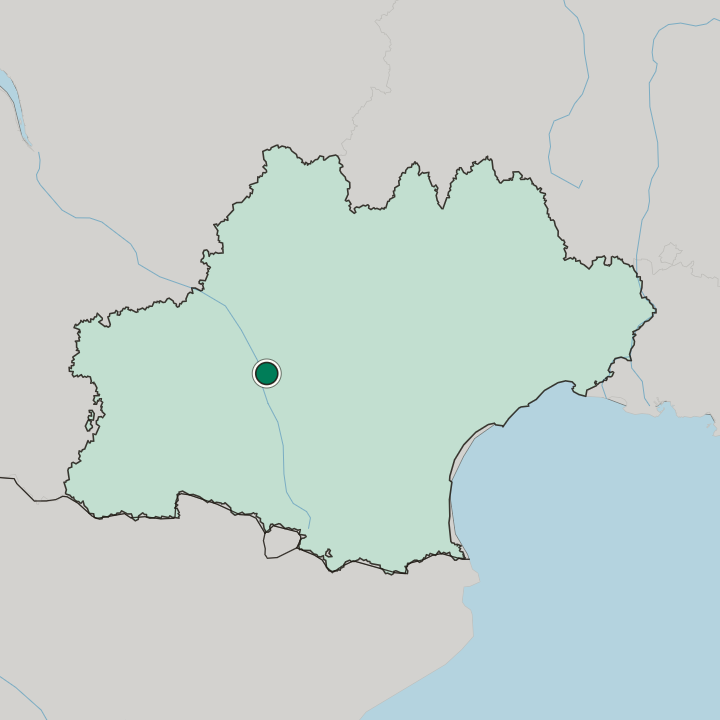
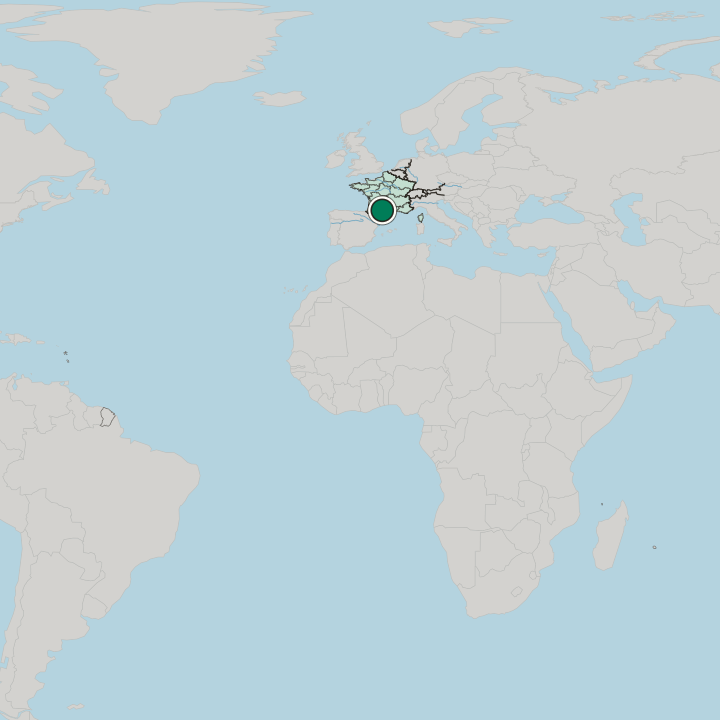
Toulouse stands on the River Garonne in southern France, north of the Pyrenees and halfway between the Atlantic and the Mediterranean. The river cuts the city in two, the old brick core on the right bank and the Saint-Cyprien quarter on the left. Flat alluvial plains spread around it, well inland from either coast.
The Garonne carries the drainage of the mountains down toward the Atlantic. Occitanie surrounds the city on every side.
What is the climate of Toulouse?
Toulouse has a mild climate shaped by its position north of the Pyrenees and its distance from both seas. Summers run hot and dry, the sun baking the pink brick and the Garonne quays through long afternoons while the river runs low between its banks. Winters stay cool but rarely bitter.
The inland position between the Atlantic and the Mediterranean softens the cold. Spring and autumn bring the steadiest weather, and rain arrives in spells.
How do you get to Toulouse?
Toulouse sits at a crossroads. The airport on the western edge serves the aerospace city and links it across Europe, while rail lines run north toward Paris and east toward the Mediterranean and roads fan out across Occitanie toward the Pyrenees. Trains reach the centre fast.
From the stations, the Basilica of St. Sernin and the Garonne quays lie a short walk into the brick heart of the old town.
Common questions
What is the best area to stay in Toulouse?
Saint-Sernin old town: Pilgrims and students by the Romanesque basilica. La Daurade riverbank: Quays and galleries by the Garonne. Saint-Cyprien: Modern art and better-value rooms across the river.
Good for
More cities in Occitanie
Updated October 2026