France · Occitanie
Where to Stay in Perpignan, Occitanie
Catalan Perpignan holds the plain of Roussillon in Occitanie, southern France, known for the Palace of the Kings of Majorca.
Hotel links are affiliate links: booking through them may earn us a commission, at no extra cost to you. It never affects how places are ranked. How this works


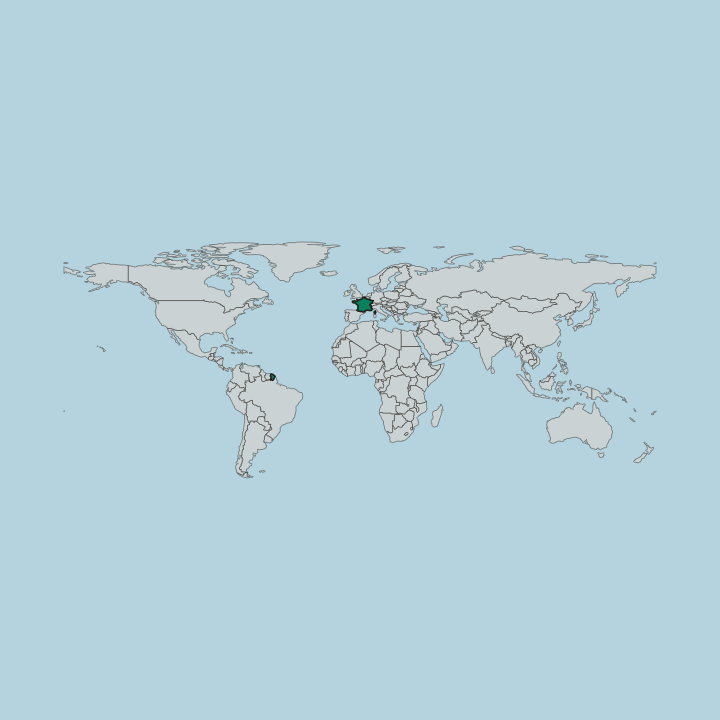
Where to stay in Perpignan
How the choice of base plays out on the ground.
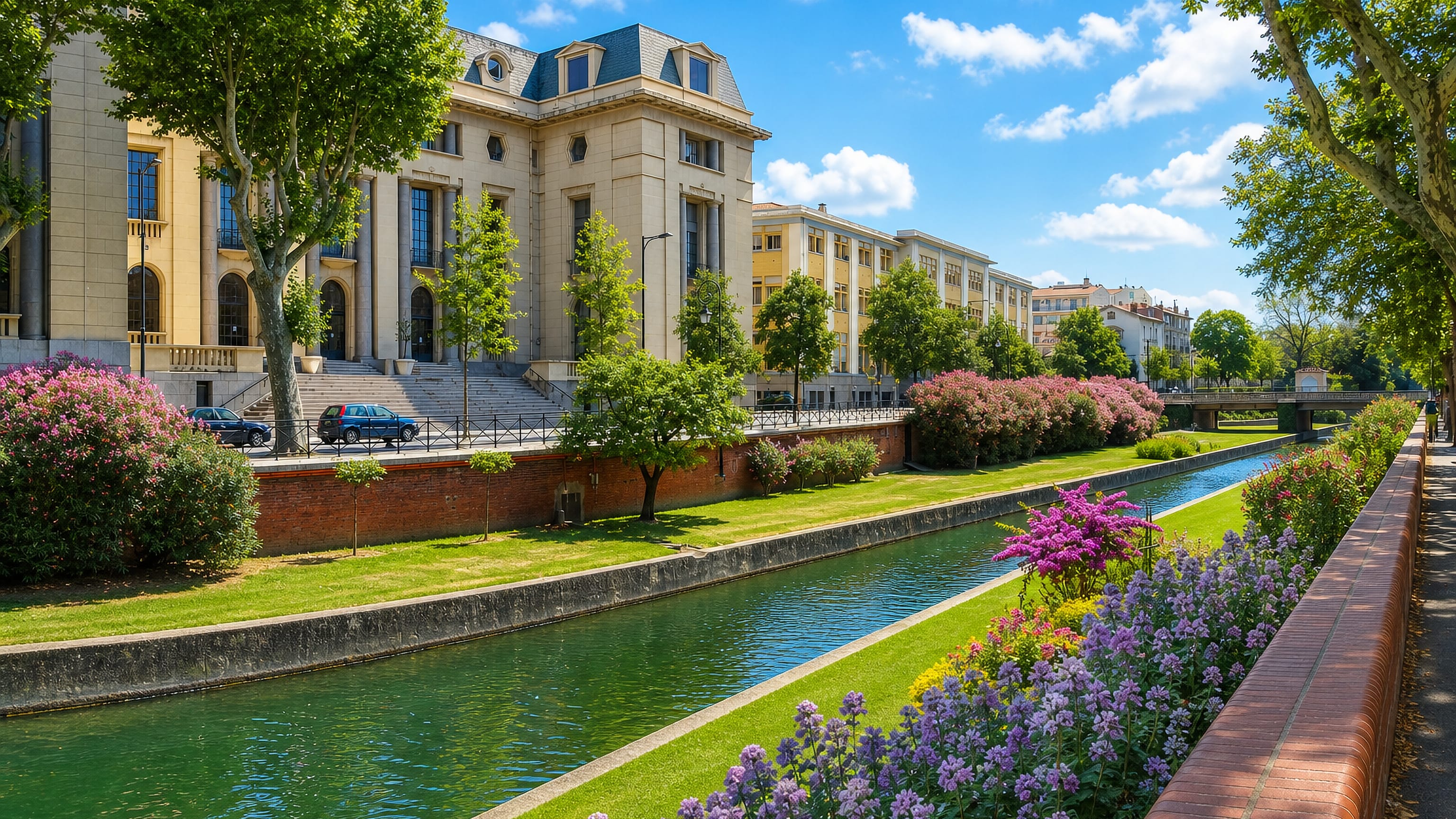
Most visitors base themselves in the old town, where the narrow Catalan lanes gather the church of Saint-Jean le Vieux, the merchant Casa Xanxo, and the Musée Hyacinthe-Rigaud within one walkable core beside the Basse. The river runs through the middle. Around the little Basse the squares fill with cafés under painted façades, and the pace holds late near the church of Saint-Jacques.
Rooms here go early in summer. For a base beneath the great fortress, travellers choose the streets below the Palace of the Kings of Majorca, ringed by the City walls of Perpignan on the higher southern ground. The quays offer a calmer choice.
Along the Têt to the north the newer avenues stretch out with more room and easy access to the roads. If you want the Roussillon story on the doorstep, the blocks near the Catalan Museum of Popular Arts and Traditions and Notre-Dame la Réal set the region's heritage a short walk apart.
Find hotels in Perpignan
Direct booking searches for these neighbourhoods.
The old Catalan core by the Basse
The Catalan lanes gather Saint-Jean le Vieux, the Casa Xanxo, and the Musée Hyacinthe-Rigaud within one walkable core beside the little Basse.Find hotels in The old Catalan core by the BasseTravellers drawn to the fortress and the rampartsBelow the Palace of the Kings of Majorca
The streets under the Palace of the Kings of Majorca climb the higher southern ground within the ochre City walls of Perpignan.Find hotels in Below the Palace of the Kings of MajorcaVisitors wanting more room and easy road accessThe Têt-side avenues north of the centre
The newer avenues along the Têt stretch north of the old town with wider streets and quick links to the Roussillon roads.Find hotels in The Têt-side avenues north of the centreTravellers who want the Roussillon heritage closeNear the Catalan Museum of Popular Arts and Traditions
The blocks by the Catalan Museum of Popular Arts and Traditions and Notre-Dame la Réal set the region's Catalan heritage a short walk apart.Find hotels in Near the Catalan Museum of Popular Arts and TraditionsHotel links are affiliate links: booking through them may earn us a commission, at no extra cost to you. It never affects how places are ranked. How this works
Things to do in Perpignan
Ranked by global recognition; descriptions from Wikidata (CC0).
Museums & Galleries
3- Muséum d'histoire naturelle de Perpignan Heritage
- Musée Hyacinthe-Rigaud
- Musée numismatique Joseph Puig (Perpignan, France)
Churches & Religious Sites
6- Église Saint-Jacques de Perpignan Heritage
- Notre-Dame la Réal church (Perpignan) Heritage
- église des Carmes de Perpignan Heritage
- Église Saint-Jean le Vieux de Perpignan Heritage
- Église Saint-Mathieu de Perpignan Heritage
Show 1 more →
- Chapel Notre-Dame-des-Anges Heritage
Castles & Historic Sites
2- Palace of the Kings of Majorca Heritage
- City walls of Perpignan
Stadiums & Sports
3- Stade Gilbert Brutus
- Stade Aimé Giral
- Stade Jean-Laffon
Landmarks & Notable Places
2- Casa Xanxo Heritage
- Maison, 3 rue des Fabriques-Nabot Heritage
worth knowingacross 5 categories in Perpignan
About Perpignan
What is Perpignan known for?
Perpignan is known as the Catalan capital on the French side of the Pyrenees. It was once the continental seat of the Kingdom of Majorca, and the Palace of the Kings of Majorca still crowns the old town within its ochre City walls of Perpignan. Red and yellow mark the streets.
The Catalan Museum of Popular Arts and Traditions and the church of Saint-Jean le Vieux keep the Roussillon identity, while the Musée Hyacinthe-Rigaud honours the painter born here.
What are the main landmarks in Perpignan?
Perpignan keeps its landmarks within the old ramparts. The Palace of the Kings of Majorca rises behind the City walls of Perpignan, while the church of Saint-Jean le Vieux and the Gothic Saint-Jacques anchor the Catalan lanes below. Painting has its house too.
The Musée Hyacinthe-Rigaud holds the city's art, the merchant Casa Xanxo shows its Gothic front, and the Catalan Museum of Popular Arts and Traditions and Notre-Dame la Réal round out the centre.
What is the history of Perpignan?
Perpignan grew on the plain of Roussillon as the chief town of a Catalan county before the crowns of the south reached for it. Its great age came with the Kingdom of Majorca. When the kings of that island realm held lands on the mainland, they made the city their continental capital and raised the Palace of the Kings of Majorca on the hill, ringing the town with the City walls of Perpignan.
Two rivers shaped the ground below. The Têt ran to the north and the little Basse threaded the centre, and along their banks rose the churches of Saint-Jacques and Saint-Jean le Vieux and the merchant houses like the Casa Xanxo. Aragon and then France took the town.
Roussillon passed to the French crown in the seventeenth century, and the ramparts were rebuilt for the new frontier while the Catalan tongue and the Sanch traditions held on. The old identity outlasted the borders. The Musée Hyacinthe-Rigaud gathered the city's painting, the Catalan Museum of Popular Arts and Traditions kept its customs, and Notre-Dame la Réal stood on through every change of flag.
Where is Perpignan?
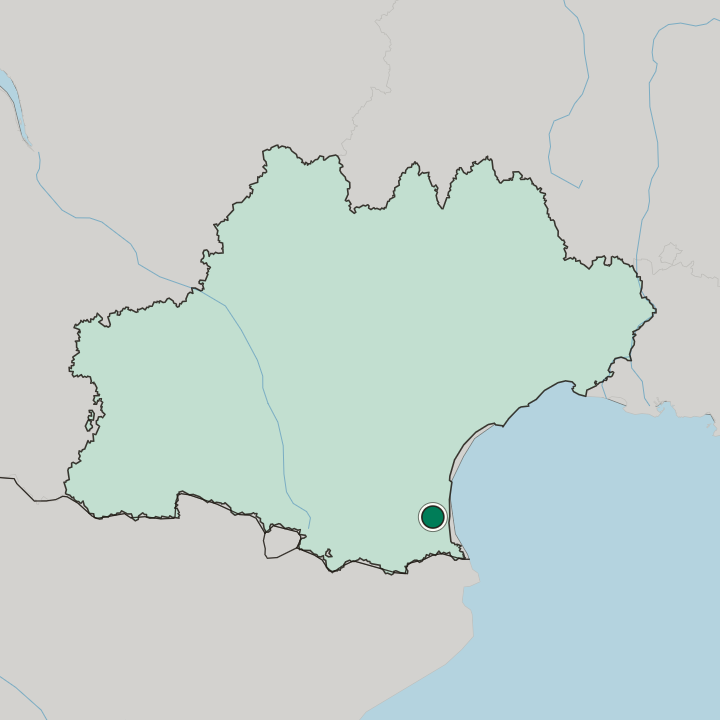
Perpignan lies in southern France, on the plain of Roussillon at the foot of the Pyrenees a short way from the Mediterranean Sea. The city is the prefecture of the Pyrénées-Orientales in Occitanie, and two rivers cross it, the Têt to the north and the little Basse through the centre. The Corbières scrub rises inland.
Beyond the plain the peaks of the Pyrenees close the southern horizon, and the coast lies out to the east.
What is the climate of Perpignan?
Perpignan has a Mediterranean climate of hot dry summers and mild winters. The sun holds long over the plain of Roussillon, and the dry scrub of the Corbières browns under the summer heat between the Pyrenees and the sea. The tramontane blows hard.
That dry north wind sweeps down off the Pyrenees and clears the sky for days across the Roussillon plain.
How do you get to Perpignan?
Perpignan sits on the main rail line that runs south along the coast toward Spain. Trains reach the city from Montpellier and Barcelona, and the line crosses the Pyrenees frontier close by. Walking covers the old quarter.
A regional airport serves the Roussillon plain, and roads run east to the Mediterranean Sea and up into the Pyrenees.
Common questions
What is the best area to stay in Perpignan?
The old Catalan core by the Basse: First-time visitors wanting the painted squares on foot. Below the Palace of the Kings of Majorca: Travellers drawn to the fortress and the ramparts. The Têt-side avenues north of the centre: Visitors wanting more room and easy road access. Near the Catalan Museum of Popular Arts and Traditions: Travellers who want the Roussillon heritage close.
Good for
More cities in Occitanie
Updated September 2026