United Kingdom · Scotland
Where to Stay in Dunfermline, Scotland
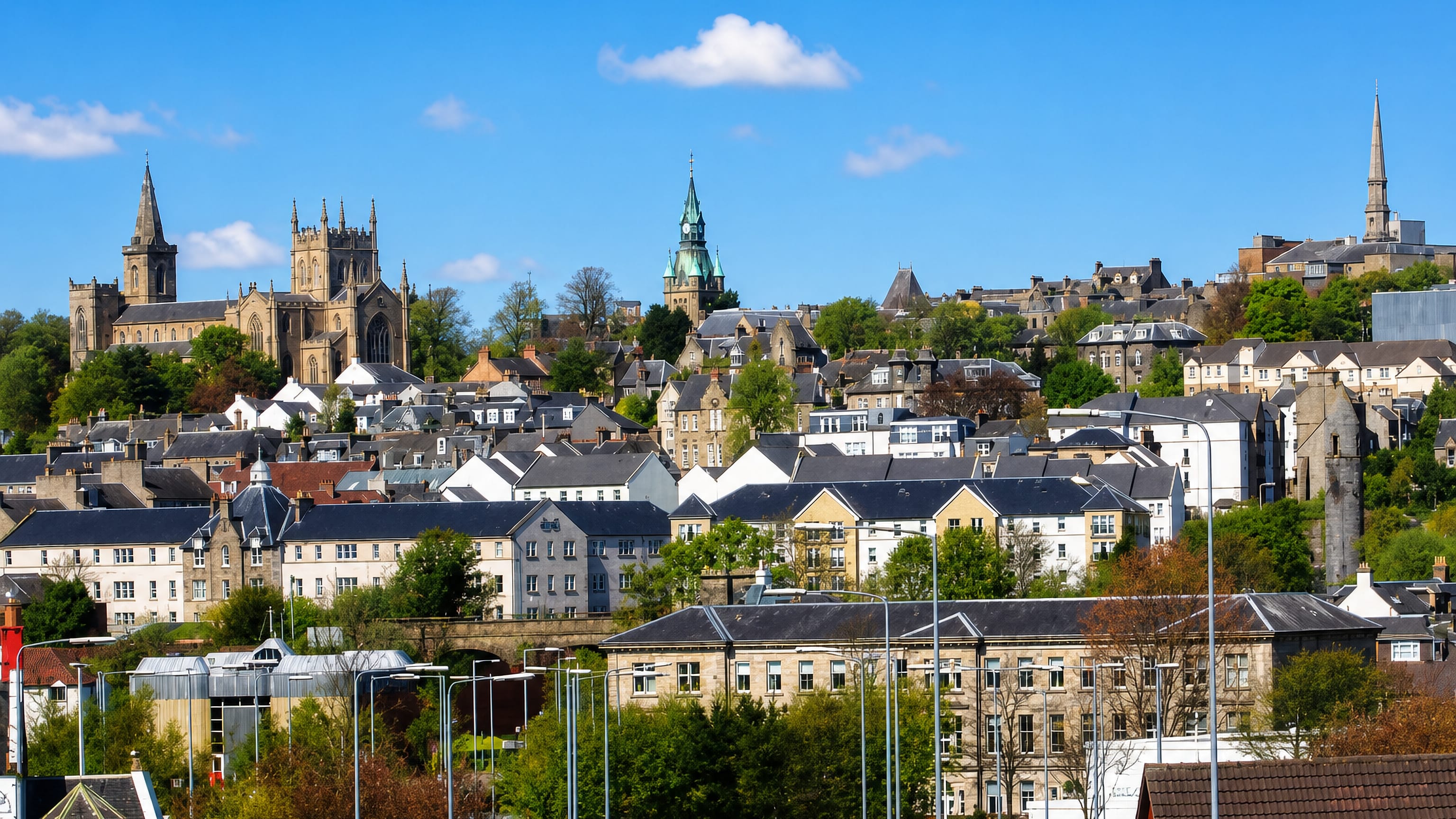
Dunfermline is a city and former royal burgh in Fife, Scotland, the de facto capital of the Kingdom of Scotland from the 11th to the 15th century.
Hotel links are affiliate links: booking through them may earn us a commission, at no extra cost to you. It never affects how places are ranked. How this works


Where to stay in Dunfermline
Where visitors usually base themselves, and why.
Most visitors should settle in the old town. Dunfermline Abbey and the ruins of Dunfermline Palace stand together at its centre, Abbot House, Dunfermline is a few steps away, and Saint Margaret's Cave belongs to the same short circuit of the medieval town. Pittencrieff House is close.
A room here means the burial place of Scottish monarchs is a walk rather than a drive, which is the whole argument for staying in the middle. St Margaret's R.C. Church, Holyrood Place, Dunfermline and Holy Trinity Episcopal Church, East Port, Dunfermline are both inside that ring.
Carnegie's town centre offers the other choice. Dunfermline Carnegie Library & Galleries, Dunfermline Museum, and the Andrew Carnegie Birthplace Memorial Museum sit within the same walkable centre, and rooms near Canmore Street or East Port put the church-lined streets outside the door. Quiet comes further out.
Pitfirrane Castle and Pitliver House mark the country end of the parish, where a base trades the abbey's nearness for fields, and Culross Palace with its Mary Luke Garden makes a day out from there. Erskine and St Andrews Parish Church, Queen Anne Street, Dunfermline anchors the walk back in. The Firth of Forth is 3 miles off.
Find hotels in Dunfermline
Direct booking searches for these neighbourhoods.
The abbey and palace ground
Abbot House, Dunfermline and Pittencrieff House stand within the same few streets.Find hotels in The abbey and palace groundMuseum days at Dunfermline Carnegie Library & GalleriesAround the Carnegie Library
Dunfermline Museum and the Andrew Carnegie Birthplace Museum are both close by.Find hotels in Around the Carnegie LibraryNights on Canmore Street with the East Port churches nearbyCanmore Street and East Port
Dunfermline Congregational Church, 6 Canmore Street, Dunfermline fixes one end of this pair of streets. Few places to stay nearby — book ahead.Find hotels in Canmore Street and East PortCountry stays near Pitfirrane CastleOut past Pitfirrane
Pitliver House keeps the same rural edge of the parish. Beds are limited here, so book early.Find hotels in Out past PitfirraneHotel links are affiliate links: booking through them may earn us a commission, at no extra cost to you. It never affects how places are ranked. How this works
Things to do in Dunfermline
Ranked by global recognition; descriptions from Wikidata (CC0).
Museums & Galleries
3- Dunfermline Carnegie Library & Galleries Heritage
- Andrew Carnegie Birthplace Memorial Museum Heritage
- Andrew Carnegie Birthplace Museum
Churches & Religious Sites
8- St Leonard's Parish Church, Brucefield Avenue, Dunfermline Heritage
- St Margaret's R.C. Church, Holyrood Place, Dunfermline Heritage
- North Church, Golfdrum Street, Dunfermline Heritage
- Dunfermline Congregational Church, 6 Canmore Street, Dunfermline Heritage
- Erskine and St Andrews Parish Church, Queen Anne Street, Dunfermline Heritage
Show 3 more →
- Gillespie Memorial Church, Chapel Street, Dunfermline Heritage
- Holy Trinity Episcopal Church, East Port, Dunfermline Heritage
- New Abbey Parish Church, Dunfermline Abbey, Dunfermline Heritage
Castles & Historic Sites
2- Dunfermline Palace Heritage
- Pitfirrane Castle Heritage
Nature & Outdoors
1- Saint Margaret's Cave
Parks & Gardens
1- Mary Luke Garden at Culross Palace
Landmarks & Notable Places
1- Pitliver House Heritage
worth knowingacross 6 categories in Dunfermline
About Dunfermline
Kings lie in the abbey.
What is Dunfermline known for?
Dunfermline Abbey drew monarchs for burial, and the ruins of Dunfermline Palace stand beside it, the pair of them marking the years when this was the effective capital of the Kingdom of Scotland. Andrew Carnegie was born here, and the Andrew Carnegie Birthplace Museum keeps the cottage end of that story while Dunfermline Carnegie Library & Galleries carries his name into the town's public buildings. Saint Margaret's Cave completes the short list.
What are the main landmarks in Dunfermline?
Churches account for much of the register. New Abbey Parish Church, Dunfermline Abbey, Dunfermline stands at the centre of it, with Erskine and St Andrews Parish Church, Queen Anne Street, Dunfermline and Gillespie Memorial Church, Chapel Street, Dunfermline among the others. Dunfermline's older secular stone comes next.
Abbot House, Dunfermline, Pittencrieff House, and the ruins of Dunfermline Palace hold the medieval end, while Pitfirrane Castle and Pitliver House carry the country-house one.
What is the history of Dunfermline?
Royalty made the town. From the 11th century Dunfermline served as a royal residence and an ecclesiastical centre, and for four centuries after that it functioned as the de facto capital of the Kingdom of Scotland. Monarchs were buried at the abbey.
New Abbey Parish Church, Dunfermline Abbey, Dunfermline stands on that ground, Dunfermline Palace kept the royal quarters beside it, and Abbot House, Dunfermline survives from the same monastic town. Saint Margaret's Cave belongs to the older layer still. The burgh status came with all of it, and the city later lost the royal role while keeping the buildings that had held it.
Andrew Carnegie was born in Dunfermline. His name attaches to a run of the town's public buildings: Dunfermline Carnegie Library & Galleries, the Andrew Carnegie Birthplace Museum, and the Andrew Carnegie Birthplace Memorial Museum all carry it. Pittencrieff House stands among them.
Dunfermline Museum holds the town's collections, and the church addresses on Queen Anne Street, East Port, Chapel Street, and Canmore Street record how many congregations the burgh once supported. Fife kept it a parish as well as a city. Culross Palace carries the Mary Luke Garden among the district's other heritage sites.
Where is Dunfermline?
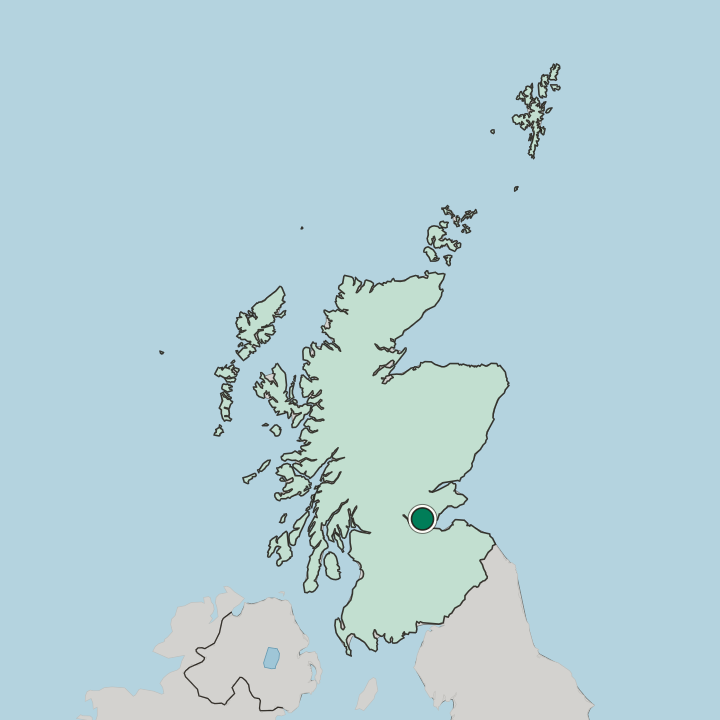
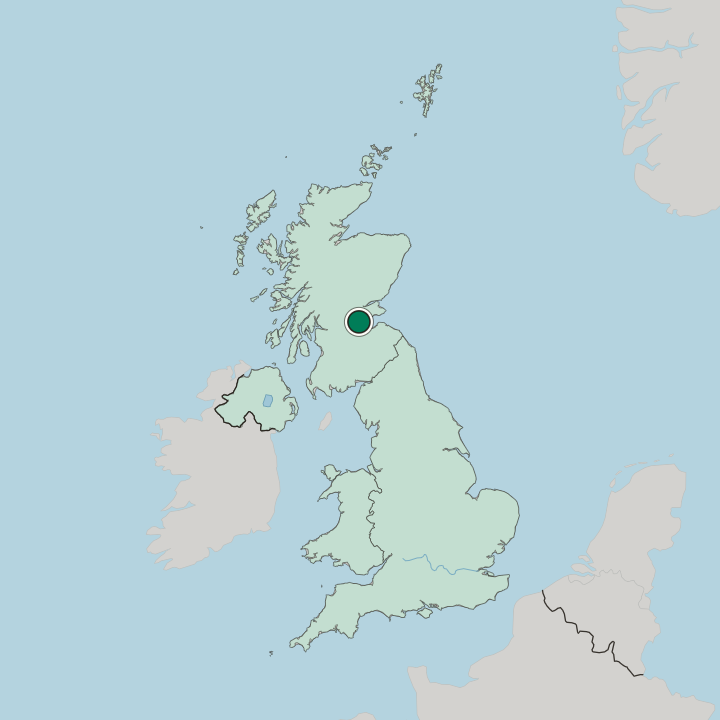
Fife holds Dunfermline 3 miles from the northern shore of the Firth of Forth. The water is close. Streets run inland from that gap, taking in Priory Lane, Canmore Street, Golfdrum Street, and Brucefield Avenue, while Pitfirrane Castle and Pitliver House stand out in the surrounding parish.
Dunfermline is a parish as much as a city.
What is the climate of Dunfermline?
The Firth of Forth lies 3 miles off, close enough to moderate the season's extremes, so cold spells stay shorter and summer heat stays mild in a way that suits long days outdoors. Rain is spread rather than seasonal. Grey days come with the estuary, and the temperate band here delivers long summer light and short winter afternoons in the same year.
How do you get to Dunfermline?
The Firth of Forth is the first thing any approach has to deal with. Dunfermline stands 3 miles back from its northern shore, so arrivals reach the water first and carry on into Fife afterwards. The old streets do the rest.
East Port, Queen Anne Street, Canmore Street, and Priory Lane are the addresses the town's churches use, and they map the centre for anyone walking in from the edge.
Common questions
What is the best area to stay in Dunfermline?
The abbey and palace ground: Mornings between Dunfermline Abbey and Dunfermline Palace. Around the Carnegie Library: Museum days at Dunfermline Carnegie Library & Galleries. Canmore Street and East Port: Nights on Canmore Street with the East Port churches nearby. Out past Pitfirrane: Country stays near Pitfirrane Castle.
Good for
More cities in Scotland
Updated September 2026