United Kingdom · Scotland
Where to Stay in Dundee, Scotland
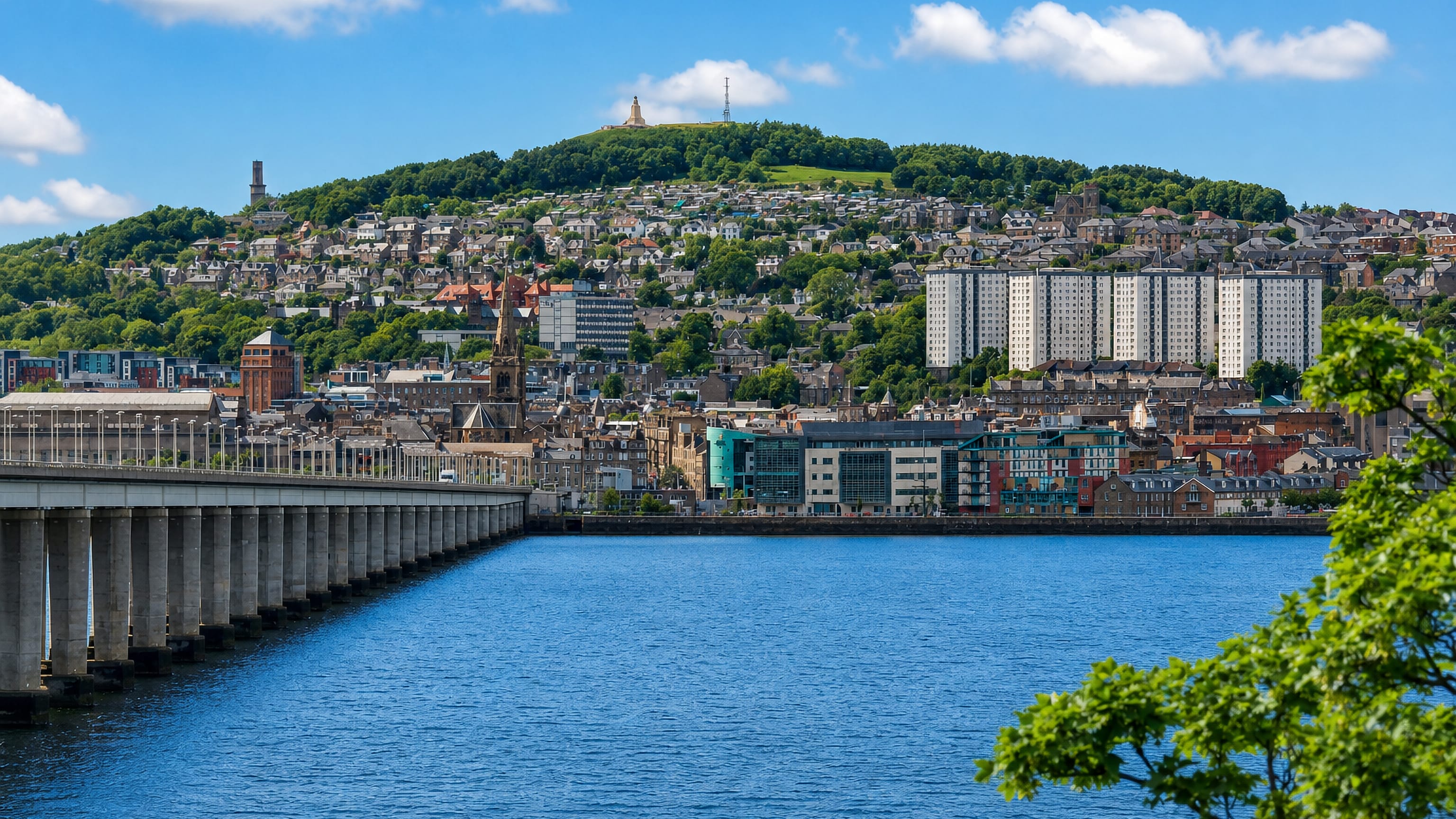
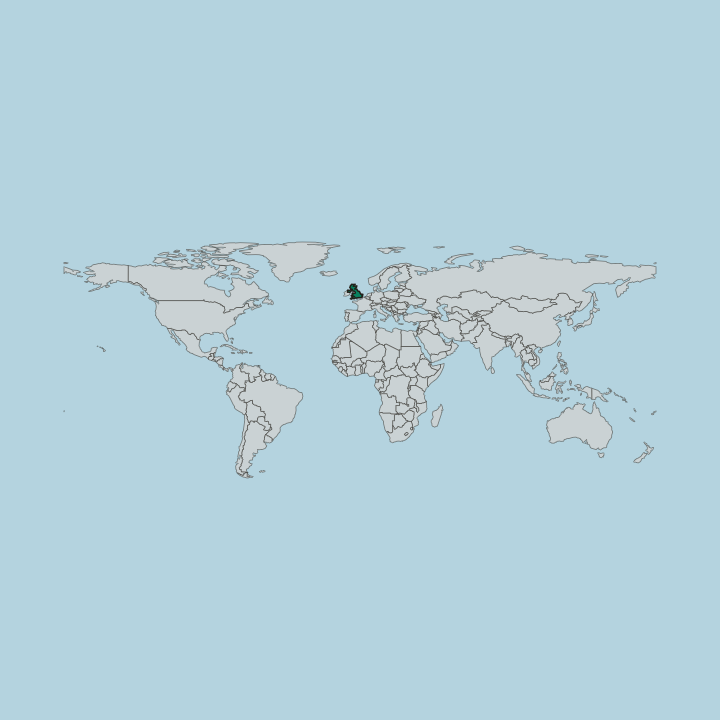
Dundee stands on the north bank of the Firth of Tay in Scotland, a port city known for the RRS Discovery and V&A Dundee on its waterfront.
Hotel links are affiliate links: booking through them may earn us a commission, at no extra cost to you. It never affects how places are ranked. How this works


Where to stay in Dundee
Each area has its own feel; here's who each one suits.

 DundeeUnited Kingdom
Lochee
Lochee sits in the west of Dundee, a separate town until the 19th century and the site of Camperdown Works, the largest jute works in the world.Lochee →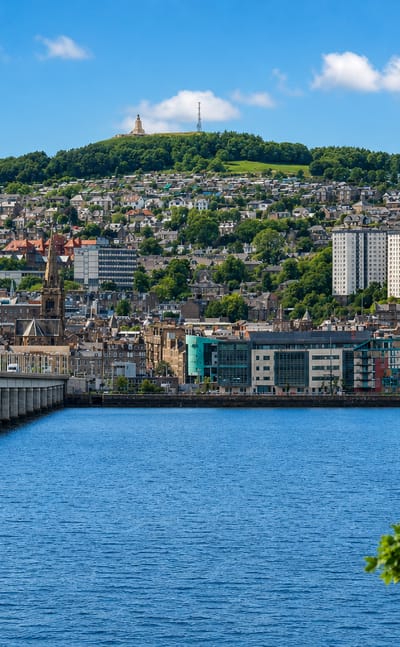 DundeeUnited Kingdom
Claverhouse
Claverhouse is a residential area on Dundee's northern outskirts, two miles from the city centre, with Mains Castle and Caird Park alongside.Claverhouse →DundeeUnited KingdomArdler
Ardler is a housing scheme in the north-west of Dundee, completed in the late 1960s on land that had belonged to Downfield Golf Club.Ardler →DundeeUnited KingdomMenzieshill
Menzieshill is a suburb in the west of Dundee, split between private housing on its eastern side and council housing on its western side.Menzieshill →DundeeUnited KingdomNinewells
Ninewells is a district of Dundee, its listed addresses running along Blackness Road and Perth Road and out into Invergowrie.Ninewells →DundeeUnited KingdomCharleston
Charleston sits on the northwest edge of Dundee, with Menzieshill to the immediate southwest, Camperdown to the north and Lochee to the east.Charleston →DundeeUnited KingdomDouglas and Angus
Douglas and Angus is an area on the eastern side of Dundee, in Scotland, with Claypotts Castle its best-known building.Douglas and Angus →DundeeUnited KingdomBallumbie
Ballumbie is a Dundee district known through four listed names: Ballumbie Castle, Ballumbie House, Pitkerro House and Duntrune House.Ballumbie → DundeeUnited Kingdom
Broughty Ferry
A Dundee suburb on the north bank of the Firth of Tay, Broughty Ferry lies four miles east of the city centre and holds Broughty Castle.Broughty Ferry →Hotel links are affiliate links: booking through them may earn us a commission, at no extra cost to you. It never affects how places are ranked. How this works
Things to do in Dundee
Ranked by global recognition; descriptions from Wikidata (CC0).
Museums & Galleries
3- McManus Gallery Heritage
- Verdant Works Museum Heritage
- V&A Dundee
Churches & Religious Sites
8- St Andrew's Cathedral, Dundee Heritage
- Dundee Parish Church Heritage
- Steeple Church Heritage
- Our Lady of Victories Rc Church, St Mary, 34-36 Forebank Road, Dundee Heritage
- St Luke's Church, Broughty Ferry Heritage
Show 3 more →
- St Salvador's Episcopal Church Heritage
- Mccheyne Memorial Church, 328 Perth Road, Dundee Heritage
- St Marks Church, 158 Perth Road, Dundee Heritage
Castles & Historic Sites
5- Broughty Castle Heritage
- Claypotts Castle Heritage
- Dudhope Castle Heritage
- Mains Castle Heritage
- Ballumbie Castle Heritage
Stadiums & Sports
3- Caird Park Velodrome
- West Craigie Park
- Dundee International Sports Centre
Landmarks & Notable Places
8- Pitkerro House Heritage
- Ballumbie House, Ballumbie Road, Dundee Heritage
- Red Court, 17 Fairfield Road, Dundee Heritage
- 109 Fisher Street, Broughty Ferry, Dundee Heritage
- 92 Grove Road, West Ferry, Dundee Heritage
Show 3 more →
- 94 Grove Road, West Ferry, Dundee Heritage
- Balmuir House Heritage
- Balmuirfield House Heritage
worth knowingacross 5 categories in Dundee
About Dundee
Dundee is known for its waterfront.
What is Dundee known for?
The RRS Discovery, the polar sailing ship built here for Antarctic exploration, sits at Discovery Point on the Firth of Tay beside the design galleries of V&A Dundee. Jute built the city. Its story survives at the Verdant Works, while the older HMS Unicorn floats in the docks nearby and the McManus Gallery holds the civic art collection above the town.
What are the main landmarks in Dundee?
Dundee's landmarks line the water and climb the hill above. The RRS Discovery and HMS Unicorn are the historic ships, moored at Discovery Point and in the docks. V&A Dundee and the McManus Gallery hold the design and art collections, while St Andrew's Cathedral and the Steeple Church mark the older stone of the centre.
Dudhope Castle and Mains Castle survive from the medieval town. The Mills Observatory crowns the wooded hill of Balgay.
What is the history of Dundee?
Dundee grew as a trading burgh on the Firth of Tay. A castle once stood over the harbour, and Dudhope Castle and Mains Castle survive from the medieval town that clustered around the estuary. The port made the place.
Ships came and went on the Tay, and the town lived by the sea long before the mills arrived, in the old county of Angus in the east of Scotland. Jute turned Dundee into an industrial city. Mills spun the fibre imported through the docks, and the Verdant Works preserves that trade, one of three that gave the city its old byword of jute, jam, and journalism.
The RRS Discovery was built here for polar exploration, and the ship later returned to the waterfront it left, moored at Discovery Point. The old shipyard skill still shows in HMS Unicorn, afloat in the harbour. In the twentieth century the McManus Gallery gathered the civic collections, and V&A Dundee later crowned the waterfront as the city turned its face back to the Firth of Tay.
Where is Dundee?
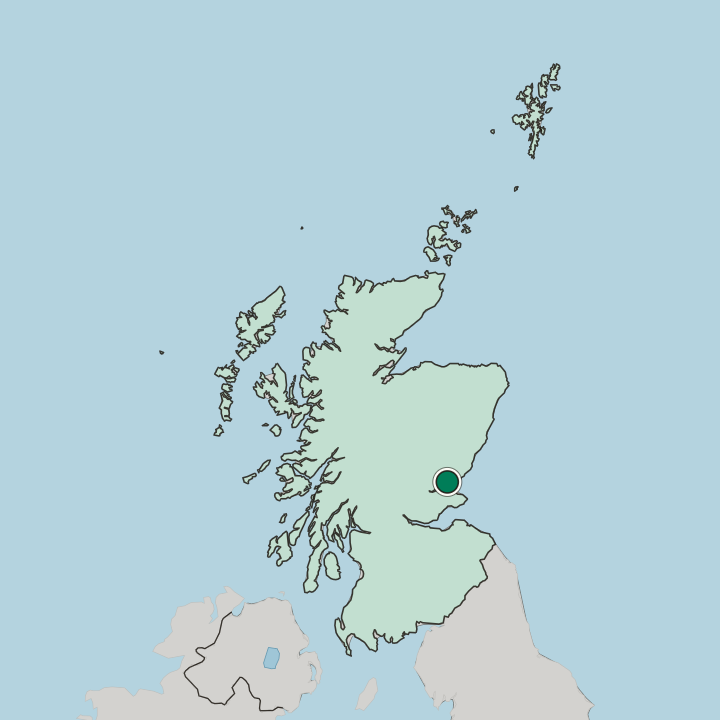
Dundee sits on the north bank of the Firth of Tay, where the river broadens toward the North Sea in the eastern Lowlands of Scotland. The land rises steeply. From the water it climbs to the Law, the hill that overlooks the centre, while Balgay carries the Mills Observatory on a second wooded rise to the west.
Below runs the waterfront. The docks line the estuary, and the road bridge crosses the Tay toward the country beyond.
What is the climate of Dundee?
Dundee has the cool, dry-edged climate of eastern Scotland. Winters are cold and grey rather than harsh, tempered by the Firth of Tay that opens to the North Sea. Summers stay mild.
The east coast sees less rain than the Scottish west, though wind off the estuary keeps the waterfront brisk through much of the year. Frost is common on the Law in winter.
How do you get to Dundee?
Dundee is reached by rail, road, and the bridges over the Firth of Tay. Trains run along the east-coast line through the city, with the station set beside the waterfront and Discovery Point. The road bridge carries traffic across from the south.
A small airport sits on the river's edge for shorter flights, and roads climb inland from the estuary toward the wider east of Scotland and the country beyond the Tay. The station is central.
Good for
More cities in Scotland
Updated October 2026