United Kingdom · Scotland
Where to Stay in Livingston, Scotland
Livingston is a West Lothian new town, designated in 1962 along the River Almond and built around the older village it took its name from.
Hotel links are affiliate links: booking through them may earn us a commission, at no extra cost to you. It never affects how places are ranked. How this works


Where to stay in Livingston
Each area has its own feel; here's who each one suits.
 LivingstonUnited Kingdom
Howden
Howden is an area of Livingston, the largest town in West Lothian, bordered by Craigshill, Ladywell, Almondvale and Kirkton.Where to stay →LivingstonUnited KingdomCraigshill
Craigshill is one of the residential districts of Livingston, close to the older streets of the neighbouring village of Mid Calder.Where to stay →LivingstonUnited KingdomDedridge
Dedridge is an area in the south of Livingston, in West Lothian, lying south of Almondvale and north of Murieston.Where to stay →LivingstonUnited KingdomBellsquarry
Bellsquarry is a suburban area in the south-west of Livingston, an older village named for a limestone quarry and taken into the new town in 1962.Where to stay →Hotel links are affiliate links: booking through them may earn us a commission, at no extra cost to you. It never affects how places are ranked. How this works
Find hotels in Livingston
Direct booking searches for these neighbourhoods.
Livingston Village
Livingston Parish Church on Kirk Lane marks the settlement the 1962 plan absorbed. Rooms are few around here — worth securing early.Find hotels in Livingston Villagethe listed frontages of Bank Street and Main StreetMid Calder
Main Point on Bank Street and Brewery House on Main Street front the old Mid Calder village. Rooms are few around here — worth securing early.Find hotels in Mid Caldershops and the run out to Edinburgh or GlasgowLivingston town centre
The new-town centre holds the shops and puts Livingston Village and Mid Calder inside a short drive.Find hotels in Livingston town centreFive Sisters Zoo and the Almond Valley Light Railway with childrenThe Almond Valley side
The Almond Valley Heritage Centre and the Museum of the Scottish Shale Oil Industry work the River Almond theme. Lodging is scarce in this area; reserve in advance.Find hotels in The Almond Valley sideHotel links are affiliate links: booking through them may earn us a commission, at no extra cost to you. It never affects how places are ranked. How this works
Things to do in Livingston
Ranked by global recognition; descriptions from Wikidata (CC0).
Museums & Galleries
1- Almond Valley Heritage Centre
Churches & Religious Sites
3- Mid Calder Parish Church Heritage
- St Andrew's Church Heritage
- Livingston Parish Church, Kirk Lane, Livingston Village Heritage
Landmarks & Notable Places
8- Calder House Heritage
- Linhouse Heritage
- 2 Pumpherston Road, Mid Calder Heritage
- 21, 21A Bank Street, Mid Calder Heritage
- 23, 25 Bank Street, Mid Calder Heritage
Show 3 more →
- 29 Bank Street, Mid Calder Heritage
- 37, 39 Bank Street, Mid Caldr Heritage
- Alderston House Heritage
worth knowingacross 3 categories in Livingston
About Livingston
What is Livingston known for?
Designation in 1962 made Livingston the fourth post-war new town in Scotland, and the plan drew the old villages of the River Almond into a single West Lothian town. Shale oil came before that. The Museum of the Scottish Shale Oil Industry and the Almond Valley Heritage Centre hold that record, and the Almond Valley Light Railway carries the same theme.
Five Sisters Zoo pulls the family traffic. Mid Calder keeps the older frontages on Bank Street.
What are the main landmarks in Livingston?
Five Sisters Zoo and the Almond Valley Heritage Centre are the two day-out addresses, and the Almond Valley Light Railway belongs with them. Older ground belongs to the kirks. Mid Calder Parish Church, Livingston Parish Church on Kirk Lane and St Andrew's Church divide it between them, while Calder House and the Calder witch memorial plaque sit at the Mid Calder end.
Houses fill the rest: Linhouse, Murieston House, Alderston House, Limefield House and Newpark, with Brewery House and Main Point on the Mid Calder streets. The Museum of the Scottish Shale Oil Industry closes it.
What is the history of Livingston?
Mid Calder came long before the plan. Calder House, Mid Calder Parish Church and the frontages along Bank Street, Main Street and Pumpherston Road belong to that older settlement, and the Calder witch memorial plaque marks a darker part of its record. Linhouse, Murieston House, Alderston House, Limefield House and Newpark stand from the same country period, and Livingston Parish Church on Kirk Lane still marks Livingston Village.
Shale oil followed. The Museum of the Scottish Shale Oil Industry keeps that chapter, and the Almond Valley Heritage Centre and Almond Valley Light Railway carry the same valley name. Designation came in 1962.
Livingston was the fourth post-war new town built in Scotland, laid out from 1963 across ground that then lay in Midlothian as well as West Lothian, and it took its name from the village it absorbed. St Andrew's Church is on that list too. The town grew to be the largest in West Lothian, with Broxburn and Bathgate near neighbours and Edinburgh and Glasgow both within reach on either side.
The River Almond kept its line through all of it, and the older names on Bank Street and Kirk Lane survived the plan rather than being cleared for it.
Where is Livingston?
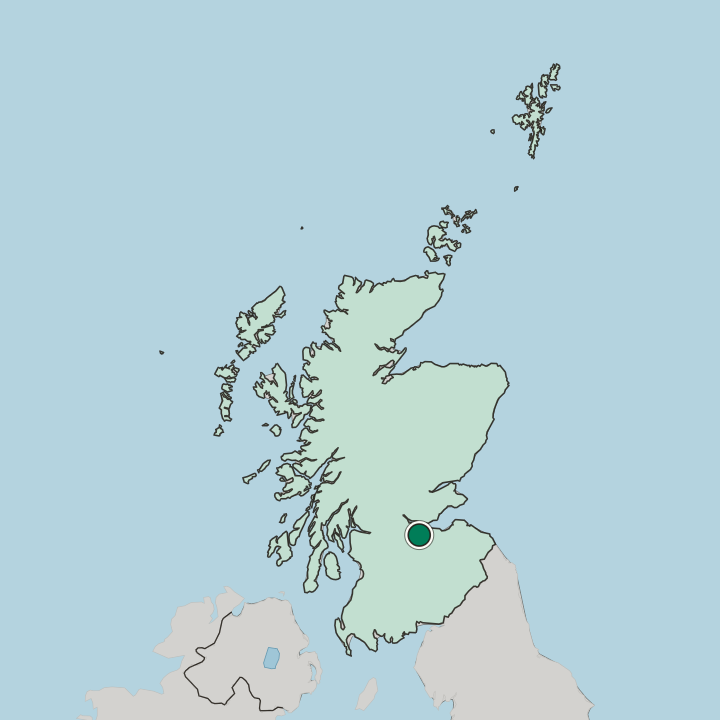
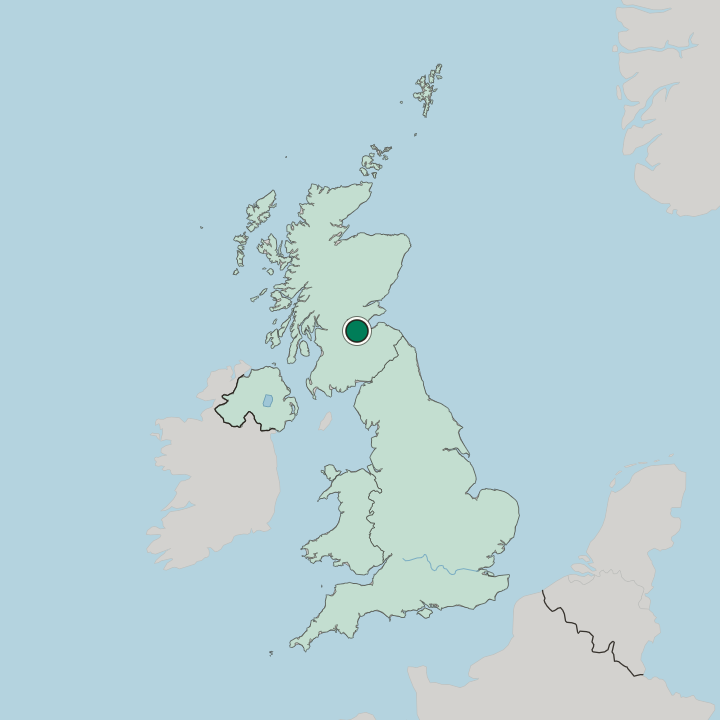
The River Almond runs through it, and the new town was laid out along its banks in what were then the counties of Midlothian and West Lothian. Edinburgh lies about fifteen miles east. Glasgow sits roughly thirty miles the other way, with Broxburn close to the north-east and Bathgate to the north-west, so Livingston sits inside a ring of West Lothian towns.
Mid Calder and Livingston Village hold the older ground.
What is the climate of Livingston?
The River Almond sets the pattern. Air settling along the valley holds frost on the low ground at Mid Calder and Livingston Village while the open country toward Bathgate and Broxburn clears sooner. Summers run temperate rather than hot, and rain is spread across the year, which is why the Almond Valley Heritage Centre and the Museum of the Scottish Shale Oil Industry earn their keep.
Five Sisters Zoo wants a dry day.
How do you get to Livingston?
Edinburgh and Glasgow sit on either side, about fifteen miles east and thirty miles west, which puts Livingston within an easy run of both and on the road between them. Broxburn lies north-east. Bathgate lies north-west of the town, so the West Lothian neighbours are closer than either city.
Once inside, Livingston Village and Mid Calder are the two old centres worth aiming for, and the Almond Valley Heritage Centre takes its name from the same river. Five Sisters Zoo is the other stop.
Common questions
What is the best area to stay in Livingston?
Livingston Village: Livingston Parish Church and the village the new town was named for. Mid Calder: the listed frontages of Bank Street and Main Street. Livingston town centre: shops and the run out to Edinburgh or Glasgow. The Almond Valley side: Five Sisters Zoo and the Almond Valley Light Railway with children.
Good for
More cities in Scotland
Updated September 2026