Indonesia
Daerah Istimewa Yogyakarta, Indonesia — Towns & Travel Guide
Daerah Istimewa Yogyakarta is a special province on Java's south coast, still ruled by the Sultan of Yogyakarta from his Kraton below Mount Merapi.
Hotel links are affiliate links: booking through them may earn us a commission, at no extra cost to you. It never affects how places are ranked. How this works


Towns & cities in Daerah Istimewa Yogyakarta
One town here has its own guide — it links to where to stay.
 Indonesia
Yogyakarta
The Tugu Yogyakarta rises over Yogyakarta, a royal city on the plain of south-central Java, known for its sultan's court and for batik.Where to stay →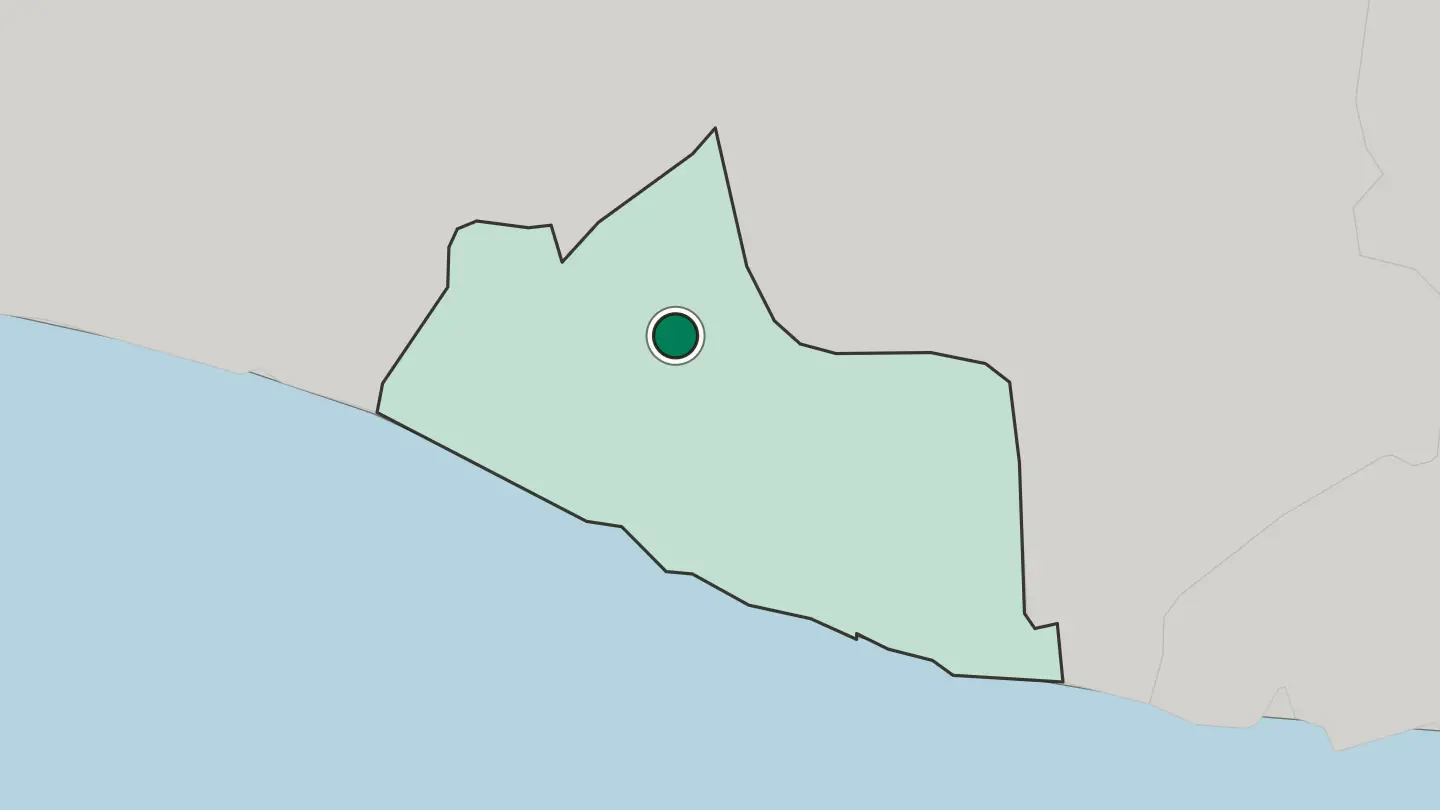
Hotel links are affiliate links: booking through them may earn us a commission, at no extra cost to you. It never affects how places are ranked. How this works
About Daerah Istimewa Yogyakarta
Yogyakarta is the cultural heart of Java.
What is Daerah Istimewa Yogyakarta known for?
The Sultan still governs from the Kraton, a walled palace-city in the middle of Yogyakarta, and the court sets the tone for the whole province. Malioboro Street runs north from the palace, a corridor of batik stalls, silversmiths and food carts. The region is also Indonesia's classroom, drawing students to a dense cluster of universities.
Beyond the city, Mount Merapi smokes on the northern skyline and the karst cliffs of Gunungkidul drop to the Indian Ocean in the south. Gamelan and wayang shadow-play still fill its evenings. Art is everywhere here.
Where is Daerah Istimewa Yogyakarta?
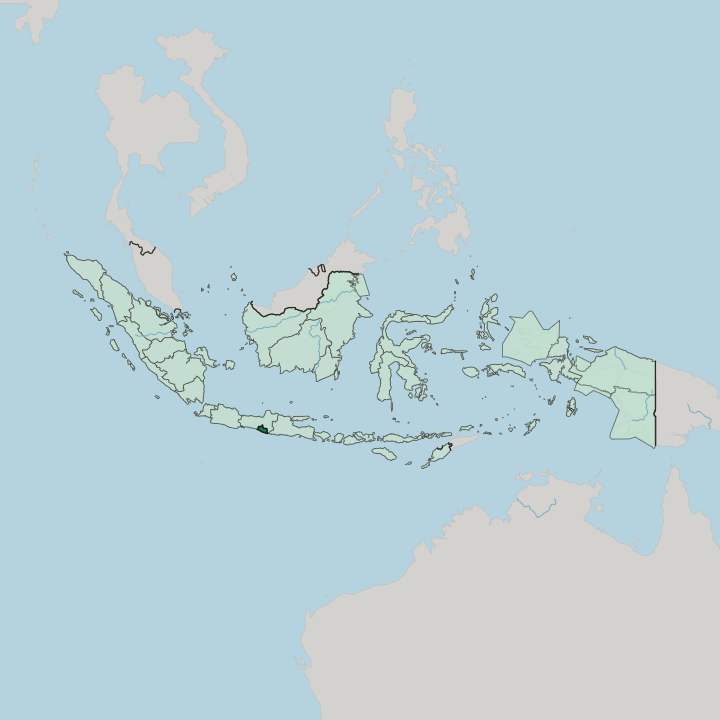
Daerah Istimewa Yogyakarta sits on the south coast of Java, the second-smallest of Indonesia's provinces after the capital region of Jakarta. It is almost an enclave. Central Java wraps around it on the landward side to the west, north and east, while the whole southern edge is open to the Indian Ocean. The province gathers the city of Yogyakarta and four regencies: Bantul, Gunungkidul, Kulon Progo and Sleman.
Together they cover a wedge of land that runs from a volcano in the north down to the surf in the south. Mount Merapi dominates the north. The most active volcano in Indonesia rises on the border of Sleman and Central Java, and its eruptions have repeatedly buried and then re-fertilised the plains below, laying down the ash and lava soils that make Sleman's farmland so productive.
The Opak River drains that slope, running south through Bantul to reach the Indian Ocean near Parangtritis. Westward, the land flattens into the coastal plain of Kulon Progo. The southeast is the opposite kind of country, the dry limestone hills of Gunungkidul, where rivers vanish into caves and the karst breaks off in cliffs above the sea.
What is Daerah Istimewa Yogyakarta like?
Culture here still radiates from a palace. The Kraton is not a museum but a working court, the residence of the Sultan of Yogyakarta, who by long-standing arrangement also serves as the province's governor. Around it a guild culture of makers survives.
Yogyakarta batik has its own darker, indigo-and-brown palette, distinct from the coastal styles, and the wax-resist cloth is still drawn by hand in workshops near the palace. Court gamelan orchestras and wayang kulit shadow-play remain living traditions, not revivals. In the walled pleasure garden of Taman Sari, the old bathing pools of the sultans still stand.
Beyond the court, Yogyakarta runs young. A dense concentration of universities and art schools fills the city with students, and that has made it Indonesia's centre for contemporary art, galleries and street murals as much as classical dance. Indonesian is the shared language, but the older courtly Javanese, with its layered levels of politeness, is what people speak at home.
The signature dish is gudeg, young jackfruit stewed slowly in palm sugar and coconut milk. Everyday life leans quieter and more refined than in Jakarta. People call the city's manner halus, meaning smooth and unhurried.
What is the history of Daerah Istimewa Yogyakarta?
It all begins in 1755. The Treaty of Giyanti split the old Mataram Sultanate, and Prince Mangkubumi took the western half as Sultan Hamengkubuwono I, founder of the Yogyakarta Sultanate that still rules from the Kraton. Dutch power closed in after the Java War of 1825 to 1830.
The turning point came with the revolution. As the young Republic of Indonesia fought for survival, its capital moved here in 1946, and Sultan Hamengkubuwono IX put the court behind independence. Loyalty was repaid in 1950 with a lasting Special Region under its own Sultan.
What is the climate of Daerah Istimewa Yogyakarta?
Two seasons, not four, govern the year. The lowlands around Yogyakarta stay warm and humid throughout. A wet monsoon runs from about October to April, with the heaviest downpours over January and February, when afternoon storms roll in off the Indian Ocean and the rivers off Mount Merapi run high.
May to September is the dry half, sunnier and far less humid, and the easiest stretch for travel. Heat eases only with height. Up at Kaliurang on Merapi's slopes, the air turns cool enough for a jacket.
How do you get to Daerah Istimewa Yogyakarta?
For the majority of visitors to Yogyakarta, the journey ends at an airport. Yogyakarta International Airport stands out on the coast at Temon, in Kulon Progo, roughly 45 km west of the city, which is why it opened with its own rail link running passengers into Yogyakarta in about forty minutes. The older in-town airport, Adisutjipto, keeps only a sliver of the traffic.
Trains are the other way in, on the trunk line across Java that ties Yogyakarta to Jakarta and Surabaya through the central Tugu station. Local roads and TransJogja buses reach the coast, Merapi and Prambanan. Everything runs through the city.
Common questions
What is the best area to stay in Daerah Istimewa Yogyakarta?
Central Yogyakarta: a first base by the Kraton and Malioboro. Prawirotaman: guesthouses and cafes south of the palace. Kaliurang: cool highland nights below Mount Merapi. Parangtritis: the Indian Ocean surf south of the city. The Gunungkidul coast: quiet karst coves in the southeast.
Good for
More regions in Indonesia
Updated September 2026