India · State of Bihar
Where to Stay in Arrah, State of Bihar
Arrah is the headquarters of Bhojpur district in Bihar, India, on the plain near the confluence of the Ganges and the Sone.
Hotel links are affiliate links: booking through them may earn us a commission, at no extra cost to you. It never affects how places are ranked. How this works


Where to stay in Arrah
The practical side of choosing where to sleep.
Arrah takes business travel more often than tourism, and its rooms sit where that trade is, close to the Bhojpur district offices and the main road through the city. Few beds compete for the trade. Hotels here serve the district rather than a visitor trade, which suits a night tied to Bhojpur business, a family visit, or a stop on the way between Patna and the countryside.
Arrah is a municipal corporation, and the scale of the city shows in the number of streets rather than in any hotel district. The centre keeps everything within reach, since the Holy Saviour Church and the offices of the Bhojpur district headquarters stand within the same compact centre. Patna is the alternative.
Travellers who want a wider choice of beds often stay about 58 kilometres away in Patna, or about 39 kilometres away in Danapur, and drive out to Arrah for the day. That works both ways. Anyone here for the Masarh lion or the river country near the confluence of the Ganges and the Sone gains from a base in the city itself, since the distances from Patna eat a morning.
Book nothing elaborate.
Find hotels in Arrah
Direct booking searches for these neighbourhoods.
Arrah centre
The compact streets around the Bhojpur district headquarters, with the church and the offices together. Beds are limited here, so book early.Find hotels in Arrah centrea wider choice of beds within a morning's drivePatna
About 58 kilometres from Arrah, used as a base for day trips into Bhojpur district.Find hotels in Patnaa shorter run back towards the GangesDanapur
About 39 kilometres from Arrah on the road towards Patna, useful when beds in the city are taken.Find hotels in DanapurHotel links are affiliate links: booking through them may earn us a commission, at no extra cost to you. It never affects how places are ranked. How this works
About Arrah
Administration is the constant here.
What is Arrah known for?
Arrah runs Bhojpur district from within the city, a role it also held under the British Raj, when it was the seat of the historical Shahabad district. Two names carry the sightseeing: the Masarh lion and the Holy Saviour Church. Rivers do the rest, with the confluence of the Ganges and the Sone close by and the road to Patna running on from there.
What are the main landmarks in Arrah?
Arrah's register runs to two entries. The Masarh lion and the Holy Saviour Church are the two named landmarks the record attaches to Arrah, and both sit in a city better known for administration than for sightseeing. Bhojpur district holds the rest of the interest, with the confluence of the Ganges and the Sone within reach of the city.
What is the history of Arrah?
The rivers came first. Arrah grew on the plain near the confluence of the Ganges and the Sone, a position between two large rivers that mattered long before any district line was drawn around it. Bhojpur district takes its shape from those two rivers.
The Masarh lion belongs to that older layer, the single piece of antiquity the record attaches to the city. Administration arrived with the British Raj. Arrah served as the administrative headquarters of the historical Shahabad district and was reckoned its most populous urban centre, which fixed the offices of a district seat in the town.
The Shahabad name has since given way to Bhojpur district, and Arrah kept the headquarters through that change. The title stayed. Arrah is a municipal corporation, running its own city government while remaining the seat of Bhojpur district, about 39 kilometres from Danapur and about 58 kilometres from Patna.
The Masarh lion and the Holy Saviour Church are what a visitor sees of that sequence, one from the deep past of the plain and the other from the administrative century that followed.
Where is Arrah?
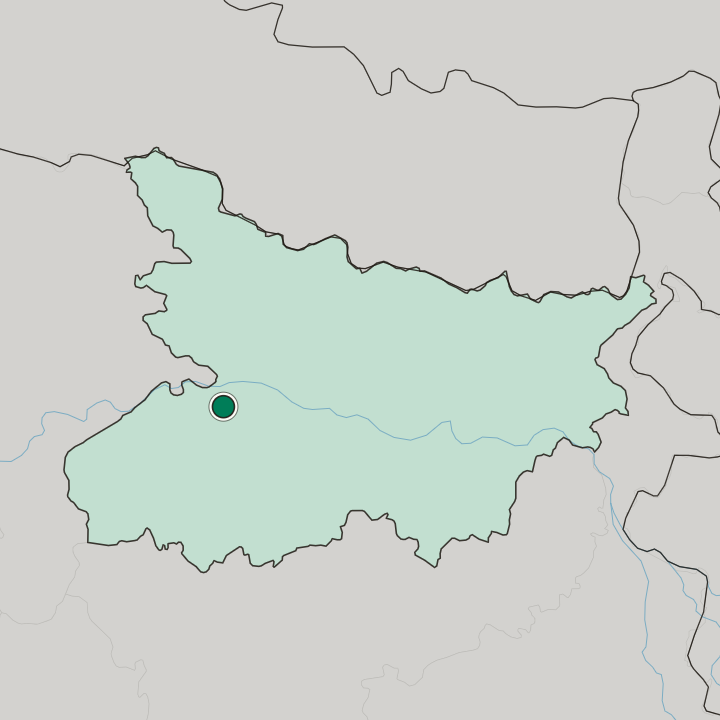
Two rivers frame the district. Arrah sits on the plain of Bihar near the confluence of the Ganges and the Sone, with flat ground running out from the city in every direction. Danapur lies about 39 kilometres off, Patna about 58 kilometres, and Bhojpur district spreads around Arrah between the two rivers.
Nothing here rises much.
What is the climate of Arrah?
Arrah sits in the subtropical band, so the year swings between a hot dry stretch and a wet one rather than between mild seasons. The plain offers no shelter. Heat builds over open ground between the Ganges and the Sone, and the rivers matter more for what they carry in the wet months than for any cooling they give the city.
Cool arrives only with the winter nights.
How do you get to Arrah?
Most arrivals come from Patna. The road from Patna covers about 58 kilometres, and Danapur sits about 39 kilometres out, which makes either an easy morning run into Arrah. The Ganges and the Sone shape those approaches, since a road into Bhojpur district has to work around the confluence rather than straight across it.
In town, distances are walkable.
Common questions
What is the best area to stay in Arrah?
Arrah centre: district business and the Holy Saviour Church. Patna: a wider choice of beds within a morning's drive. Danapur: a shorter run back towards the Ganges.
Good for
More cities in State of Bihar
Updated September 2026