India
Union Territory of Andaman and Nicobar Islands, India — Towns & Travel Guide
The Andaman and Nicobar Islands are India's forested archipelago in the Bay of Bengal, ruled from Port Blair on South Andaman.
Hotel links are affiliate links: booking through them may earn us a commission, at no extra cost to you. It never affects how places are ranked. How this works


Towns & cities in Union Territory of Andaman and Nicobar Islands
One town here has its own guide — it links to where to stay.
 India
India
Port Blair
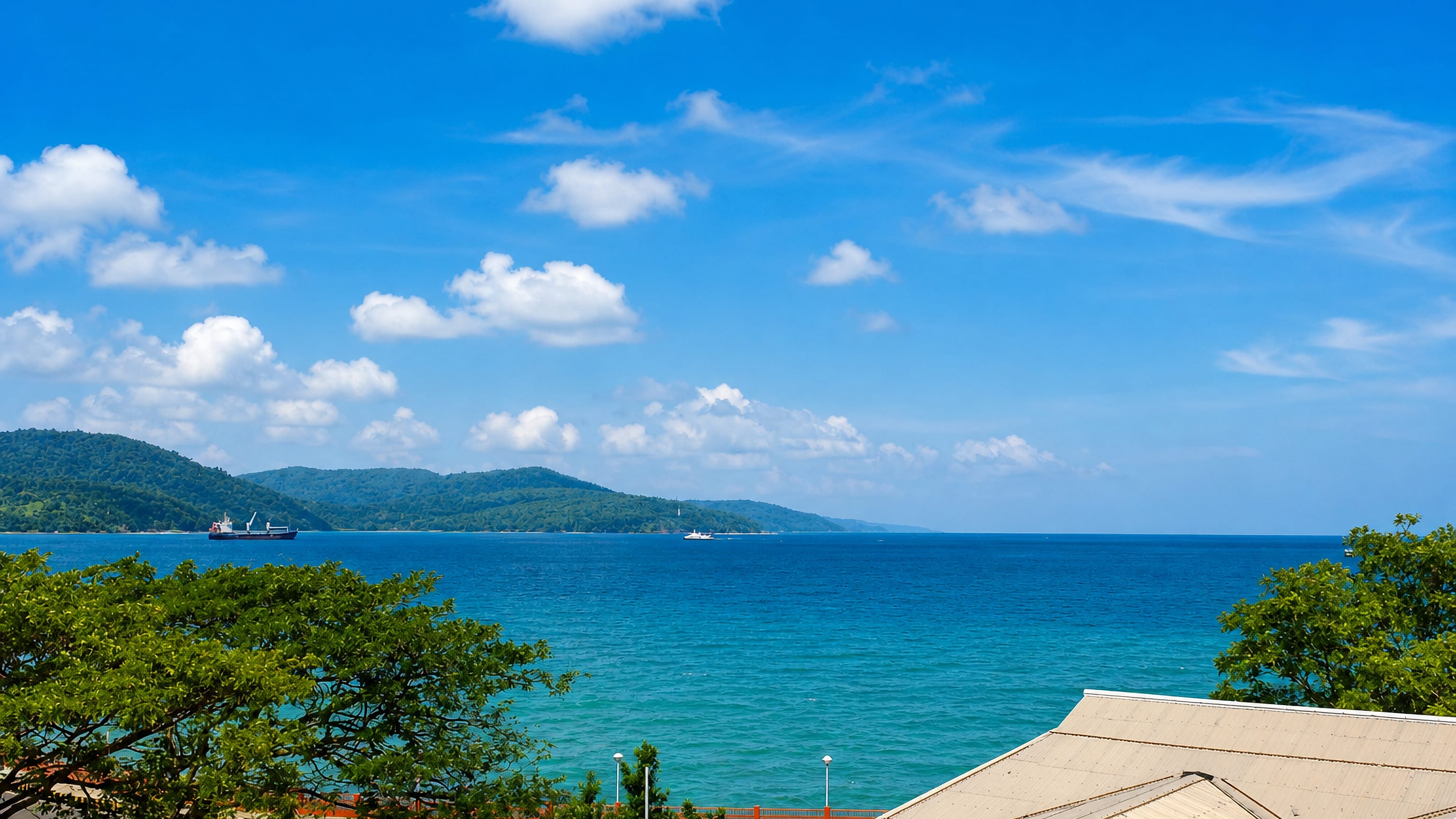
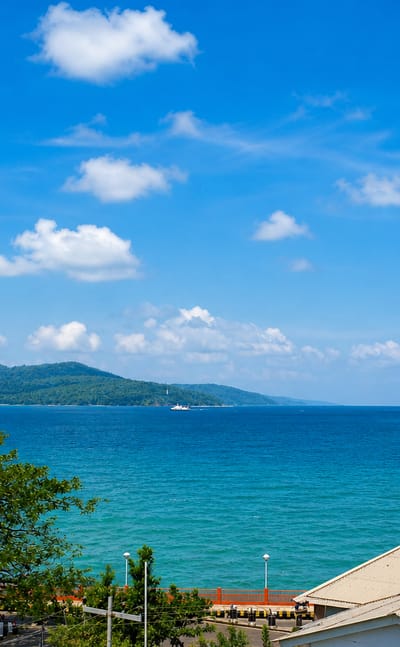
Port Blair looks out over the Andaman Sea from South Andaman Island, the capital of the Andaman and Nicobar Islands and site of the Cellular Jail.Where to stay →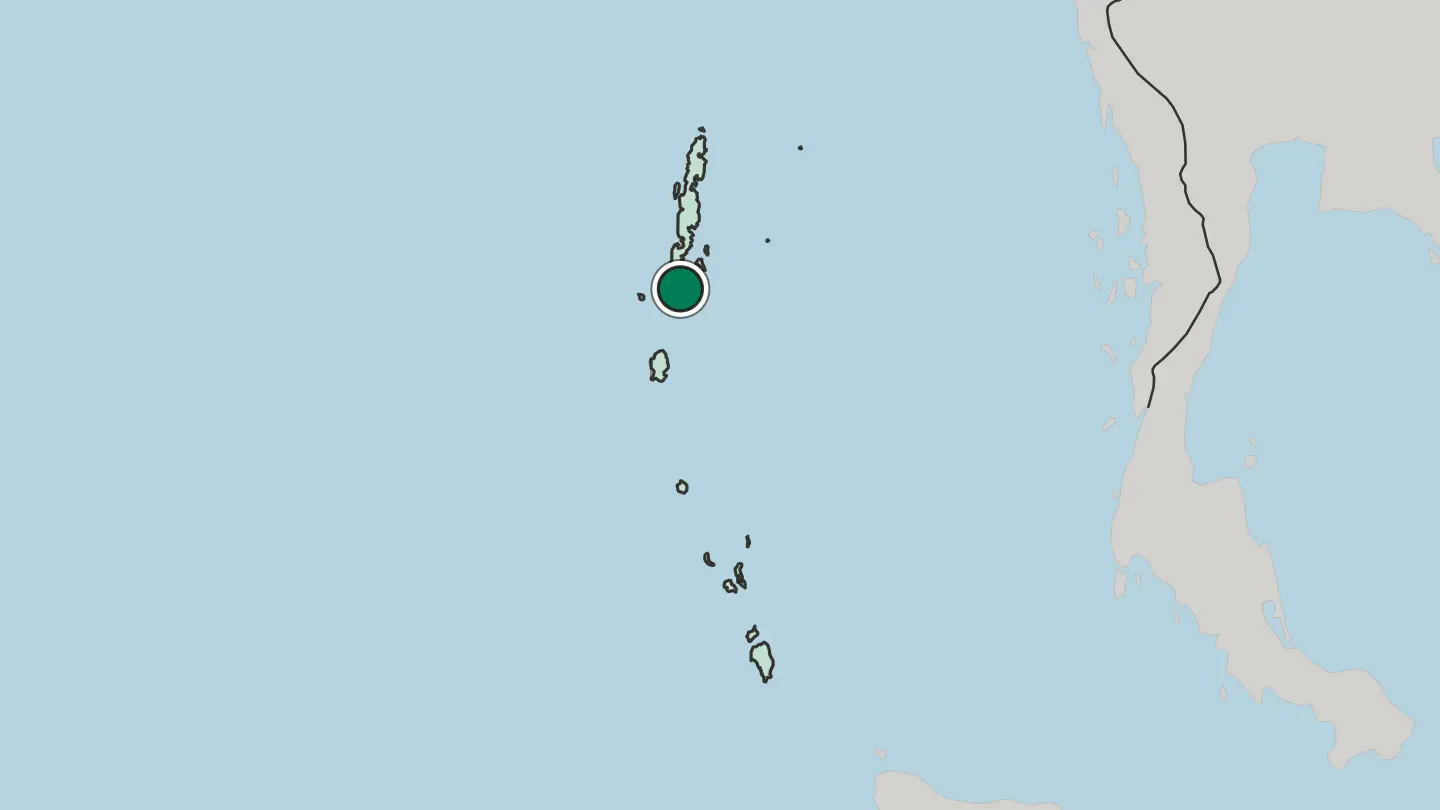
Hotel links are affiliate links: booking through them may earn us a commission, at no extra cost to you. It never affects how places are ranked. How this works
About Union Territory of Andaman and Nicobar Islands
What is Union Territory of Andaman and Nicobar Islands known for?
This is India at its most far-flung: a chain of 836 islands strung down the Bay of Bengal, closer to Myanmar and Sumatra than to the Indian mainland. The Andaman group in the north holds the dive reefs and white-sand beaches that draw most travellers, above all Swaraj Dweep. Only 31 of the islands are inhabited.
The Nicobar group to the south is largely off-limits, home to protected tribal reserves. Port Blair, the capital on South Andaman, anchors it all, and its Cellular Jail is the territory's defining monument.
Where is Union Territory of Andaman and Nicobar Islands?
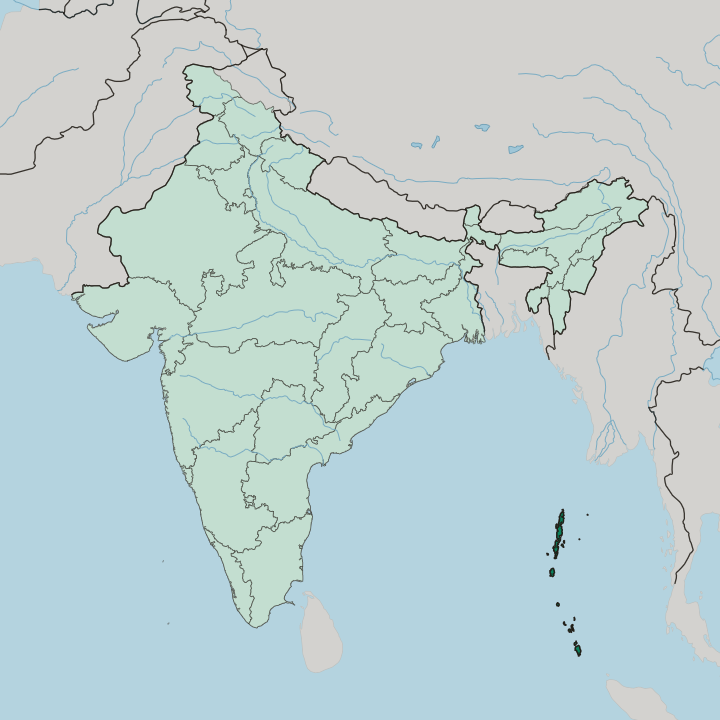
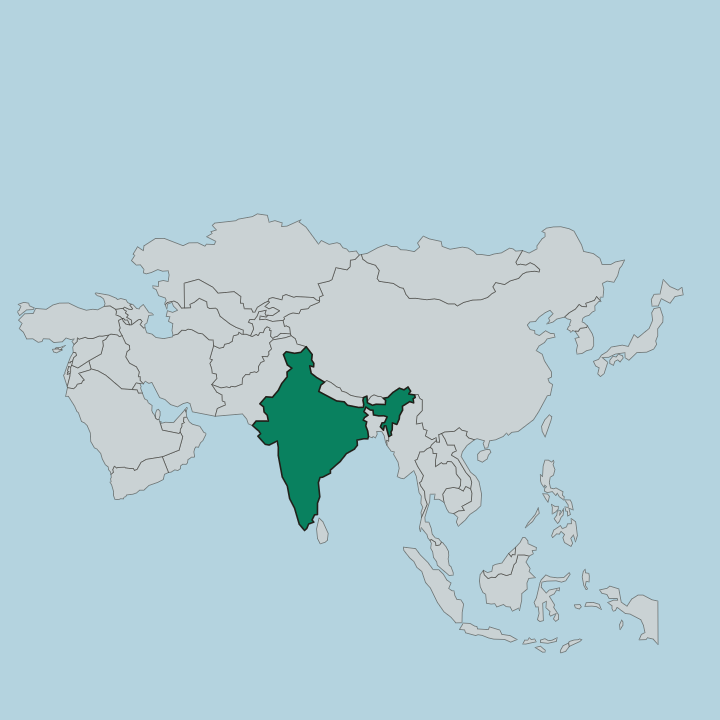
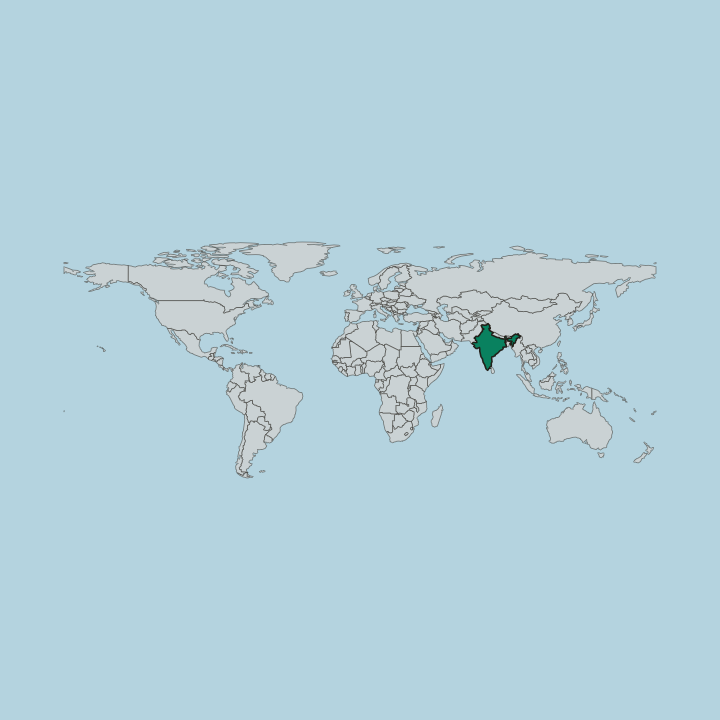
The territory is a long north-south chain in the eastern Bay of Bengal, far out from the Indian mainland and much nearer the coasts of Myanmar and Sumatra. It splits into two groups. The Andaman Islands run across the north, and the Nicobar Islands lie to the south, the two separated by the Ten Degree Channel, a stretch of open sea about 150 km wide.
The Bay of Bengal washes the western shores while the Andaman Sea lies to the east, so the whole chain is a thin dividing line between the two. Dense tropical rainforest covers most of the land. Saddle Peak rises to 732 m on North Andaman, the highest point in the archipelago and the crown of its own national park.
Great Nicobar, the largest island of the southern group, carries Indira Point at its tip, the southernmost land in all of India. Reefs and mangroves fringe the coasts. Port Blair sits on South Andaman, the natural hub because the deep, sheltered harbour there made it the one good anchorage.
The islands are the exposed peaks of a submarine mountain range, an arc that continues underwater toward Sumatra. That geology, not any land bridge, explains why they sit so far from India yet remain Indian soil.
What is Union Territory of Andaman and Nicobar Islands like?
Two very different worlds share these islands. One is the settler society of Port Blair and the larger Andaman villages, peopled by descendants of mainland Indians, former convicts, and refugees from across the subcontinent, so Bengali, Tamil, Telugu, and Hindi are all heard in the markets. The other is far older.
Deep in the Andaman forests live Indigenous peoples whose ancestors reached the islands tens of thousands of years ago. Great Andamanese and Jarawa communities hold the northern group, and the Sentinelese of North Sentinel Island remain among the most isolated peoples on earth, their island closed to outsiders by Indian law. The Nicobarese are the largest Indigenous community, farmers and fishers of the southern islands.
Much of the modern culture grew out of hardship. Because the British built the territory as a prison, its towns began as a settlement of exiles, and that mixed, transplanted heritage still shapes the food, the languages, and the festivals. Seafood and coconut run through the cooking.
The reefs and the forest are not a backdrop here. They are the reason the oldest islanders have survived, and the reason the newest ones came.
What is the history of Union Territory of Andaman and Nicobar Islands?
The islands entered the record as a place of exile. Britain first tried a settlement at Port Blair in 1789 but abandoned it within a few years to disease. After the failed uprising of 1857, the empire returned and built a permanent penal colony to hold its rebels, and in time raised the great Cellular Jail, constructed between 1896 and 1906 to lock away India's independence fighters far across the sea the prisoners called Kālā Pānī, the black water.
Japan held it in wartime. India took the islands at independence and organised them as a single union territory in 1956.
What is the climate of Union Territory of Andaman and Nicobar Islands?
The climate is tropical and warm all year, with no real winter and the sea holding the temperature steady across the whole chain. Rain rules the calendar instead of cold. The southwest monsoon soaks the islands from roughly May to September, and a second, weaker northeast monsoon brings more wet weather later in the year, so downpours can arrive across much of the year.
The dry stretch from about November to April is when the Bay of Bengal turns calm and the ferries to Swaraj Dweep run smoothly. Humidity is high whatever the season.
How do you get to Union Territory of Andaman and Nicobar Islands?
Most travellers fly. Veer Savarkar International Airport at Port Blair is the single gateway, linked by regular flights to Chennai, Kolkata, and other mainland cities across roughly 1,190 km of the Bay of Bengal. Passenger ships also sail from Chennai, Kolkata, and Visakhapatnam, but the crossing takes two to three days and runs only a few times a month.
Once you land, the islands connect by boat: government and private ferries leave Port Blair for Swaraj Dweep and Neil Island. The Nicobar Islands stay closed to tourists.
Common questions
What is the best area to stay in Union Territory of Andaman and Nicobar Islands?
Port Blair: the Cellular Jail and the ferry jetties. Swaraj Dweep: scuba diving off the Andaman reefs. Neil Island: a quieter island than Swaraj Dweep.
Good for
More regions in India
Updated September 2026