India
West Bengal, India — Towns & Travel Guide
West Bengal runs from the Himalayan tea hills of Darjeeling down through the Ganges delta to the Bay of Bengal, with Kolkata at its heart.
Hotel links are affiliate links: booking through them may earn us a commission, at no extra cost to you. It never affects how places are ranked. How this works


Towns & cities in West Bengal
Pick a town or city — each links to where to stay.
 India
India
Kolkata
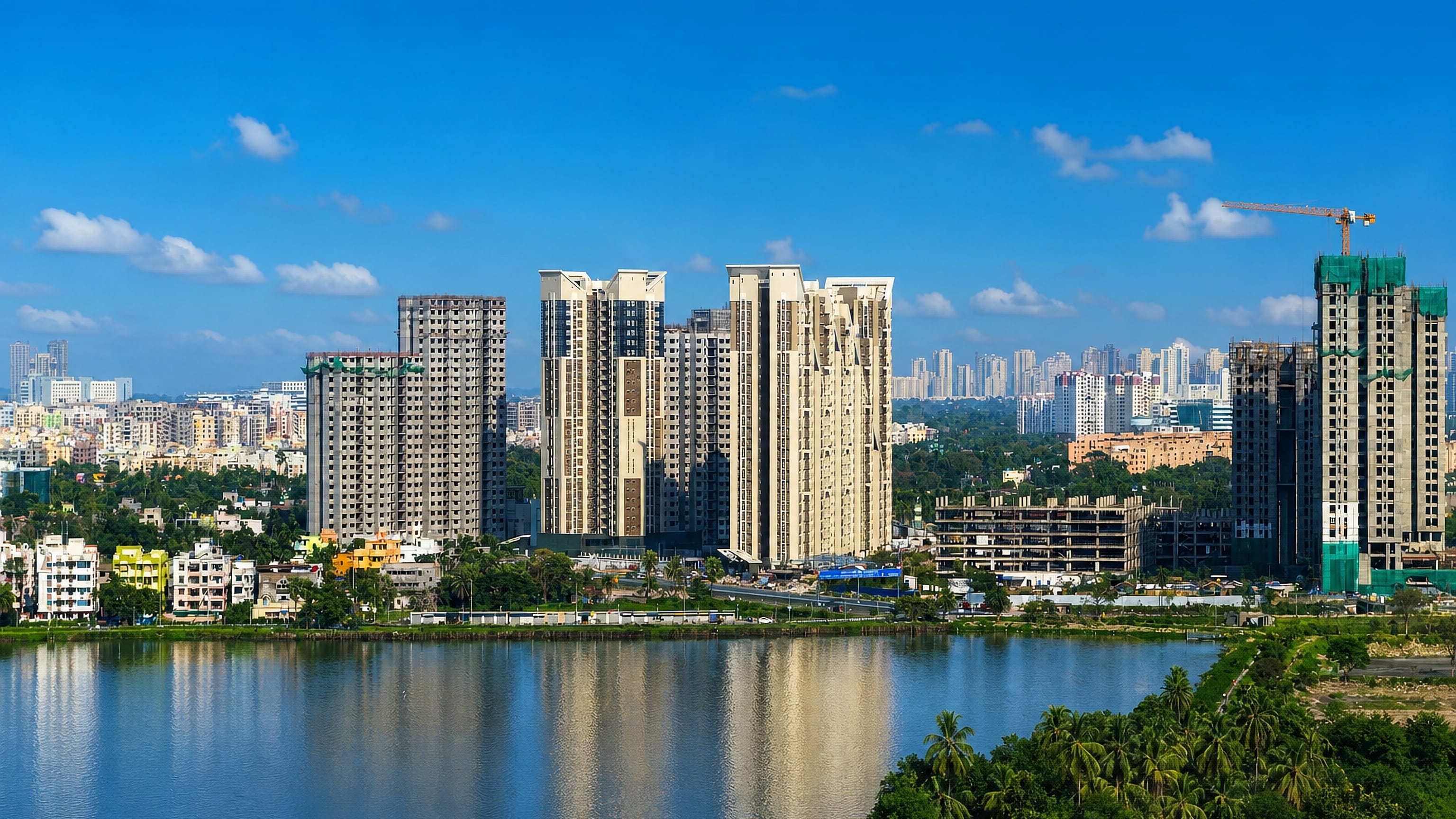
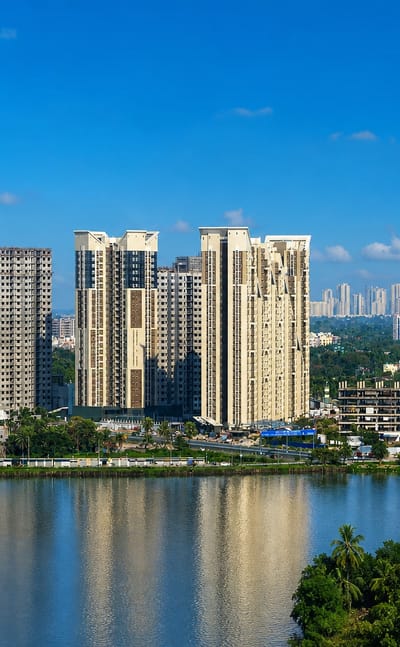
The Hooghly River rolls past Kolkata, capital of West Bengal, cradle of the Bengali Renaissance, known for the Victoria Memorial and its colonial churches.Where to stay →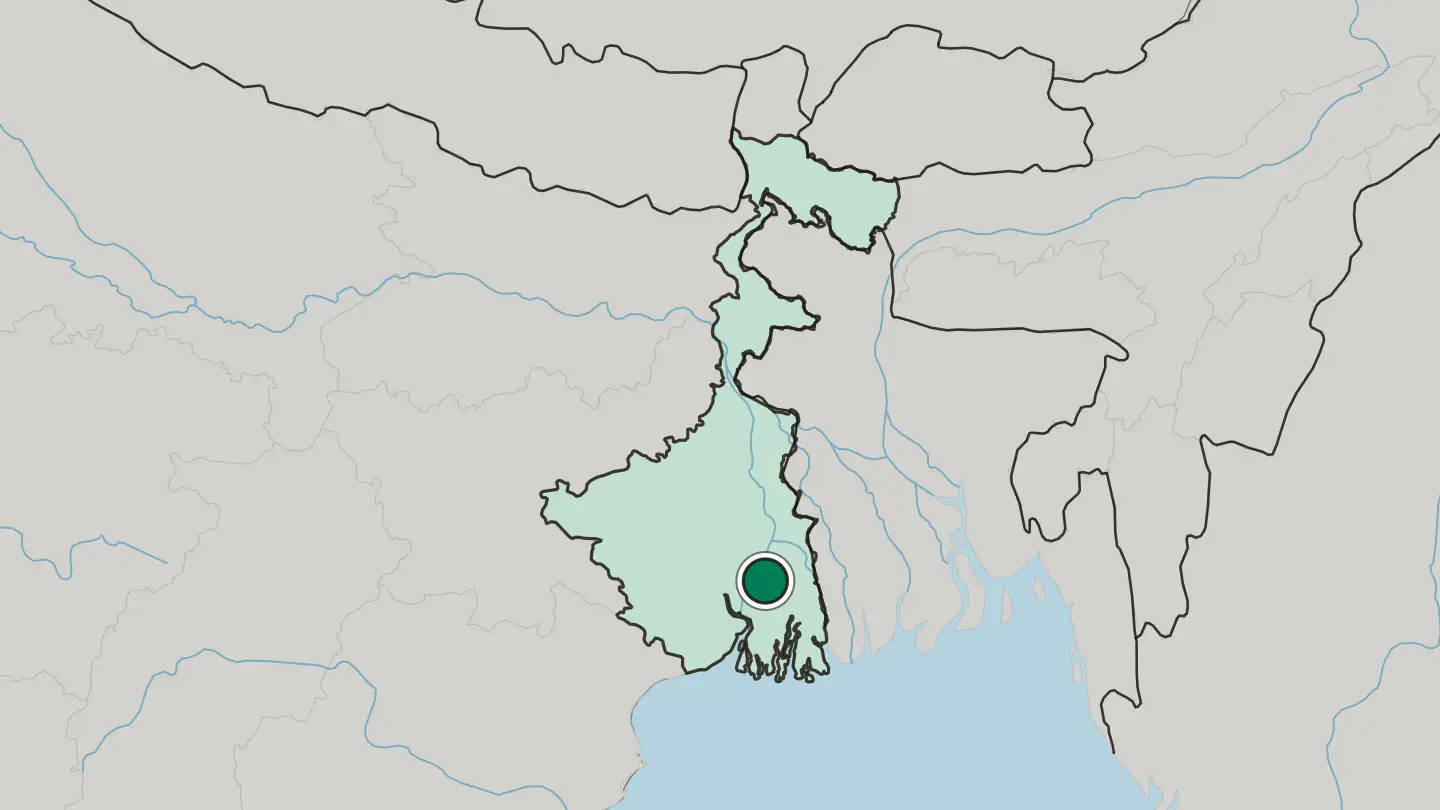
 India
India
Howrah
Howrah faces Kolkata across the Hooghly River, an industrial and transport city and the headquarters of the Howrah Sadar subdivision.Where to stay →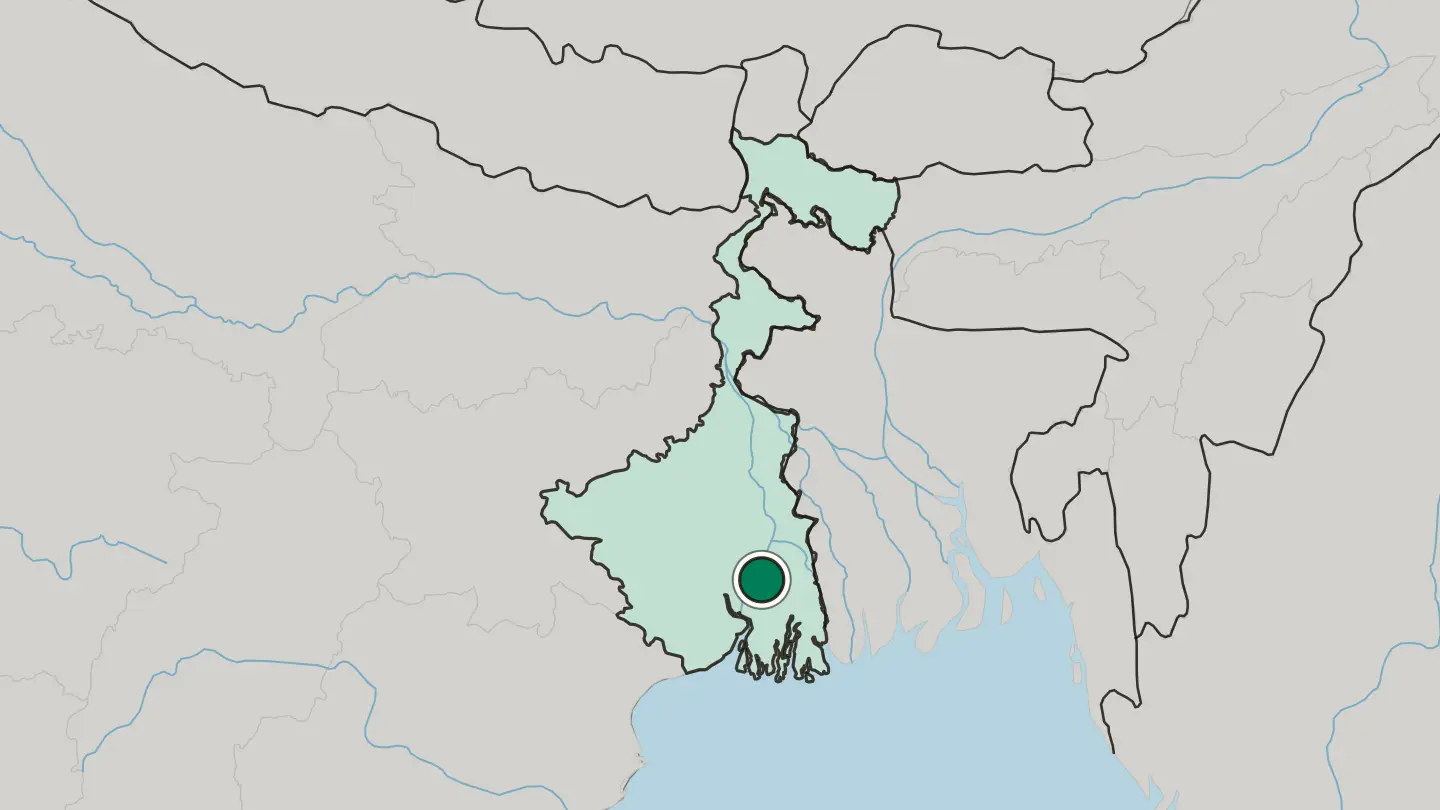 India
India
Durgapur
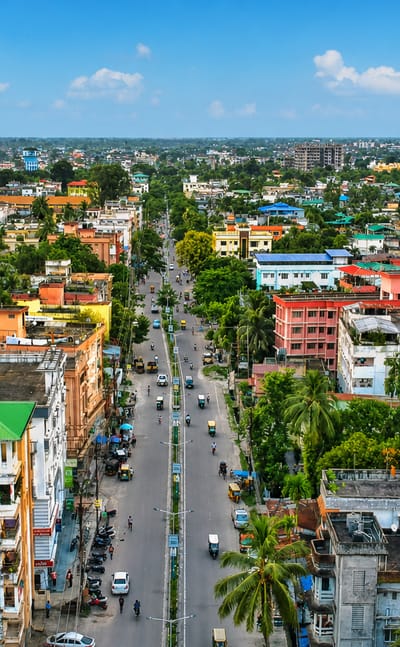
Durgapur is a planned industrial city on the northern bank of the Damodar river, in the Paschim Bardhaman district of West Bengal.Where to stay →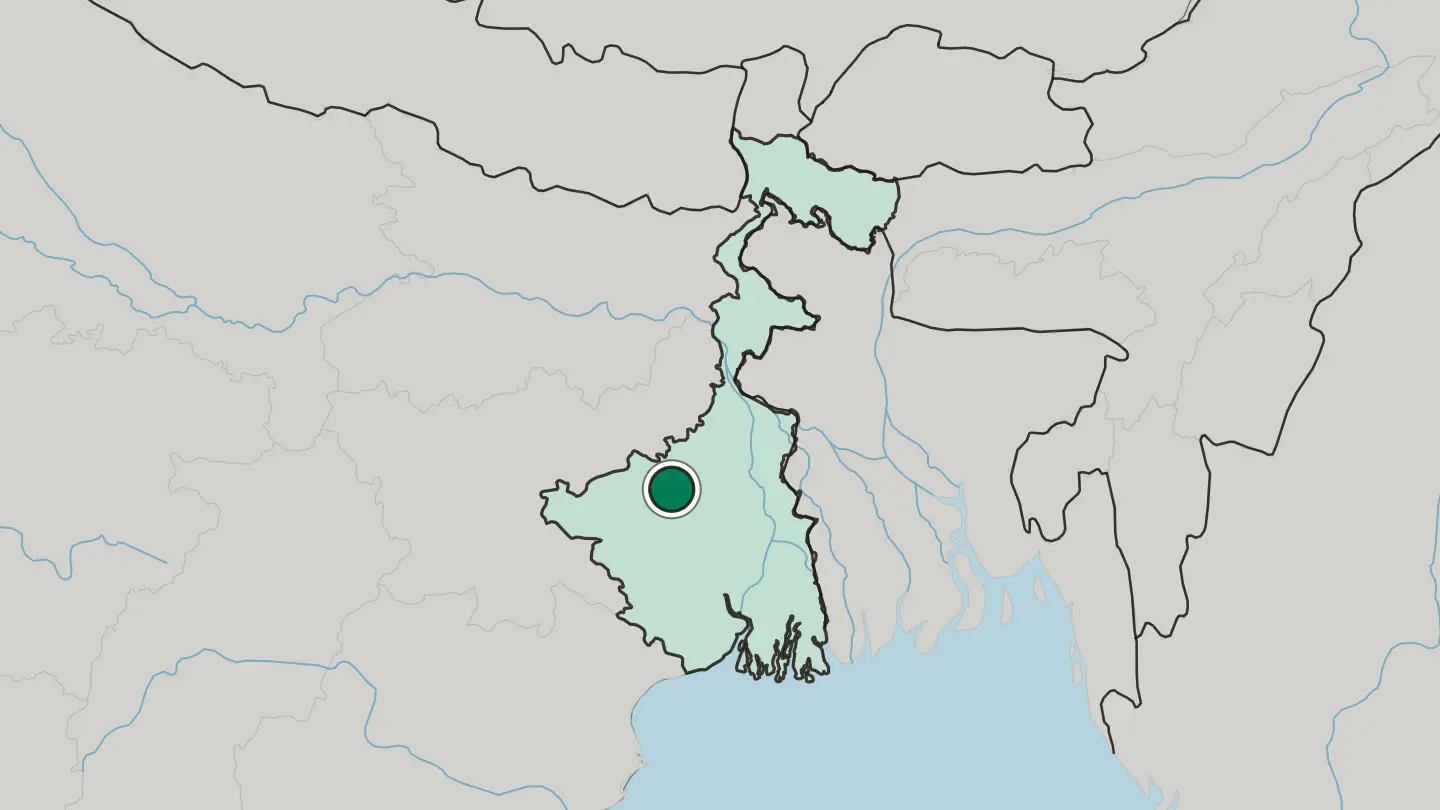
 India
India
Siliguri
The Teesta River runs down from the Darjeeling Hills past Siliguri, a foothill city in northern West Bengal and the transport hub of the region.Where to stay →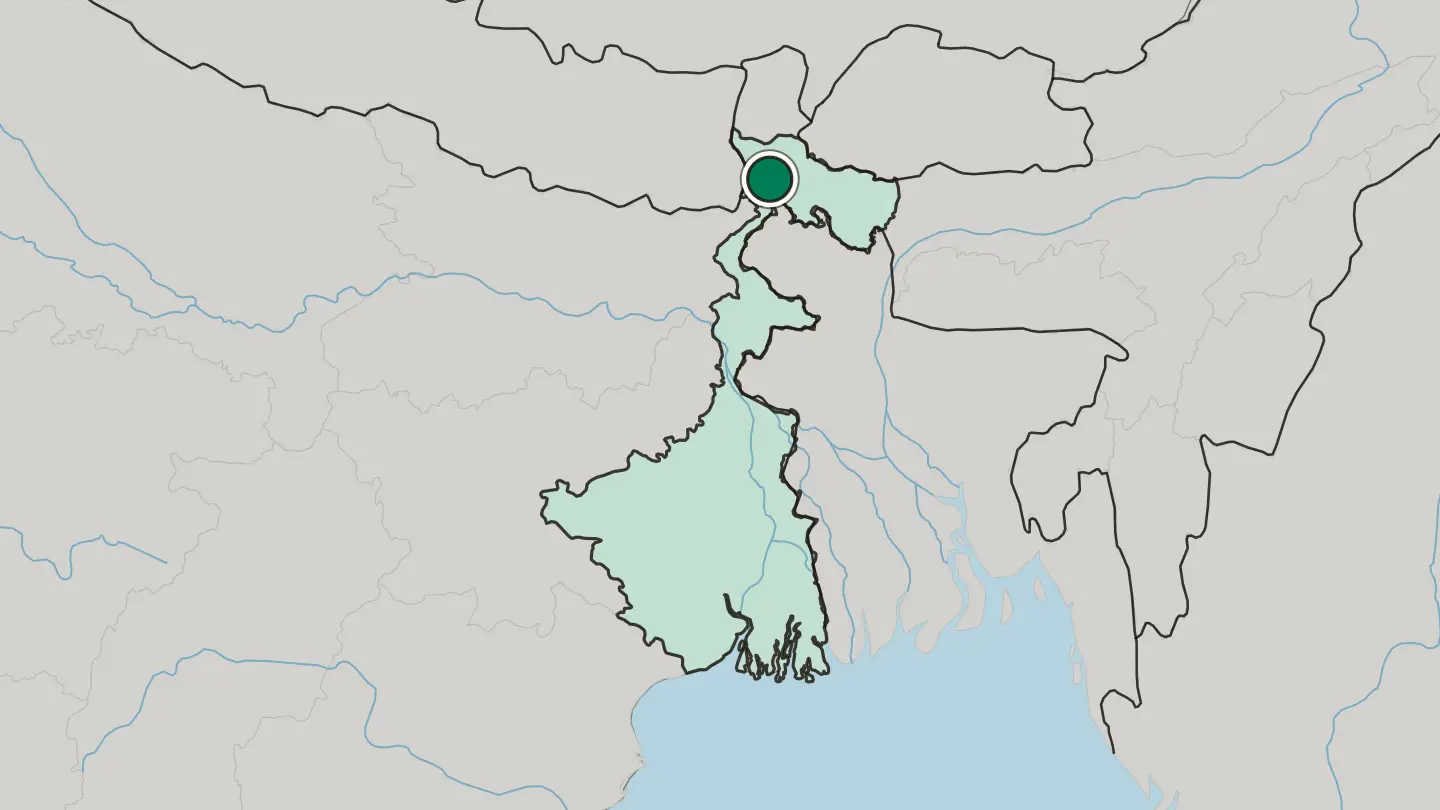 India
India
Āsansol
Āsansol is the headquarters of Paschim Bardhaman district in West Bengal, an industrial city and the second largest urban centre in the state.Where to stay →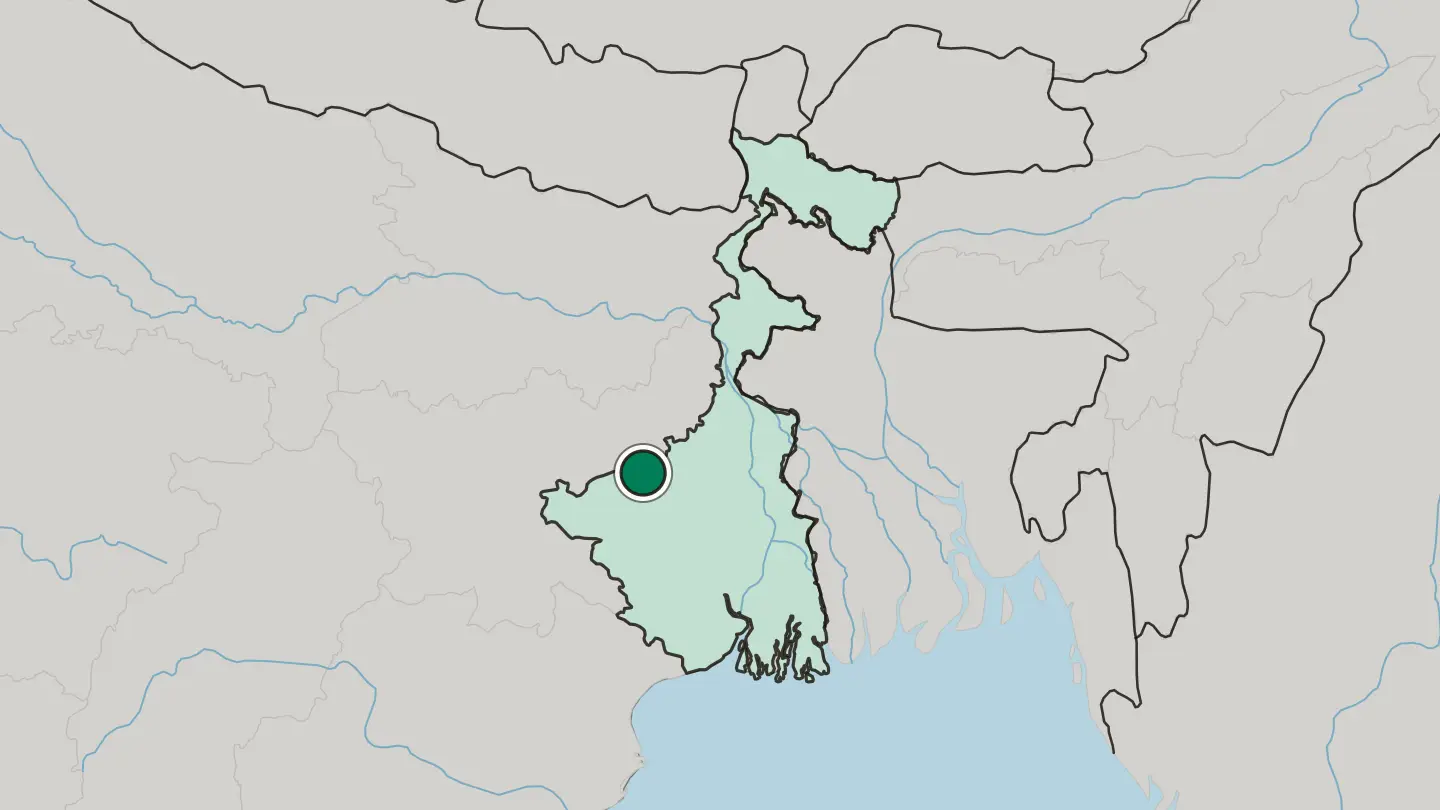
 India
India
Barddhamān
Bardhaman is a historic city on the plains of West Bengal in eastern India, long the seat of a great line of rajas.Where to stay →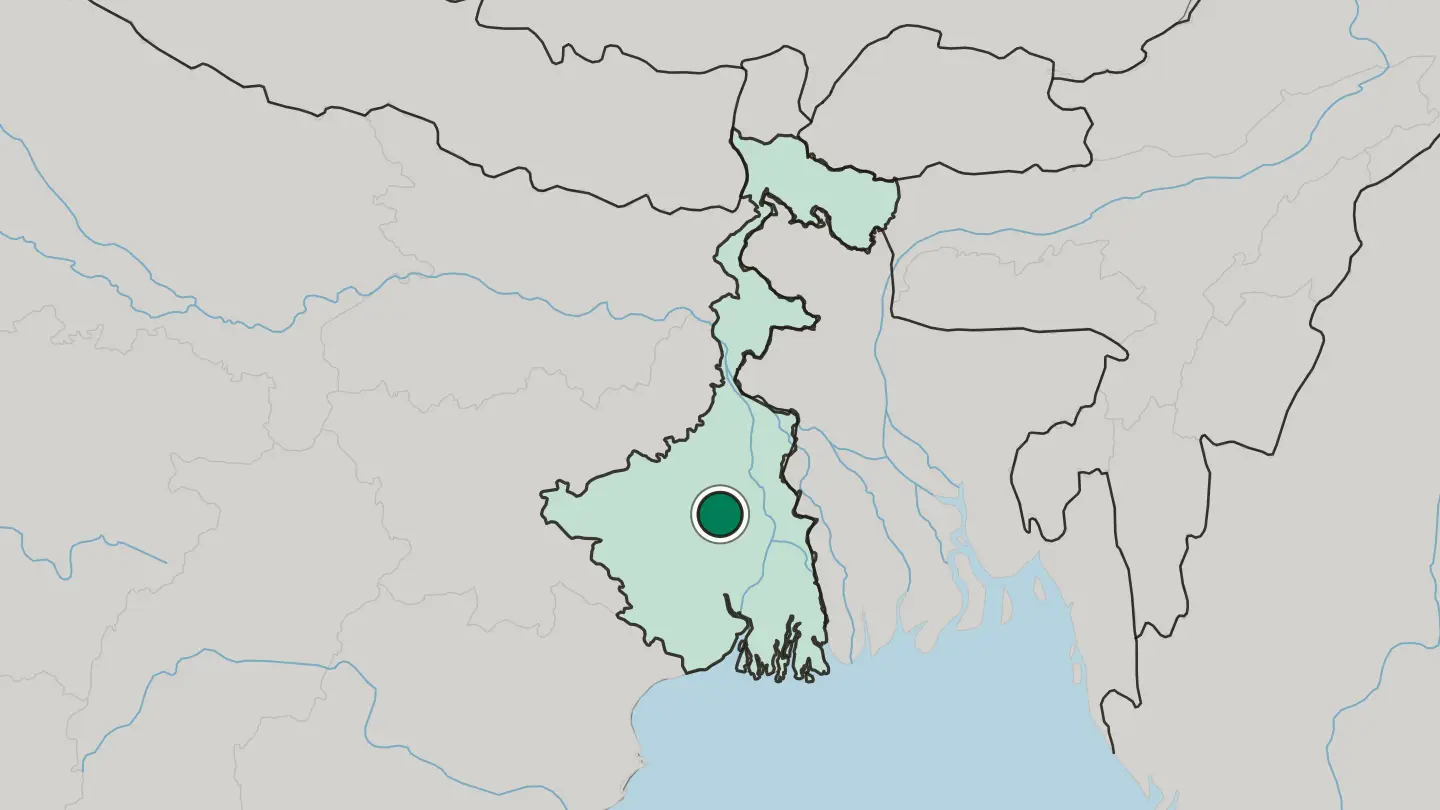
 India
India
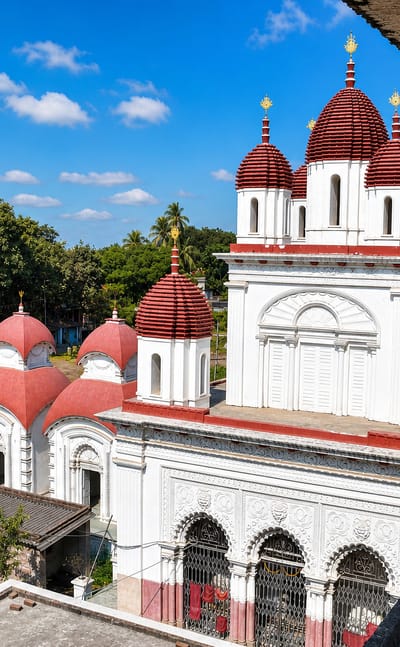
Bārāsat
Bārāsat is a municipality of North 24 Parganas district in West Bengal, and the district's headquarters, inside the Kolkata metropolitan area.Where to stay →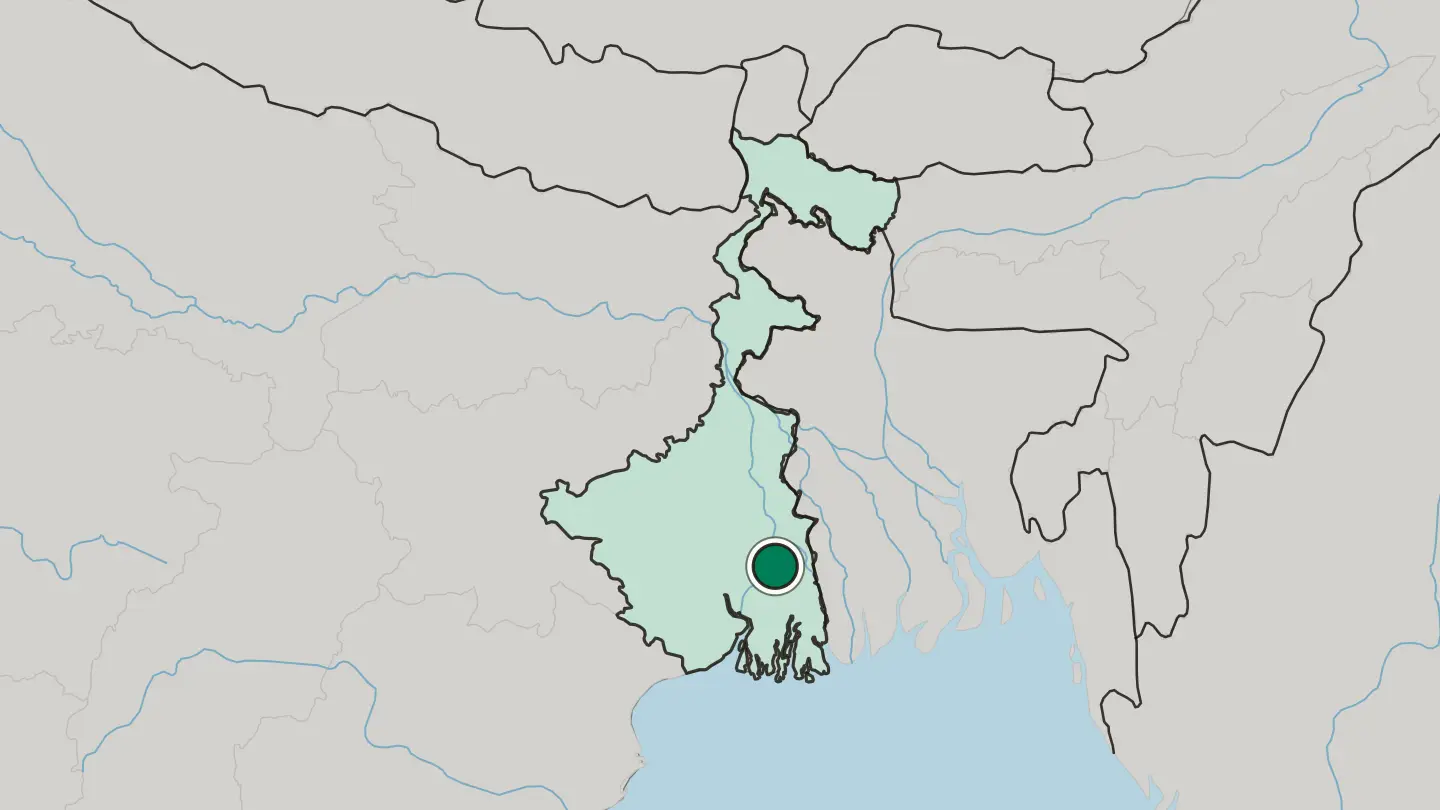
 India
India
Baranagar
Baranagar is a city on the Hooghly just north of Kolkata, home to the Indian Statistical Institute and the first Ramakrishna monastery.Where to stay →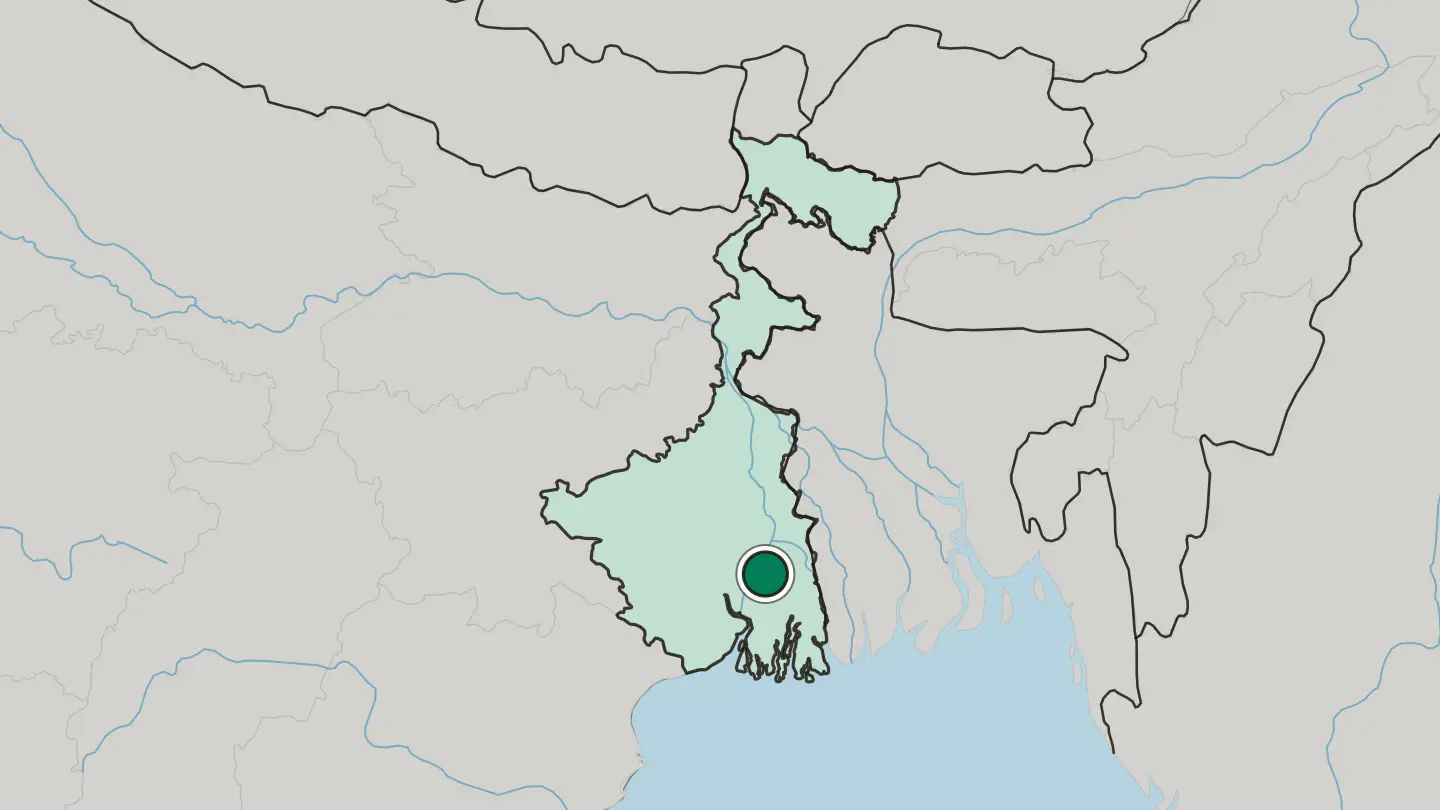
All towns & cities (31)
India
Uluberiya
Uluberiya is an industrial town on the western bank of the Hooghly River, headquarters of its subdivision in the Howrah district of West Bengal.Where to stay →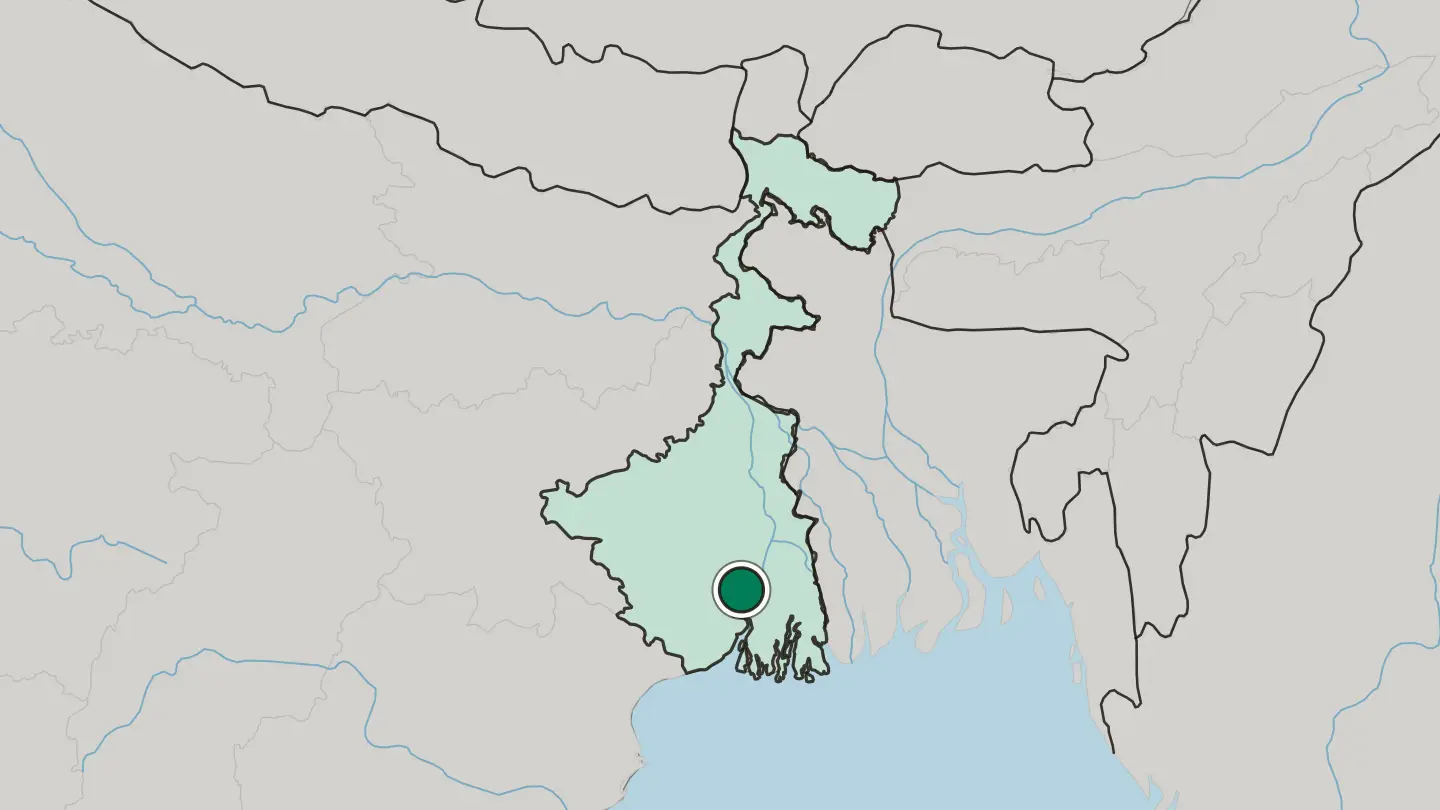
 India
India
Shrīrāmpur
Shrīrāmpur is a historic town on the Hooghly in West Bengal, India, once the Danish colony of Serampore.Where to stay →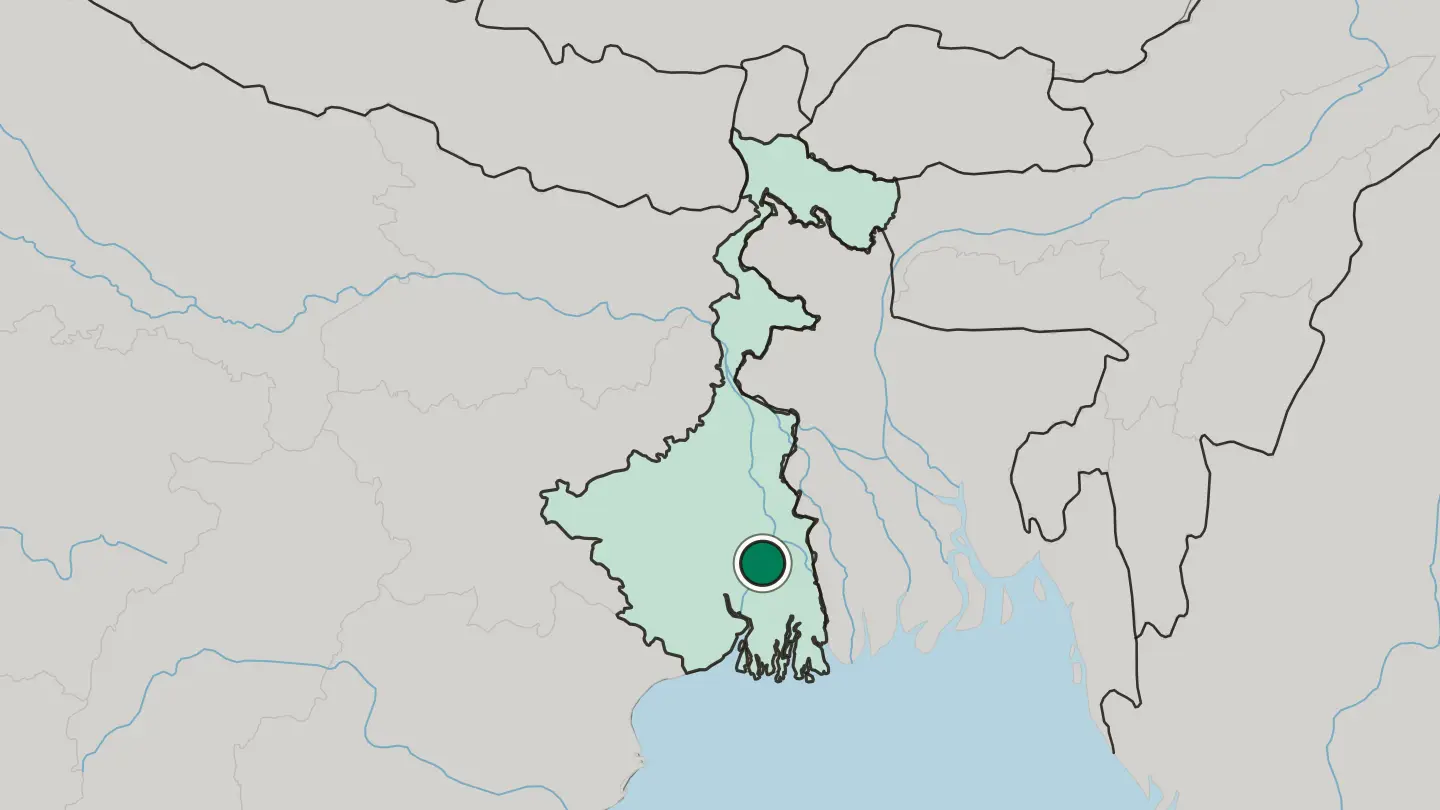
 India
India
Kharagpur
A railway and industrial city in West Bengal's Paschim Medinipur district, Kharagpur holds the oldest and biggest Indian Institute of Technology in India.Where to stay →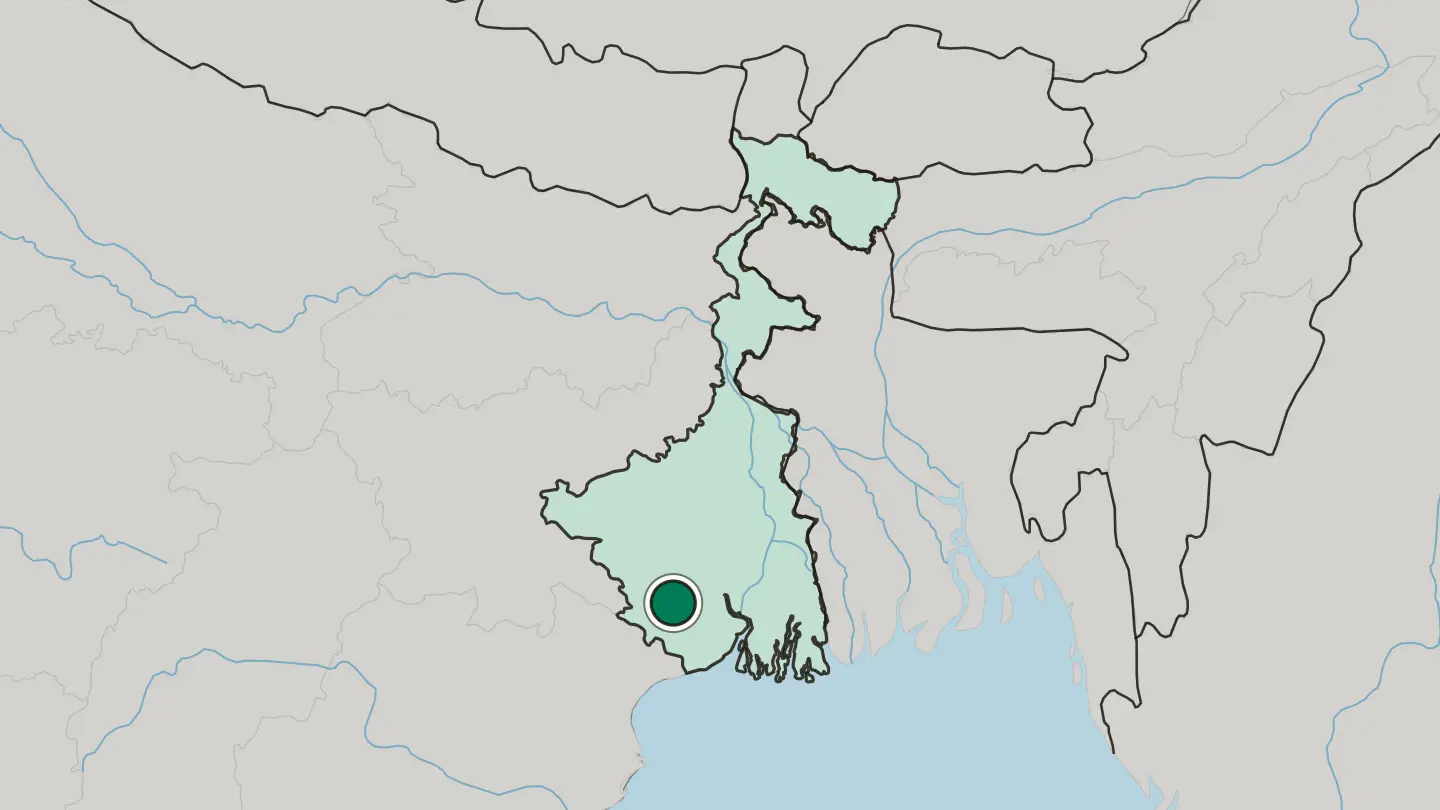
 India
India
Chandannagar
Chandannagar is an old French town on the Hooghly in West Bengal, India, a riverside colony of churches and mansions north of Kolkata.Where to stay →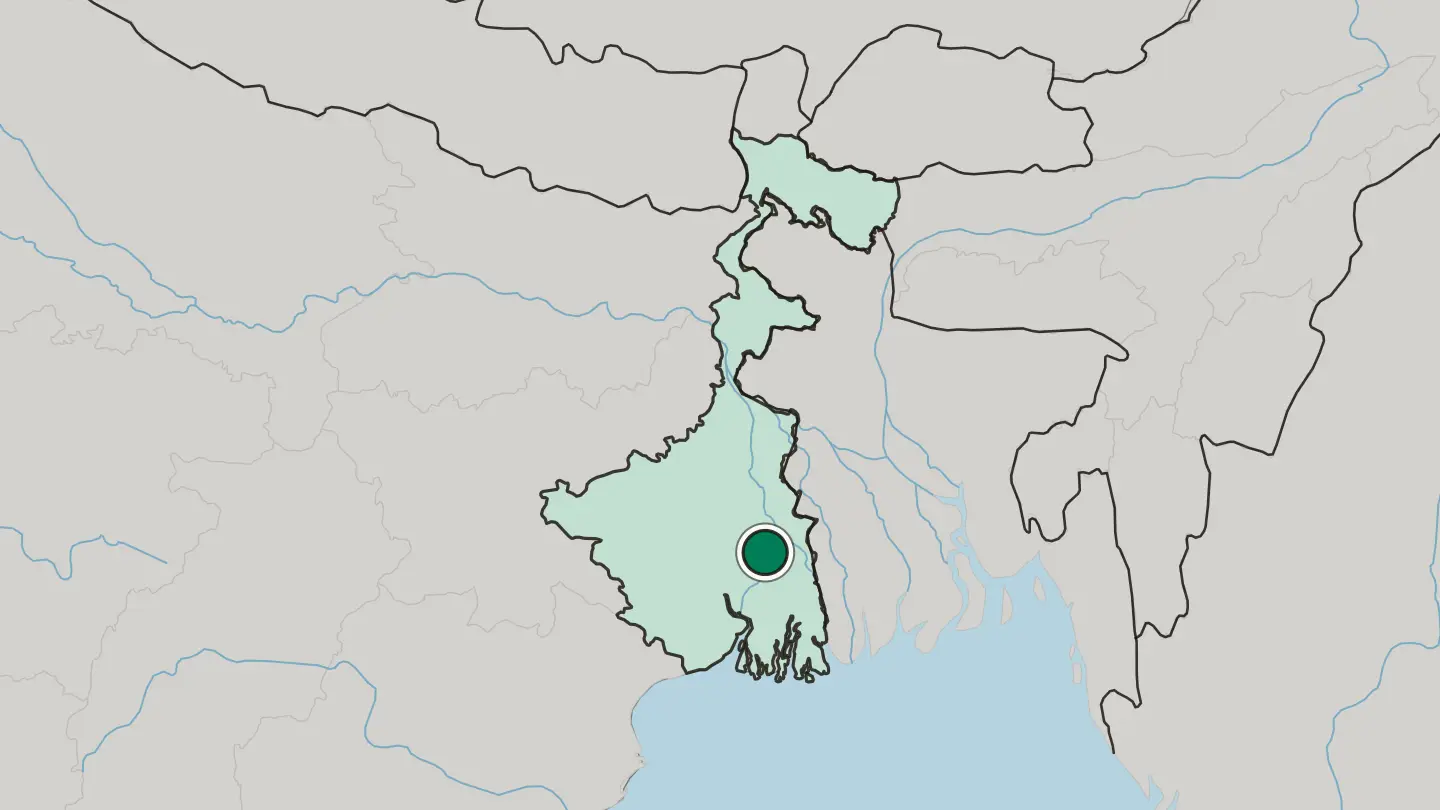
 India
India
Baharampur
Baharampur is a town on the Bhagirathi in West Bengal, India, an old British cantonment near Murshidabad, the lost capital of the Nawabs of Bengal.Where to stay →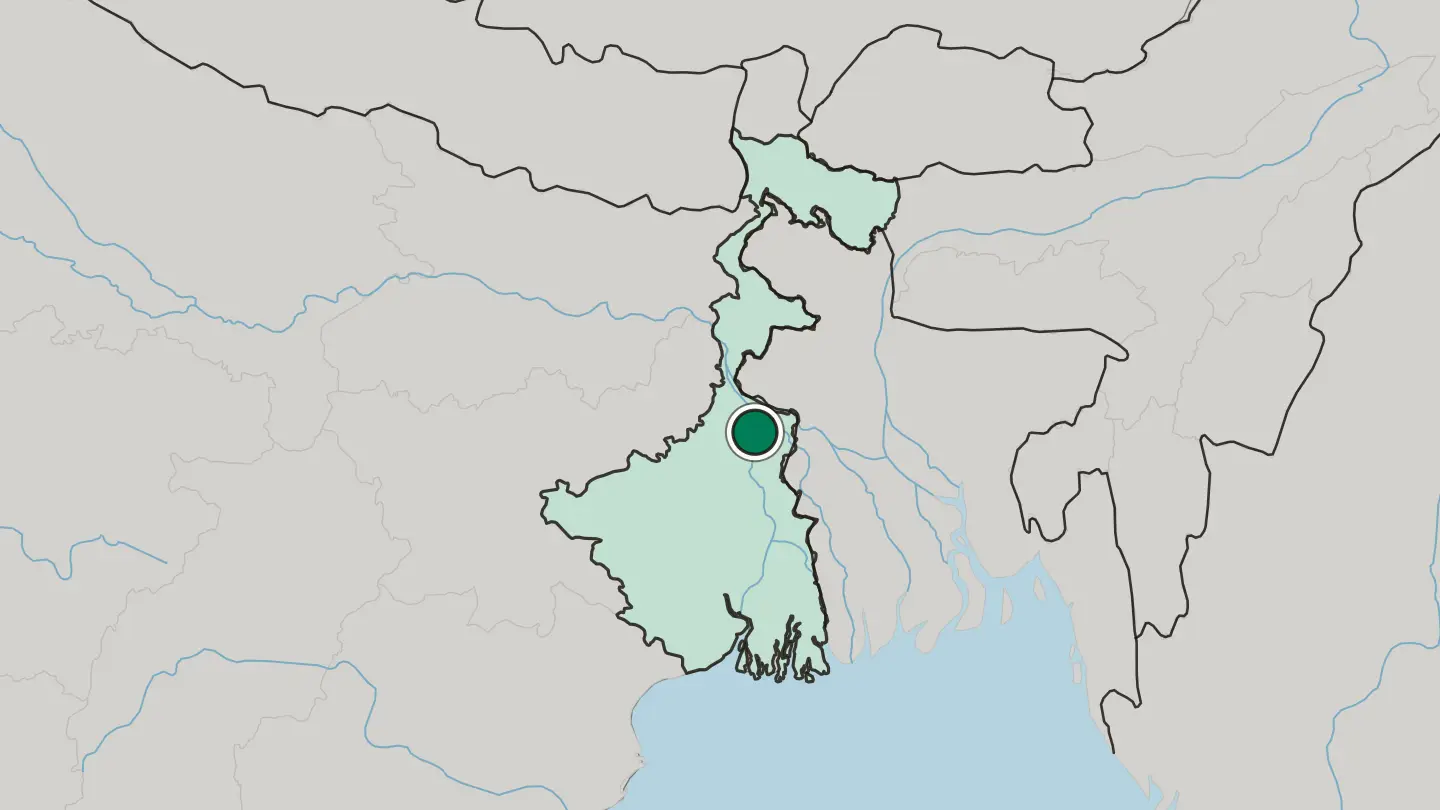
 India
India
Hugli
Hugli, or Hugli-Chuchura, stands on the bank of the Hooghly River, 35 km north of Kolkata, as headquarters of the Hooghly division.Where to stay →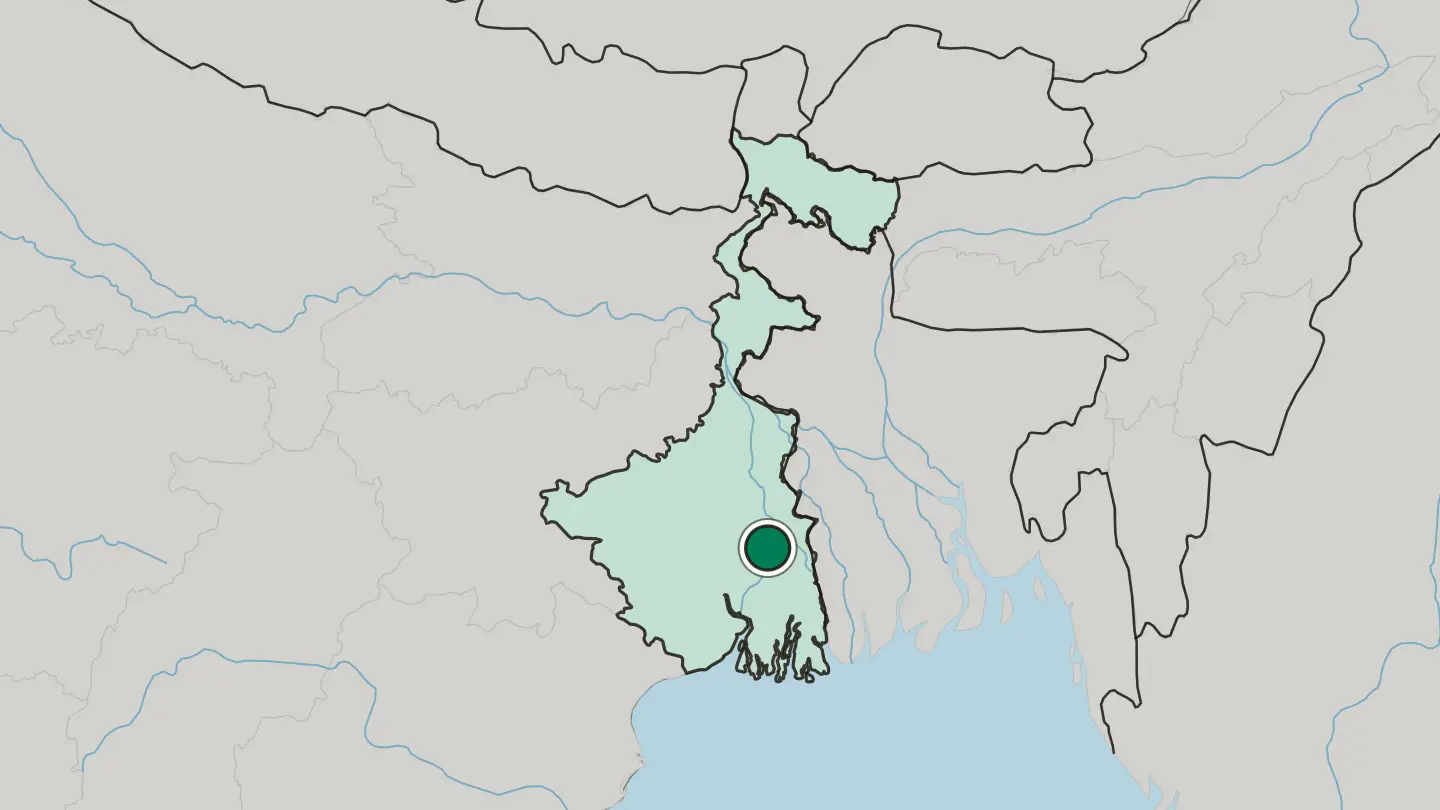
 India
India
Haldia
Haldia is an industrial port city of Purba Medinipur district in West Bengal, near where the Haldi River joins the Hooghly.Where to stay →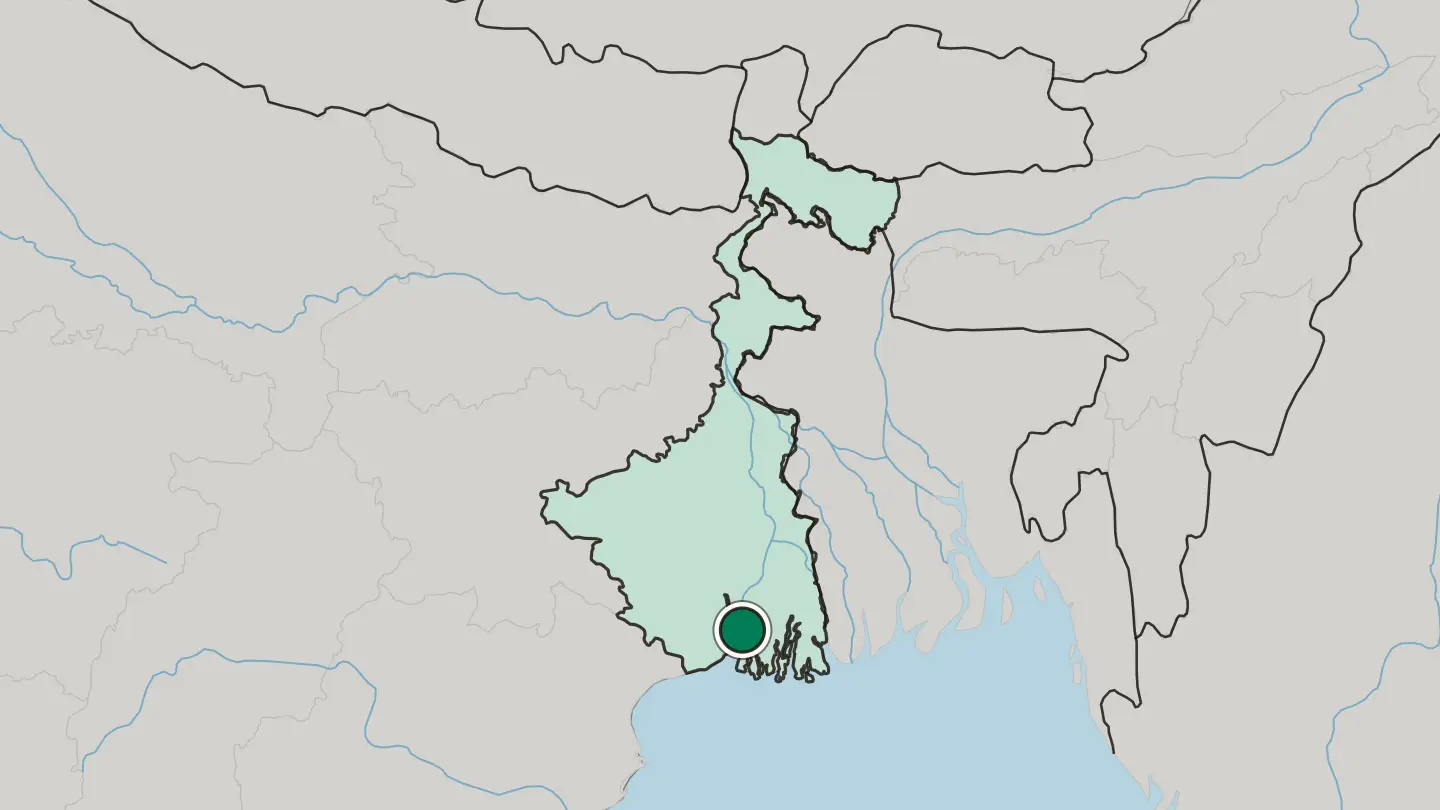 India
India
Rāiganj
Rāiganj stands on the Kulik River in West Bengal, headquarters of Uttar Dinajpur district and known for the bird sanctuary along the water.Where to stay →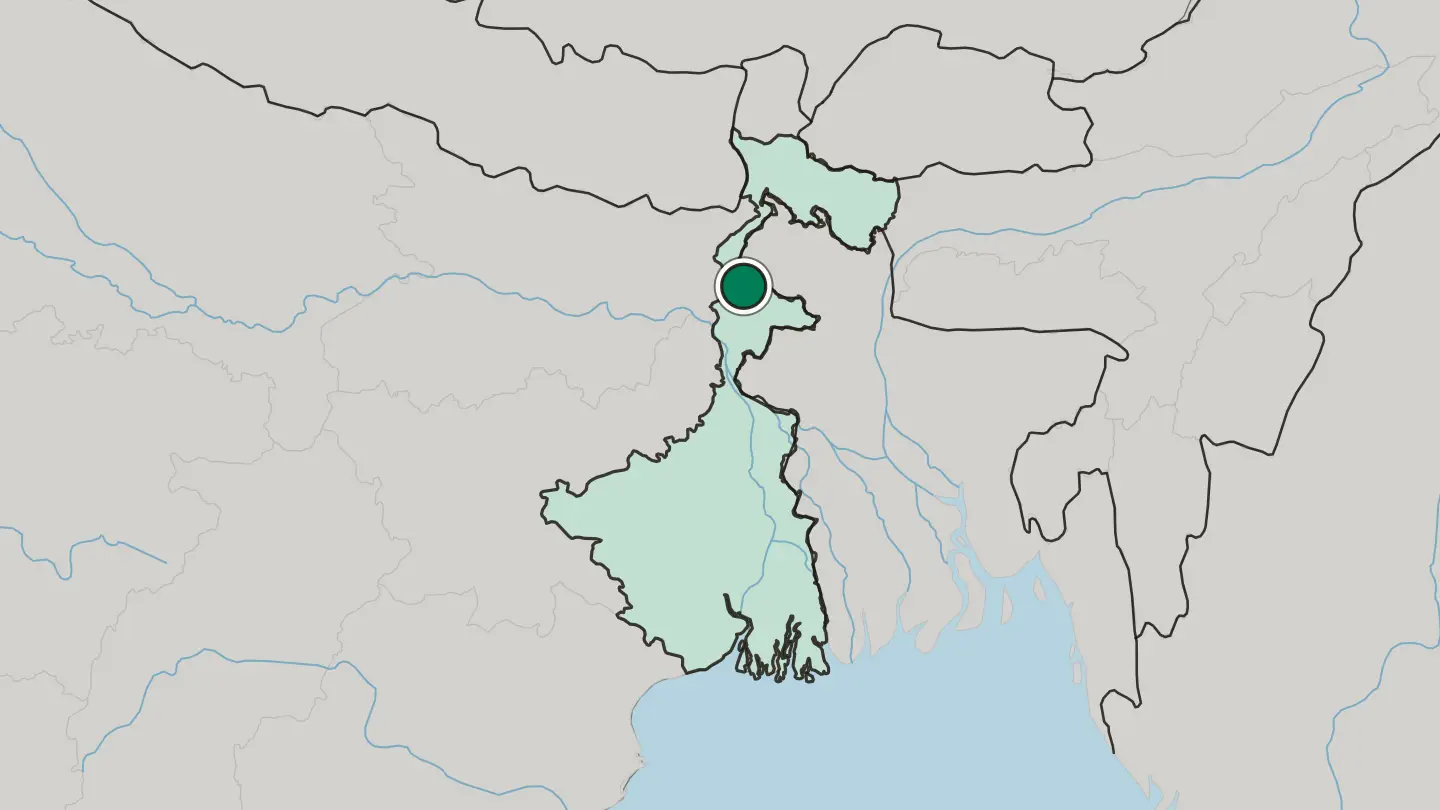 India
India
Malda
Malda, officially English Bazar, is a city on the Mahananda River in West Bengal, and the headquarters of Malda district and Malda division.Where to stay →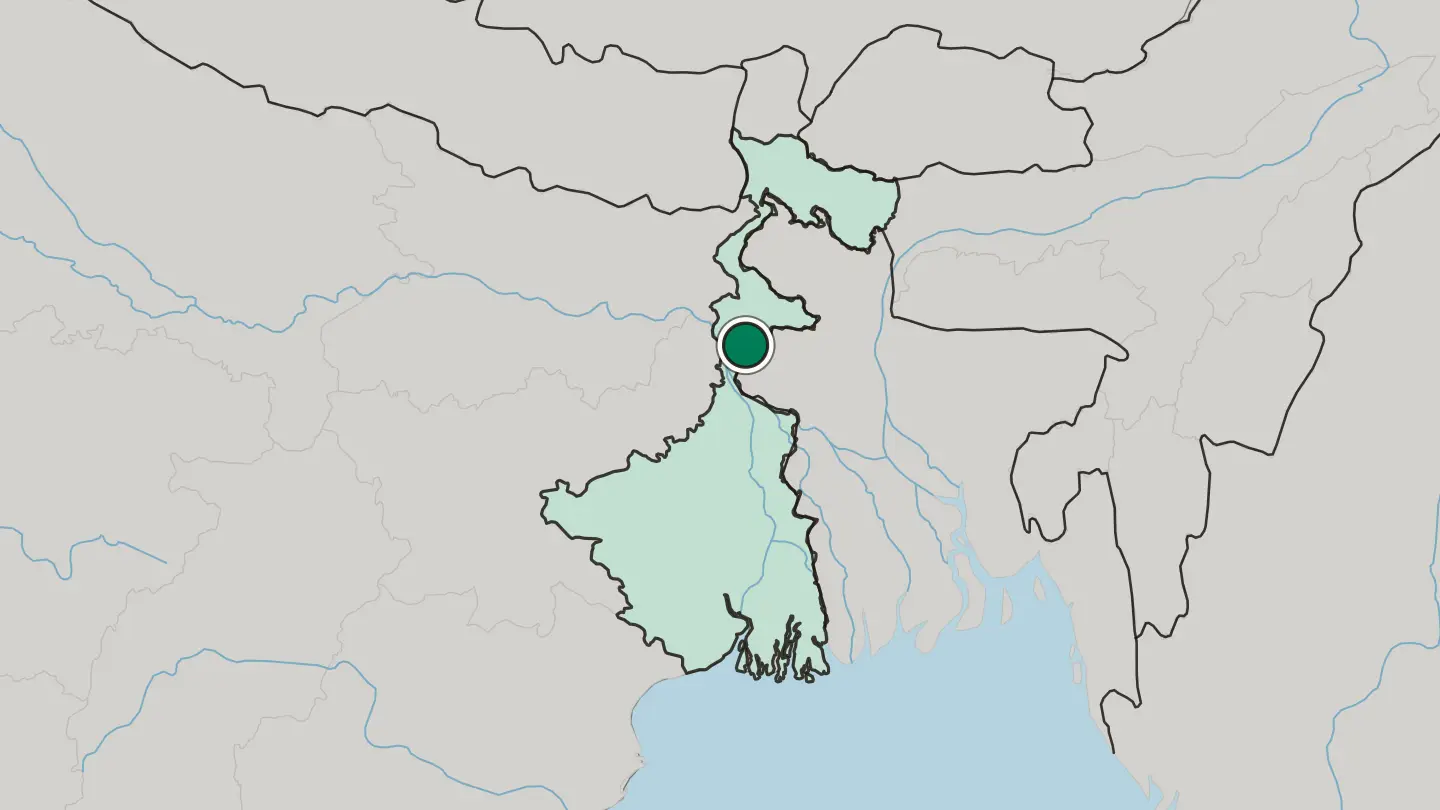
 India
India
Jaigaon
Jaigaon is a census town on the West Bengal side of the India-Bhutan border, where Bhutan Gate opens onto Phuentsholing.Where to stay →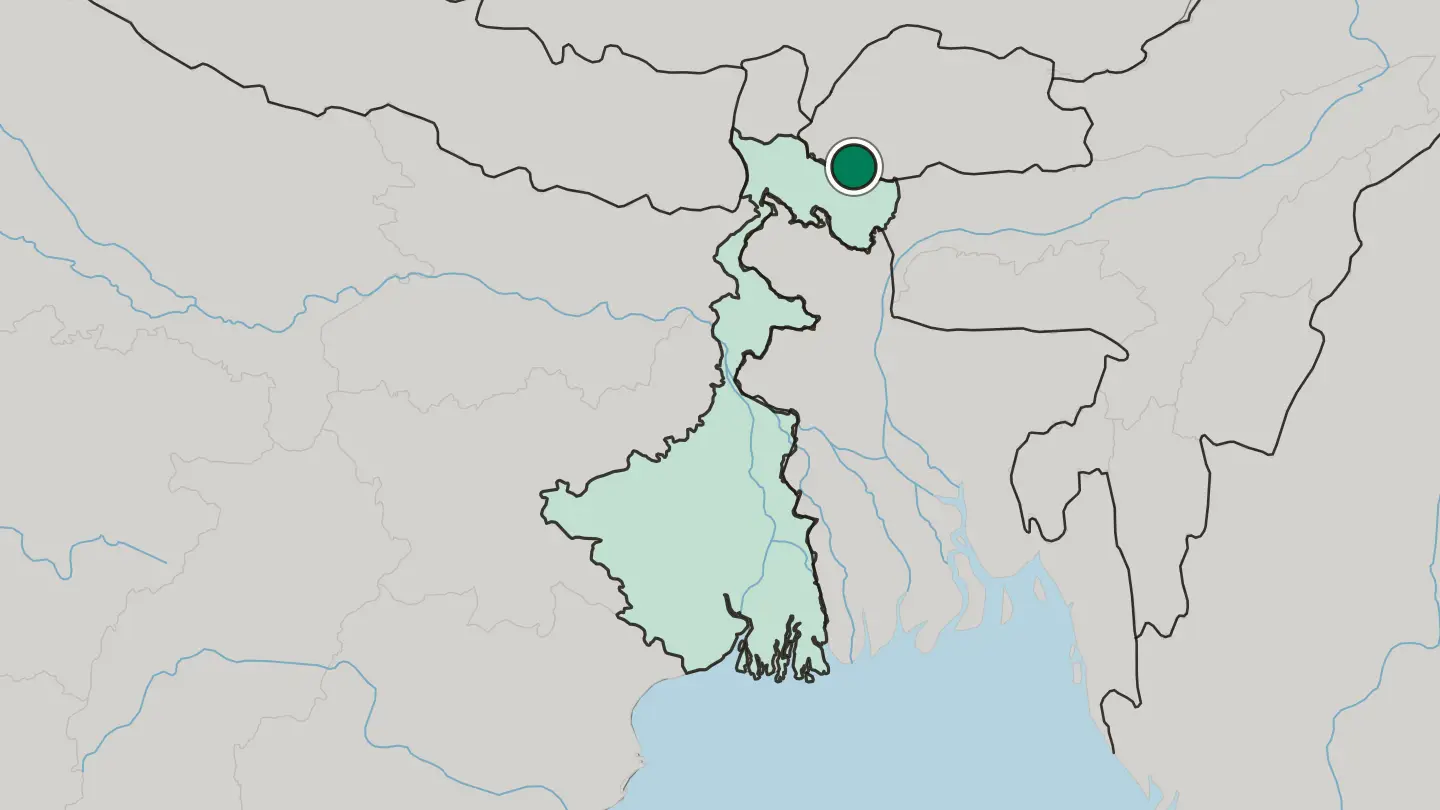 India
India
Medinīpur
Medinīpur, also written Midnapore, is a district headquarters on the Kangsabati River in West Bengal, a town known above all for its history.Where to stay →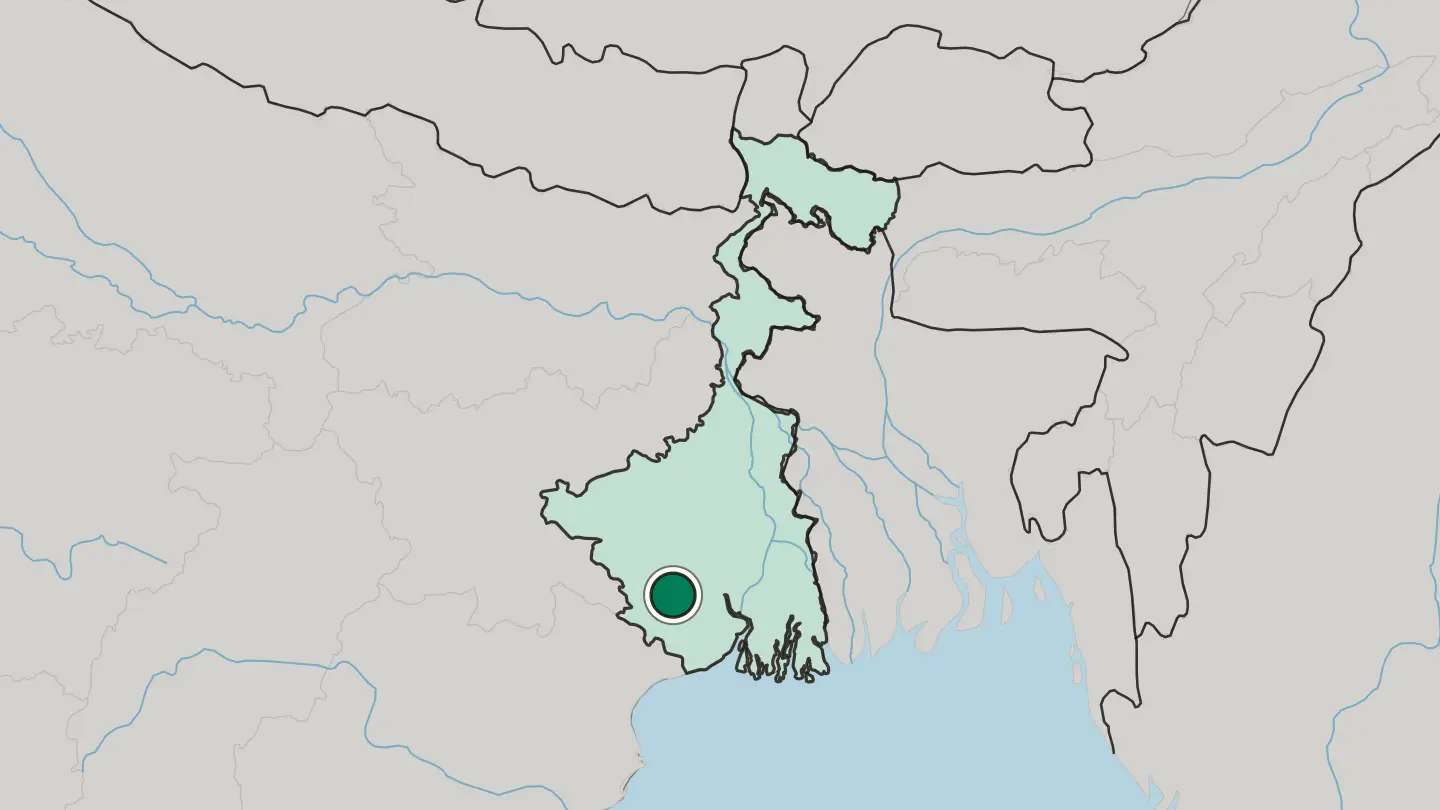
 India
India
Bārākpur
Bārākpur, also spelled Barrackpore, is a cantonment city in North 24 Parganas district of West Bengal, within the metropolitan area of Kolkata.Where to stay →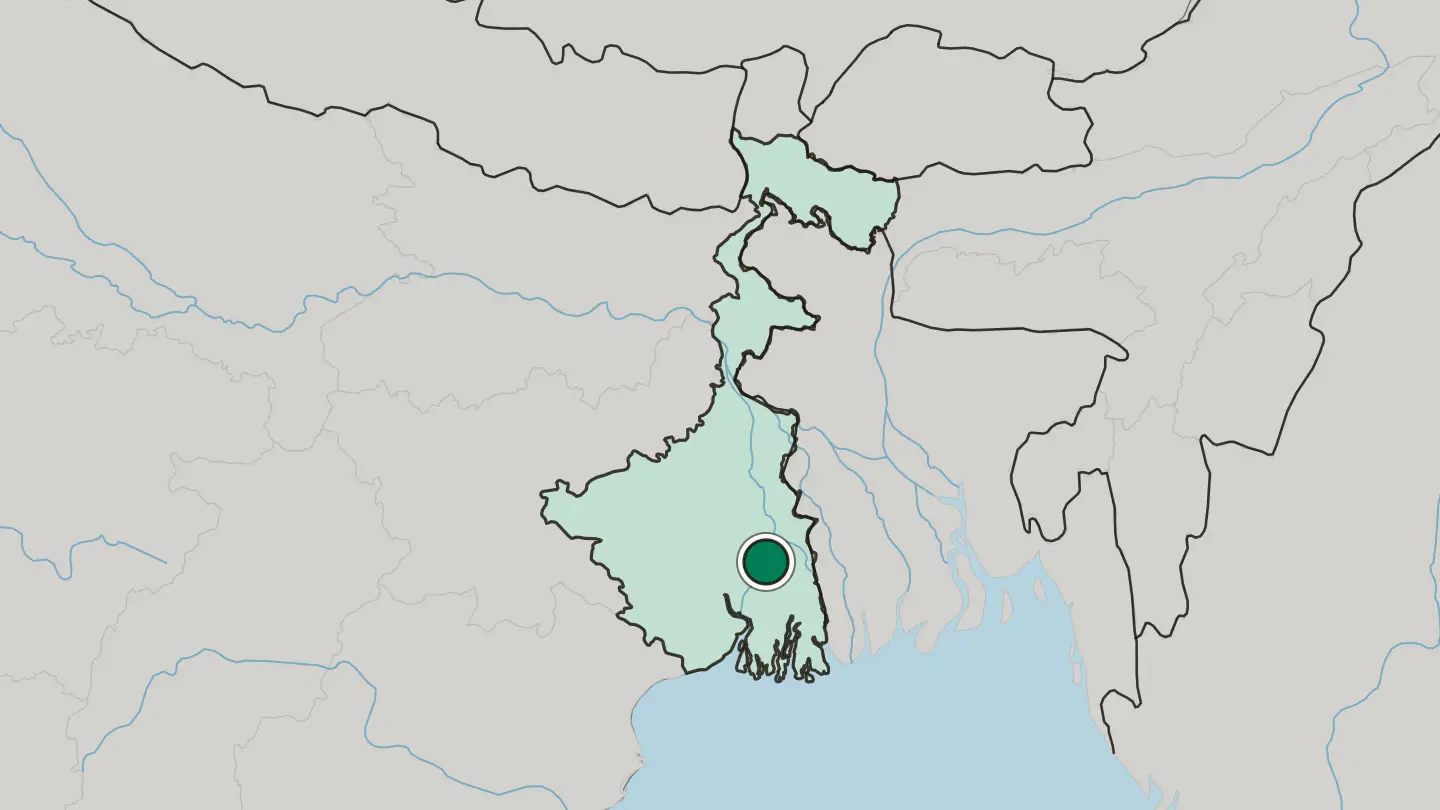
 India
India
Krishnanagar
Krishnanagar sits on the Jalangi River in the Nadia district of West Bengal, a centre for culture and literature and the district's administrative seat.Where to stay →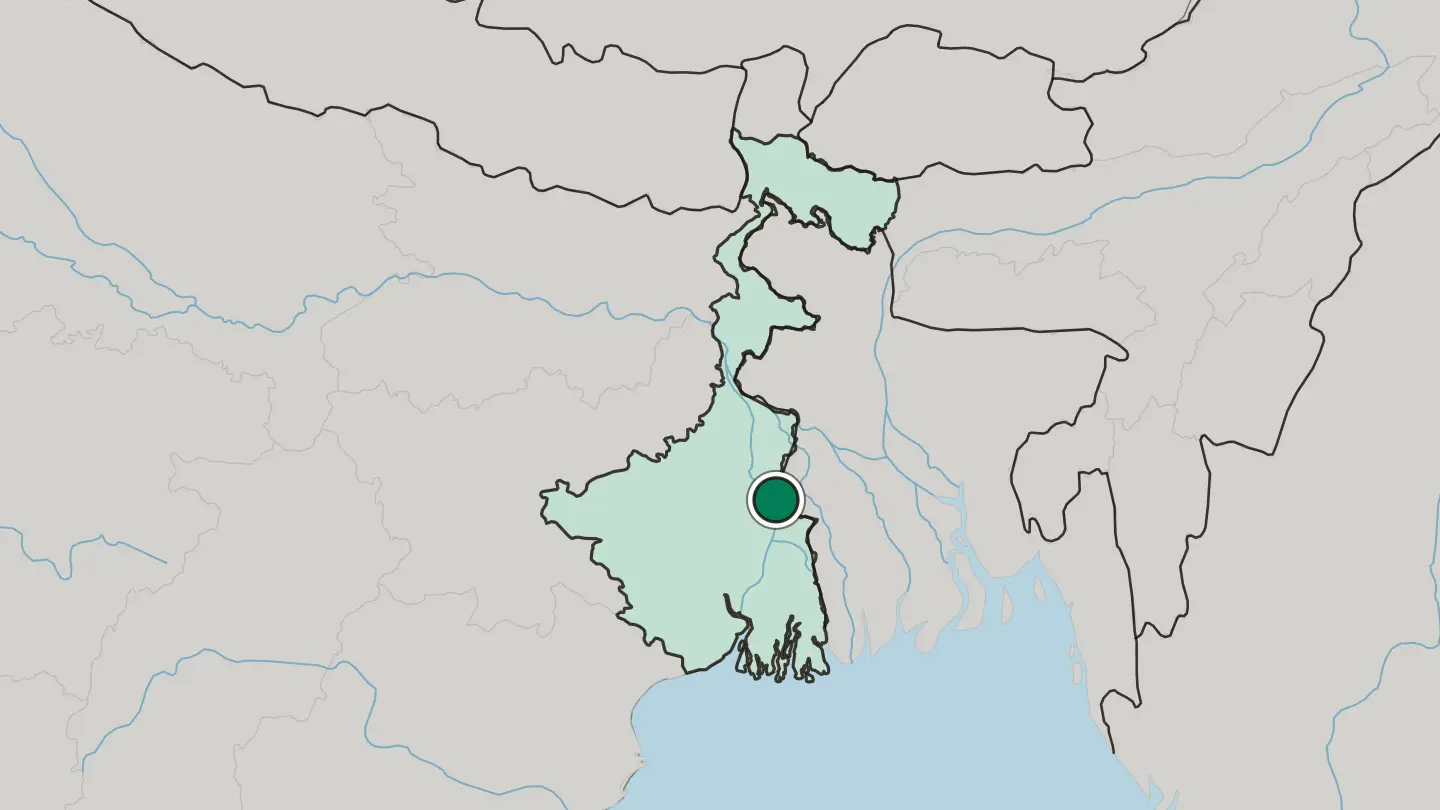 India
India
Bānkura
Bānkura heads its own district in the Rarh belt of West Bengal, a terracotta town on the Dwarkeswar River within reach of Susunia Hill.Where to stay →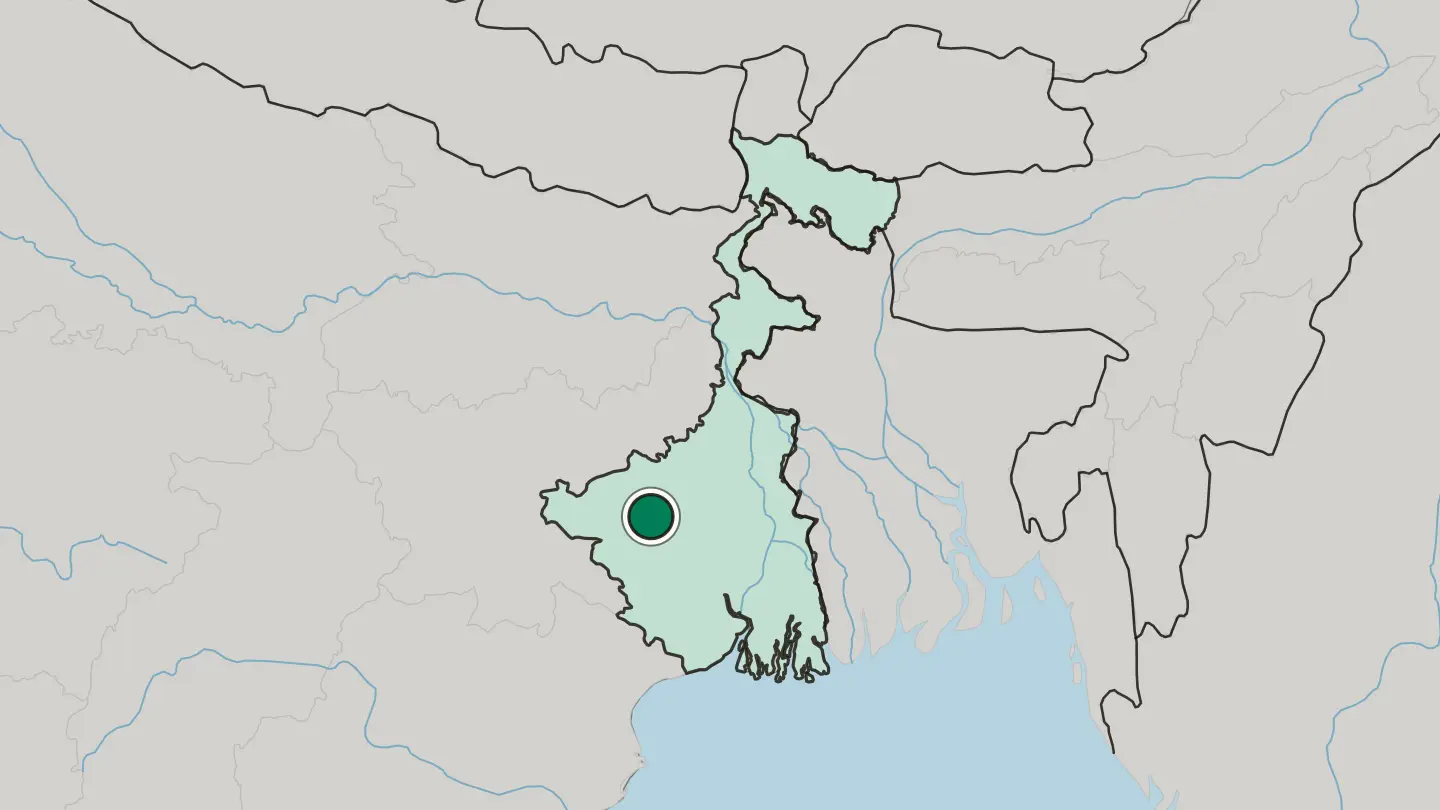
 India
India
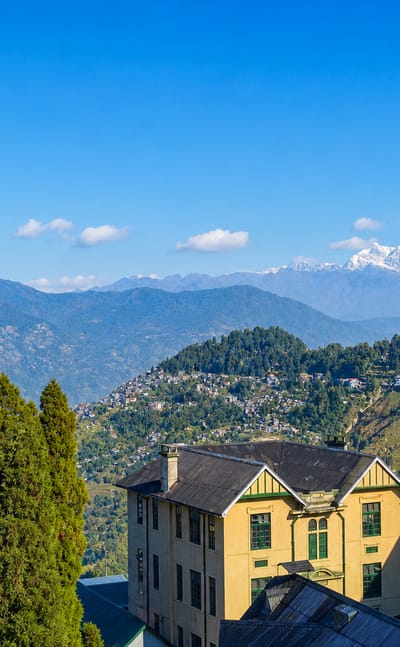
Dārjiling
Kangchenjunga rises north of Dārjiling, a Himalayan hill station in West Bengal known for tea, the Darjeeling Himalayan Railway, and Chowrasta square.Where to stay →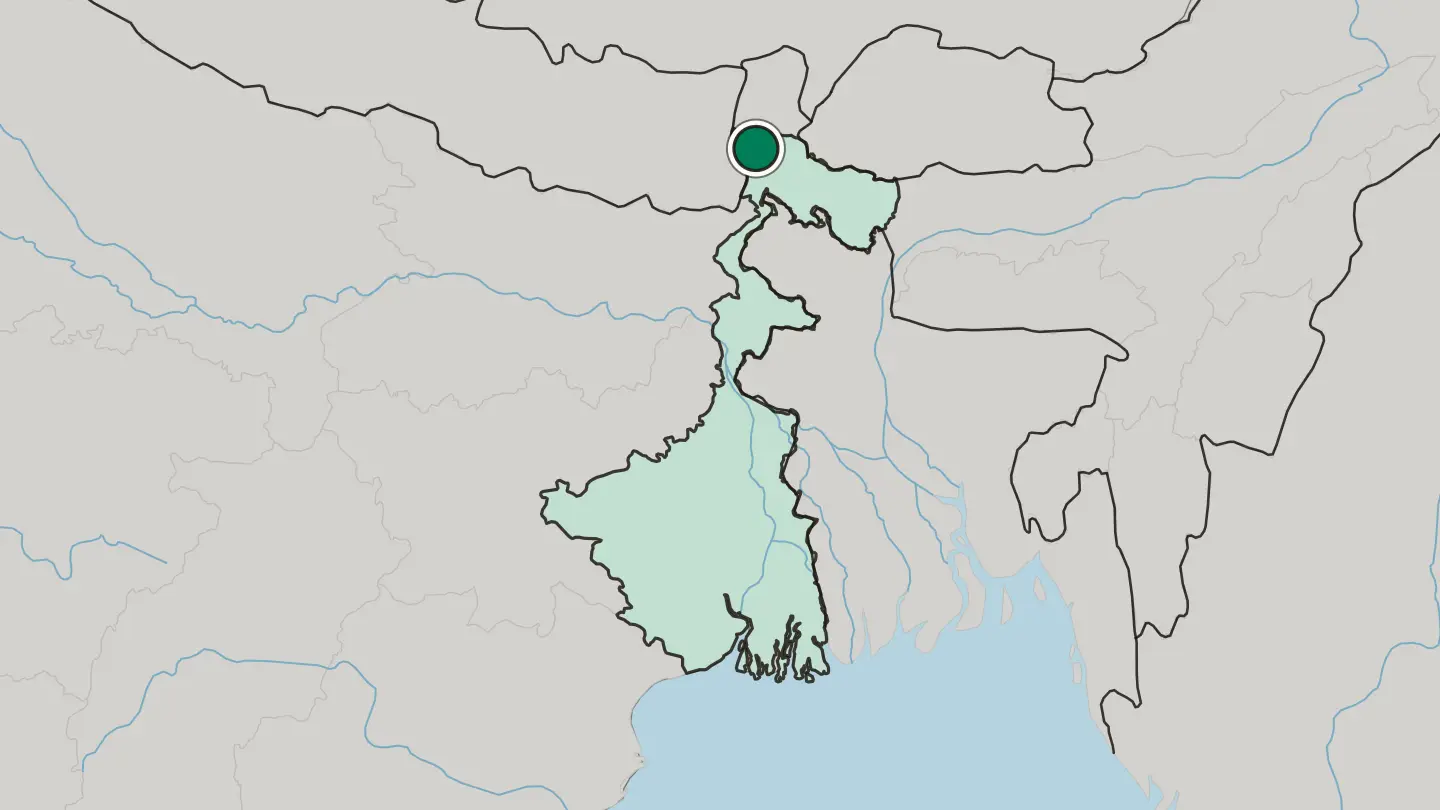
 India
India
Dam Dam
Dam Dam, written Dum Dum in most sources, is a municipality in the Kolkata Metropolitan Area and the site of Kolkata Airport.Where to stay →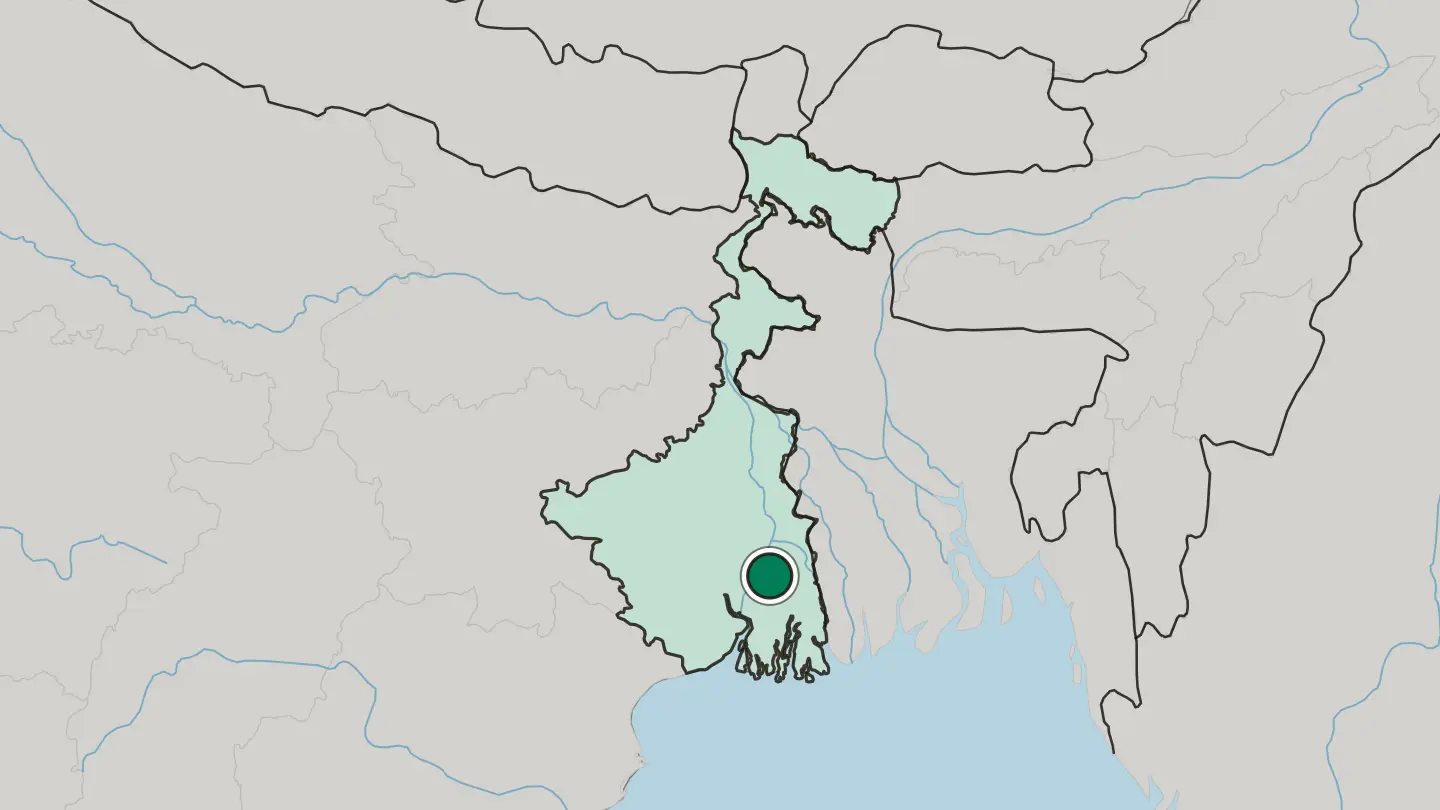
 India
India
Navadwīp
Navadwīp is a holy city on the Ganges in West Bengal, India, revered as the birthplace of the saint Chaitanya.Where to stay →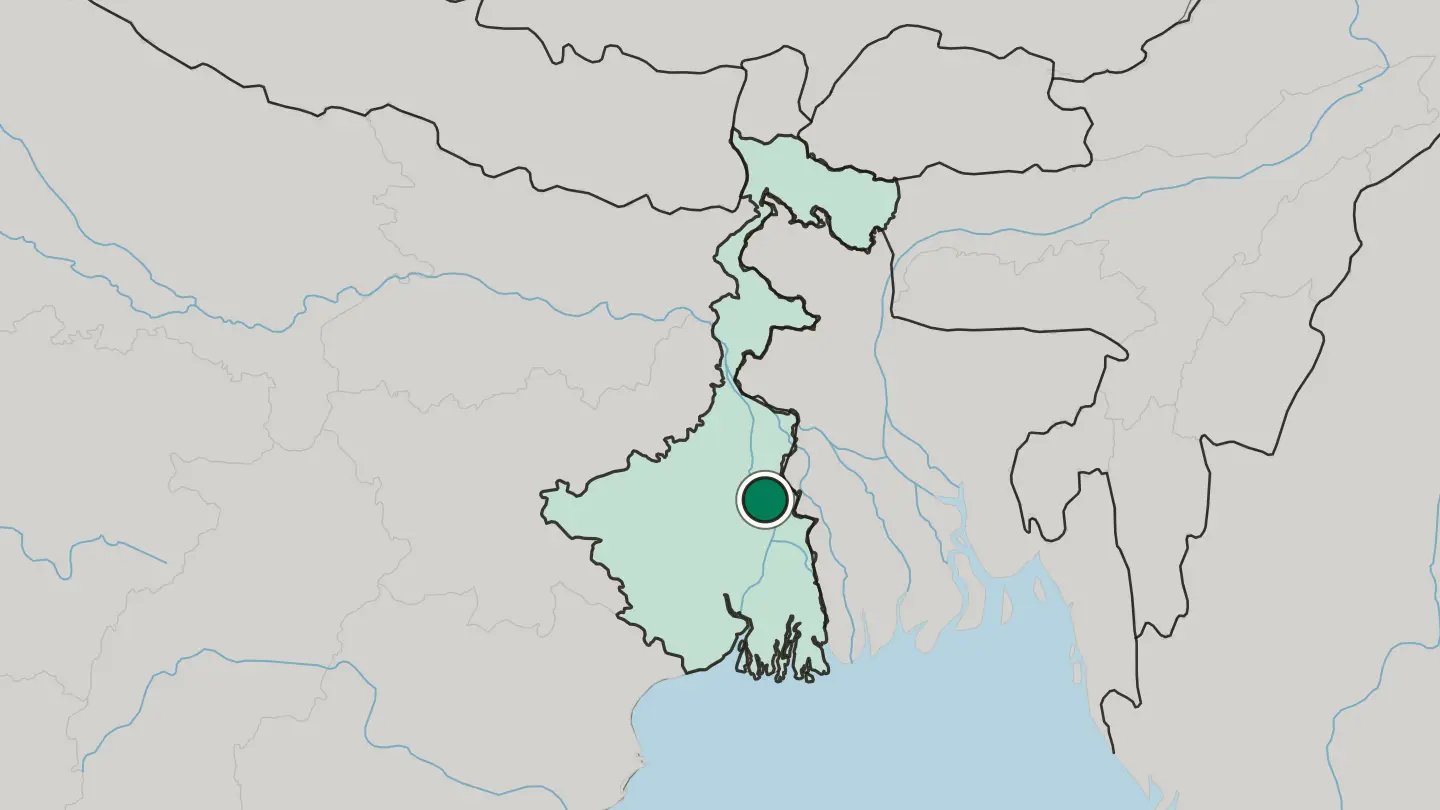
 India
India
Jalpāiguri
Jalpāiguri is a city on the Teesta River in North Bengal, headquarters of the Jalpaiguri district and of the Jalpaiguri division.Where to stay →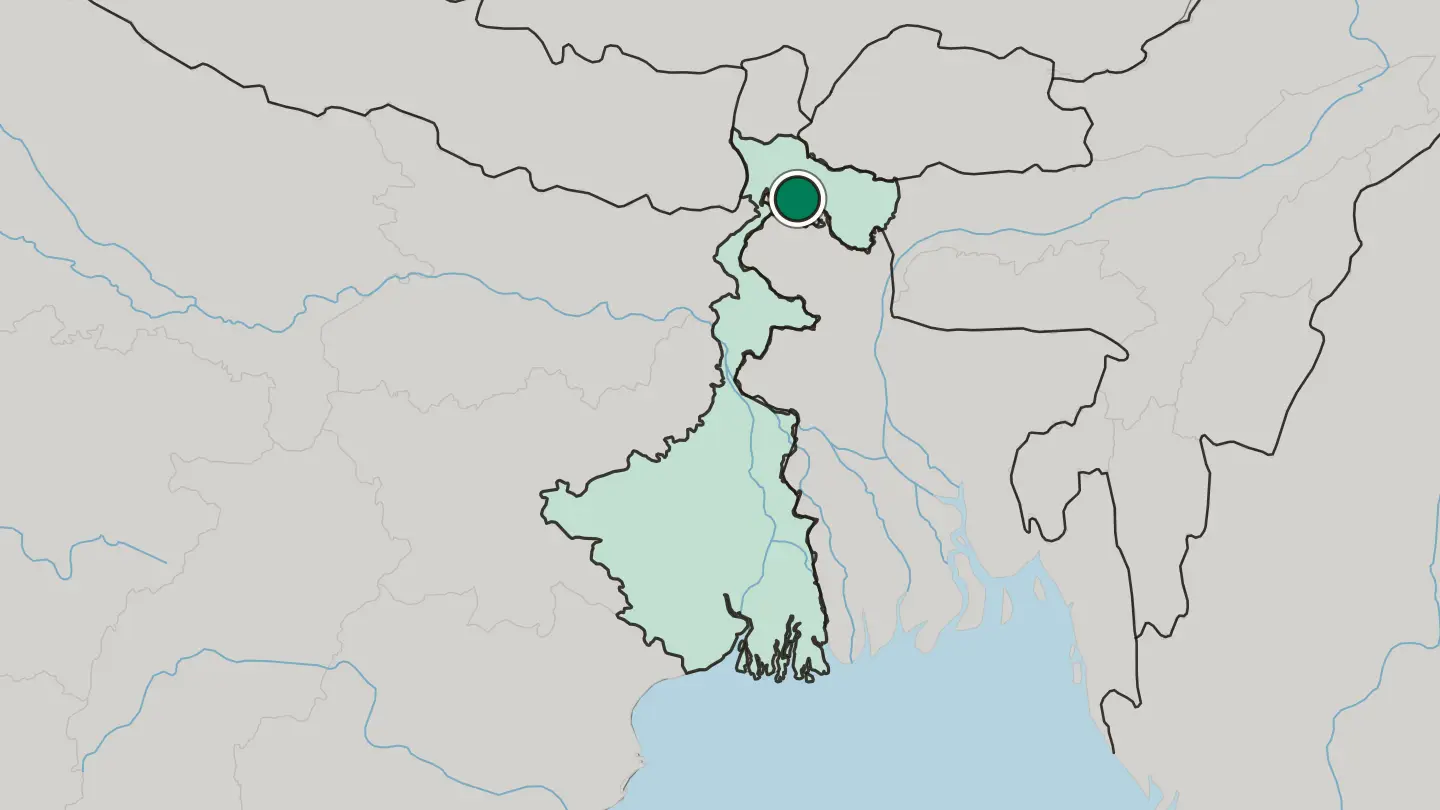
 India
India
Kalyani
Kalyani is a planned township in the Nadia district of West Bengal, headquarters of the Kalyani subdivision within the Presidency division.Where to stay →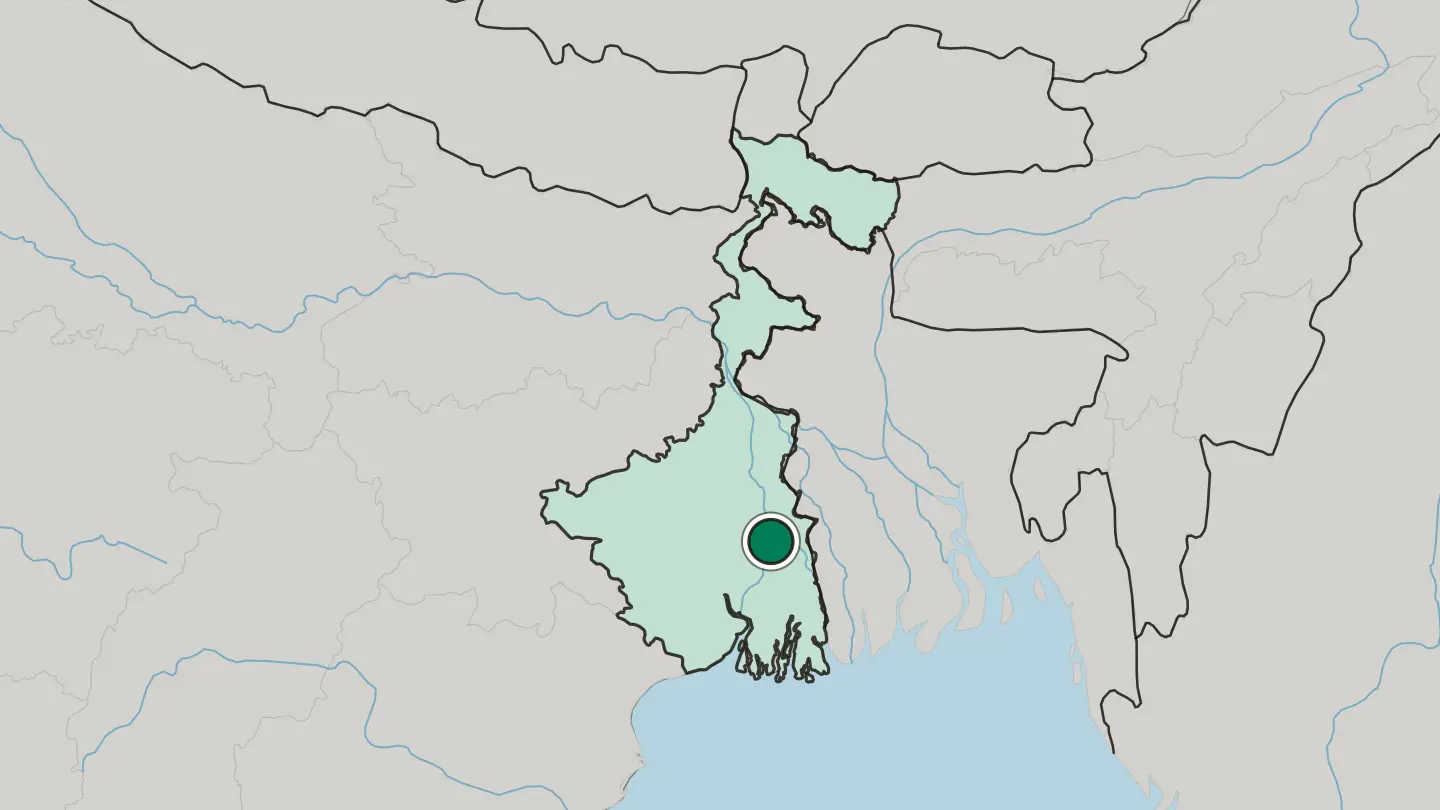
 India
India
Koch Bihār
Koch Bihār stands on the Torsa river in West Bengal, a planned town built around the palace of the princely state of Cooch Behar.Where to stay →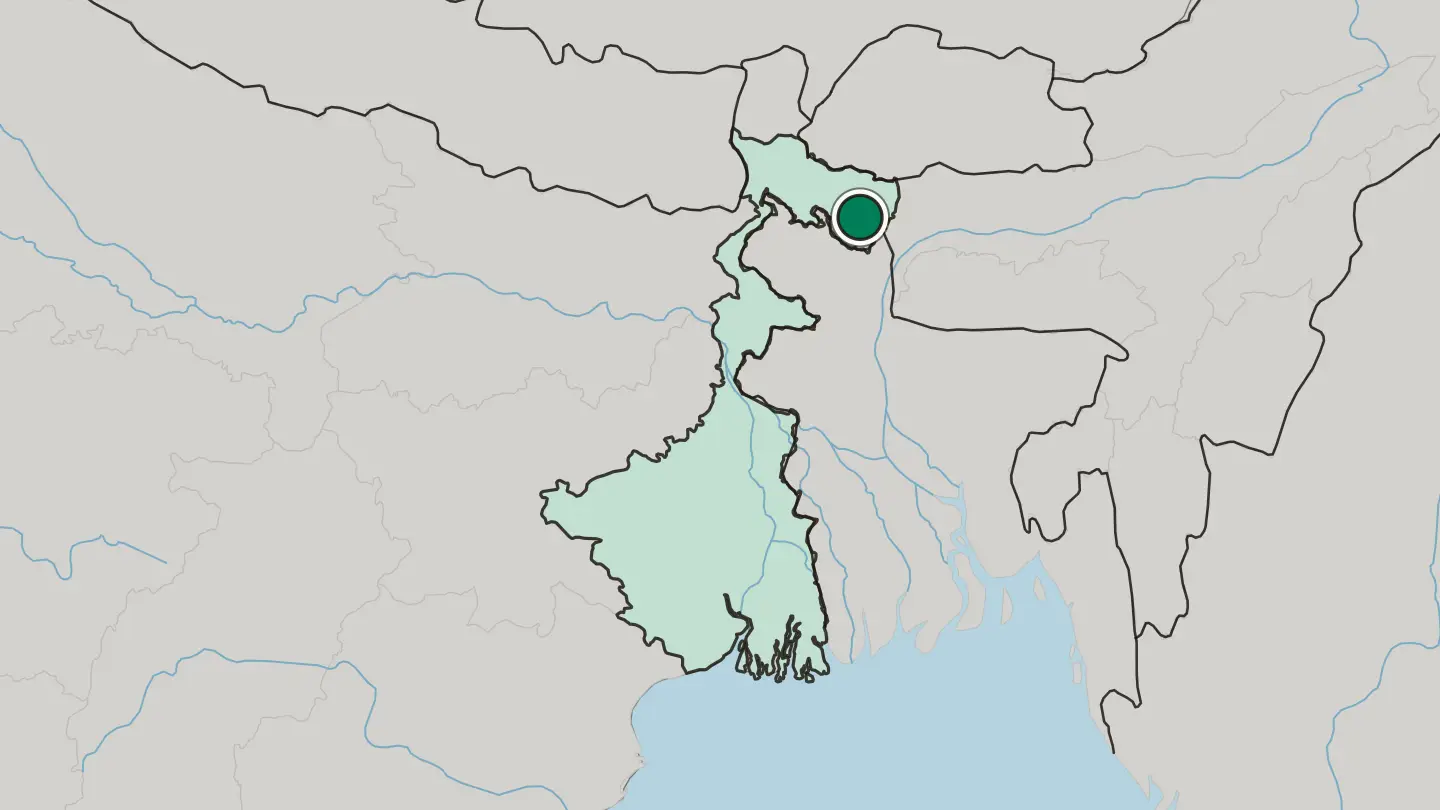 India
India
Alīpur Duār
Alīpur Duār stands on the east bank of the Kaljani River, in the Western Dooars of North Bengal, below the foothills of the Himalayas.Where to stay →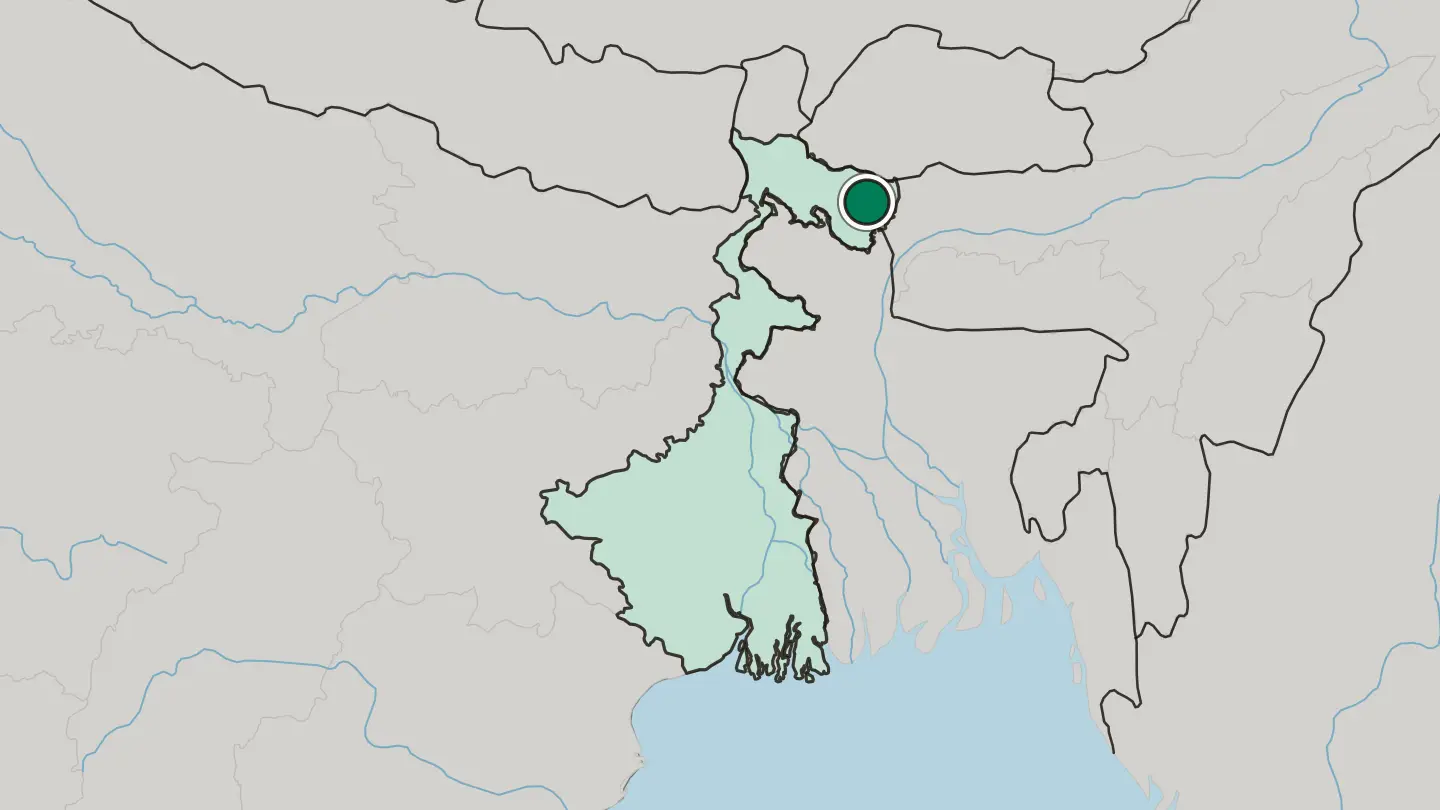 India
India
Bishnupur
Bishnupur is a historic temple town on the plains of West Bengal, India, famed for its terracotta temples.Where to stay →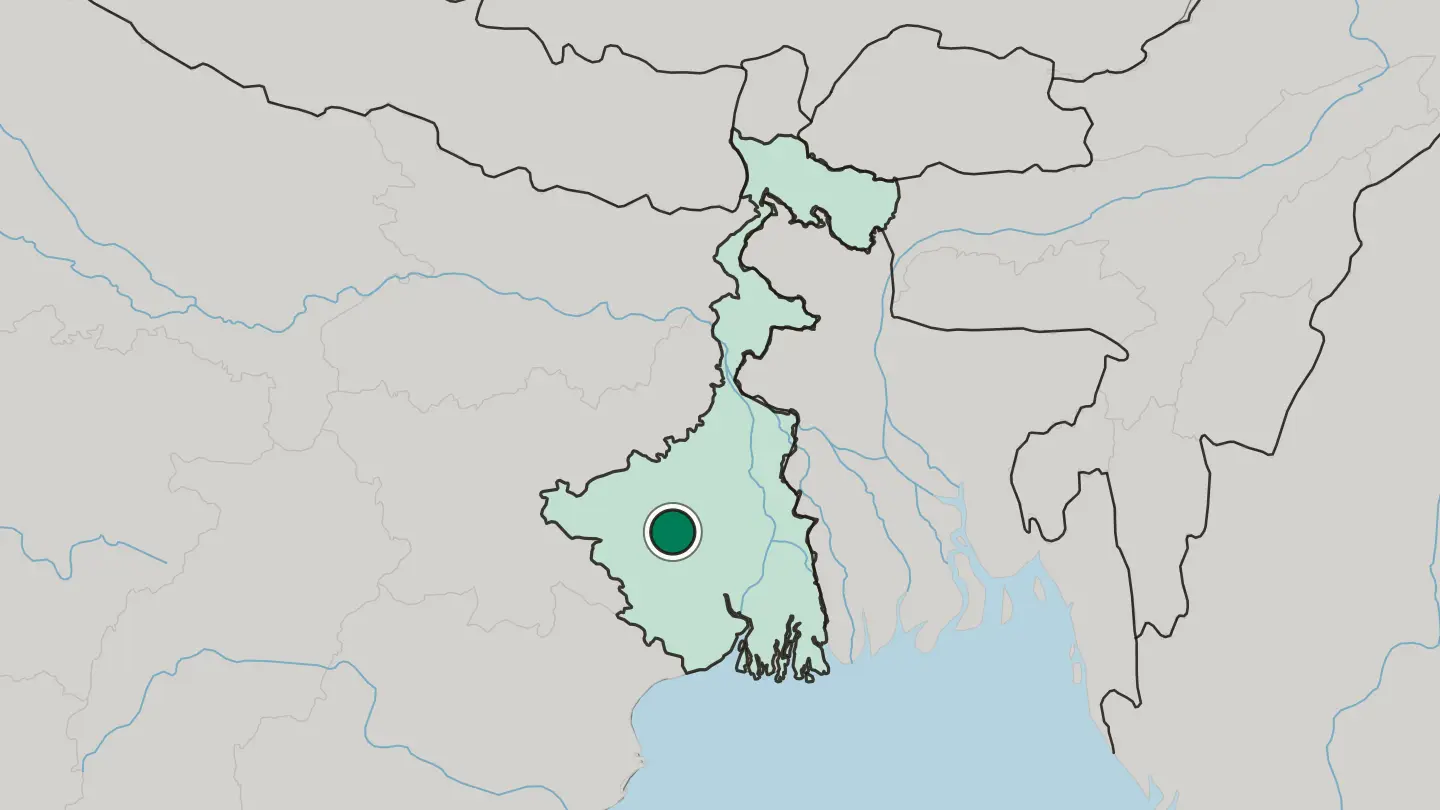 India
India
Naksalbāri
Naksalbāri is a village of the Terai in Darjeeling district, West Bengal, known as the site of a peasant uprising in 1967.Where to stay →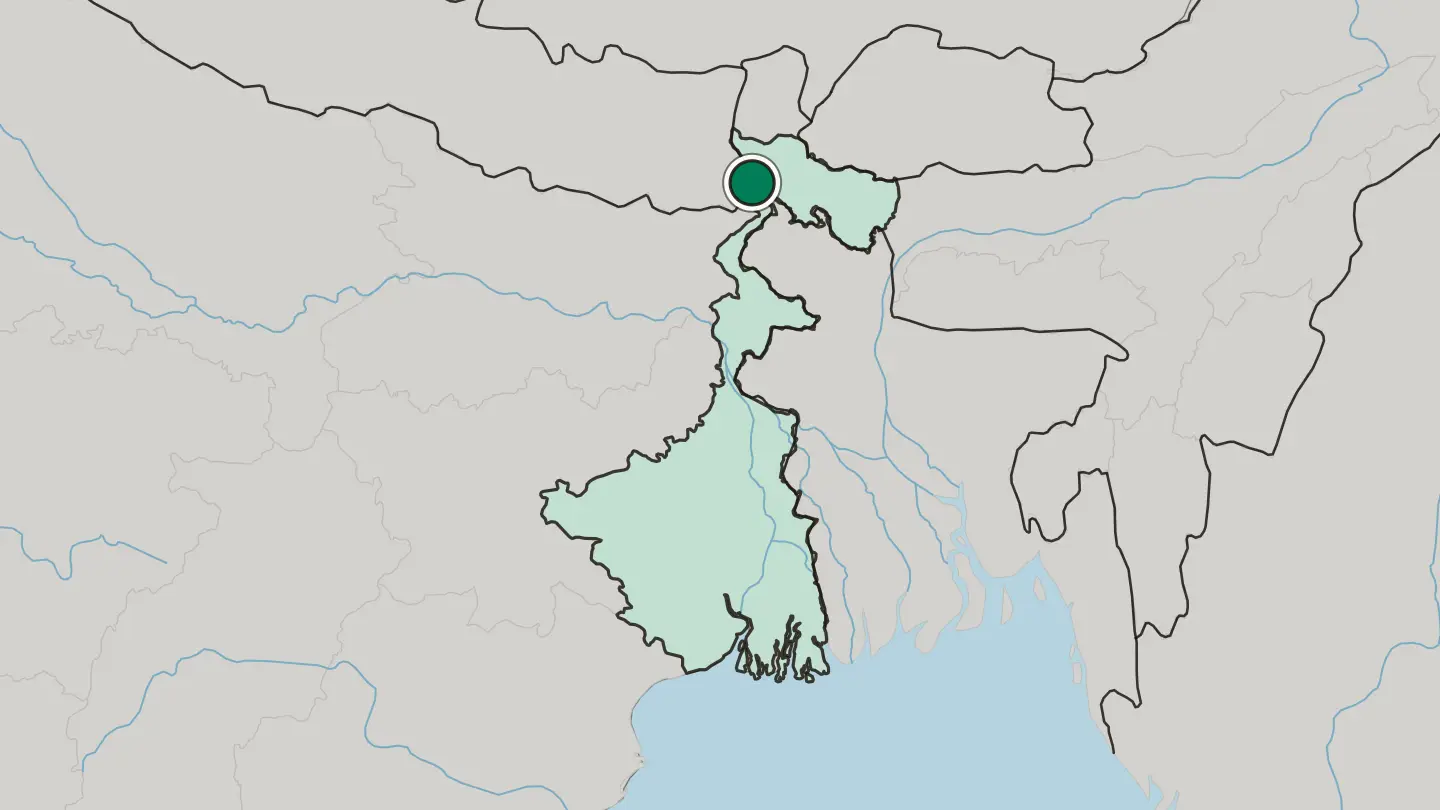
Hotel links are affiliate links: booking through them may earn us a commission, at no extra cost to you. It never affects how places are ranked. How this works
About West Bengal
What is West Bengal known for?
This is the one Indian state with both snow peaks and sea beaches. Kolkata anchors the south, the state capital and the old capital of British India, still its centre of art, letters, and street food. North of the plains, the tea gardens of Darjeeling climb toward the eastern Himalayas, where the Darjeeling Himalayan Railway winds up to the town.
The Sundarbans spread across the seaward delta, the largest mangrove forest on earth and home to the Bengal tiger. Durga Puja fills the autumn calendar. Nothing else in Bengal draws crowds quite like it.
Where is West Bengal?
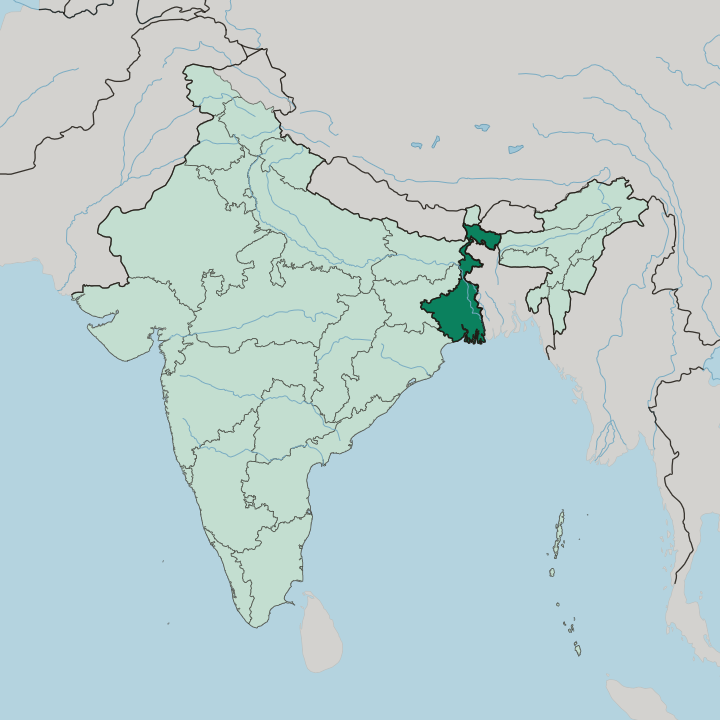
West Bengal occupies the eastern neck of India, a long state that tapers between the Himalayas and the sea. It runs north to south. In the far north the land rises into the eastern Himalayas around Darjeeling, where Sandakphu reaches 3,636 metres, the highest ground in the whole of the state.
A narrow belt of forest and floodplain, the Terai and the Dooars, divides those hills from the North Bengal plains. Then the country flattens. Southward it spreads into the Ganges delta, the largest river delta in the world, laced with distributaries that fan out toward the Bay of Bengal.
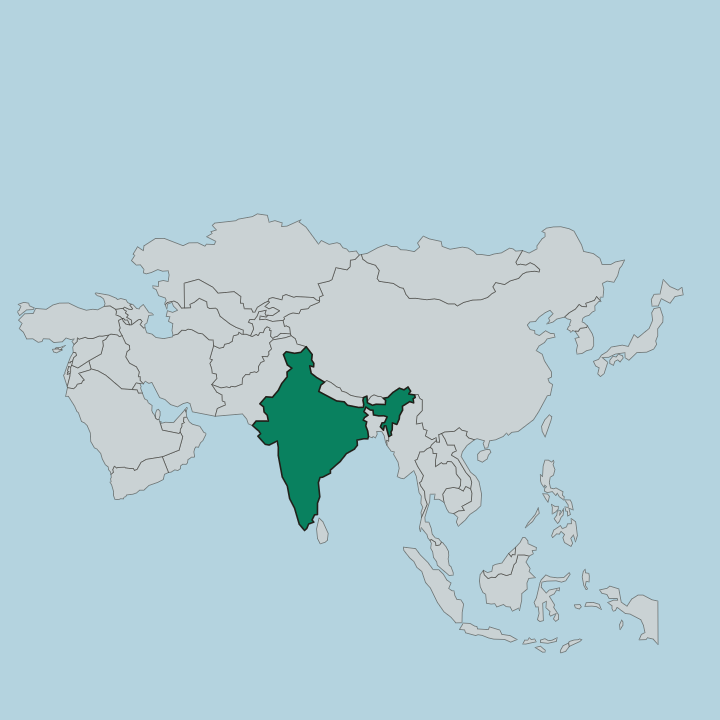
The Ganges enters from the west, and its main branch, the Hooghly River, runs south past Kolkata to the sea. Where the delta reaches the bay, the Sundarbans mangroves stretch across a chain of low tidal islands. Bangladesh lines the entire eastern border, sharing the same delta and rivers. Nepal, Sikkim, and Bhutan edge the northern hills; Assam sits to the northeast; Odisha, Jharkhand, and Bihar run down the west.
Snow peaks north, sea beaches south. This is the only Indian state that holds both, and that reach from mountain to mangrove shapes everything about the place.
What is West Bengal like?
Bengal thinks of itself as a land of poets and arguments, and that self-image is earned. Its official language is Bengali, a tongue with a literature that runs from the medieval Charyapada through Rabindranath Tagore, the first non-European to win the Nobel Prize in Literature. Kolkata carried the nineteenth-century flowering known as the Bengal Renaissance, when Western learning met Bengali letters and reshaped both.
Music runs wide here. Rabindrasangeet fills concert halls while the wandering Baul singers work the villages, and the Chhau dancers of Purulia leap in painted masks. Durga Puja is the great festival.
For a few days each autumn the whole state turns into an open-air gallery of temporary pavilions, the pandals, built and lit and then let go. Food is taken seriously and argued over. River fish cooked in mustard, and sweets made of curdled milk, run to the core of what Bengalis eat.
English is widely spoken alongside Bengali, a legacy of the colonial capital. The culture belongs as much to the delta villages as to the city.
What is the history of West Bengal?
The state was born in 1947. When British India was partitioned that year, the old province of Bengal was split along religious lines: the Hindu-majority west became this Indian state, and the Muslim-majority east became East Pakistan, later Bangladesh. Before that Kolkata had served as the capital of British India until 1911, and the region drove much of the Indian independence movement.
Partition sent millions of refugees across the new border into West Bengal in the years that followed. One province became two countries, and the river delta they share still ties them together.
What is the climate of West Bengal?
West Bengal has five seasons, not four. Most of the state runs hot and tropical, ruled by the monsoon that breaks in June and pours the year's rain through the summer. Winters on the plains are mild and dry, cool enough to be the pleasant time to travel.
The Ganges delta around Kolkata turns humid and heavy in the wet months, and the low ground floods easily. Up in the Darjeeling hills the pattern flips: the eastern Himalayas stay cool through the year and take snow in the coldest weeks. Come between October and March.
How do you get to West Bengal?
Most visitors arrive through Kolkata. Netaji Subhas Chandra Bose International Airport is the main gateway, linking the state capital to the rest of India and to cities abroad. For the northern hills, travellers fly into Bagdogra near Siliguri, then climb by road toward Darjeeling.
Kolkata is also one of India's great railway hubs. Long-distance trains reach it from across the country, and inside the state road and rail thread the Ganges plain between the city, the delta, and the mountains.
Common questions
What is the best area to stay in West Bengal?
Kolkata: an introduction to West Bengal. Darjeeling and the northern hills: tea country and mountain air. The Sundarbans: mangroves and tiger country. Digha and the bay coast: the sea coast.
Good for
More regions in India
Updated October 2026