India
State of Odisha, India — Towns & Travel Guide
Odisha is an eastern Indian state on the Bay of Bengal, temple country where the Mahanadi's six-river delta meets the sea.
Hotel links are affiliate links: booking through them may earn us a commission, at no extra cost to you. It never affects how places are ranked. How this works


Towns & cities in State of Odisha
Pick a town or city — each links to where to stay.
 India
India
Bhubaneswar
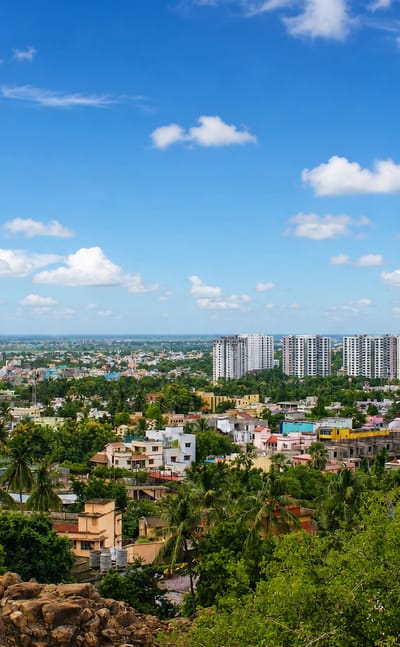
Sandstone spires rise over Bhubaneswar, capital of Odisha on the River Kuakhai, known for the Lingaraja Temple and its Kalinga stonework.Where to stay →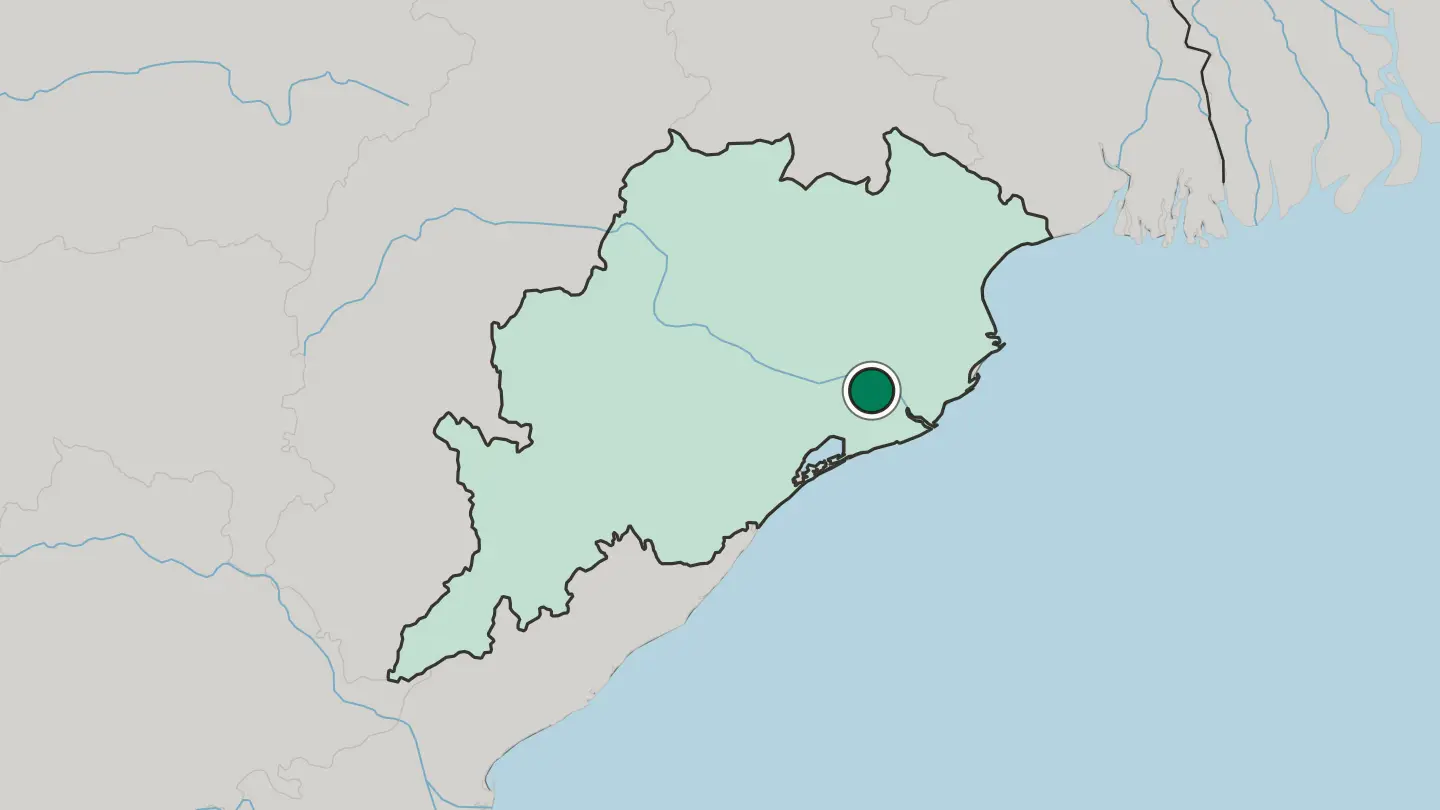
 India
India
Cuttack
Cuttack, officially Kataka, is the former capital and second-largest city of Odisha, the Silver City that grew around the ancient Barabati Fort.Where to stay →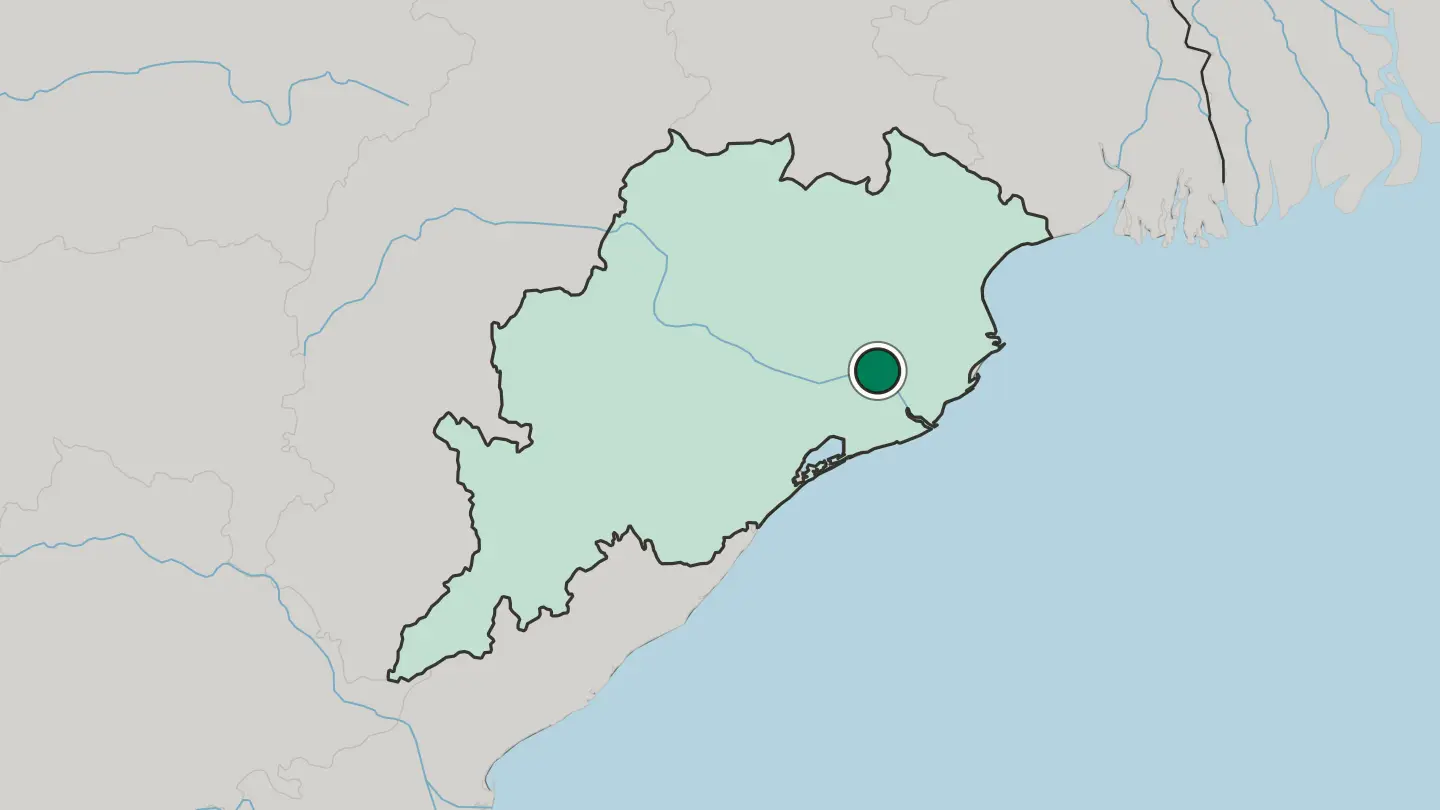 India
India
Brahmapur
Brahmapur, formerly Berhampur, is the Silk City of Odisha, a business hub on the eastern coastline of Odisha near Gopalpur-on-Sea.Where to stay →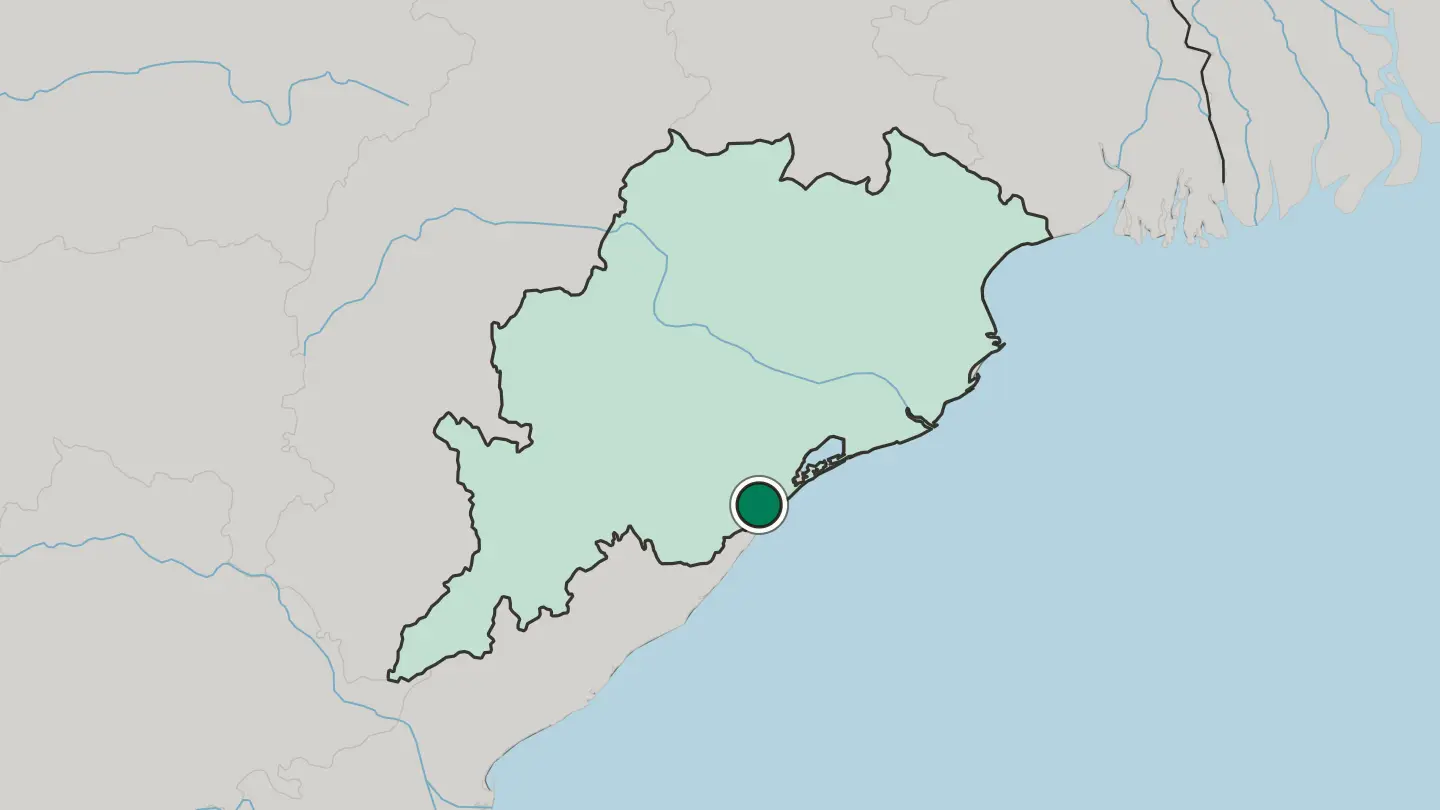
 India
India
Rourkela
Rourkela is a planned steel city in the northern district Sundargarh of Odisha, ringed by hills and encircled by the Koel, Sankha and Brahmani.Where to stay →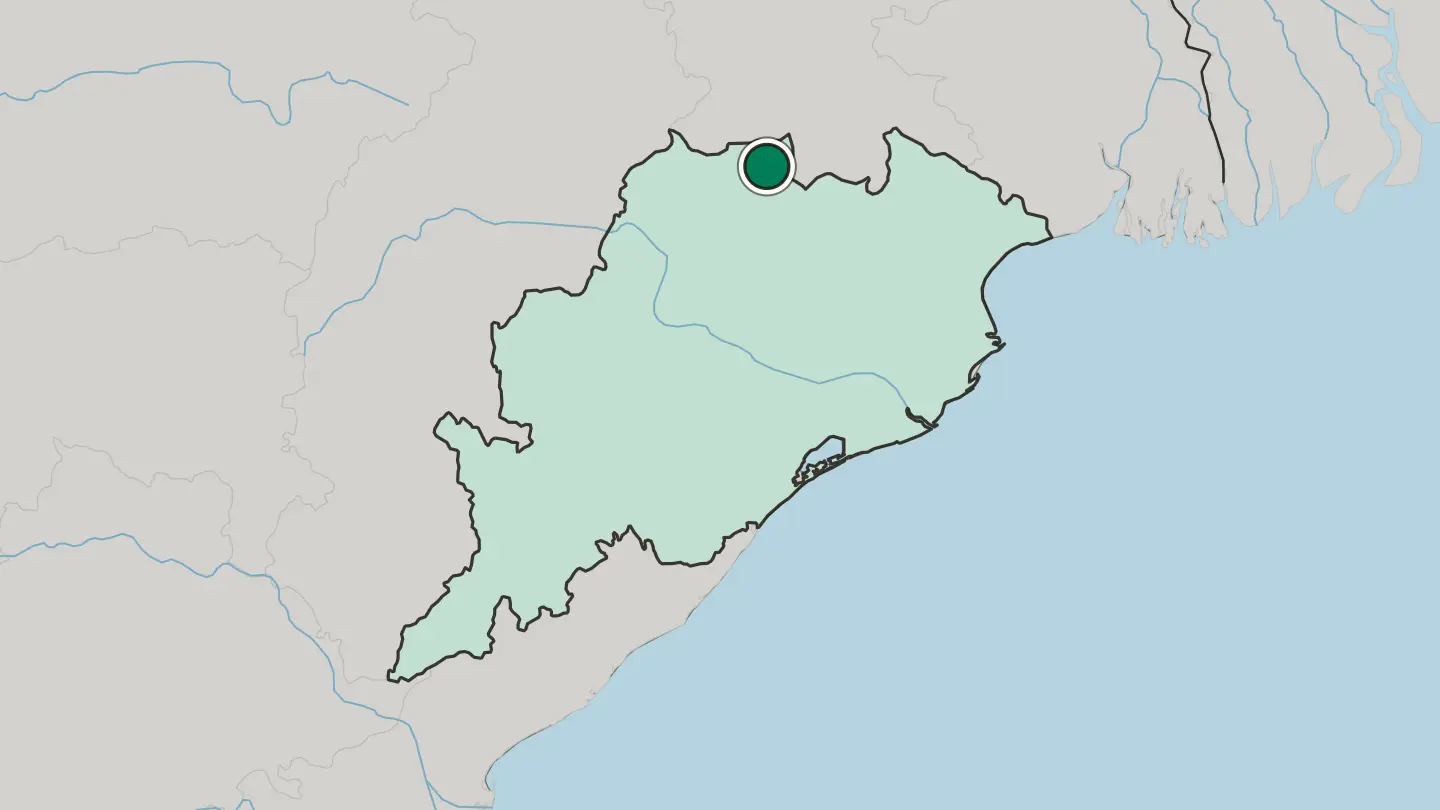
 India
India
Puri
Puri is a city of Odisha in east India on the Bay of Bengal, one of Hinduism's four holy abodes, revered for the Jagannath temple and its chariot festival.Where to stay →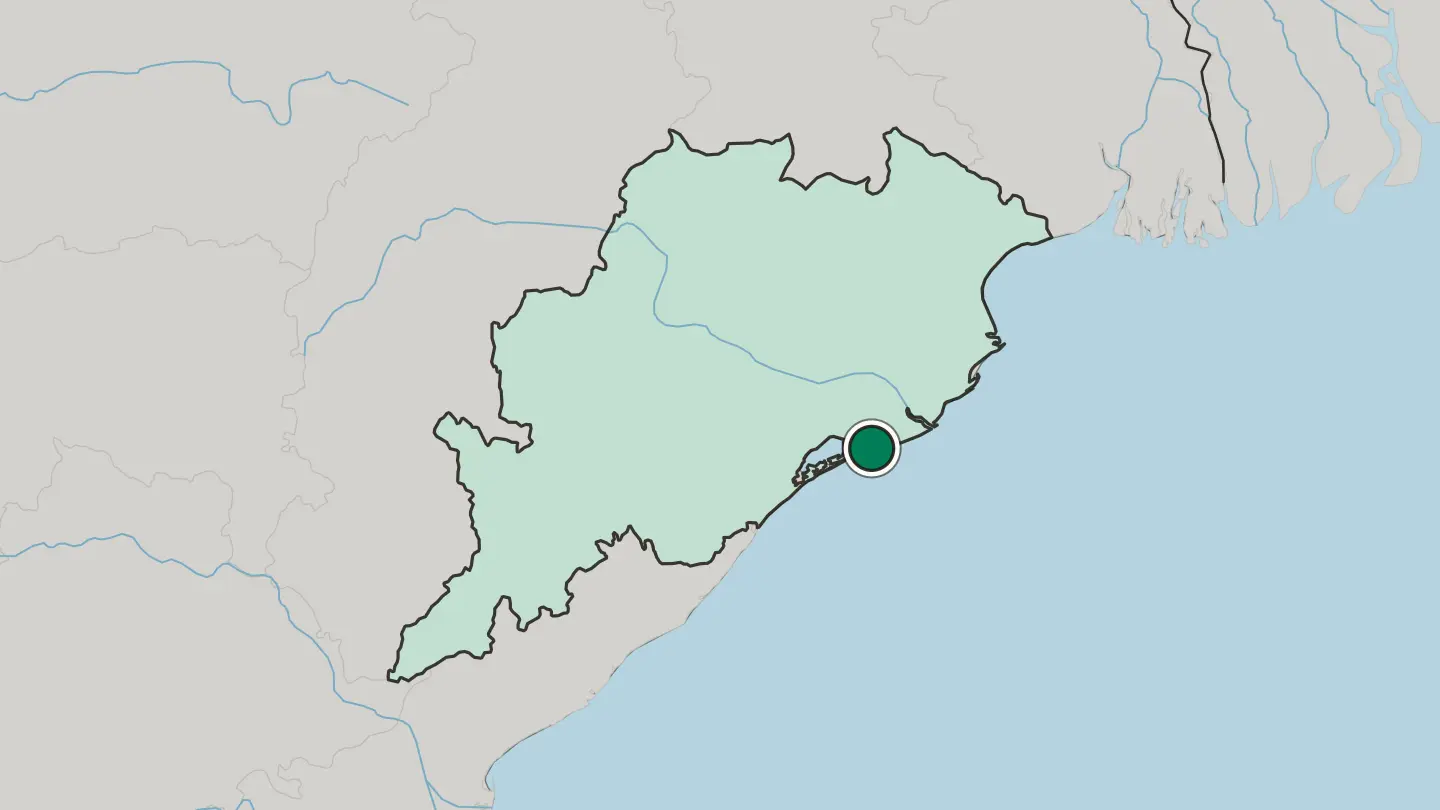
 India
India
Sambalpur
Sambalpur is the biggest city in western Odisha, standing on the banks of the Mahanadi and known for the Sambalpuri sari and the Leaning Temple of Huma.Where to stay →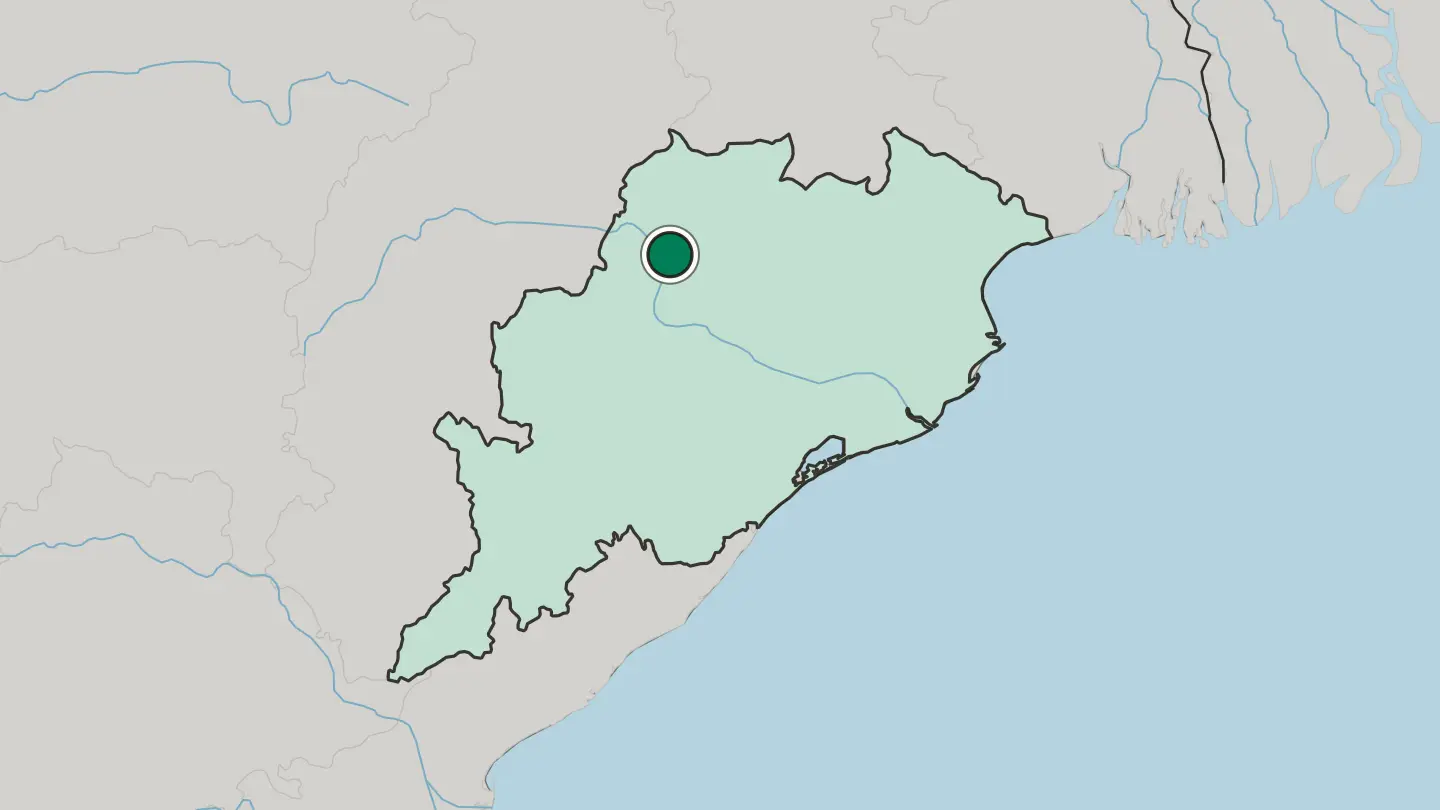 India
India
Balasore
Balasore, or Baleshwar, is a city in Odisha, the headquarters of Balasore district and the nearest city to Chandipur beach.Where to stay →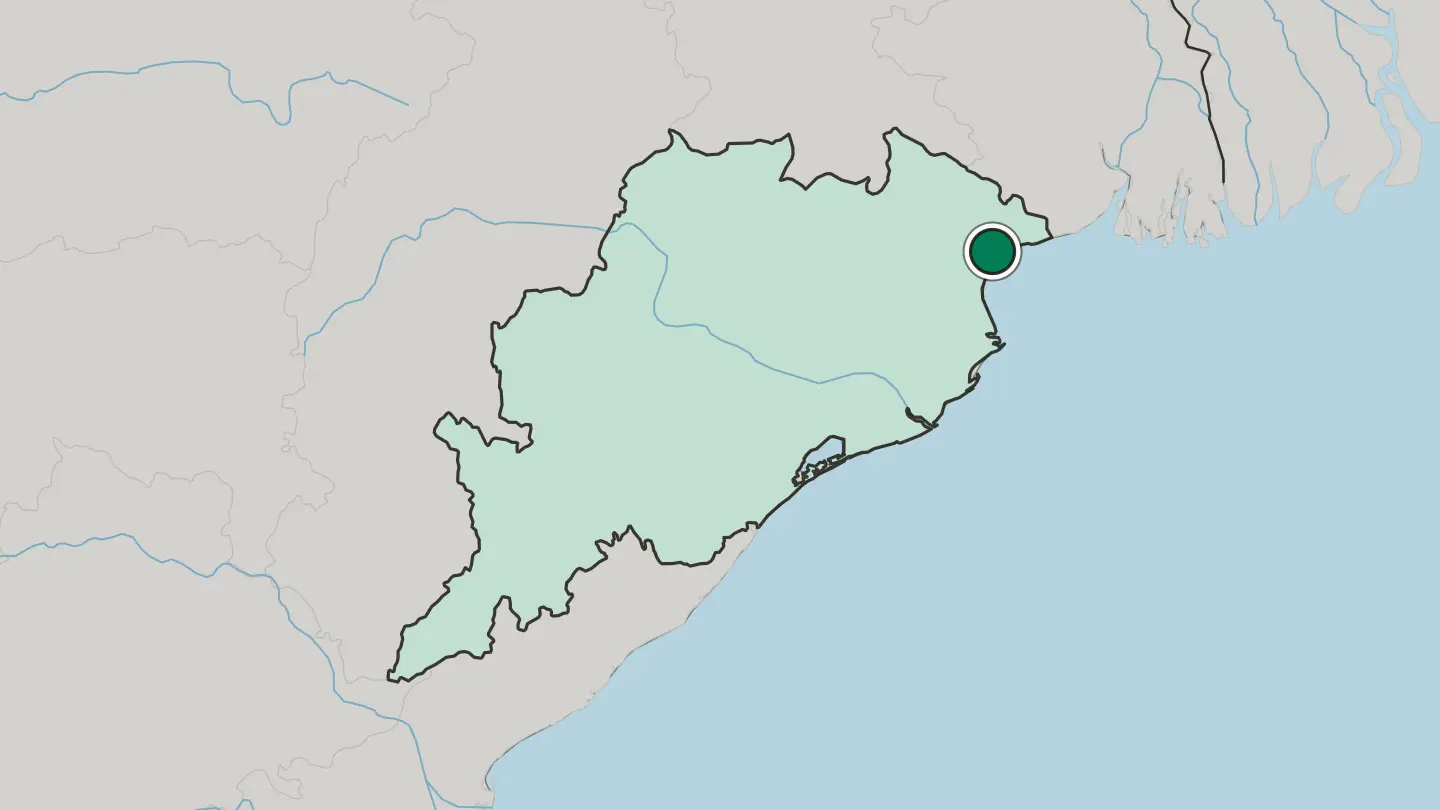 India
India
Jharsuguda
Jharsuguda, the Powerhouse of Odisha, is an industrial town and district headquarters at the western end of Odisha, with an airport of its own.Where to stay →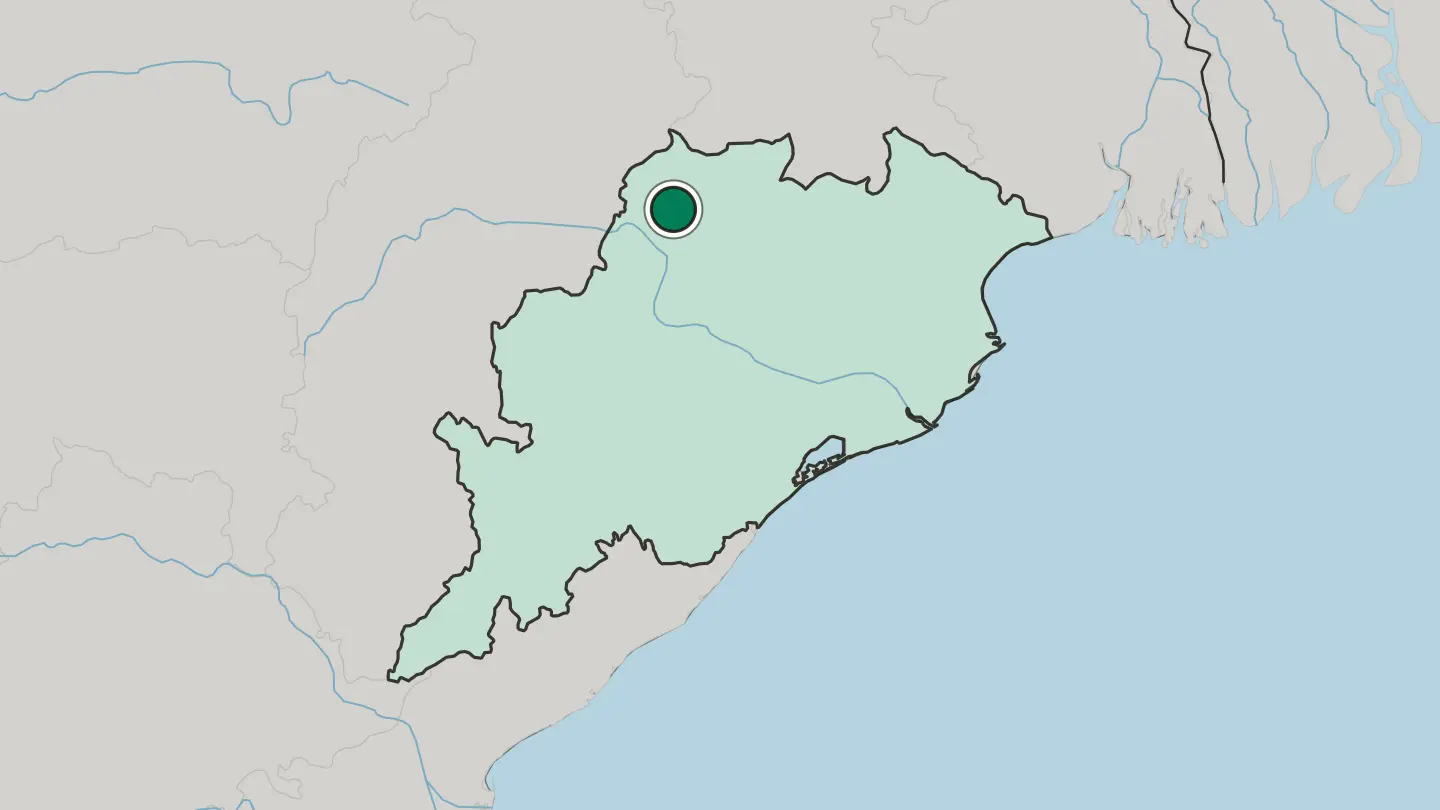
All towns & cities (9)
India
Parādīp Garh
Parādīp Garh, spelled Paradip or Paradeep, is a major industrial seaport city in Jagatsinghpur district, on the coast of Odisha.Where to stay →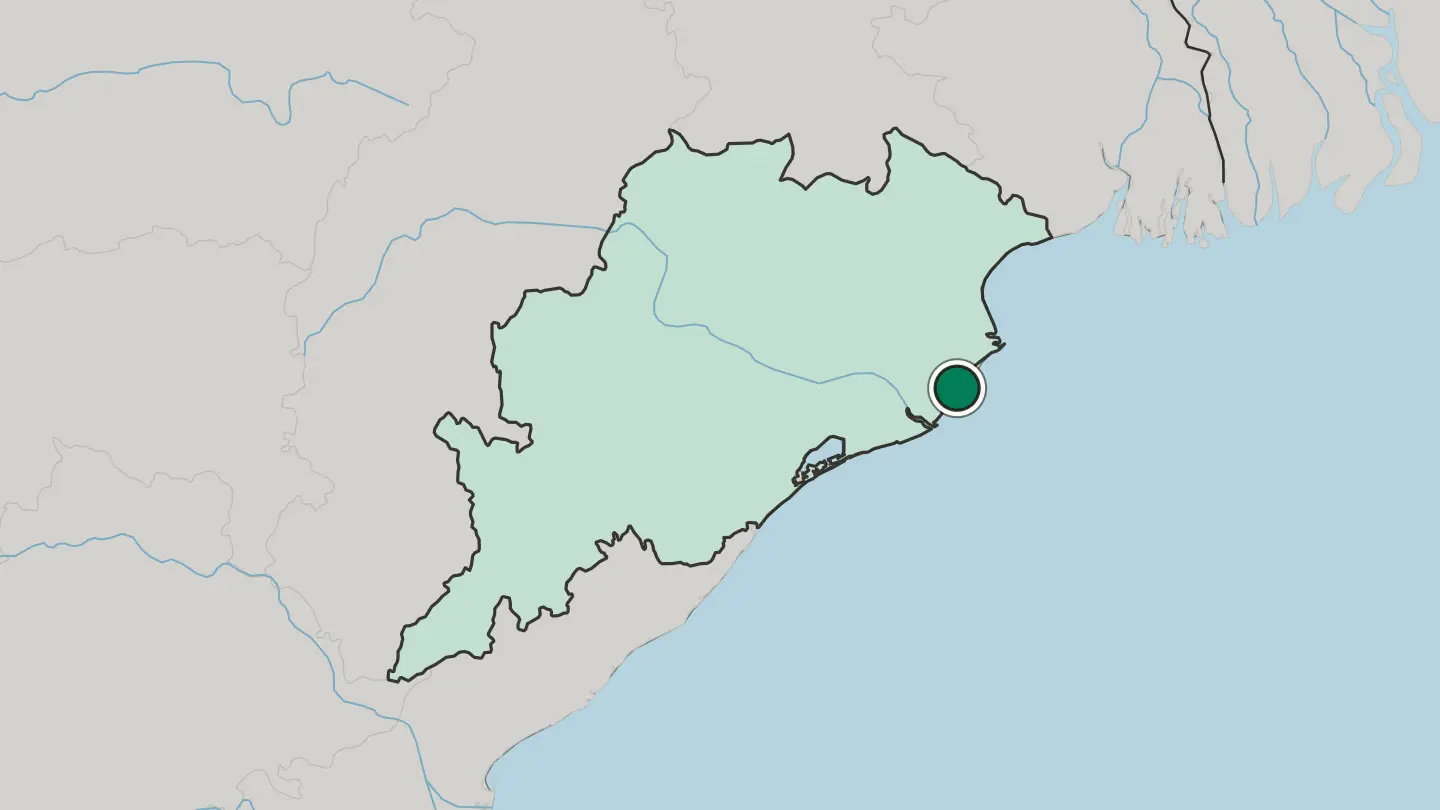
Hotel links are affiliate links: booking through them may earn us a commission, at no extra cost to you. It never affects how places are ranked. How this works
About State of Odisha
What is State of Odisha known for?
Odisha is a coastal state in eastern India, best known for its stone temples. Three of them define the trip. The 12th-century Jagannath Temple at Puri draws pilgrims by the hundred thousand to its summer chariot festival, the Rath Yatra.
The Konark Sun Temple, carved in the 1200s as a giant stone chariot for the sun god, stands on the shore a short way north. Inland, the state capital Bhubaneswar holds hundreds of older shrines. Beyond the temples lie Chilika Lake and a long Bay of Bengal coast.
Where is State of Odisha?
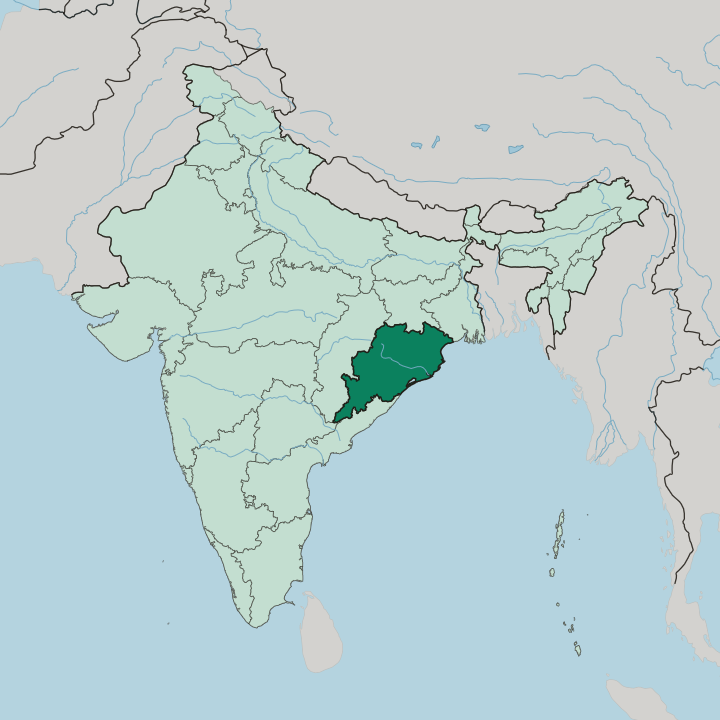
Odisha sits on the eastern seaboard of India, its long coast facing the Bay of Bengal. The state falls into three bands running roughly parallel to the sea. Nearest the water is a fertile coastal plain built from silt.
The plain is really a set of merged river deltas, laid down by the Subarnarekha, the Budhabalanga, the Baitarani, the Brahmani, the Mahanadi and the Rushikulya, which is why Odishans call it the gift of six rivers. Behind it the land climbs. The Eastern Ghats rise from the plain in a belt of forested hills and dissected plateau, and the Mahanadi has cut a dramatic gorge, the Satkosia, where it saws through that range on its way down from Chhattisgarh to the coast.
Deomali, the state's highest peak, stands among these hills in the Koraput country of the south. Water shapes the edge as much as the hills shape the interior. Chilika Lake, a brackish lagoon and the largest of its kind on the Indian coast, spreads behind a sandbar where the Daya drains toward the sea.
West Bengal lies to the north-east, Jharkhand to the north, and Andhra Pradesh to the south, but it is the Bay of Bengal to the east that has defined the state.
What is State of Odisha like?
Odisha thinks of itself as the land of Jagannath, and the deity's cult in Puri sits at the centre of its identity. That devotion is not abstract. It fills a calendar of festivals, above all the Rath Yatra, when the temple images are hauled through Puri on enormous wooden chariots rebuilt from scratch each year.
The state has given India some of its finest temple carving, the sandstone of Bhubaneswar and the sun-chariot at Konark, and it holds a classical dance form of its own. Odissi grew out of the temple tradition and the sculptured poses on those very walls. Craft runs alongside the shrines.
Palm-leaf etching, appliqué work, and stone and wood carving are living trades here, not museum pieces. The common tongue is Odia, one of India's classical languages, written in its own rounded script and spoken by most of the state. Its literature reaches back centuries.
Away from the coastal plain the hills of the Eastern Ghats hold a large tribal population, with their own languages and their own festivals, and their presence gives the interior a character distinct from the temple towns by the sea.
What is the history of State of Odisha?
Odisha was once Kalinga. In 261 BCE the Mauryan emperor Ashoka invaded that coastal kingdom, and the slaughter of the Kalinga War so appalled him that he turned to Buddhism and renounced conquest entirely. Later Odia dynasties raised the great temples, the Eastern Ganga kings building the Jagannath Temple at Puri and the Konark Sun Temple in the 12th and 13th centuries, with Cuttack long serving as the seat of power.
The modern state took shape in 1936, when the British carved a separate province out of the Odia-speaking districts, the first province in India drawn on the basis of language rather than administration.
What is the climate of State of Odisha?
Odisha runs hot and tropical. The year turns on the south-west monsoon, which sweeps in off the Bay of Bengal from June to September and drops the great bulk of the state's rain in those few crowded months. Before it breaks the coastal plain grows fierce and humid; after it the winter runs dry and mild, the pleasant stretch that suits temple travel.
The same warm bay that feeds the monsoon also spins up cyclones, and the Odisha coast takes some of the most powerful storms to strike India.
How do you get to State of Odisha?
Most visitors arrive at Bhubaneswar. Its Biju Patnaik International Airport is the state's main gateway, a few kilometres south-west of the city's railway station, with flights from across India and a handful abroad. The coast is also threaded by the main eastern railway line, so trains reach Bhubaneswar, Cuttack and Puri directly from Kolkata and Chennai.
From the capital the temple towns are close: Puri lies about an hour down the coast, and the Konark Sun Temple sits between the two on the shore road.
Common questions
What is the best area to stay in State of Odisha?
Bhubaneswar: the temple shrines and museums. Puri: the sea and the Rath Yatra. Konark: the Konark Sun Temple coast. Chilika Lake: the lagoon and wintering birds.
Good for
More regions in India
Updated September 2026