Italy · Puglia
Where to Stay in Bitonto, Puglia
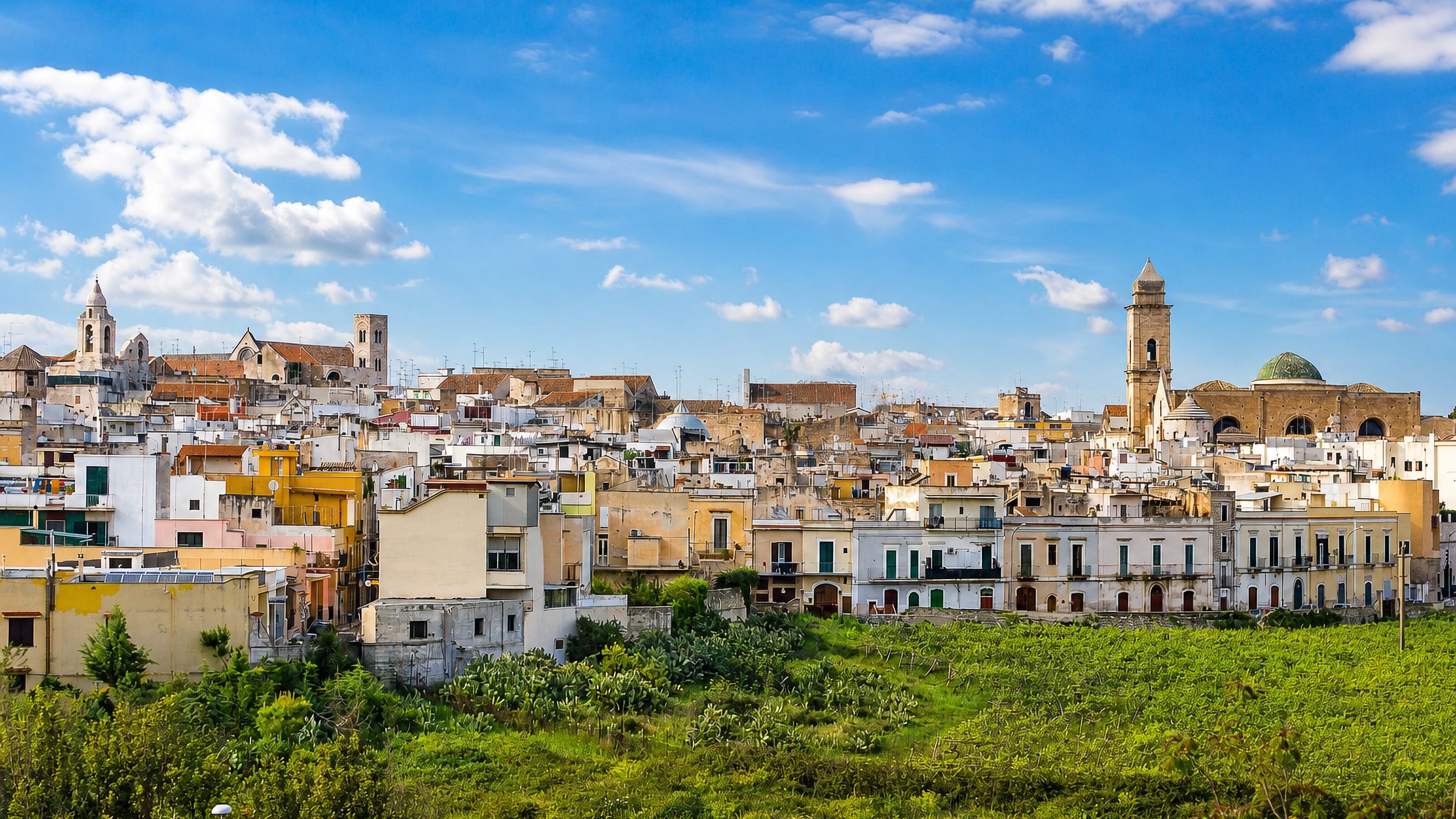
Bitonto is an olive-country town west of Bari, its old centre packed with churches, courtyards and the Galleria nazionale della Puglia.
Hotel links are affiliate links: booking through them may earn us a commission, at no extra cost to you. It never affects how places are ranked. How this works


Where to stay in Bitonto
Where the beds are, and what that means for the visit.
The old centre is the base. Rooms there sit among the courtyards of Corti e archi, within a few minutes of San Gaetano, the chiesa del Purgatorio and the Galleria nazionale della Puglia, which is the whole point of staying inside it rather than out on the modern edge. Bitonto is not a hotel town.
Beds are few, and most of them are rooms in converted houses rather than anything with a lobby and a lift. A room near Santa Maria del Popolo puts the whole walkable core within reach without ever needing a car. Bari changes the arithmetic.
The city sits close enough east that a bed there can serve a Bitonto visit, at the cost of a commute in and out past the olive groves each day. Staying in Bitonto buys the evening: the Angevin tower, the chiesa di San Francesco d'Assisi in Bitonto and the chiesa del Santissimo Crocifisso are all a walk from any room in the centre. The Museo archeologico della Fondazione De Palo-Ungaro sits in the same few streets.
Nothing in the centre is far from anything else. Weekends fill first.
Find hotels in Bitonto
Direct booking searches for these neighbourhoods.
Courtyard core
The oldest yards and lanes, with San Gaetano and the Galleria nazionale della Puglia at the end of them. Beds are limited here, so book early.Find hotels in Courtyard corea quieter room a short walk off the church streetsSanta Maria del Popolo side
Where the old centre of Bitonto meets the newer grid, still inside walking range of the Angevin tower. Lodging is scarce in this area; reserve in advance.Find hotels in Santa Maria del Popolo sidea wider choice of rooms east of the olive grovesBari
The provincial capital next door, with far more beds than Bitonto and a short run out to it.Find hotels in BariHotel links are affiliate links: booking through them may earn us a commission, at no extra cost to you. It never affects how places are ranked. How this works
Things to do in Bitonto
Ranked by global recognition; descriptions from Wikidata (CC0).
Museums & Galleries
3- Galleria nazionale della Puglia Heritage
- Museo archeologico della Fondazione De Palo-Ungaro Heritage
- Museo civico "E. Eustachio Rogadeo" Heritage
Churches & Religious Sites
5- chiesa di San Francesco d'Assisi in Bitonto Heritage
- chiesa del Santissimo Crocifisso Heritage
- chiesa del Purgatorio Heritage
- chiesa di Sant'Egidio Heritage
- chiesa di Santa Caterina Heritage
Castles & Historic Sites
2- Castle Heritage
- Corti e archi Heritage
Landmarks & Notable Places
1- Angevin tower Heritage
worth knowingacross 4 categories in Bitonto
About Bitonto
Olives made the reputation.
What is Bitonto known for?
Groves surround Bitonto on every side, which is why the town is nicknamed the City of Olives, and they also separate it from the edge of Bari to the east. The Galleria nazionale della Puglia keeps the art side of the record. Corti e archi names what the old centre actually looks like, a run of courtyards and arches threaded between the churches.
What are the main landmarks in Bitonto?
The Angevin tower still marks the skyline. Around it the churches multiply: San Gaetano, Santa Maria del Popolo, the chiesa del Santissimo Crocifisso, the chiesa di Sant'Egidio and the chiesa di Santa Caterina all stand within the old streets. The Galleria nazionale della Puglia holds the paintings, and the Museo archeologico della Fondazione De Palo-Ungaro holds what came out of the ground.
Corti e archi covers the rest.
What is the history of Bitonto?
No document fixes the year Bitonto came into being. What the town has instead is fabric: the Angevin tower, the Castle at the edge of the old streets, and a series of churches whose dedications repeat across the centuries of building. Olive growing runs underneath all of it.
The groves that ring the town gave it the nickname City of Olives, and they are the reason its countryside looks the way it does. The old centre kept its shape, courtyard by courtyard, and Corti e archi is the name given to that pattern of arches and yards between the churches. Church building is the long thread.
San Gaetano, Santa Maria del Popolo, the chiesa di San Francesco d'Assisi in Bitonto, the chiesa del Santissimo Crocifisso and the chiesa del Purgatorio each mark a stage in it, and several of them sit within sight of one another. The Galleria nazionale della Puglia gathered a regional collection into the town, and the Museo archeologico della Fondazione De Palo-Ungaro did the same for excavation. Bari absorbed the administration.
Bitonto belongs to the Metropolitan City of Bari, the unit that governs the provincial capital and the towns west of it, Corti e archi and olive groves included.
Where is Bitonto?
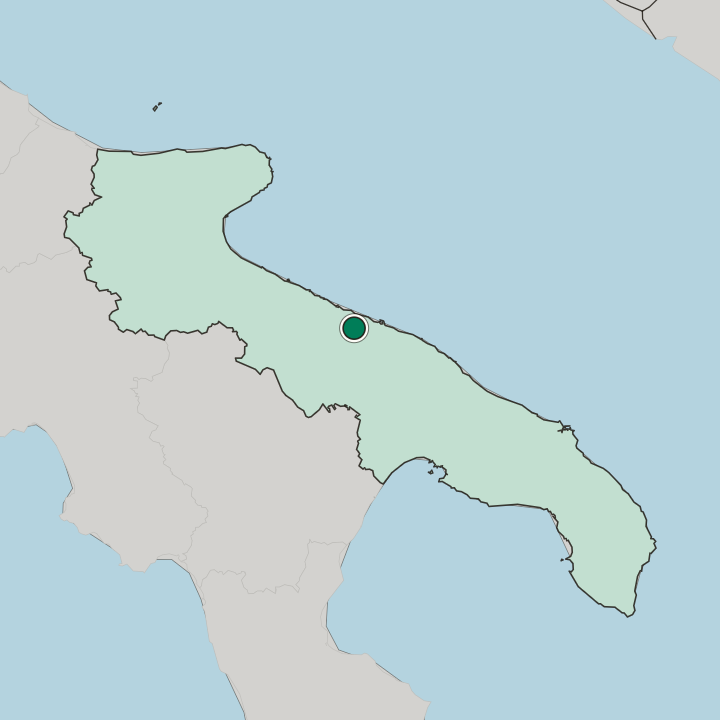
Bitonto stands west of Bari, on ground given over almost entirely to olives. Groves reach right up to the built-up edge, and the municipality spreads well beyond them, out into the countryside that separates the town from Bari. The old centre is compact.
Its courtyards and arches, the pattern recorded as Corti e archi, sit inside a ring of later streets, with the Angevin tower rising among them.
What is the climate of Bitonto?
Olive country sets the weather here. Summers run hot and dry across the groves that surround Bitonto, and the town's shaded courtyards are the practical answer to the middle of a July afternoon. Rain concentrates in the cooler months.
Winters stay mild by the standards of the temperate band, and frost is not what shapes the growing year in this part of Puglia.
How do you get to Bitonto?
Bari is the way in. The provincial capital lies east of Bitonto, close enough that the trip out through the olive groves is short, and the road between them is the usual approach. Inside Bitonto, walking is the only sensible option, since the courtyards of Corti e archi are too tight for driving and the Angevin tower, San Gaetano and the Galleria nazionale della Puglia sit minutes apart.
Park at the edge.
Common questions
What is the best area to stay in Bitonto?
Courtyard core: walking the arches of Corti e archi after dark. Santa Maria del Popolo side: a quieter room a short walk off the church streets. Bari: a wider choice of rooms east of the olive groves.
Good for
More cities in Puglia
Updated October 2026