Italy · Puglia
Where to Stay in Taranto, Puglia
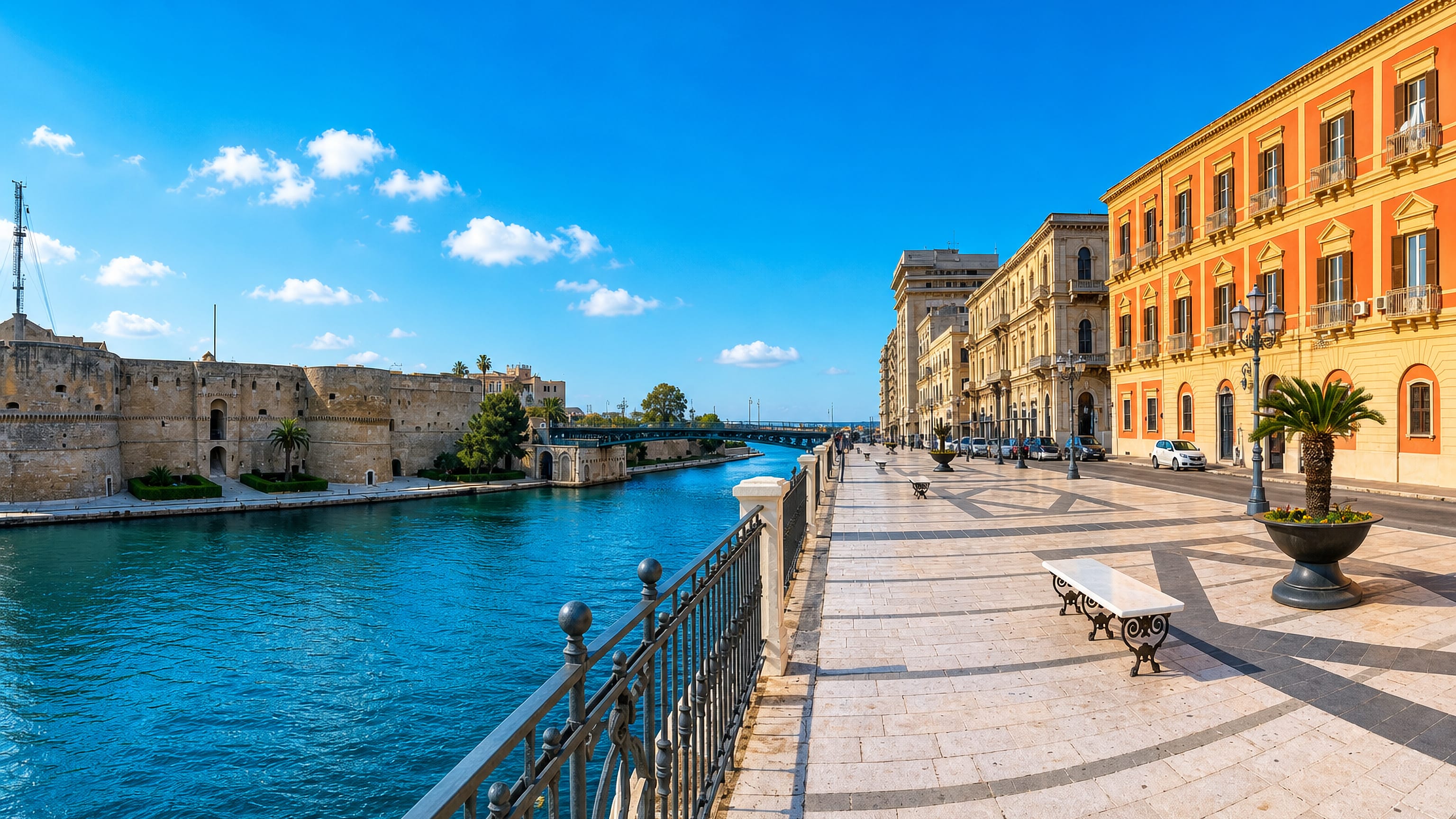
Taranto sits on the Ionian coast of Puglia, a Greek city of the ancient Mediterranean that became Italy's main naval port.
Hotel links are affiliate links: booking through them may earn us a commission, at no extra cost to you. It never affects how places are ranked. How this works


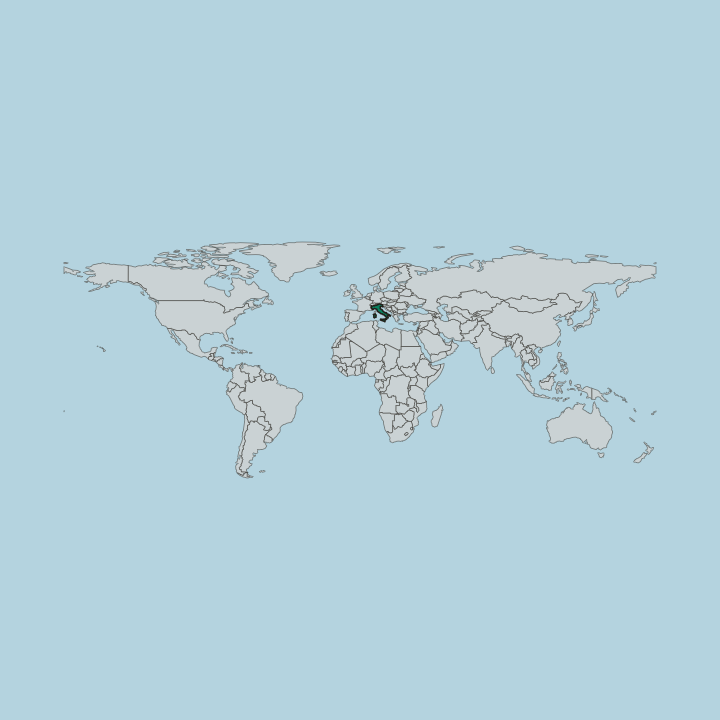
Where to stay in Taranto
Where the beds are, and what that means for the visit.
Two halves compete for the traveller. The old town holds Taranto Cathedral, the Cripta del Redentore and Castello Aragonese in a few tight streets, which is the version of the city most visitors come to walk. The Temple of Poseidon and the Spartan hypogeum museum of Taranto fall inside that same walk, so a room in the old quarter covers the ancient city and the medieval one together.
Rooms there are fewer. Converted houses and small guesthouses do most of the letting in that quarter, so the choice is thinner than the setting suggests, and summer weekends close it fast. The newer streets carry the volume.
Hotels cluster on the side of the city that holds the National Archaeological Museum of Taranto, and that half is also the simpler one to reach with a car. The waterfront is a third option, with the Monumento al Marinaio di Taranto facing the Ionian and the naval base beyond it. Neither half is far from the other.
Anyone here for the Museo etnografico Alfredo Majorano, the Museo medievale Maria d'Enghien or the Diocesan Museum Taranto can pick either half without losing an hour to transfers. A car changes little inside the centre.
Find hotels in Taranto
Direct booking searches for these neighbourhoods.
Old town by Taranto Cathedral
The oldest quarter, where Taranto Cathedral, the Cripta del Redentore and Castello Aragonese stand within a few minutes of one another. Rooms are few around here — worth securing early.Find hotels in Old town by Taranto Cathedralmuseum mornings at the National Archaeological Museum of TarantoMuseum side
The newer half of Taranto, shaped around the National Archaeological Museum of Taranto with the Mudit - Museo degli Illustri Tarantini also in reach.Find hotels in Museum sideevenings on the front where the Monumento al Marinaio di Taranto faces the waterWaterfront by the Monumento al Marinaio di Taranto
The Ionian front, looking out on the water that carries the naval base and the commercial port.Find hotels in Waterfront by the Monumento al Marinaio di TarantoHotel links are affiliate links: booking through them may earn us a commission, at no extra cost to you. It never affects how places are ranked. How this works
Things to do in Taranto
Ranked by global recognition; descriptions from Wikidata (CC0).
Museums & Galleries
3- National Archaeological Museum of Taranto Heritage
- Spartan hypogeum museum of Taranto Heritage
- Museo etnografico Alfredo Majorano Heritage
Churches & Religious Sites
3- Taranto Cathedral
- Concattedrale Gran Madre di Dio
- San Domenico Maggiore (Taranto)
Castles & Historic Sites
5- Castello Aragonese Heritage
- Temple of Poseidon Heritage
- monument to the fallen of Taranto Heritage
- Ipogeo Genoviva Heritage
- Tomba degli Atleti Heritage
Landmarks & Notable Places
2- Clock tower Heritage
- Torre di Raimondello
worth knowingacross 4 categories in Taranto
About Taranto
The Greek past is still visible.
What is Taranto known for?
Columns of the Temple of Poseidon stand in the old town, and the National Archaeological Museum of Taranto holds what excavation has recovered from the city and the province around it. Castello Aragonese is the other fixed point. Naval work defines the modern city, and the Mostra storica arsenale keeps the record of the yard that made this the main Italian naval base.
Taranto Cathedral and the Concattedrale Gran Madre di Dio give the city two cathedral churches.
What are the main landmarks in Taranto?
The list starts underground. Cripta del Redentore, the Tomba degli Atleti and the Ipogeo Genoviva belong to a city that keeps a great deal below its streets, and the Spartan hypogeum museum of Taranto opens one of those cut spaces to visitors. Above them stand Castello Aragonese, the Torre di Raimondello and the Clock tower.
The National Archaeological Museum of Taranto is the heavyweight. Smaller collections follow: the Bios Taras Natural History Museum, the Museo etnografico Alfredo Majorano and the Mudit - Museo degli Illustri Tarantini.
What is the history of Taranto?
Greece came first. The city counted among the powers of the Mediterranean in the Greek period, and the columns of the Temple of Poseidon are what survives above ground from that age. Underground, the record is denser.
The Spartan hypogeum museum of Taranto, the Tomba degli Atleti and the Ipogeo Genoviva preserve burial and living space cut into rock beneath the later town. The National Archaeological Museum of Taranto assembles the rest. Medieval and Aragonese layers sit on top of the Greek one.
Castello Aragonese, the Torre di Raimondello and the Museo medievale Maria d'Enghien carry that stretch, while Taranto Cathedral, San Domenico Maggiore and the cloister of the San Domenico convent record the long presence of the church in the same streets. The sea then took over the account. Naval building made Taranto the main Italian naval base and the capital of its province, and the Mostra storica arsenale holds the record of the yard that did it.
War left its own memorials. The monument to the fallen of Taranto, the Monumento al Marinaio di Taranto and the memorial to citizens killed in the raids of 1940 to 1943 mark what the naval city paid for that role. Bari remains the regional capital.
Where is Taranto?
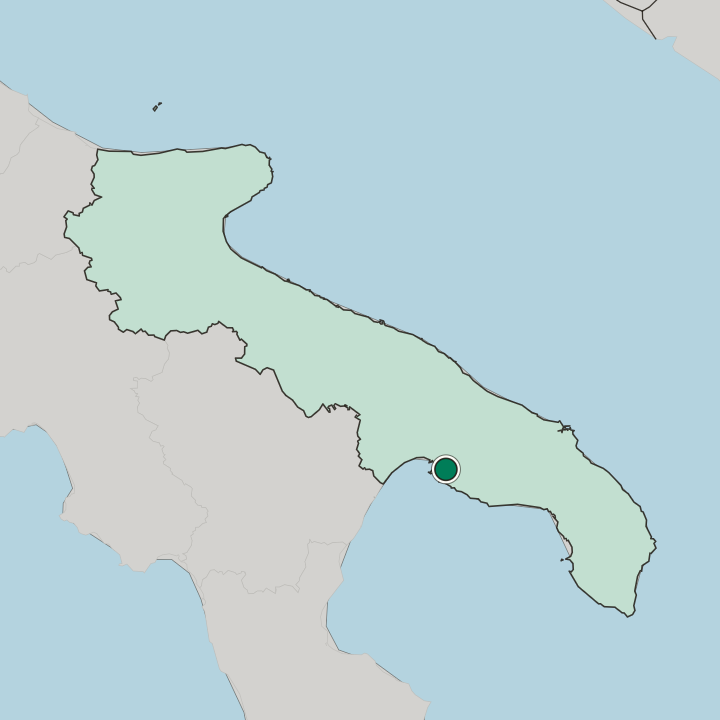
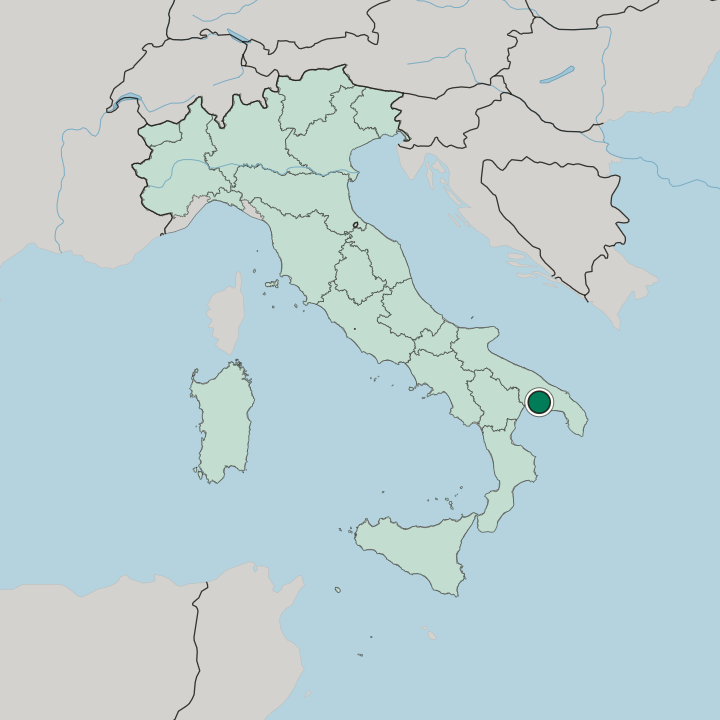
Taranto faces the Ionian. The municipal territory runs to some two hundred and fifty square kilometres of coast and country, and the water is the reason both the naval base and the commercial port ended up here. Puglia stretches inland behind the built-up shore.
The old town sits compact beside the water with Castello Aragonese standing inside it, while the newer city spreads out further back.
What is the climate of Taranto?
The Ionian moderates everything here. Summers turn hot and dry along this coast, though the water keeps the nights easier than they run inland, and the narrow streets of the old town hold shade deep into the afternoon. Wet weather belongs to the cool half.
Taranto lies inside the temperate band, and the sea beside it narrows the gap between its warmest and coldest months.
How do you get to Taranto?
Most of Taranto is flat and walkable. The old town, the National Archaeological Museum of Taranto and the front by the Monumento al Marinaio di Taranto sit close enough that one central room reaches all three on foot. The port and the naval base take up a long stretch of the waterfront.
Roads run out through the province around the city, and a car is what opens the coast and the country past the built-up edge.
Common questions
What is the best area to stay in Taranto?
Old town by Taranto Cathedral: waking a few streets from Taranto Cathedral and Castello Aragonese. Museum side: museum mornings at the National Archaeological Museum of Taranto. Waterfront by the Monumento al Marinaio di Taranto: evenings on the front where the Monumento al Marinaio di Taranto faces the water.
Good for
More cities in Puglia
Updated October 2026