Italy · Puglia
Where to Stay in Cerignola, Puglia
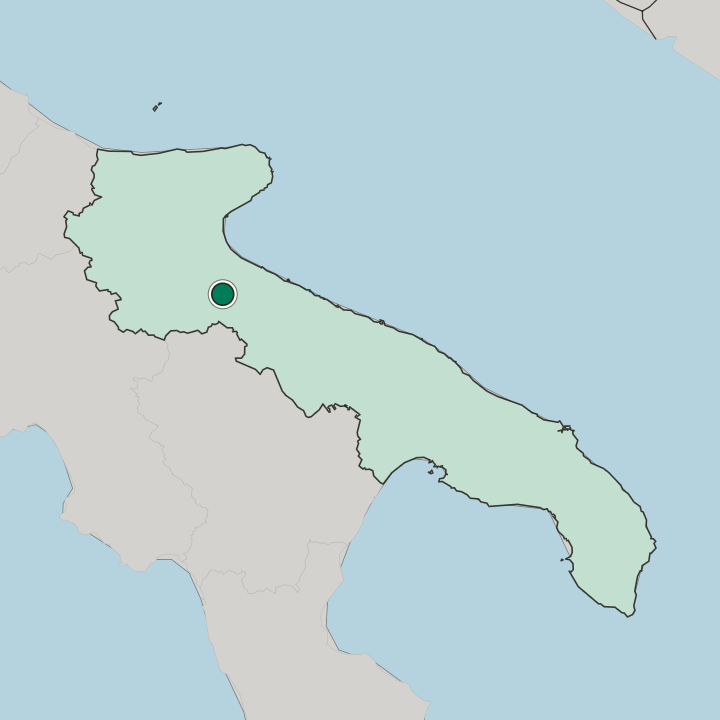
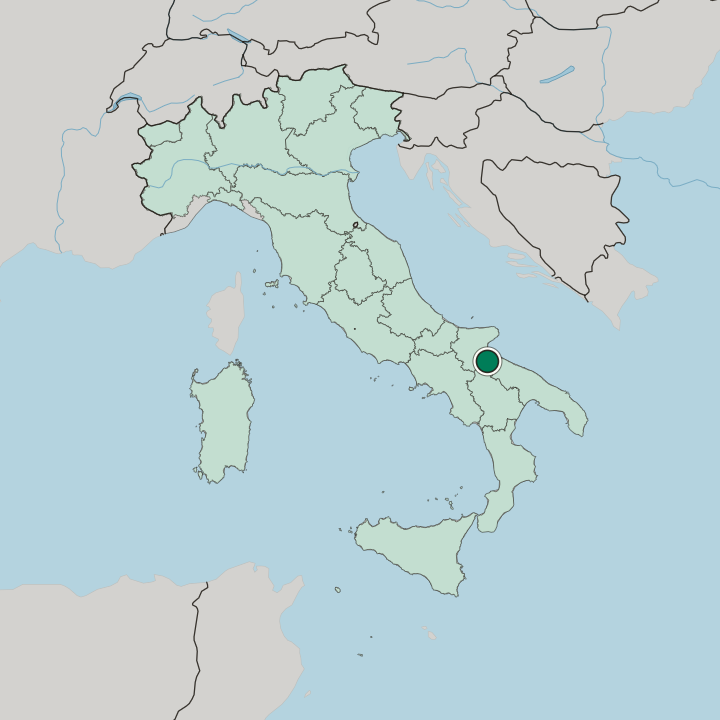
Cerignola is a Puglia town southeast of Foggia, holding one of the largest municipal territories in Italy, behind only Rome and Ravenna.
Hotel links are affiliate links: booking through them may earn us a commission, at no extra cost to you. It never affects how places are ranked. How this works


Where to stay in Cerignola
How the choice of base plays out on the ground.
Almost everything with a bed is in the compact built-up centre, which is a small share of a municipality that runs for kilometres in every direction. That centre is walkable. Cerignola Cathedral, the Chiesa del Purgatorio and the Museo del Grano are within a few streets of one another, so a room anywhere inside it covers the whole visit.
Cerignola keeps only a handful of beds. This is a working agricultural town rather than a resort, and beds run to small hotels and rooms rather than anything built for tourism. Foggia is the alternative.
Foggia sits about 40 kilometres off, with Cerignola southeast of it, and the provincial capital carries a range of rooms that a farming town of this size does not. Staying in Cerignola itself buys the evening in the centre and the early start into the surrounding countryside, which is where the town's real extent lies. The Museo del Grano is the clue to what surrounds it.
A car is close to essential. Nothing outside the built-up part is walkable, and the Museo Etnografico Cerignolano, the chiesa del Cristo Re and Madonna del Carmine sit inside it with everything else.
Find hotels in Cerignola
Direct booking searches for these neighbourhoods.
Cathedral centre
The compact built-up core, with the Museo del Grano a few streets from the cathedral. Few places to stay nearby — book ahead.Find hotels in Cathedral centrea quieter room off the cathedral streetsMadonna del Carmine side
The edge of the centre near Madonna del Carmine, where Cerignola thins out toward its fields. Few places to stay nearby — book ahead.Find hotels in Madonna del Carmine sidea wider choice of rooms 40 kilometres up the roadFoggia
The provincial capital, holding the beds a farming comune the size of Cerignola cannot offer.Find hotels in FoggiaHotel links are affiliate links: booking through them may earn us a commission, at no extra cost to you. It never affects how places are ranked. How this works
About Cerignola
Land is the first fact here.
What is Cerignola known for?
Cerignola holds the third-largest municipal territory in Italy, behind Rome and Ravenna alone, and the largest of any town that is not a provincial capital. The Museo del Grano, a museum given over to wheat, says what most of that ground does. Cerignola Cathedral stands at the centre of the built-up part.
What are the main landmarks in Cerignola?
Cerignola Cathedral is the landmark that orders the town. The Chiesa del Purgatorio, the chiesa del Cristo Re and Madonna del Carmine account for most of the rest of the religious fabric, each within the built-up part rather than out in the fields. Two museums split the subject matter.
The Museo del Grano takes wheat and the Museo Etnografico Cerignolano takes the everyday life that grew around it.
What is the history of Cerignola?
Cerignola keeps no recorded founding year. What it has is ground: a municipal territory larger than any in Italy except Rome and Ravenna, and larger than that of any Italian town which is not a provincial capital. That extent is itself the history.
A comune of that size is farmland more than it is town, and the Museo del Grano is where that fact is set out. Most of that territory is field rather than street, and the compact centre where Cerignola Cathedral stands occupies a small fraction of what the comune covers on the map. The churches carry the older record.
Cerignola Cathedral, the Chiesa del Purgatorio, Madonna del Carmine and the chiesa del Cristo Re are the standing fabric of the old core, and their dedications are the oldest continuous thread the town has. Museums came much later. The Museo Etnografico Cerignolano collects the everyday objects of the farming life that filled those centuries, and the Museo del Grano does the same for the crop itself.
Administration ties the town to Foggia. Cerignola belongs to the province of Foggia and sits southeast of the provincial capital, close enough for the two to share a hinterland of fields.
Where is Cerignola?
The comune covers more ground than almost any other in Italy, with fields running out well past the edge of the town. Cerignola itself is compact. The streets around Cerignola Cathedral hold the town, and beyond them the province of Foggia continues in the same open, worked landscape as far as the next comune.
Cerignola sits southeast of Foggia, some 40 kilometres off.
What is the climate of Cerignola?
Heat is the defining season, and the fields around Cerignola bake through a long dry summer that makes the shade in the streets by the cathedral worth more than any view. Away from the coast of Puglia, there is no water to moderate the swing, so nights inland cool off further than they do on the shore. Winter is wet and brief.
Most rain arrives outside the harvest months.
How do you get to Cerignola?
Foggia is the reference point. Cerignola sits 40 kilometres southeast of it, which puts the provincial capital within an easy drive and makes the road between them the normal way in. Inside the town, distances collapse: Cerignola Cathedral, the Museo del Grano and the Chiesa del Purgatorio are all walkable from one another.
Outside it, a car is the only realistic way to cross a comune this large.
Common questions
What is the best area to stay in Cerignola?
Cathedral centre: walking to Cerignola Cathedral and the Chiesa del Purgatorio. Madonna del Carmine side: a quieter room off the cathedral streets. Foggia: a wider choice of rooms 40 kilometres up the road.
Good for
More cities in Puglia
Updated September 2026