Italy
Puglia, Italy — Towns & Travel Guide
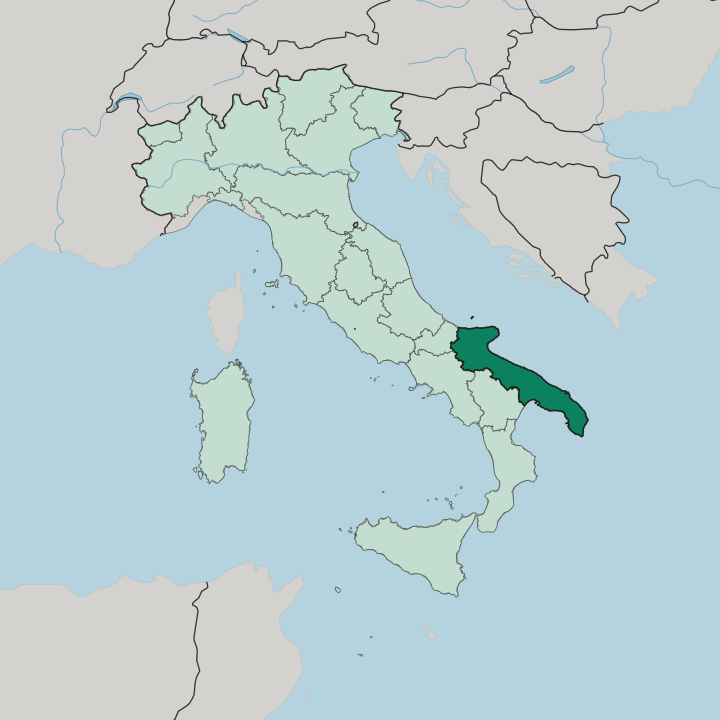
Puglia is the heel of Italy's boot, a long region reaching down between the Adriatic and Ionian seas to the Salento peninsula.
Hotel links are affiliate links: booking through them may earn us a commission, at no extra cost to you. It never affects how places are ranked. How this works


Towns & cities in Puglia
Pick a town or city — each links to where to stay.

 Italy
Italy
Bari
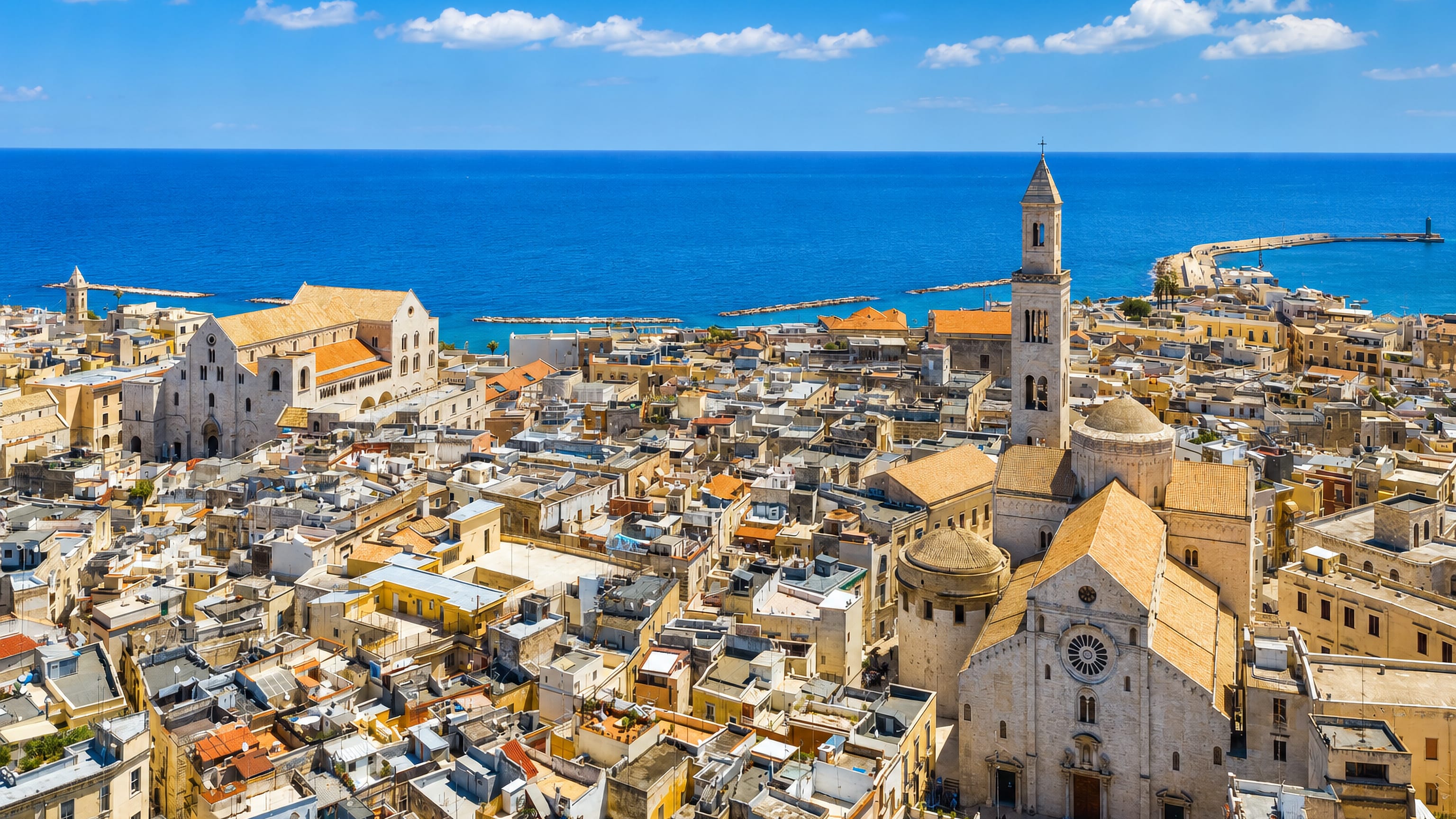
Bari turns a wall of old stone to the Adriatic, capital of Puglia and a ferry port, known for the Basilica of Saint Nicholas and Bari Vecchia.Where to stay →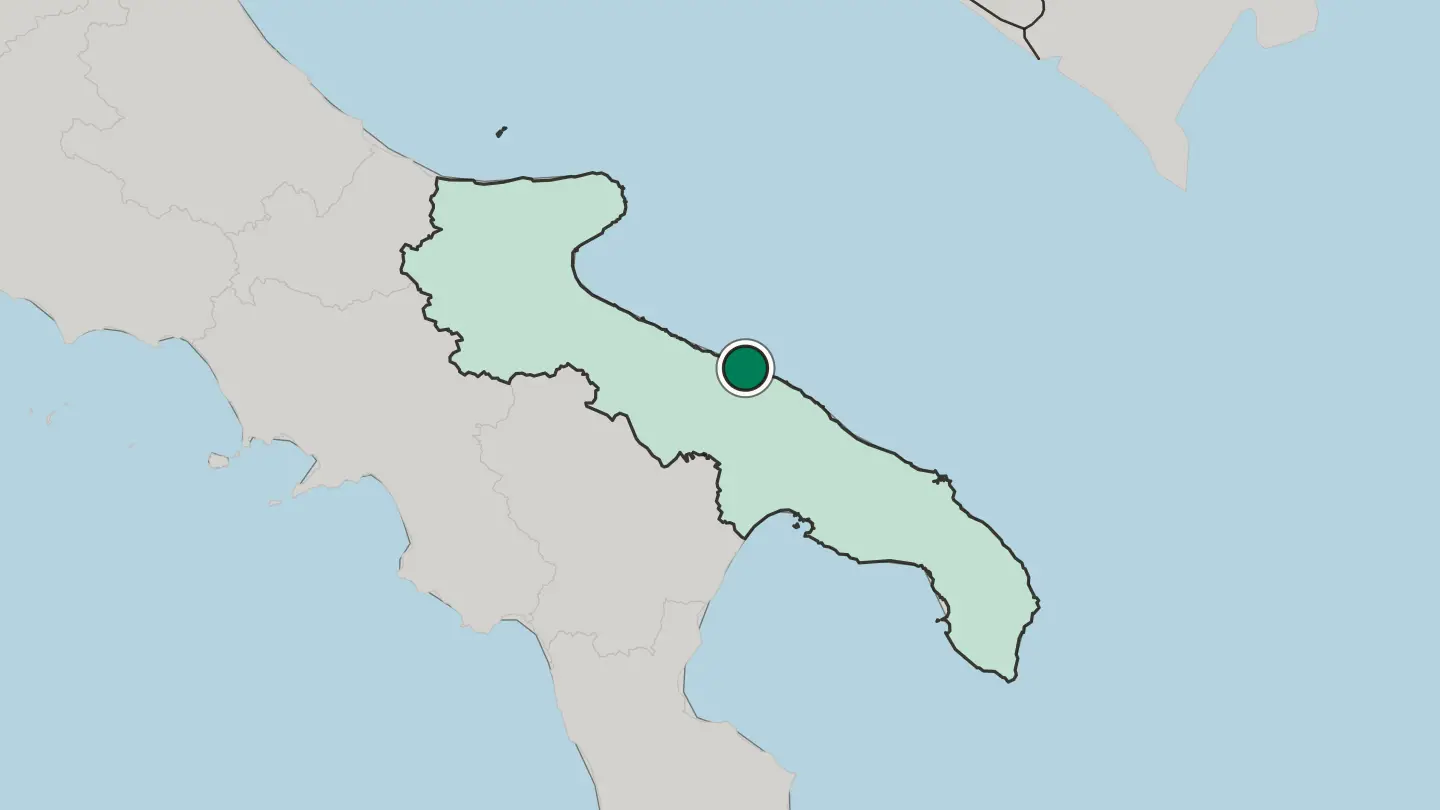
 Italy
Italy
Taranto
Taranto sits on the Ionian coast of Puglia, a Greek city of the ancient Mediterranean that became Italy's main naval port.Where to stay →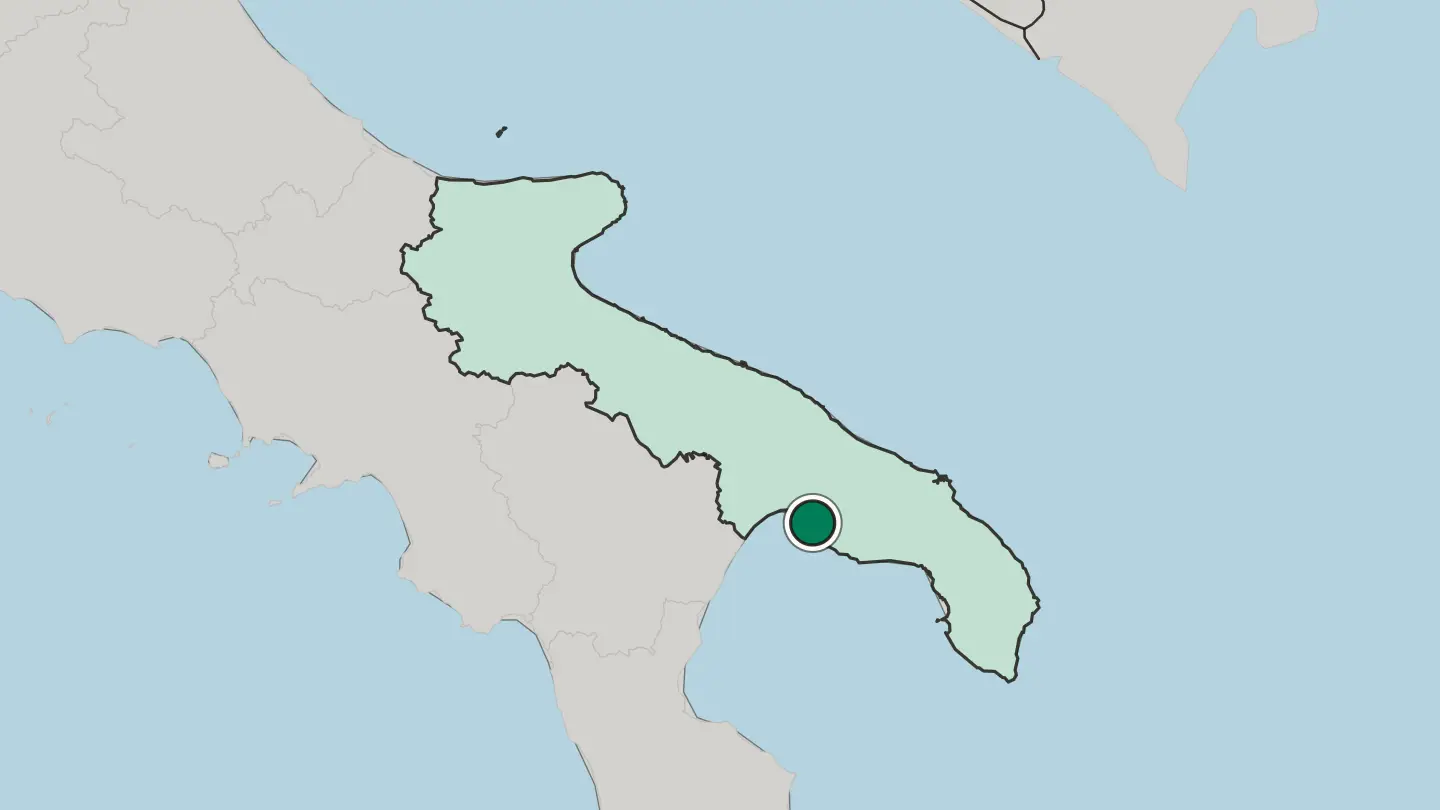
 Italy
Italy
Foggia
Foggia is the chief city of the Capitanata plain in Puglia, southern Italy, once a favourite seat of the emperor Frederick II on the great wheat plain.Where to stay →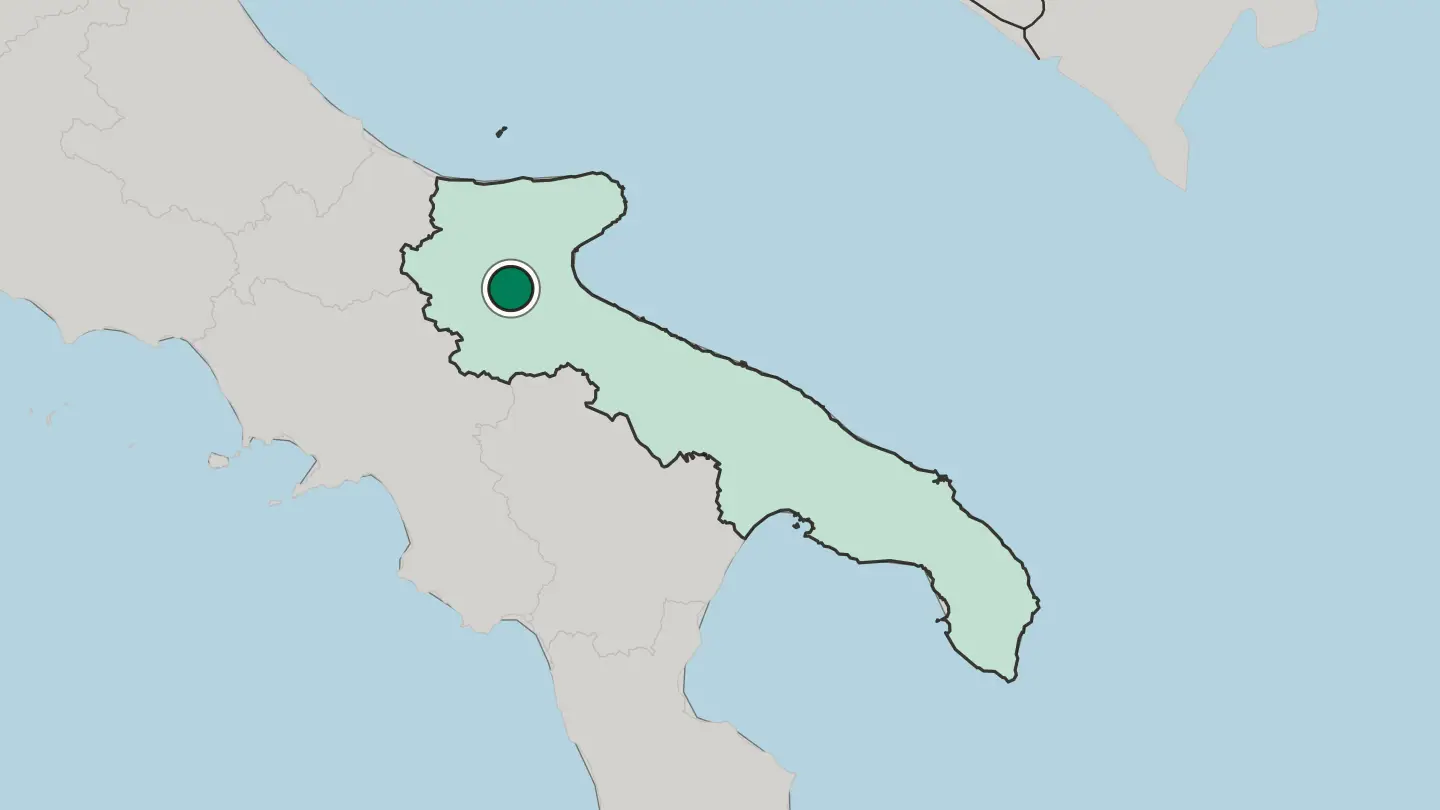
 Italy
Italy
Andria
Andria is a city in Puglia, the fourth-largest municipality in the region, known for the 13th-century Castel del Monte.Where to stay →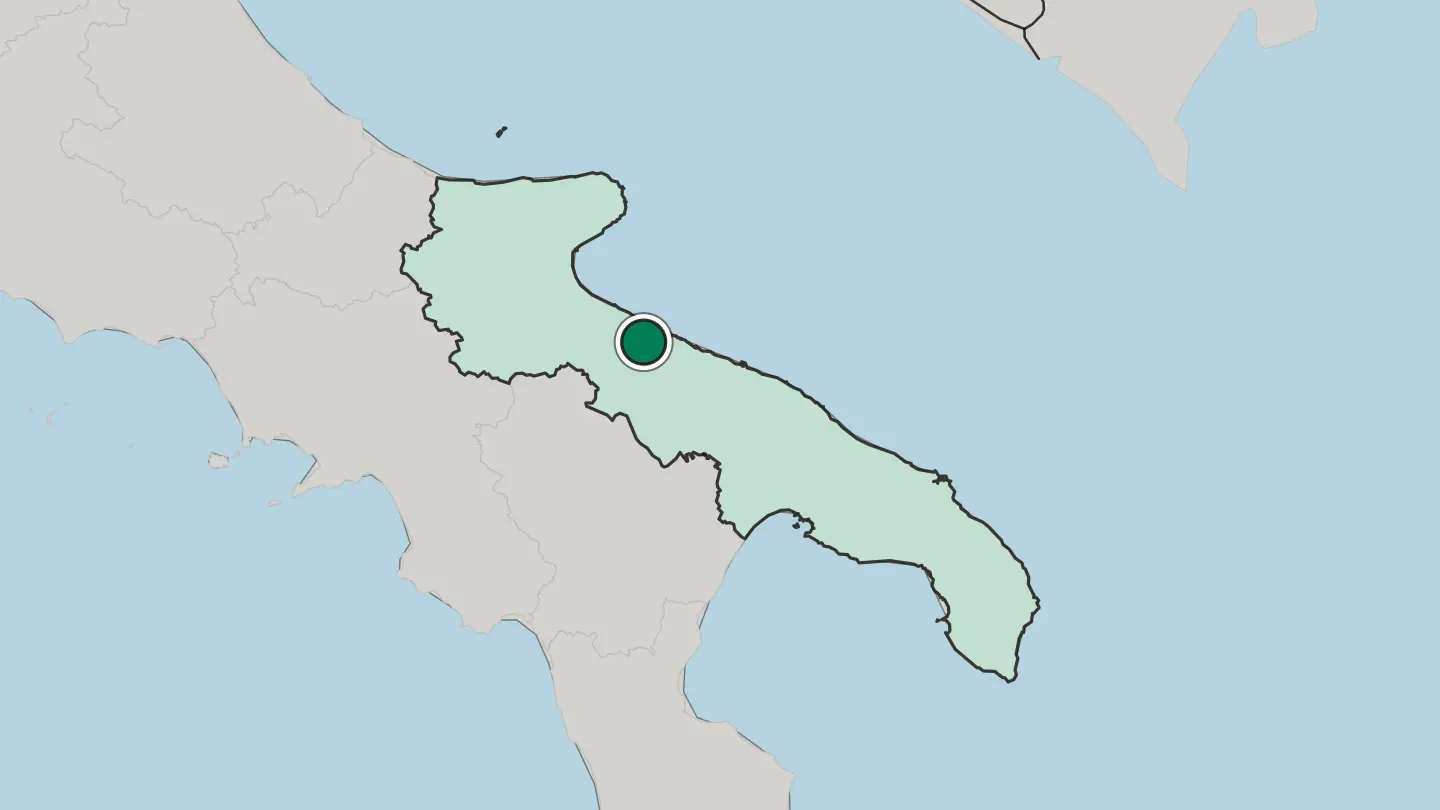
 Italy
Italy
Barletta
A colossus stands in the street. Barletta keeps a Romanesque cathedral and a castle in Apulia, one of three seats of its province.Where to stay →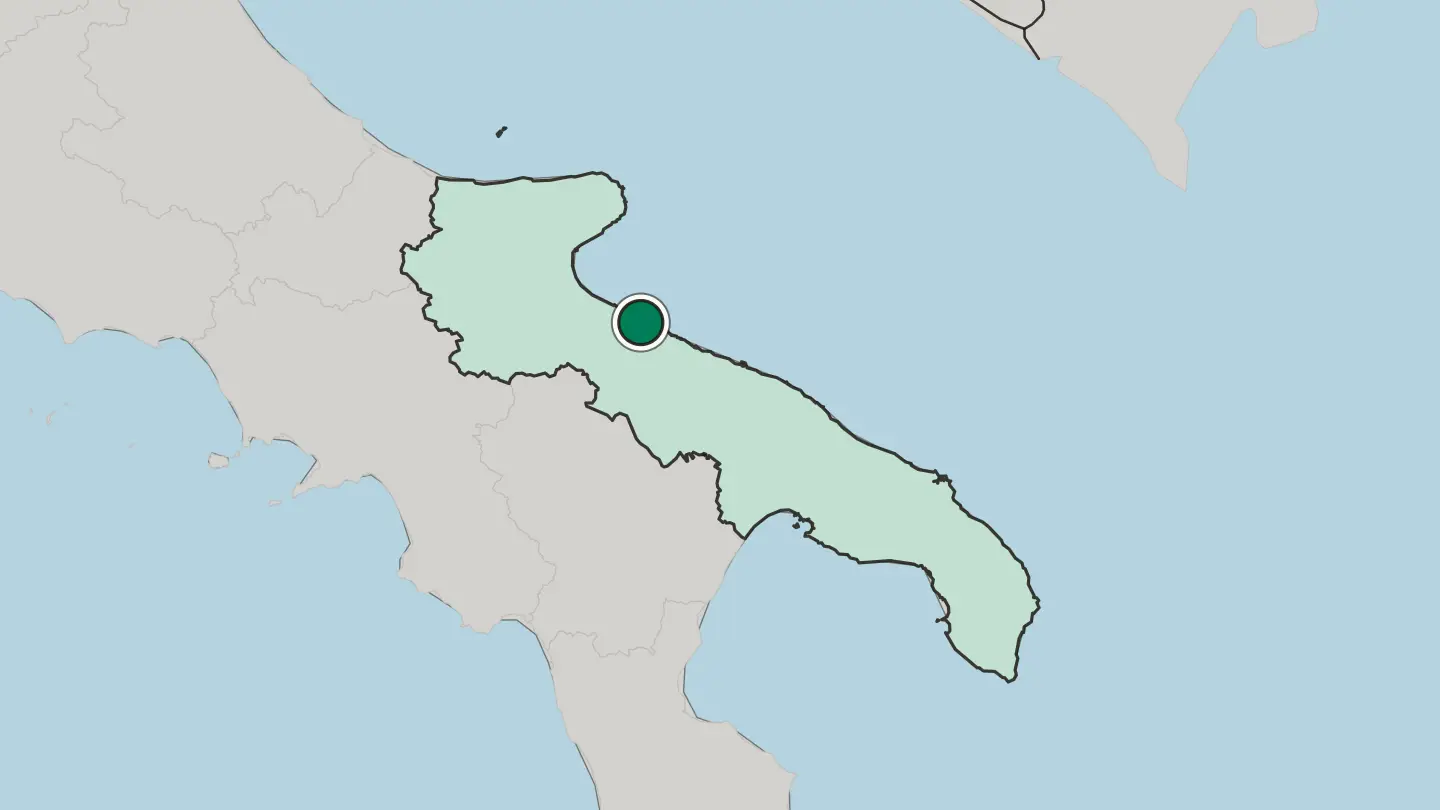
 Italy
Italy
Brindisi
Brindisi is a working Adriatic port and provincial capital in Puglia, where the Via Appia Antica ran out of road at the sea.Where to stay →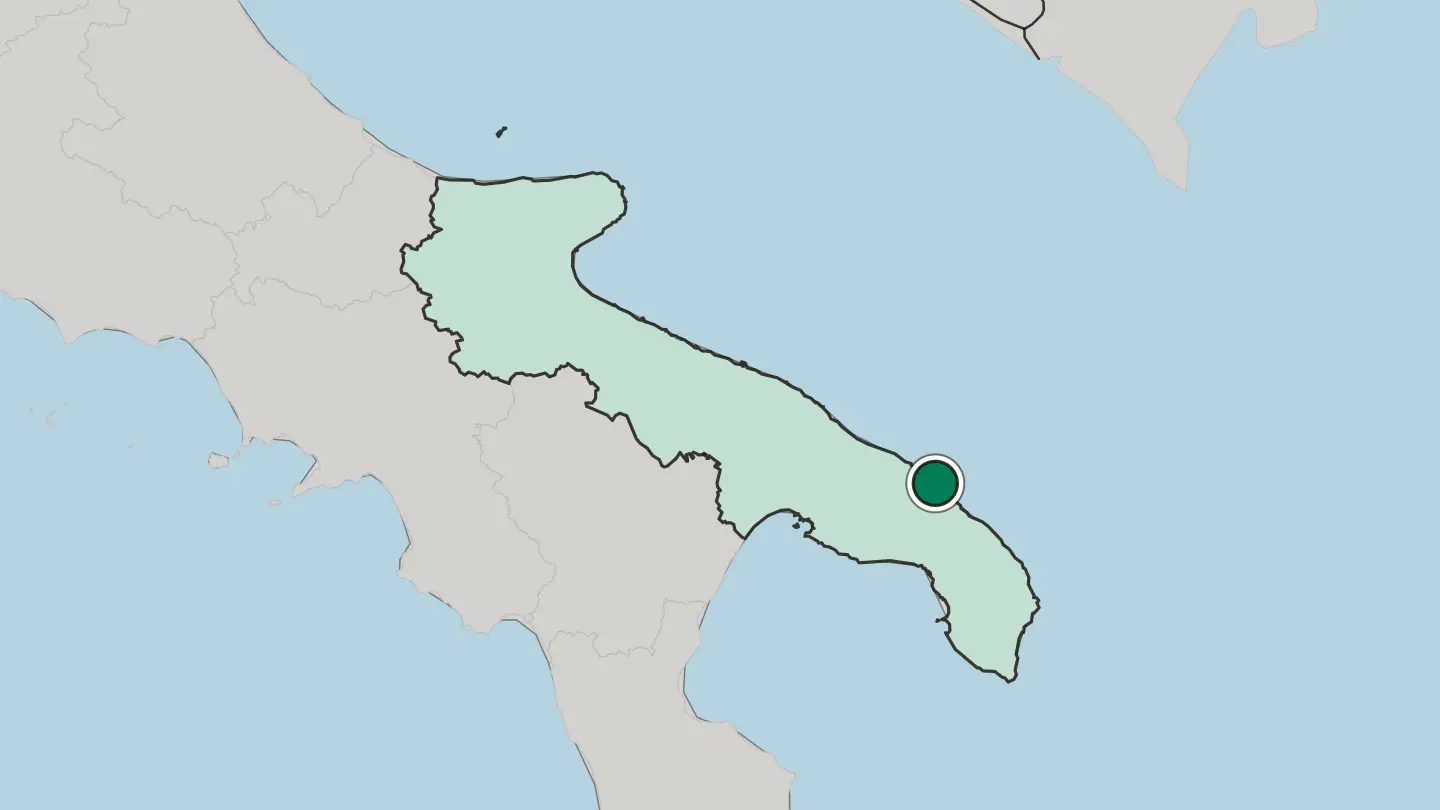
 Italy
Italy
Lecce
Lecce is the baroque capital of the Salentine Peninsula, a Puglia city of elaborate façades, Roman ruins and a cathedral square.Where to stay →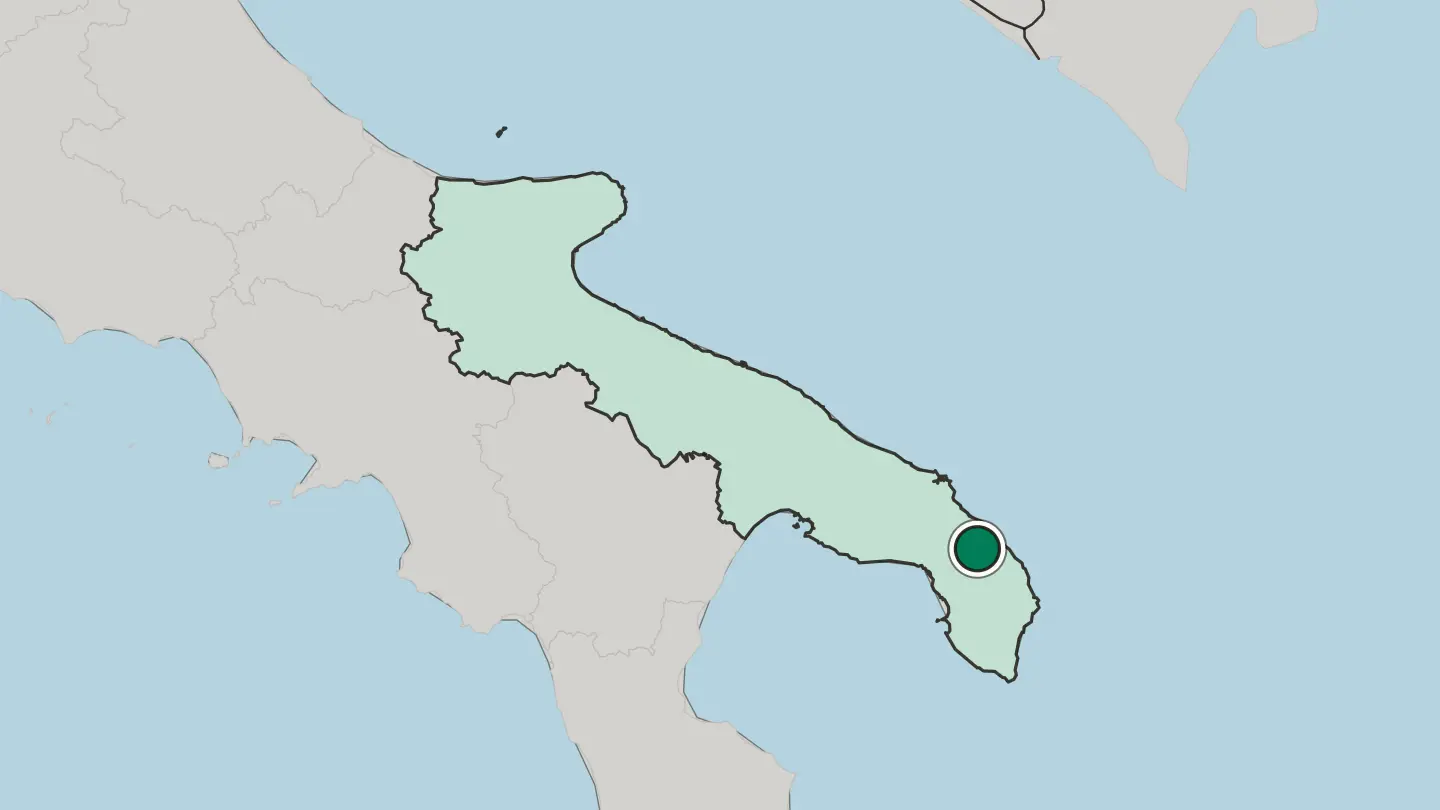 Italy
Italy
Altamura
Bread first. Altamura holds a hill of the Murge plateau, forty-five kilometres southwest of Bari and close to Basilicata.Where to stay →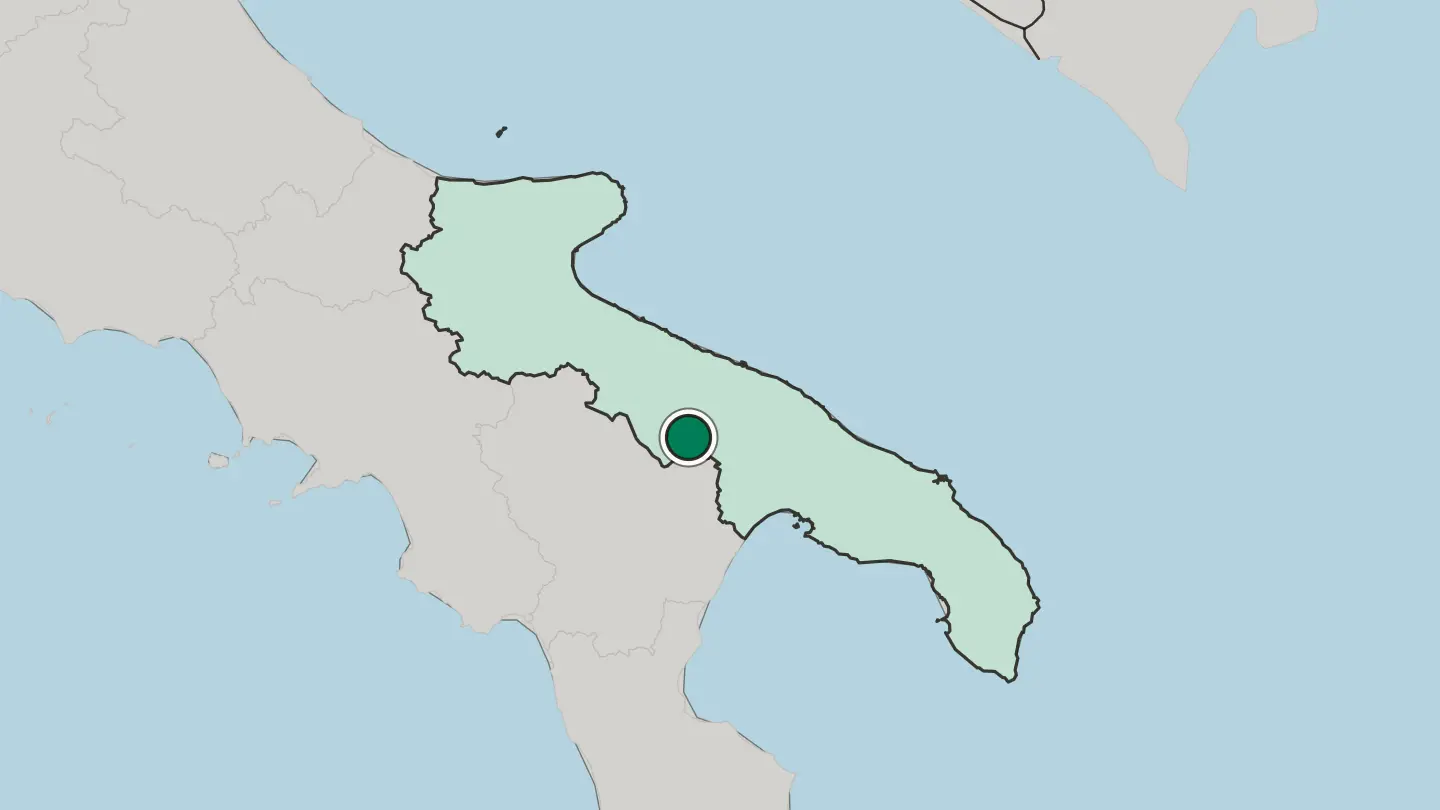
All towns & cities (15)
 Italy
Italy
Molfetta
Molfetta is a harbour town of the Metropolitan City of Bari, in Puglia, with an old centre of churches close to the water.Where to stay →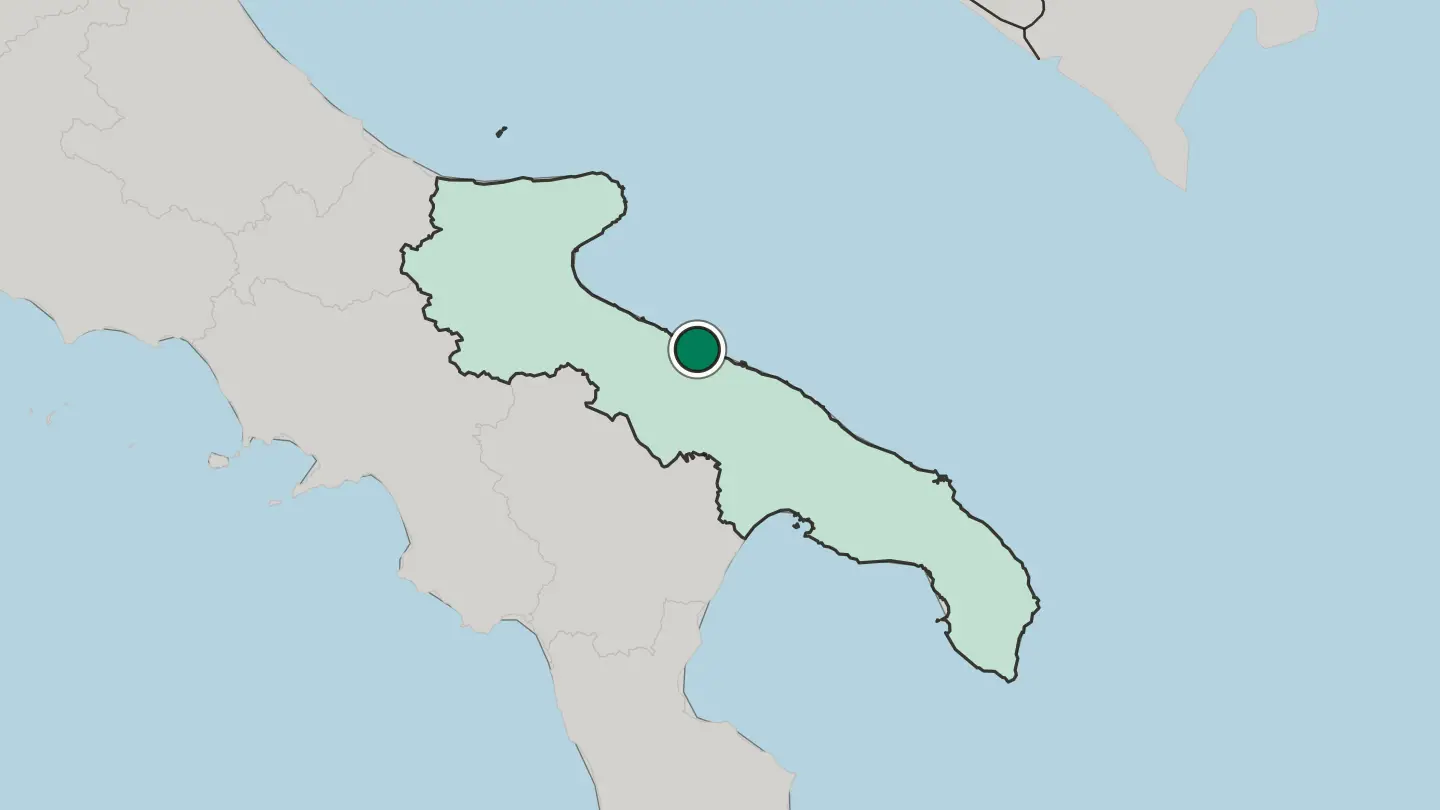
 Italy
Italy
Manfredonia
Manfredonia is a coastal city in the province of Foggia, holding a Swabian-Angevin castle, a cathedral and the archaeology of Siponto.Where to stay →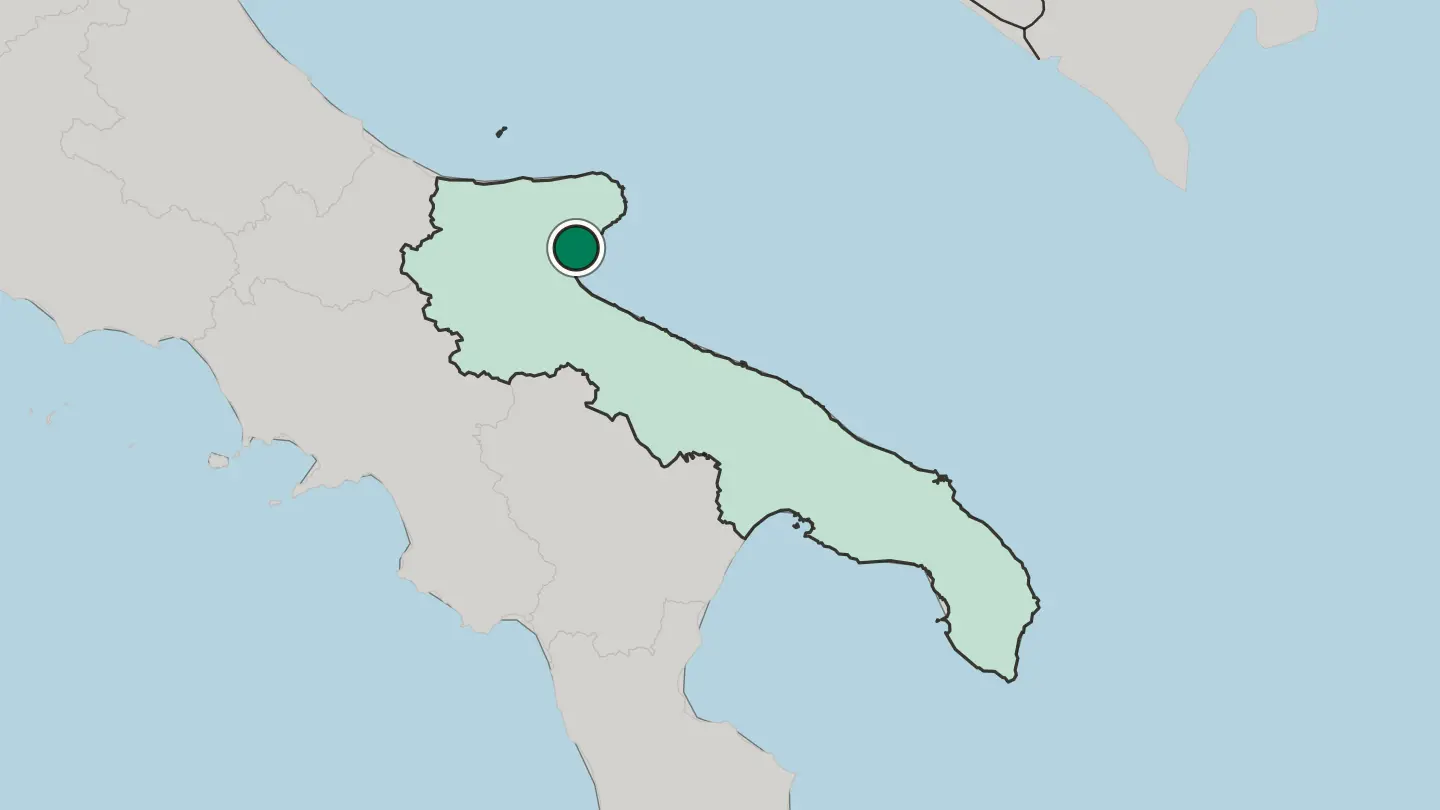
 Italy
Italy
Bisceglie
Bisceglie is a Norman-founded town on the Puglia coast, with an old centre of churches above a small working harbour.Where to stay →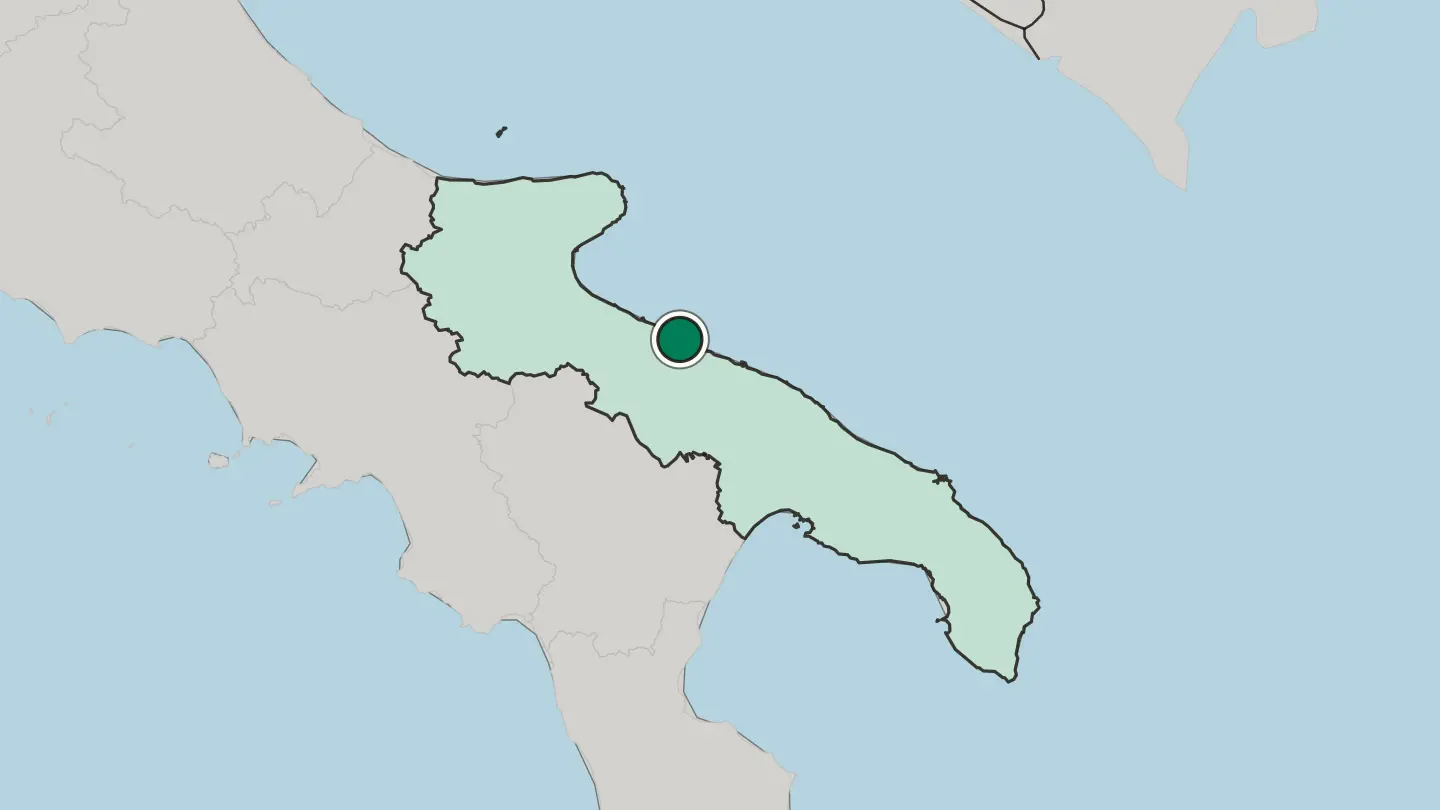 Italy
Italy
Cerignola
Cerignola is a Puglia town southeast of Foggia, holding one of the largest municipal territories in Italy, behind only Rome and Ravenna.Where to stay →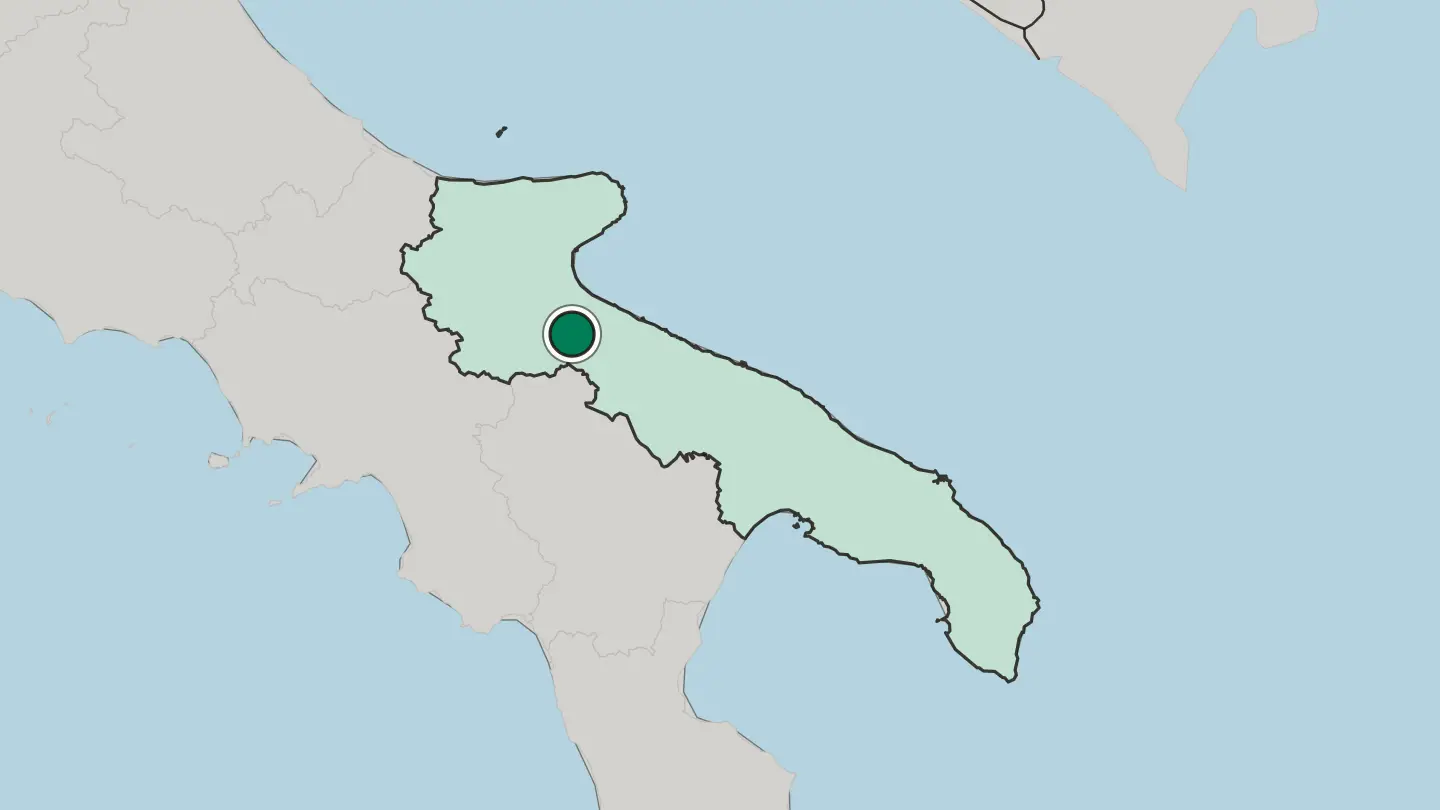
 Italy
Italy
Trani
Trani is an Adriatic seaport of Puglia, with a Romanesque cathedral and a Swabian castle standing at the water's edge.Where to stay →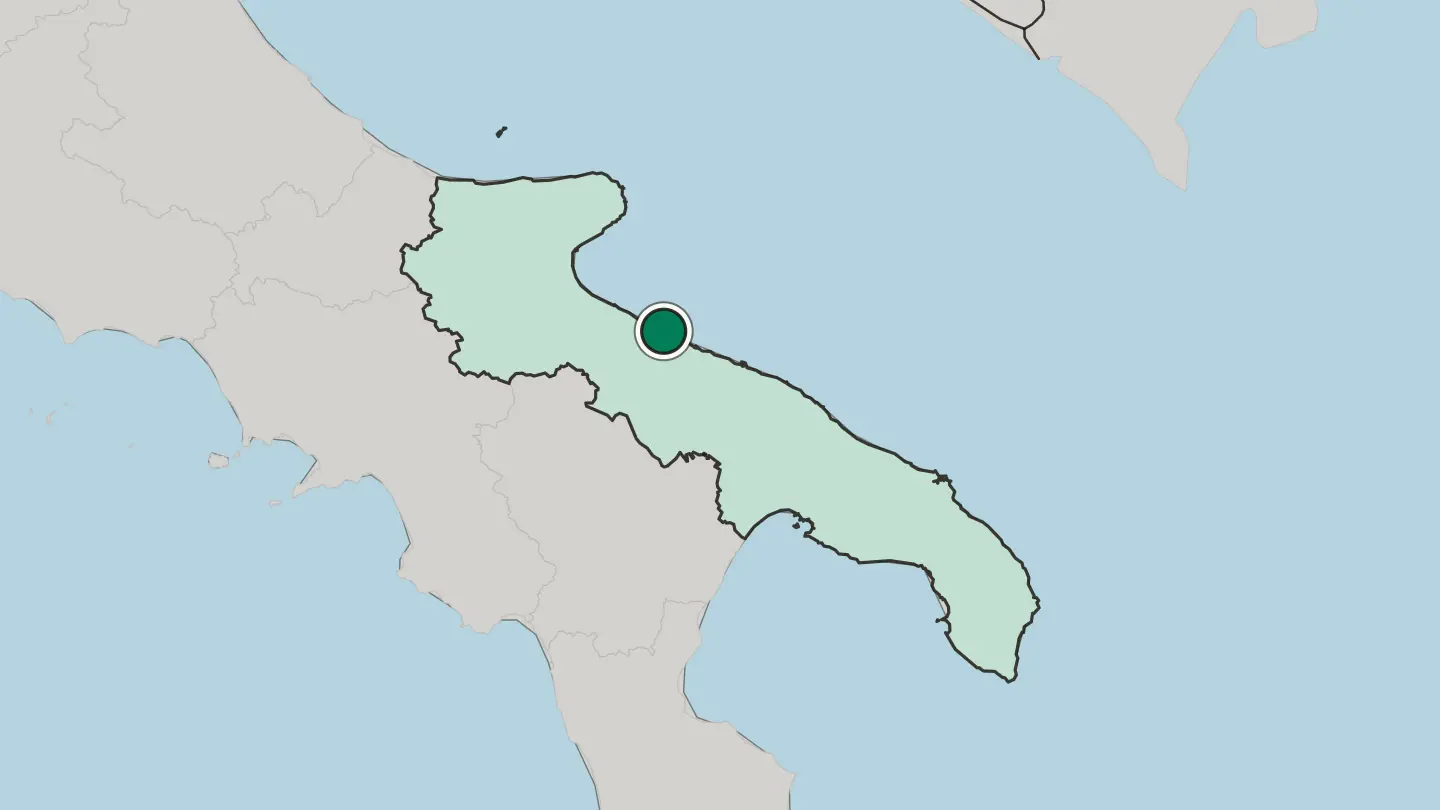
 Italy
Italy
San Severo
San Severo is a Puglian town whose old streets gather around Santa Maria Assunta Cathedral and a group of long-standing churches.Where to stay →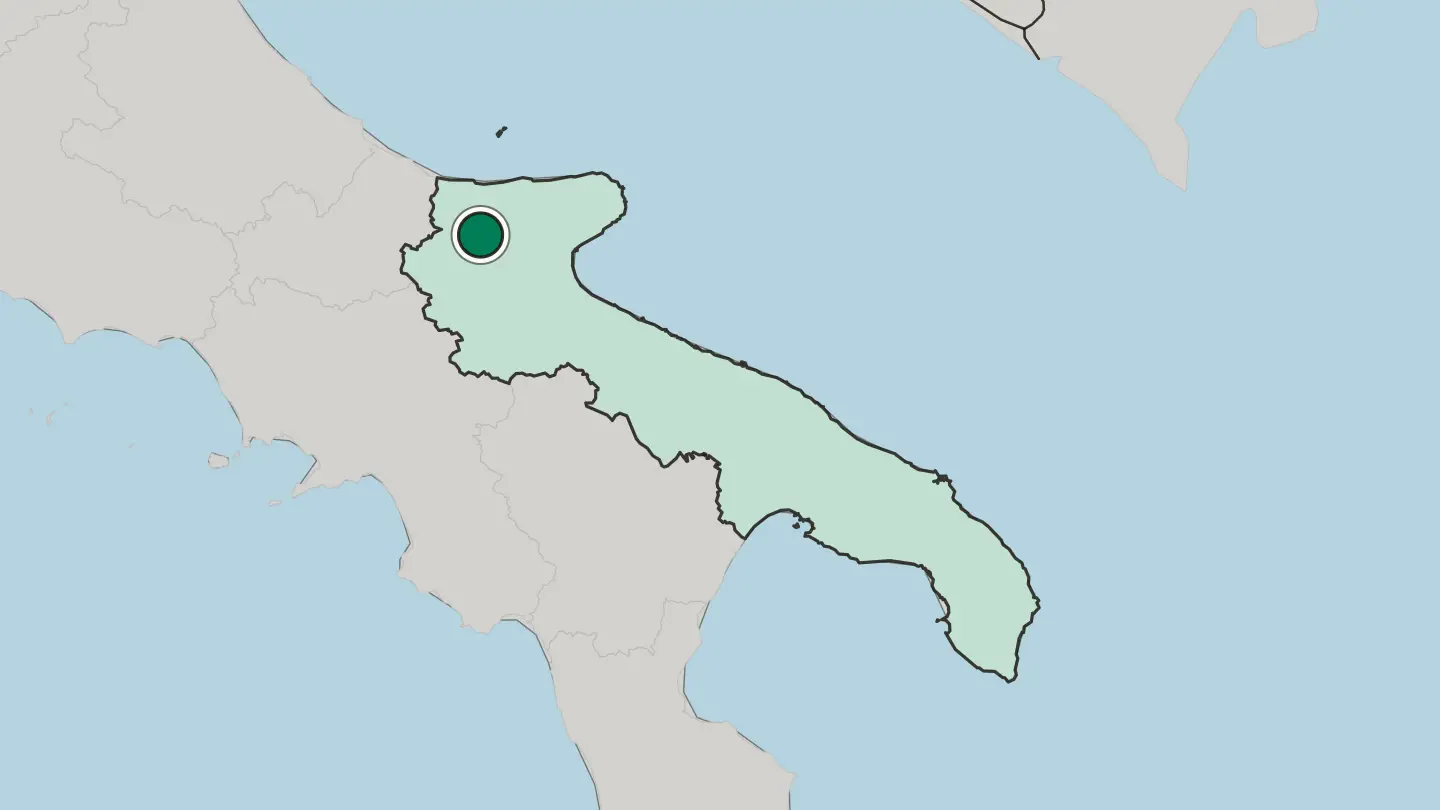
 Italy
Italy
Bitonto
Bitonto is an olive-country town west of Bari, its old centre packed with churches, courtyards and the Galleria nazionale della Puglia.Where to stay →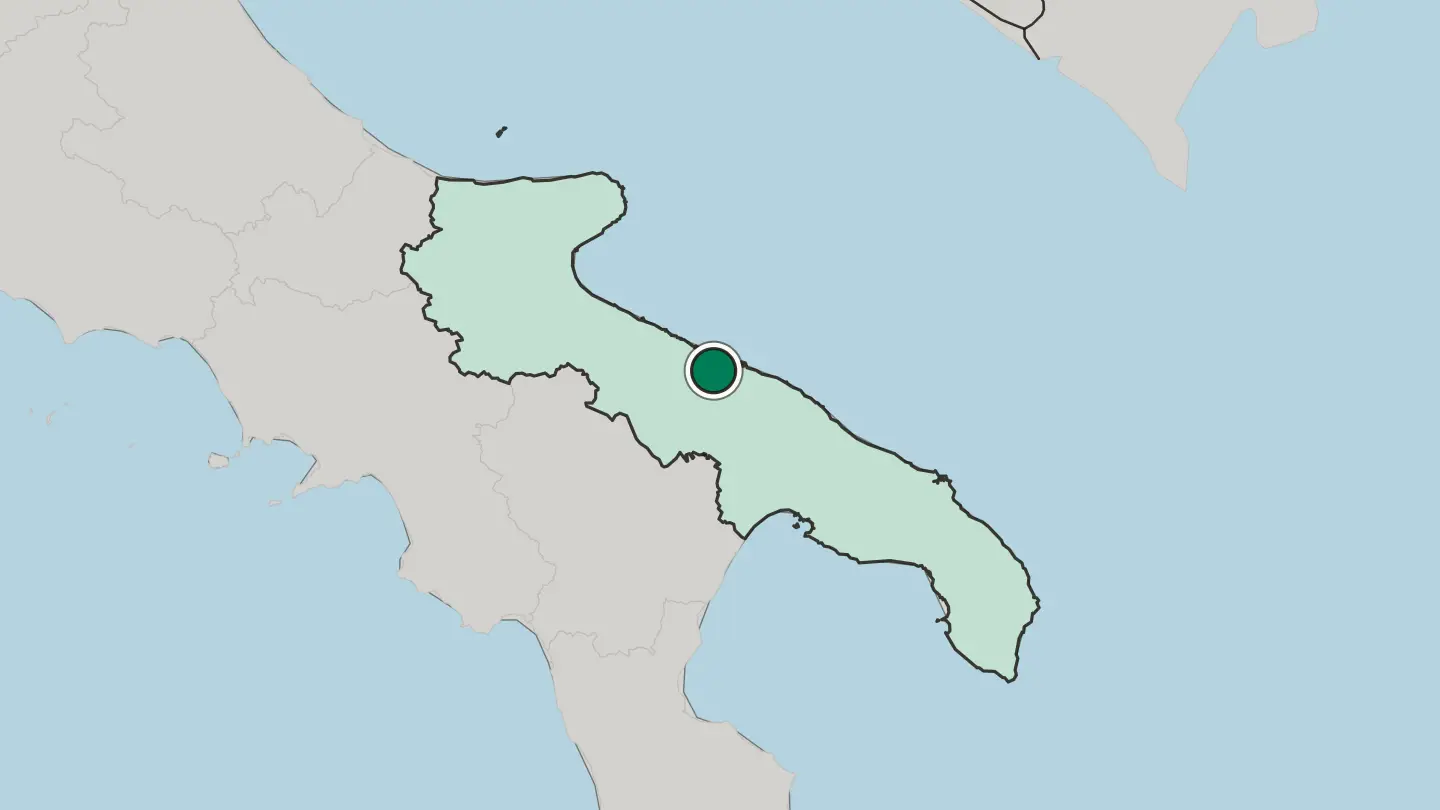
Hotel links are affiliate links: booking through them may earn us a commission, at no extra cost to you. It never affects how places are ranked. How this works
About Puglia
Puglia is the heel of the Italian boot.
What is Puglia known for?
It has the longest coastline of any region on the mainland, wrapped by the Adriatic to the east and the Ionian to the south. Inland lie the things travellers picture first: the cone-roofed trulli of Alberobello, the honey-coloured Baroque of Lecce, and olive groves so old and so vast that the region presses much of Italy's oil. Bari, the capital, sits on the Adriatic coast and is where most trips start.
Where is Puglia?
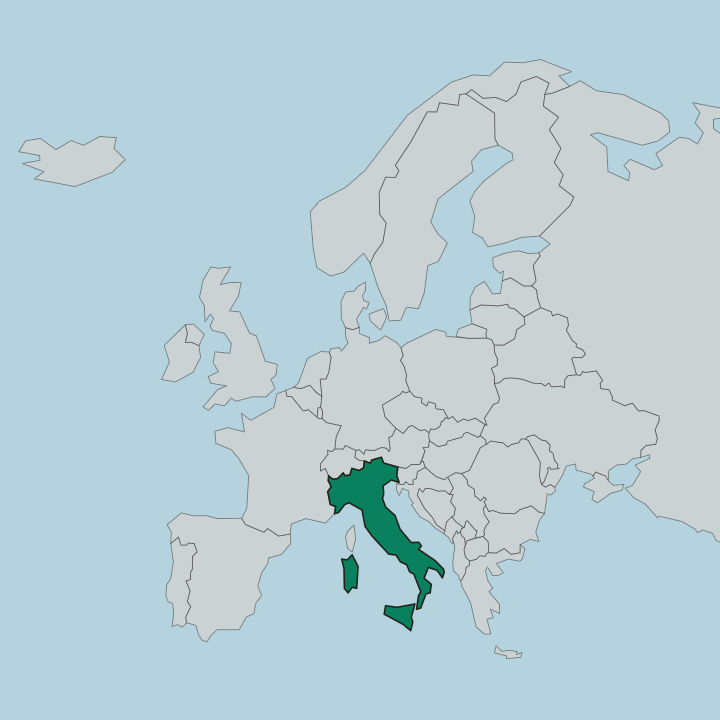
Puglia forms the eastern edge of southern Italy, the heel of the peninsula's boot. The Adriatic Sea runs the length of its long eastern coast, while the Ionian Sea and the Gulf of Taranto curl underneath the south. It is the most easterly region of the country.
From Cape Otranto, near the tip of the Salento, only the narrow Strait of Otranto separates it from Albania across the water. Three landforms give the region its shape. The Gargano promontory juts into the Adriatic in the north, the spur above the heel.
Below it spreads the Tavoliere, a broad wheat plain around Foggia and one of the flattest stretches in Italy. South and east the land rolls low and dry across the Murge plateau and down the Salento, red-soiled and studded with olive trees, rarely rising into anything you would honestly call a mountain. Inland Puglia borders three regions: Molise to the north, Campania to the west, and Basilicata to the southwest.
Almost every other edge is sea. Cape Otranto marks the far point of the heel, closer to the Balkans than to Rome. That two-sea geography, more than any hill, is what has always defined the region.
What is Puglia like?
Life in Puglia leans on the land and the sea. This is farming country before it is anything else, and the olive tree is its emblem. Groves of them run for miles across the Murge and the Salento, many of the trunks gnarled and centuries old, and the oil they press is a large share of all the oil made in Italy.
Food follows from that. Orecchiette pasta, burrata cheese, sun-hot tomatoes and fish off the Adriatic fill the table, cooked plainly and well. The building is as distinctive as the eating.
Around Alberobello the trulli stand in their thousands, round dry-stone huts capped with grey conical roofs, once thrown up without mortar so they could be pulled down before the tax man came. Lecce answers them in a different key. Its old town is carved head to foot in a soft golden limestone, so heavily worked in the Baroque age that the style earned its own name, barocco leccese, and the city its nickname as the Florence of the South.
Whitewashed hill towns like Ostuni gleam above the olive country in between. The language is Italian, though a Salentino dialect and, in a few villages, a surviving Greek speech still colour the far south. It is a culture rooted in place.
What is the history of Puglia?
Puglia has always been a doorway. It is the point where Italy faces east across a narrow sea, and every eastward power came through it. Greeks planted colonies along the Ionian shore, Taranto among them, and Rome drove the Appian Way to Brindisi to reach its ships for the East.
Byzantines, Lombards and Saracens each held the land before the Normans took it in the eleventh century. The peak came under Frederick II, the Swabian emperor who raised the octagonal Castel del Monte on its hill above the plain. Later it passed into the Kingdom of Naples and then a united Italy.
Every one of those hands left a mark still standing.
What is the climate of Puglia?
Puglia has a Mediterranean climate, and summer is the ruling season. July and August turn hot, dry and bright, when even reluctant swimmers end up chasing the Adriatic and Ionian coasts to cool off. Winters stay mild along the sea, wetter than the summer but rarely cold, with most of the year's rain falling in the darker months.
The low, open land holds little snow and few surprises. Sun is the region's steadiest export after its oil.
How do you get to Puglia?
Two airports serve the region. Bari Karol Wojtyła Airport in the north carries the wider range of routes, and Brindisi-Salento Airport in the south sits closer to Lecce and the Salento. A single coastal rail line threads the region, running down the Adriatic from Foggia through Bari and Brindisi to Lecce, so the main towns link up without a car.
Fast trains reach Bari from Rome and Naples in a few hours. A car still earns its keep for the trulli country and the white hill towns inland.
Common questions
What is the best area to stay in Puglia?
Bari: an easy first landing in Puglia. Lecce: the deep south and the Salento. Ostuni: the Itria Valley and trulli. Polignano a Mare: a coastal stop on the Adriatic.
Good for
More regions in Italy
Updated September 2026