Italy · Puglia
Where to Stay in Trani, Puglia
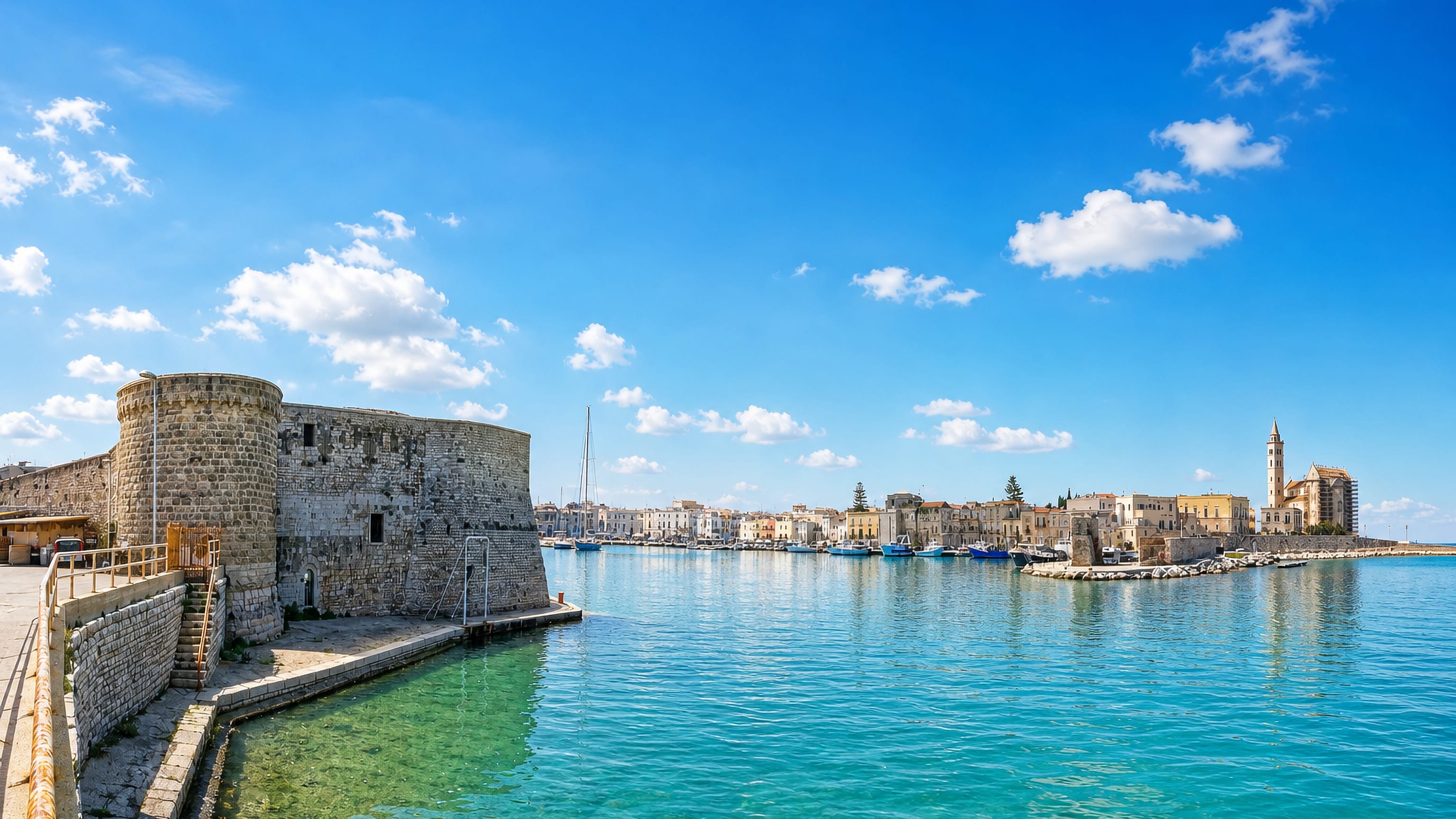
Trani is an Adriatic seaport of Puglia, with a Romanesque cathedral and a Swabian castle standing at the water's edge.
Hotel links are affiliate links: booking through them may earn us a commission, at no extra cost to you. It never affects how places are ranked. How this works


Where to stay in Trani
How the choice of base plays out on the ground.
The harbour decides most stays. Trani Cathedral and the Castle of Trani stand within a short walk of the water, and a room in the old town puts both of them, along with the lanes between, inside a few minutes on foot. That quarter fills first.
Small hotels and converted houses take the bulk of the trade near the port, and a fine weekend in high summer empties the list before most people think to look. Choice tightens accordingly. Rail ties the town to Bari, which makes a base here workable without a car for anyone content to stay near the sea.
Two alternatives are worth weighing. The medieval lanes around the Scolagrande Synagogue and the Synagogue Museum Saint Anne trade the harbour view for quiet, while keeping the cathedral and the Diocesan Museum of Trani inside the same walk. Further out, a car becomes useful.
The Monastero di Santa Maria di Colonna and the ipogeo di Santa Geffa lie away from the centre, and reaching them on foot costs more time than a short stay can usually spare. San Martino and the Beata Maria Vergine del Carmine remain central. The Museo delle carrozze di Trani suits a wet morning.
Find hotels in Trani
Direct booking searches for these neighbourhoods.
Harbour and cathedral end
The seaward end of the old town, where Trani Cathedral and the Castle of Trani stand a few minutes apart.Find hotels in Harbour and cathedral endthe lanes around the Scolagrande Synagogue and the Synagogue Museum Saint AnneOld Jewish quarter
Narrow medieval streets holding the Scolagrande Synagogue and the Synagogue Museum Saint Anne a short walk from the cathedral. Rooms are few around here — worth securing early.Find hotels in Old Jewish quartera car-based stay out towards the Monastero di Santa Maria di ColonnaSanta Maria di Colonna side
Ground away from the harbour trade, named for the Monastero di Santa Maria di Colonna and dependent on driving. Beds are limited here, so book early.Find hotels in Santa Maria di Colonna sideHotel links are affiliate links: booking through them may earn us a commission, at no extra cost to you. It never affects how places are ranked. How this works
Things to do in Trani
Ranked by global recognition; descriptions from Wikidata (CC0).
Museums & Galleries
2- Diocesan Museum of Trani Heritage
- Museo delle carrozze di Trani Heritage
Churches & Religious Sites
3- Monastero di Santa Maria di Colonna Heritage
- Synagogue Museum Saint Anne Heritage
- Trani Cathedral
Castles & Historic Sites
1- Castle of Trani Heritage
worth knowingacross 3 categories in Trani
About Trani
The cathedral does the work here.
What is Trani known for?
Trani Cathedral carries the Romanesque building the town is known by, and the Castle of Trani, Swabian in origin, gives it a second monument from much the same stretch of centuries. A Jewish quarter survives too. The Scolagrande Synagogue and the Synagogue Museum Saint Anne preserve what a medieval community built, while the Diocesan Museum of Trani keeps the church side of that record.
Carriages have their own collection: the Museo delle carrozze di Trani.
What are the main landmarks in Trani?
Trani Cathedral is the reason most visitors come. The Castle of Trani answers it from the shore, Swabian work of much the same age, and the ipogeo di Santa Geffa records an older use of the ground beneath the town. Two synagogue sites survive.
Scolagrande Synagogue and the Synagogue Museum Saint Anne stand for the medieval Jewish community, while San Martino and the Beata Maria Vergine del Carmine belong to the parish record. The Museo delle carrozze di Trani is the outlier.
What is the history of Trani?
Trade came in from the Adriatic. The town has been a seaport for as long as its monuments have stood, and the Romanesque work of Trani Cathedral belongs to the centuries when the ports of this coast were building in stone. The ipogeo di Santa Geffa runs deeper than any of that.
Swabian rule left the Castle of Trani, the second of the town's monuments from that age. Both stand close to the water, which is where the business of the place always was. A Jewish quarter grew inside the medieval town.
Scolagrande Synagogue survives from it, and the Synagogue Museum Saint Anne now holds that history in a building whose name records what became of it later. San Martino and the Beata Maria Vergine del Carmine fill in the parish life around those larger institutions. Church bodies kept an archive of their own, which the Diocesan Museum of Trani gathers, and the Monastero di Santa Maria di Colonna stands apart from the town as a separate strand of the same account.
Its administrative standing came much later. Trani is one of the capital cities of the province of Barletta-Andria-Trani, sharing that role rather than holding it alone. The railway ties it to Bari.
Where is Trani?
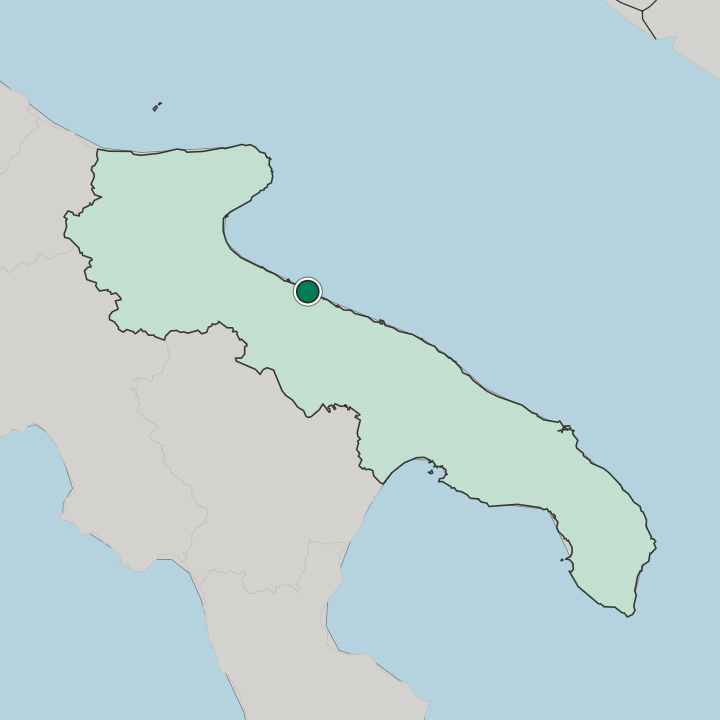
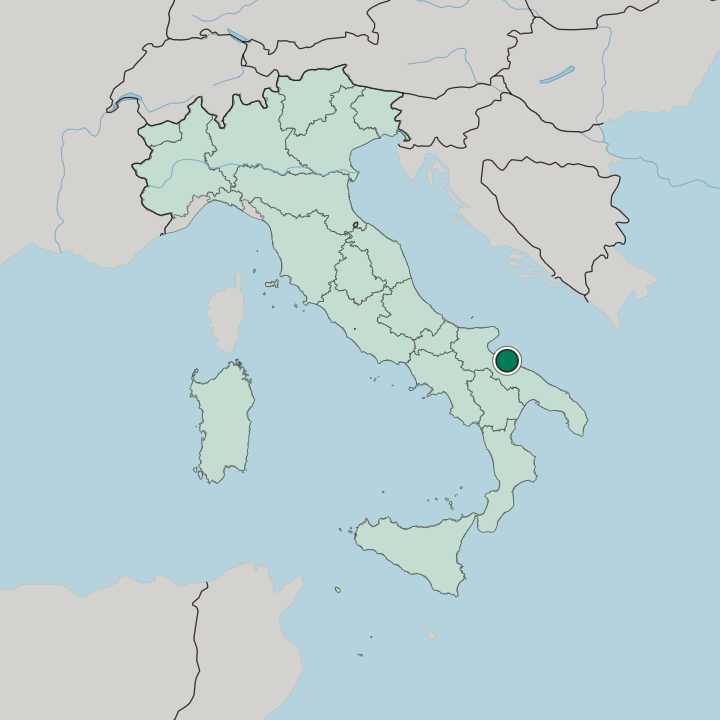
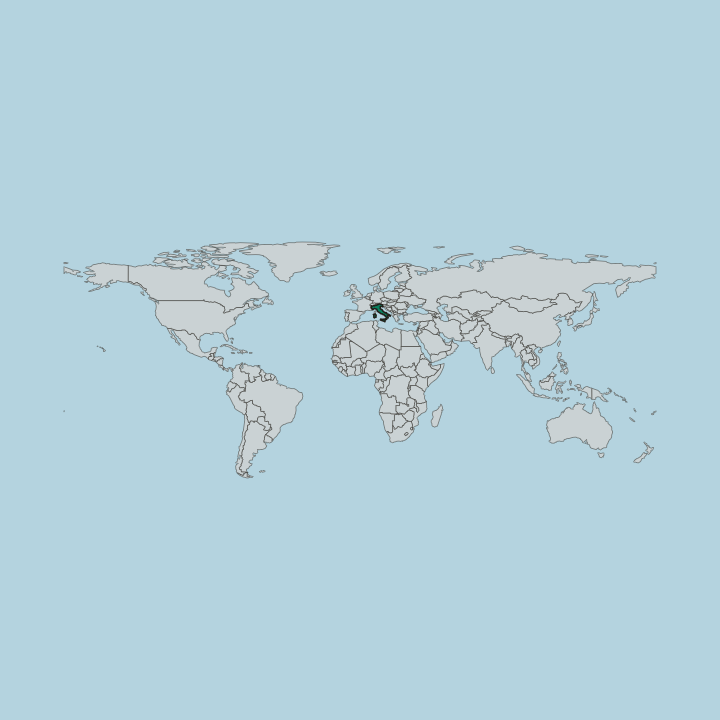
Trani stands on the Adriatic. Its municipal ground covers a little over a hundred square kilometres of shore and farmland, all of it inside the province of Barletta-Andria-Trani. Puglia runs on inland.
The old town keeps close to the harbour, with Trani Cathedral and the Castle of Trani near the seaward edge and the newer streets set back behind them.
What is the climate of Trani?
Sea air blunts both extremes. Summers on this coast run hot and dry, and the water off the harbour keeps the evenings easier than the same hours a short way inland. Winter is brief here.
Trani sits inside the temperate band, and the Adriatic beside it holds the coldest weather off the town more effectively than any distance from the sea would.
How do you get to Trani?
The railway is the useful thing. Trani lies some forty kilometres from Bari by rail, which makes arriving without a car straightforward and leaves the old town within reach of a train. Inside town, walking covers it.
Trani Cathedral, the Castle of Trani and the synagogue sites all fall within a few minutes of one another, while the Monastero di Santa Maria di Colonna asks for wheels.
Common questions
What is the best area to stay in Trani?
Harbour and cathedral end: waking within sight of Trani Cathedral and the working harbour. Old Jewish quarter: the lanes around the Scolagrande Synagogue and the Synagogue Museum Saint Anne. Santa Maria di Colonna side: a car-based stay out towards the Monastero di Santa Maria di Colonna.
Good for
More cities in Puglia
Updated October 2026