Japan · Chiba-ken
Where to Stay in Chiba, Chiba-ken
Chiba is the largest city in Chiba Prefecture, a port east of Tokyo known for the Chiba Port Tower and its bayside museums.
Hotel links are affiliate links: booking through them may earn us a commission, at no extra cost to you. It never affects how places are ranked. How this works


Where to stay in Chiba
Each area has its own feel; here's who each one suits.

 ChibaJapan
Chuo
Chuo, or Chūō-ku, holds Chiba's city government, the offices of Chiba Prefecture and the commercial centre of the city.Where to stay →ChibaJapanInage
Inage, written Inage-ku in Japanese, is one of the six wards of the city of Chiba in Chiba Prefecture.Where to stay →ChibaJapanWakaba
Wakaba is the largest of Chiba's six wards by area, with the Kasori Shell Mound the single site on its register.Where to stay →Hotel links are affiliate links: booking through them may earn us a commission, at no extra cost to you. It never affects how places are ranked. How this works
Find hotels in Chiba
Direct booking searches for these neighbourhoods.
Chiba Station district
Steps from the platforms where the Tokyo lines converge, with the Chiba City Museum of Art and the shopping arcades reachable on footFind hotels in Chiba Station districtEvening walkers drawn to the bay and the Chiba Port Tower lightsChiba Port waterfront
Reclaimed bayside anchored by the Chiba Port Tower and Chiba Port Arena, with harbour parks and open views across Tokyo BayFind hotels in Chiba Port waterfrontHotel links are affiliate links: booking through them may earn us a commission, at no extra cost to you. It never affects how places are ranked. How this works
Things to do in Chiba
Ranked by global recognition; descriptions from Wikidata (CC0).
Museums & Galleries
3- Chiba City Museum of Art
- Chiba Prefectural Museum of Art
- Chiba City Floral Museum
Castles & Historic Sites
1- Arayashiki Shell Mound
Stadiums & Sports
1- Chiba Port Arena
worth knowingacross 3 categories in Chiba
About Chiba
What is Chiba known for?
Chiba is known above all as Tokyo's eastern port and museum city. The waterfront defines it. The Chiba Port Tower rises over reclaimed land on Tokyo Bay, while the Chiba City Museum of Art, the Chiba Prefectural Museum of Art, and the Natural History Museum and Institute pull visitors inland from the docks that built the city.
Ships still frame the skyline.
What are the main landmarks in Chiba?
The Chiba Port Tower is the city's marker on the bay. It stands on the reclaimed waterfront beside the Chiba Port Arena, and from its deck the whole harbour spreads out below. Inland, the museums cluster: the Chiba City Museum of Art, the Chiba Prefectural Museum of Art, the Chiba City Museum of Science, and the Chiba City Floral Museum each hold a different collection.
An older mark remains. The Arayashiki Shell Mound keeps the ancient shore, its layered shells still tracing where the water once reached.
What is the history of Chiba?
Chiba's recorded shape begins in 1889, the year the town was formally organised on the western shore of the prefecture that carries its name. The harbour came to define it. People had lived along this coast far earlier, though, and the Arayashiki Shell Mound preserves the discarded shells of fishers from a time when the sea reached much higher up the land than the modern coast, its layers marking an ancient edge of the bay that later reclamation would push far out into the water.
Growth followed the water. Reclaimed flats carried the city out into Tokyo Bay, and the docks that rose along them eventually lifted the Chiba Port Tower above the harbour lights. The museums arrived with the modern city, each keeping a different thread of its story.
The Chiba City Folk Museum holds the older record of daily life, the Natural History Museum and Institute reads the land and its shoreline, and the Chiba City Museum of Art gathers the region's painting. Near a school for the blind stands the Statue of Helen Keller, a memorial to her visits. Trade made Chiba.
The bay has held it ever since, from the shell mounds to the container berths.
Where is Chiba?
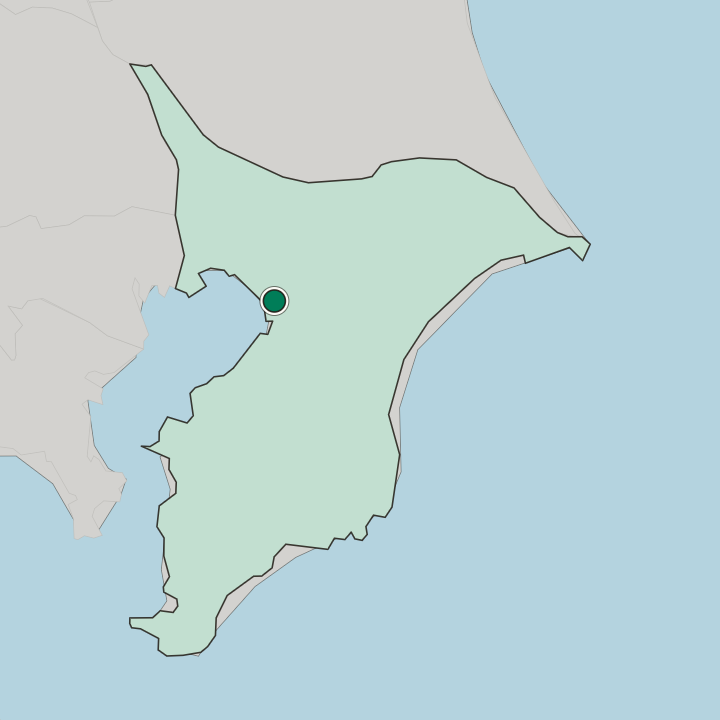
Tokyo Bay curves along Chiba's western edge. The city sits east of Tokyo. Reclaimed flats carry the port and its towers on the bay side, while the older ground rises gently inland toward the plains of Chiba Prefecture, and the Arayashiki Shell Mound marks a shoreline that once lay much further inland.
The sea set the shape of everything.
What is the climate of Chiba?
The bay keeps Chiba mild. Winters stay gentle along the water, rarely hard, while summers turn warm and humid as damp air moves in off Tokyo Bay and the open Pacific beyond it. Sea breezes soften the afternoons.
Snow is rare on the coast.
How do you get to Chiba?
Arrivals reach Chiba by rail. Chiba sits on the rail lines that run east from Tokyo, and the ride from the capital is short enough that many treat the city as an outer district of the metropolis. The port handles ships rather than passengers.
For most travellers, the station is the door, with lines fanning out from the centre toward the bay, the museums, and the prefecture beyond.
Common questions
What is the best area to stay in Chiba?
Chiba Station district: Rail-first travellers using Chiba as a cheaper base than central Tokyo. Chiba Port waterfront: Evening walkers drawn to the bay and the Chiba Port Tower lights.
Good for
More cities in Chiba-ken
Updated October 2026