Japan · Chiba-ken
Where to Stay in Ichikawa, Chiba-ken
Ichikawa is a Chiba Prefecture city across the Edogawa River from Tokyo, with Nakayama Hokekyō-ji, the Kōnodai heights and Jōmon shell mounds.
Hotel links are affiliate links: booking through them may earn us a commission, at no extra cost to you. It never affects how places are ranked. How this works


Where to stay in Ichikawa
Where the beds are, and what that means for the visit.
The choice runs from north to south. Motoyawata is the working centre, with the city hall nearby and three rail lines at its station, so a room there puts the Chūō-Sōbu Line, the Toei Shinjuku Line and the Keisei Main Line on the doorstep. Ichikawa Station is the other commercial hub and the stop for the rapid trains on the Sōbu Line.
Both suit a trip whose days are spent in Tokyo. Kōnodai is quieter. The heights above the Edogawa River hold Satomi Park, university campuses and the ground where Shimōsa Province kept its capital, and Mama and Sugano below them have carried the highest residential land prices in Chiba Prefecture since the Meiji period.
Gyōtoku is the modern south. Salt pans covered it in the Edo period, and it was rebuilt as a new town along the Tokyo Metro Tōzai Line, which runs into central Tokyo. Its bay edge is industrial, though the Sanbanze tidal flat offshore is protected as one of the important wetlands of Japan.
Nakayama is for the temple. A night near Nakayama Hokekyō-ji suits someone who wants to be at the gates early.
Find hotels in Ichikawa
Direct booking searches for these neighbourhoods.
Motoyawata
Three rail lines meet at the station beside the city hall, the administrative and commercial centre of Ichikawa.Find hotels in Motoyawataquiet nights above the Edogawa RiverKōnodai and Mama
The heights hold Satomi Park and the campuses, and Mama below them is the most expensive residential ground in Chiba Prefecture.Find hotels in Kōnodai and Mamaa direct run into Tokyo on the Tōzai LineGyōtoku
The former salt pans were rebuilt as a new town of wide streets on the Tokyo Metro Tōzai Line.Find hotels in GyōtokuHotel links are affiliate links: booking through them may earn us a commission, at no extra cost to you. It never affects how places are ranked. How this works
About Ichikawa
Literature is one answer.
What is Ichikawa known for?
Natsume Sōseki, Masaoka Shiki, Akiko Yosano and Nagai Kafū wrote about Ichikawa or lived in it, and the Ichikawa City Museum of Literature keeps that record in one building. The other answer is older. Nakayama Hokekyō-ji, a head temple of the Nichiren school, keeps a five-storey pagoda built in 1622, while Katsushika Hachiman Shrine was founded in the Heian period.
Tokyo explains the rest. The city faces the capital across the Edogawa River and grew as a commuter town for people who work there.
What are the main landmarks in Ichikawa?
Nakayama Hokekyō-ji leads the list, with a gate and a hall from the Sengoku period and the five-storey pagoda of 1622. Katsushika Hachiman Shrine is older still. On the Kōnodai heights, Satomi Park looks down on the Edogawa River and is known for its cherry trees, and Shimōsa Kokubun-ji Temple keeps the name of the provincial temple that stood nearby.
The shell mounds are the deepest layer. Horinouchi Shell Mound, Ubayama Shell Mound and Soya Shell Mound are Jōmon sites inside the city. The Ichikawa City Museum of Literature and the Chiba Museum of Science and Industry cover the modern end.
What is the history of Ichikawa?
People were here in the Palaeolithic. Stone tools some thirty thousand years old have turned up in Ichikawa, the Jōmon period left shell middens across the higher ground, among them the Ubayama Shell Mound and the Horinouchi Shell Mound, and hundreds of Kofun burial mounds came after them. The Nara period made it a capital.
Ichikawa held the provincial seat of Shimōsa Province, whose territory reached from east of the Sumida River across northern Chiba, and Shimōsa Kokubun-ji Temple and Shimōsa Kokubun-niji were its official temples. The Man'yōshū mentions the place. Taira no Masakado's rebellion was centred here in the Heian period, and in the Sengoku period the Satomi clan and the Later Hōjō clan fought the Battle of Kōnodai on the heights above the river.
Salt came next. Through the Edo period the pans at Gyōtoku produced salt known across the country. Modern Ichikawa took shape in stages.
Ichikawa Town was organised in 1889, merged with Yawata, Nakayama and Kokubun to become a city in 1934, and then absorbed Okashiwa, Gyōtoku and Minami-Gyōtoku. Writers came with the railway. Nagai Kafū, Kōda Rohan and Kitahara Hakushū all settled here.
Where is Ichikawa?
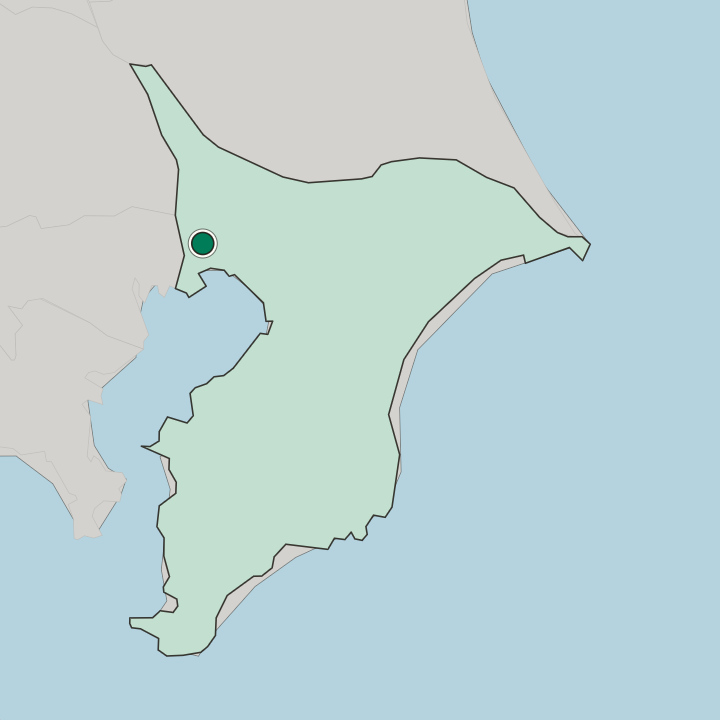
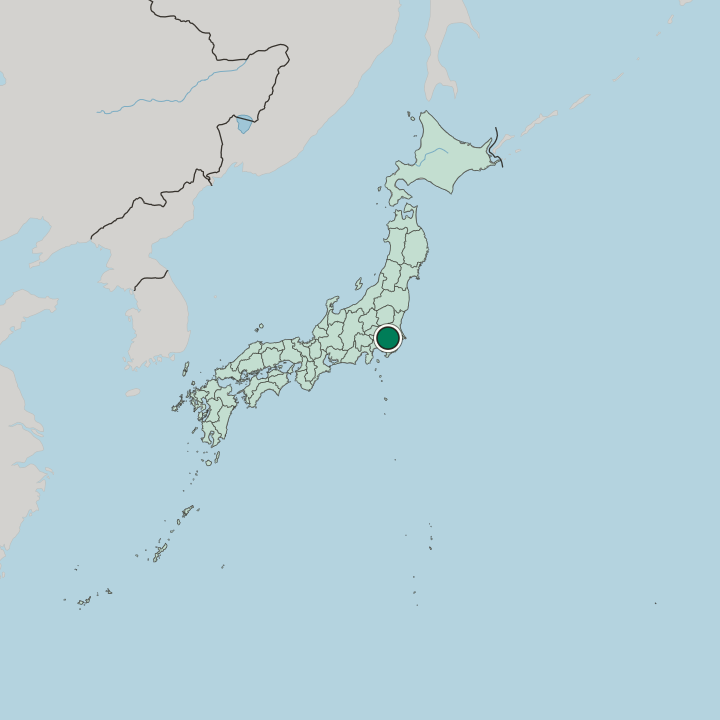
Ichikawa faces Tokyo across the Edogawa River, with Edogawa ward on the far bank. The city spans two kinds of ground. The south is an alluvial plain only about two metres above the sea, with reclaimed land along Tokyo Bay, while the north climbs onto the gentle Shimōsa Plateau and reaches thirty metres in Satomi Park. Funabashi, Matsudo, Kamagaya and Urayasu share its other borders, and pear orchards still cover the north and east.
Common questions
What is the best area to stay in Ichikawa?
Motoyawata: days spent in central Tokyo. Kōnodai and Mama: quiet nights above the Edogawa River. Gyōtoku: a direct run into Tokyo on the Tōzai Line.
Good for
More cities in Chiba-ken
Updated October 2026