Japan · Nagano-ken
Where to Stay in Nagano, Nagano-ken
The pilgrim road still climbs to Zenkō-ji in Nagano, capital of Nagano Prefecture on the floor of the Nagano Basin, the highest prefectural seat in Japan.
Hotel links are affiliate links: booking through them may earn us a commission, at no extra cost to you. It never affects how places are ranked. How this works


Where to stay in Nagano
Where visitors usually base themselves, and why.
Nagano splits its rooms between the temple gate and the station, with the length of the old approach road running between them. Beds nearest Zenkō-ji sit among the pilgrim lodgings and the shops of the monzen-machi, close enough to the dawn service that visitors walk to it in the dark, and the Nagano Prefectural Art Museum is a few minutes further on. Bells carry from the gate.
Choose this end if the temple is the reason you came. The station end takes the business trade. Hotels stand thick around the Shinkansen platforms, and rooms there put the whole of Nagano Prefecture within a morning, from Ueda and Saku across to Matsumoto and the mountains, which suits skiers moving on more than anyone lingering.
Buses to the slopes leave from the forecourt. Jōyama is the quiet option. The park ground above the temple holds the Nagano City Jōyama Zoo and a good deal of open woodland, and rooms on that slope trade the arcades for trees and a view down over the basin.
Families take it in summer, and the walk back down to the gate is downhill the whole way.
Find hotels in Nagano
Direct booking searches for these neighbourhoods.
The Zenkō-ji approach
Pilgrim lodgings and shops along the monzen-machi roadFind hotels in The Zenkō-ji approachSkiers moving on and early Shinkansen departuresThe station end
Hotels thick around the platforms and the slope busesFind hotels in The station endFamilies with the zoo and the park woodlandJōyama
Wooded slope above the temple, looking down over the basinFind hotels in JōyamaHotel links are affiliate links: booking through them may earn us a commission, at no extra cost to you. It never affects how places are ranked. How this works
About Nagano
What is Nagano known for?
Nagano is known for Zenkō-ji, the temple whose approach road became the main street of the town. Pilgrims made the place. The city grew as a monzen-machi below the temple gate, and the shops on the approach still trade on that traffic, while the winter games of 1998 left arenas in the city and ski runs in the mountains around it.
Art fills the newer halls. The Nagano Prefectural Art Museum stands on the park ground beside the temple, with the Mizuno Museum of Art and the Kitano Cultural Center further out.
What are the main landmarks in Nagano?
Nagano is built around Zenkō-ji, and the temple pulls almost everything else to it. Its main hall is vast. The dark wooden building stands at the head of the approach road with the pilgrim lodgings ranged below it, and the wooded ground of Jōyama rises immediately behind, carrying the Nagano Prefectural Art Museum and the Nagano City Jōyama Zoo.
Two more sit in the streets below. The Mizuno Museum of Art keeps a painting collection, and the Kitano Cultural Center gathers the other exhibitions.
What is the history of Nagano?
Nagano began as the town below a temple gate. Zenkō-ji was there first. The temple drew pilgrims from across the country long before there was a city here, and the lodgings, shops and workshops that served them settled along its approach road until the road itself became the town.
The basin around it was farmed and fought over. Armies met on the flats of the Nagano Basin where the rivers run together, and the district changed hands more than once before the country settled. Goods moved up the road behind them.
The approach road carried goods as well as devotion, and the monzen-machi kept its shape even as the traffic on it changed. Nagano was incorporated as a city in 1889, among the municipalities formed across Nagano Prefecture in that reform, and it took the prefectural offices as the highest such seat in Japan. Rail arrived and the town spread.
The winter games of 1998 brought the Shinkansen, the arenas and a rebuilt station, and pulled the centre of gravity down the slope toward the platforms. Zenkō-ji still holds the head of the street.
Where is Nagano?
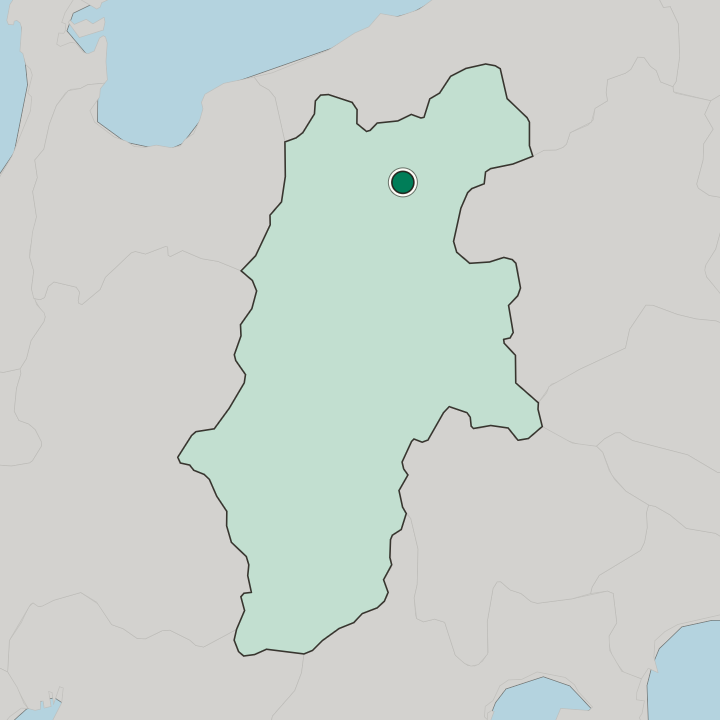
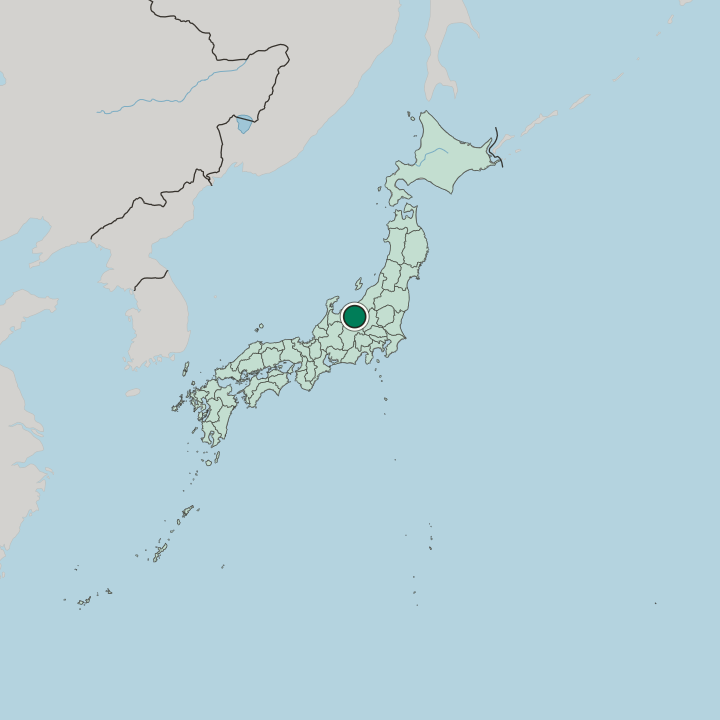
Nagano lies in the Nagano Basin, in Nagano Prefecture, in the central Chūbu region of Japan. Mountains close the basin on all sides. The city occupies the flat floor where the rivers of the basin meet, with the wooded hill of Jōyama pushing in from the north and the higher ranges standing back beyond the farm terraces.
It sits high for a Japanese city. That altitude, and not any distance from the sea, is what sets the seasons here.
What is the climate of Nagano?
Nagano runs colder than the coast because the mountains shut its basin off from the sea on both sides. Winter is long here. Snow settles on the ranges around the Nagano Basin and dusts the approach road to Zenkō-ji, though the city floor stays drier than the snow country over the passes to the north.
Summer days turn hot on the flat. Nights cool quickly once the sun drops behind the ridges.
How do you get to Nagano?
Nagano sits on the Shinkansen route that climbs inland across Nagano Prefecture and carries on toward the coast. The station is the hinge of the city. Local lines and expressway coaches leave the same forecourt for Ueda, Saku, Matsumoto and Azumino, and the ski buses run from there up into the mountains through the winter months.
Zenkō-ji is a walk or a short bus north. Drivers come in off the expressway that crosses the basin.
Common questions
What is the best area to stay in Nagano?
The Zenkō-ji approach: Walking to the dawn service in the dark. The station end: Skiers moving on and early Shinkansen departures. Jōyama: Families with the zoo and the park woodland.
Good for
More cities in Nagano-ken
Updated September 2026