Japan
Nagano-ken, Japan — Towns & Travel Guide
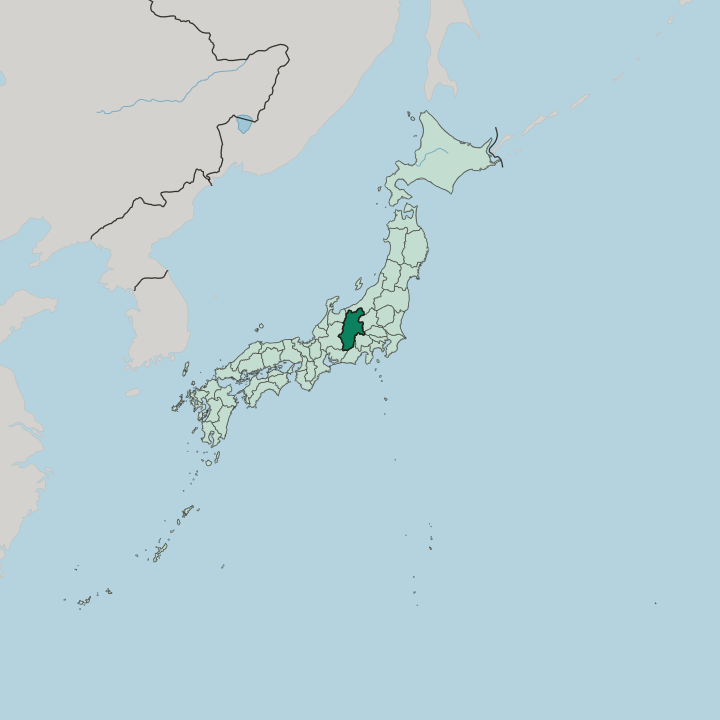
Nagano-ken is a landlocked prefecture in central Honshū, walled by the Japanese Alps and dotted with hot-spring towns.
Hotel links are affiliate links: booking through them may earn us a commission, at no extra cost to you. It never affects how places are ranked. How this works


Towns & cities in Nagano-ken
Pick a town or city — each links to where to stay.
 Japan
Japan
Nagano
The pilgrim road still climbs to Zenkō-ji in Nagano, capital of Nagano Prefecture on the floor of the Nagano Basin, the highest prefectural seat in Japan.Where to stay →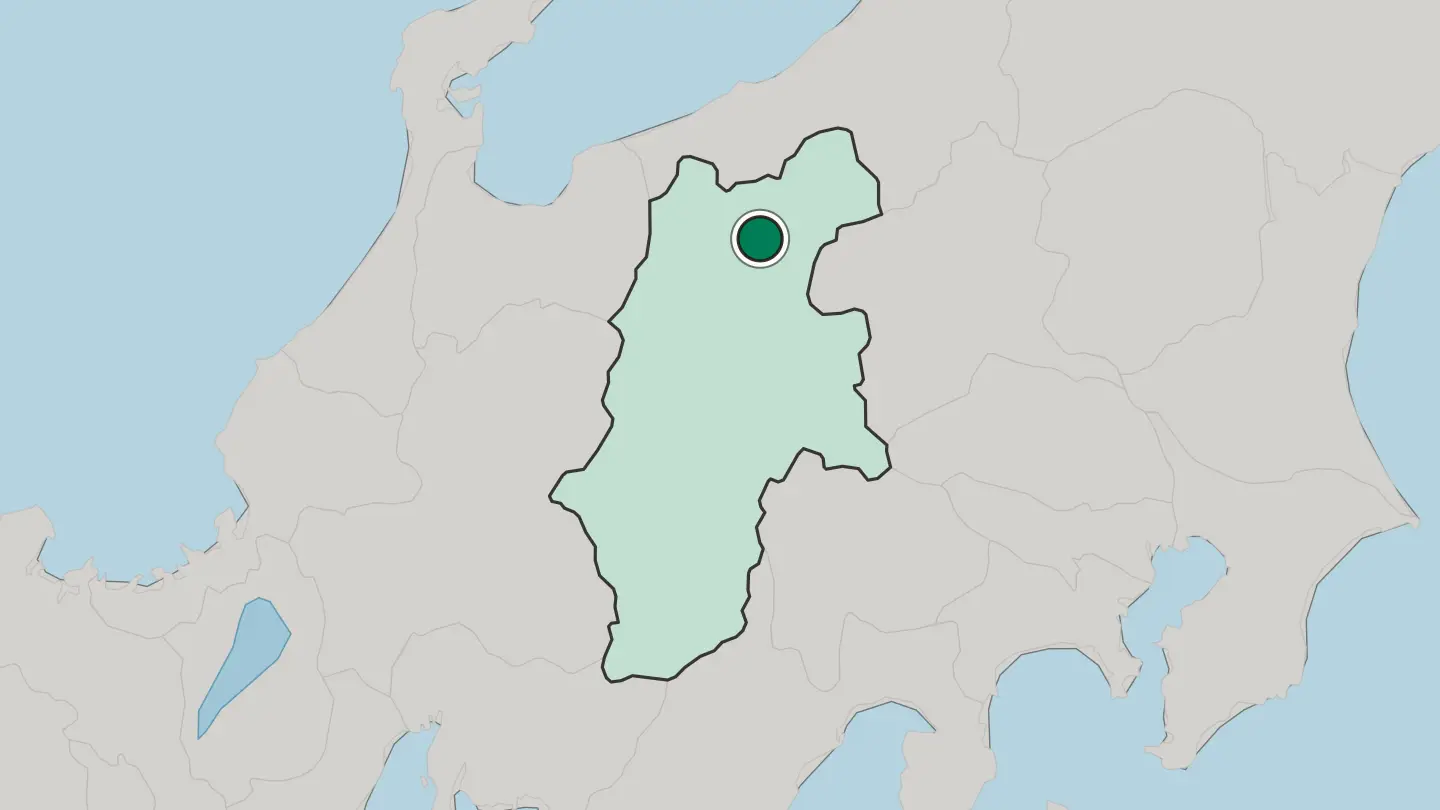
 Japan
Japan
Matsumoto
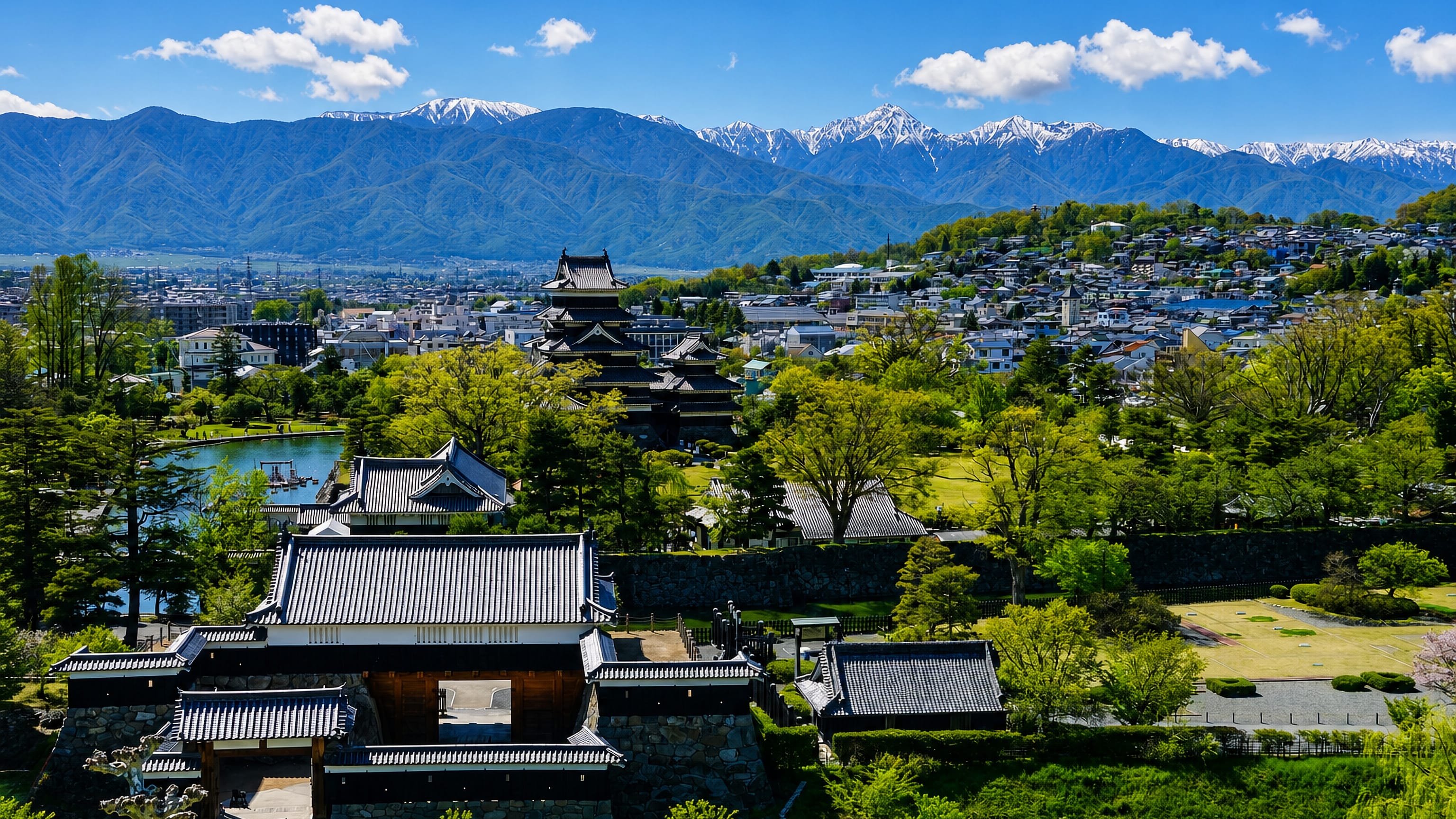
Matsumoto is a castle city in Nagano, central Japan, set in a broad basin below the peaks of the Japanese Alps.Where to stay →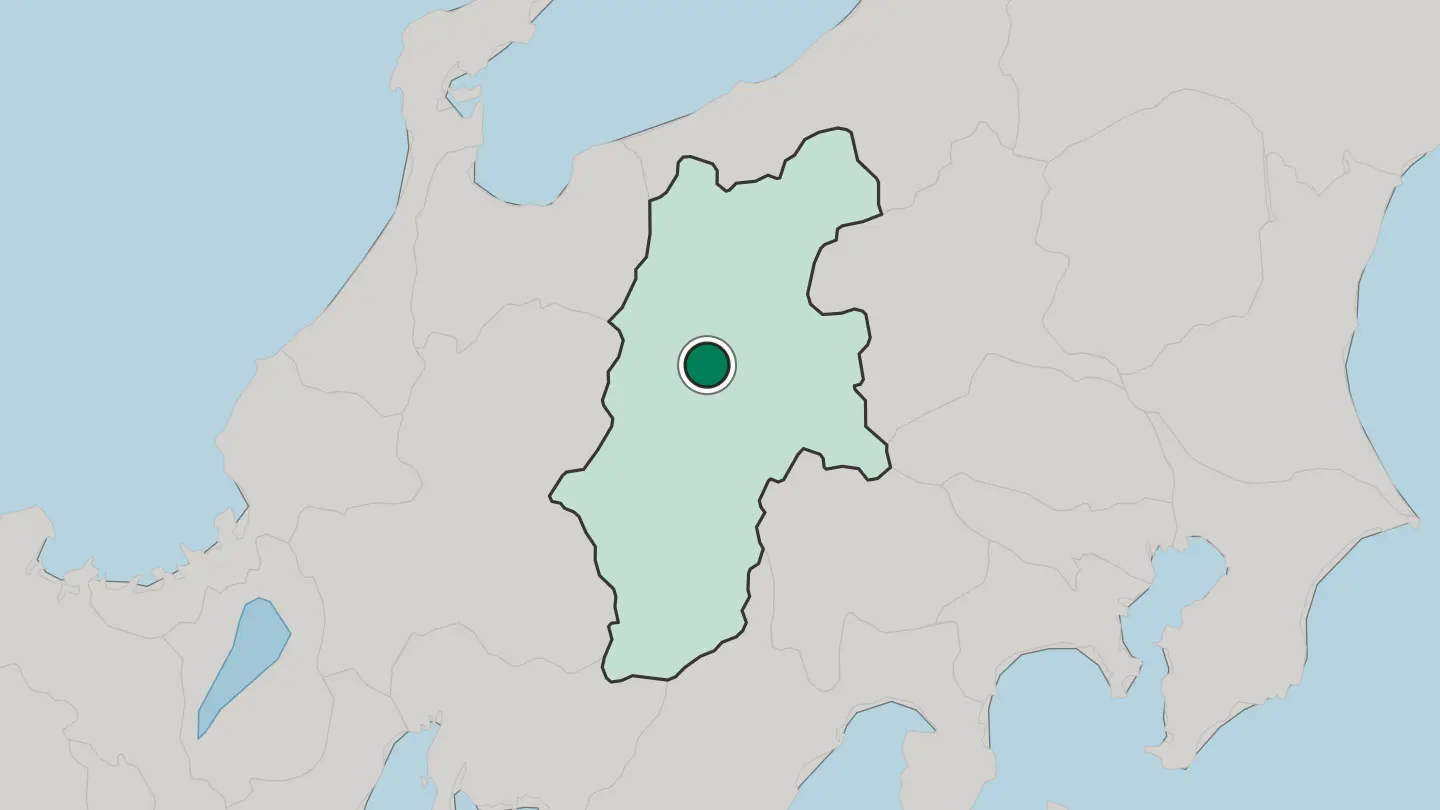
 Japan
Japan
Ueda
Two Kokubunji sites sit here. Ueda pairs Kokubunji Historical Park with the Shinano Kokubunji Museum inside a large Nagano Prefecture boundary.Where to stay →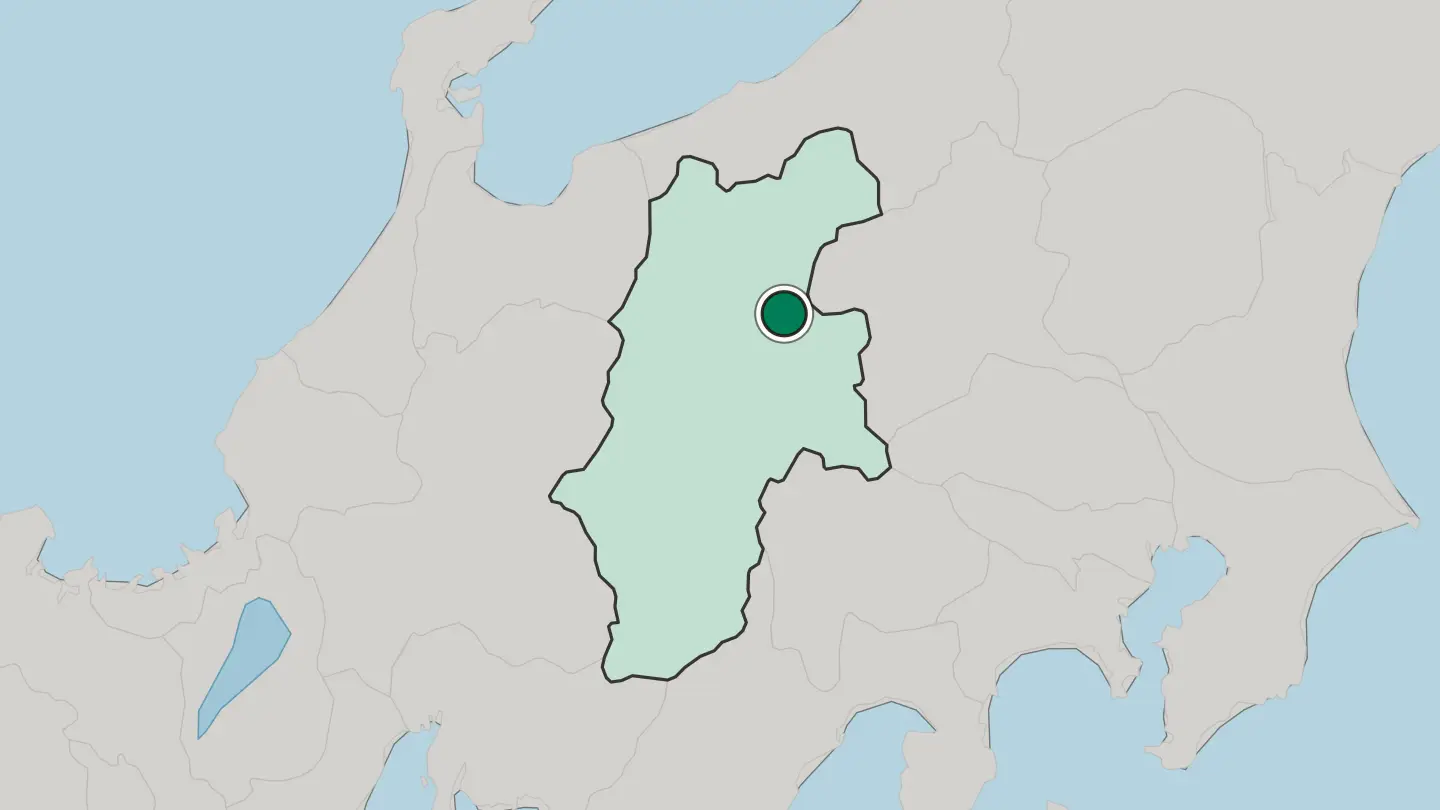 Japan
Japan
Iida
Puppetry has its own museum here. Iida keeps the Iida City Kawamoto Kihachiro Puppet Museum and Tenryū-kyō inside one Nagano Prefecture boundary.Where to stay →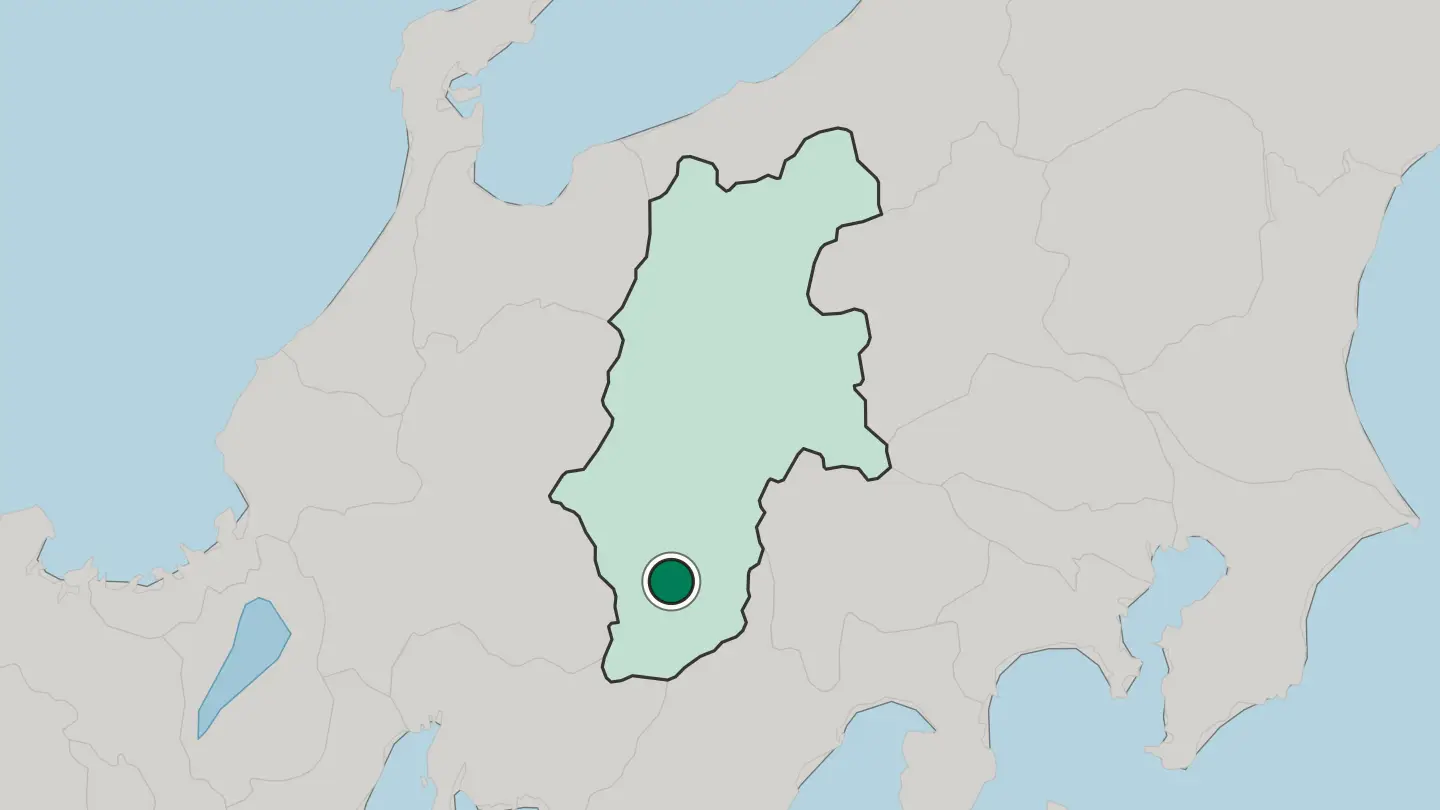
 Japan
Japan
Saku
Saku splits between two eras. The Old Nakagomi School and the Saku Children's Science Dome for the Future stand inside the same Nagano Prefecture boundary.Where to stay →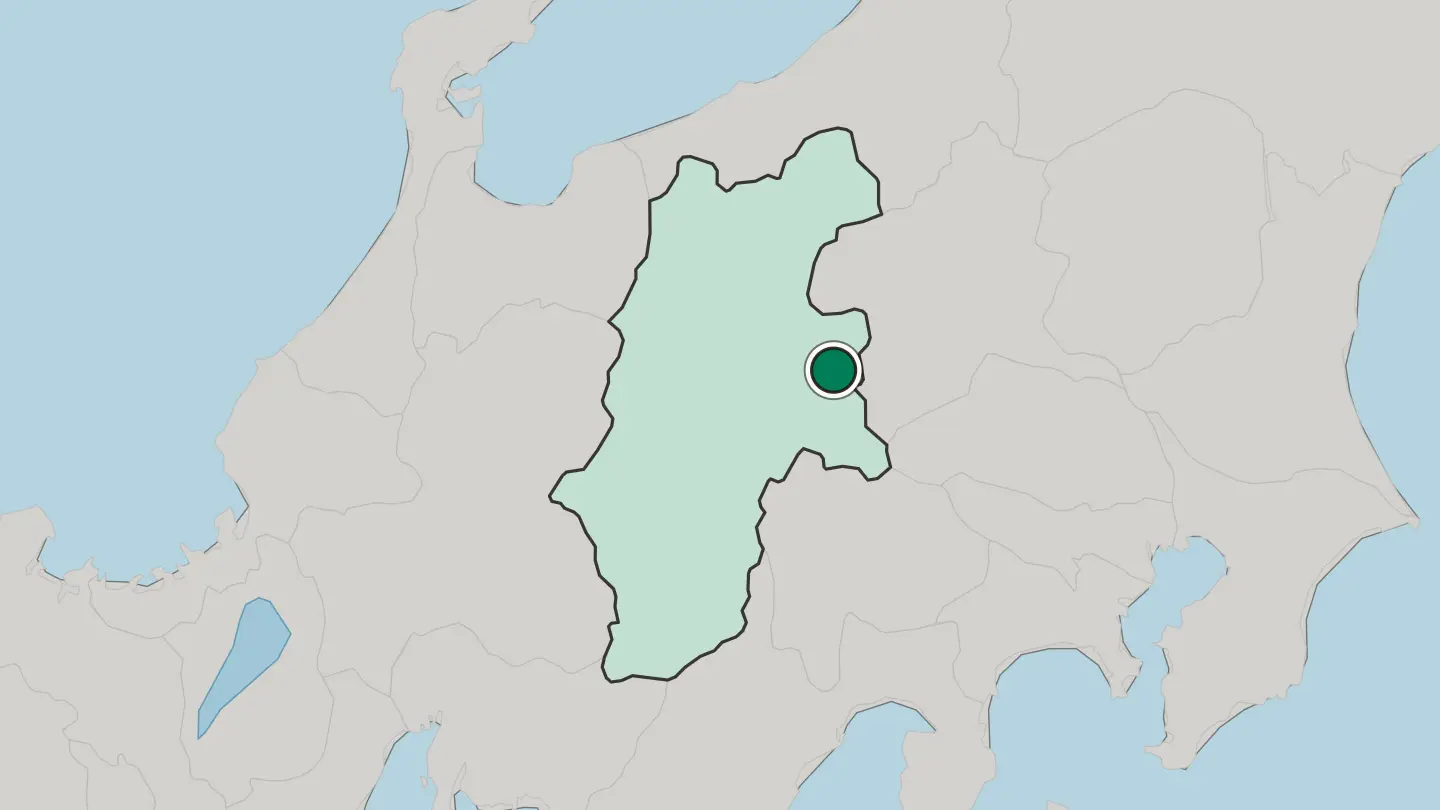
 Japan
Japan
Azumino
Azumino is a city in Nagano Prefecture, a wide temperate municipality whose named sights are small museums rather than any single landmark.Where to stay →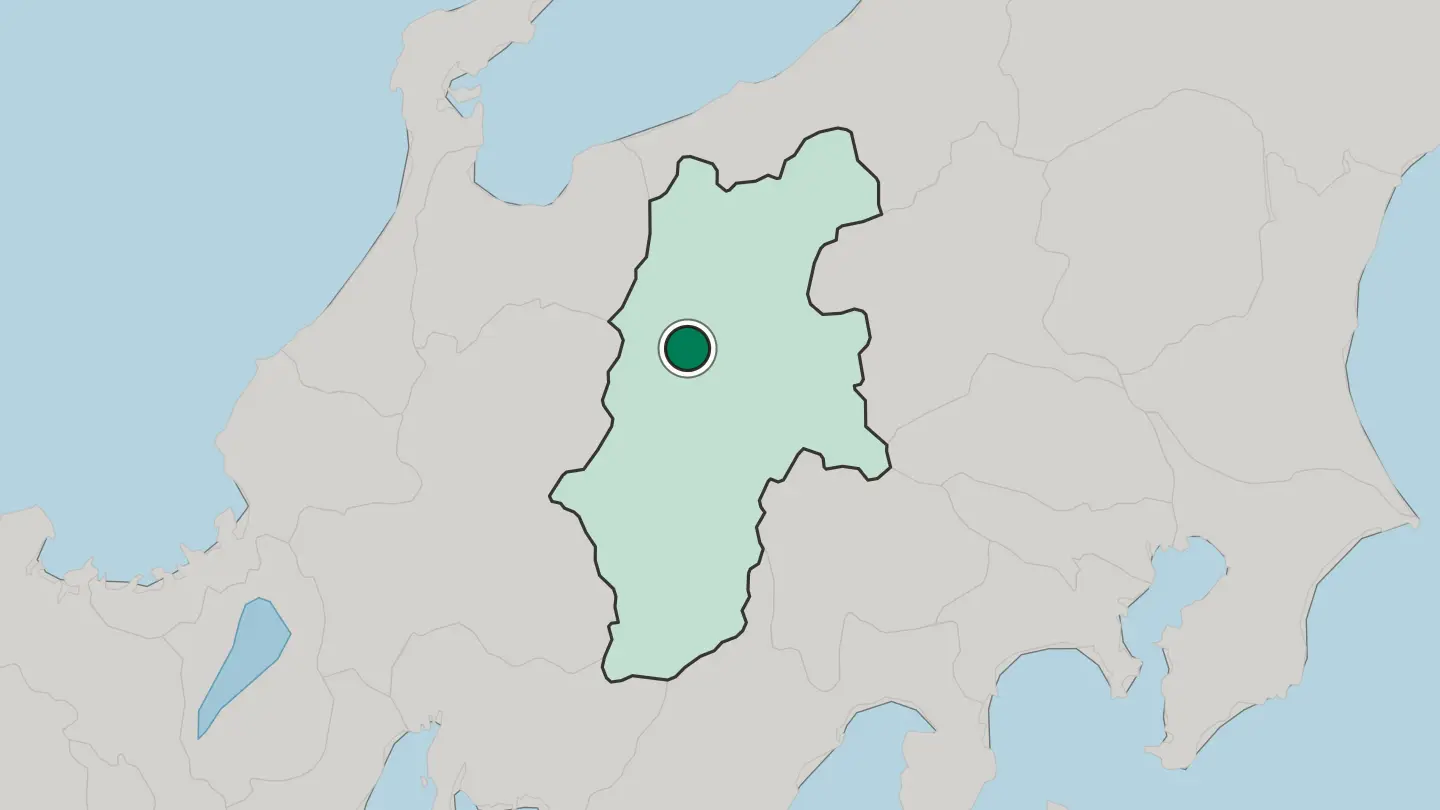 Japan
Japan
Ina
Takatō Castle draws the visits. Ina absorbed the former town of Takatō, and both sit inside Nagano Prefecture.Where to stay →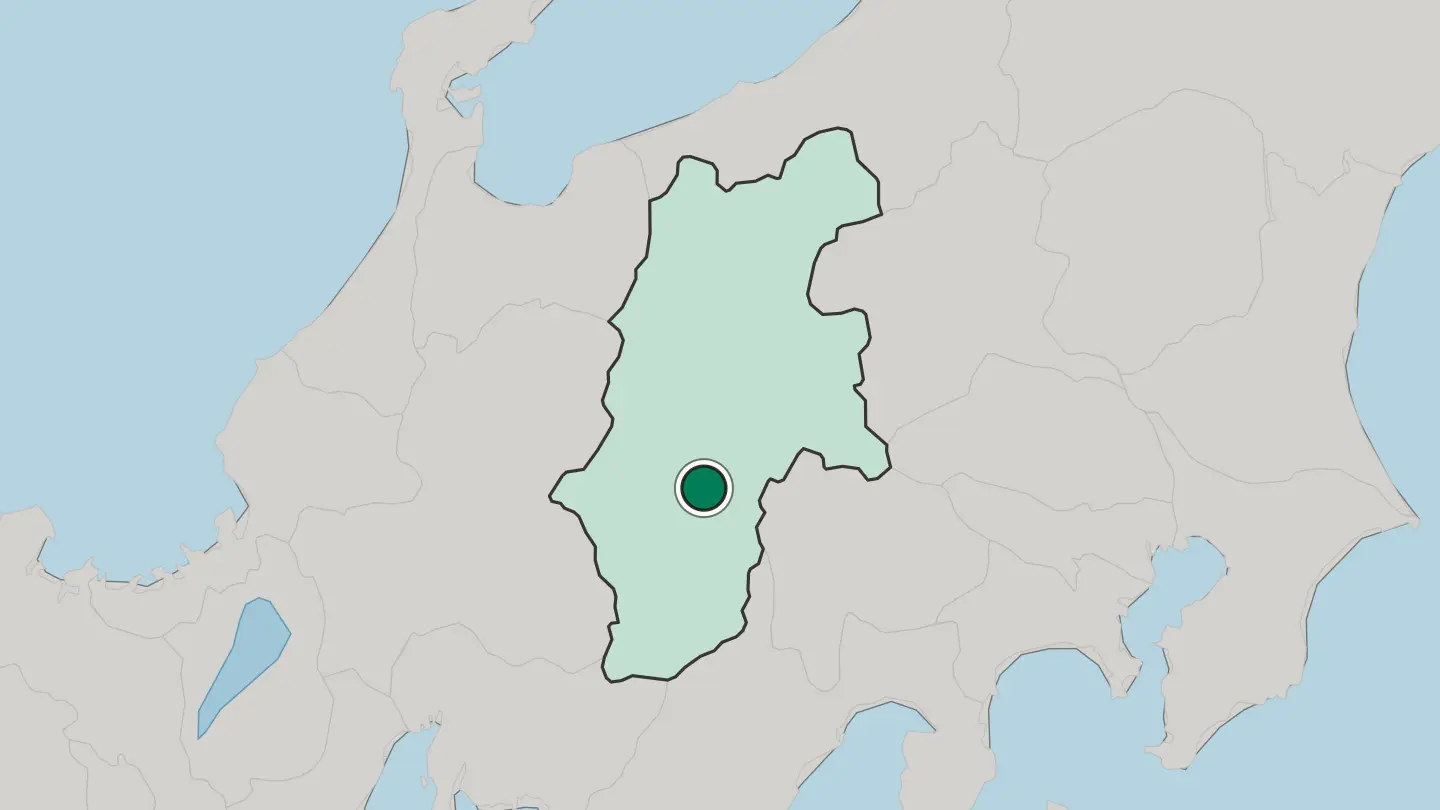
 Japan
Japan
Chino
Suwa taisha anchors Chino. The Nagano Prefecture city also holds the excavated Togariishi, Yosukeone Ruins and the Nakappara Site.Where to stay →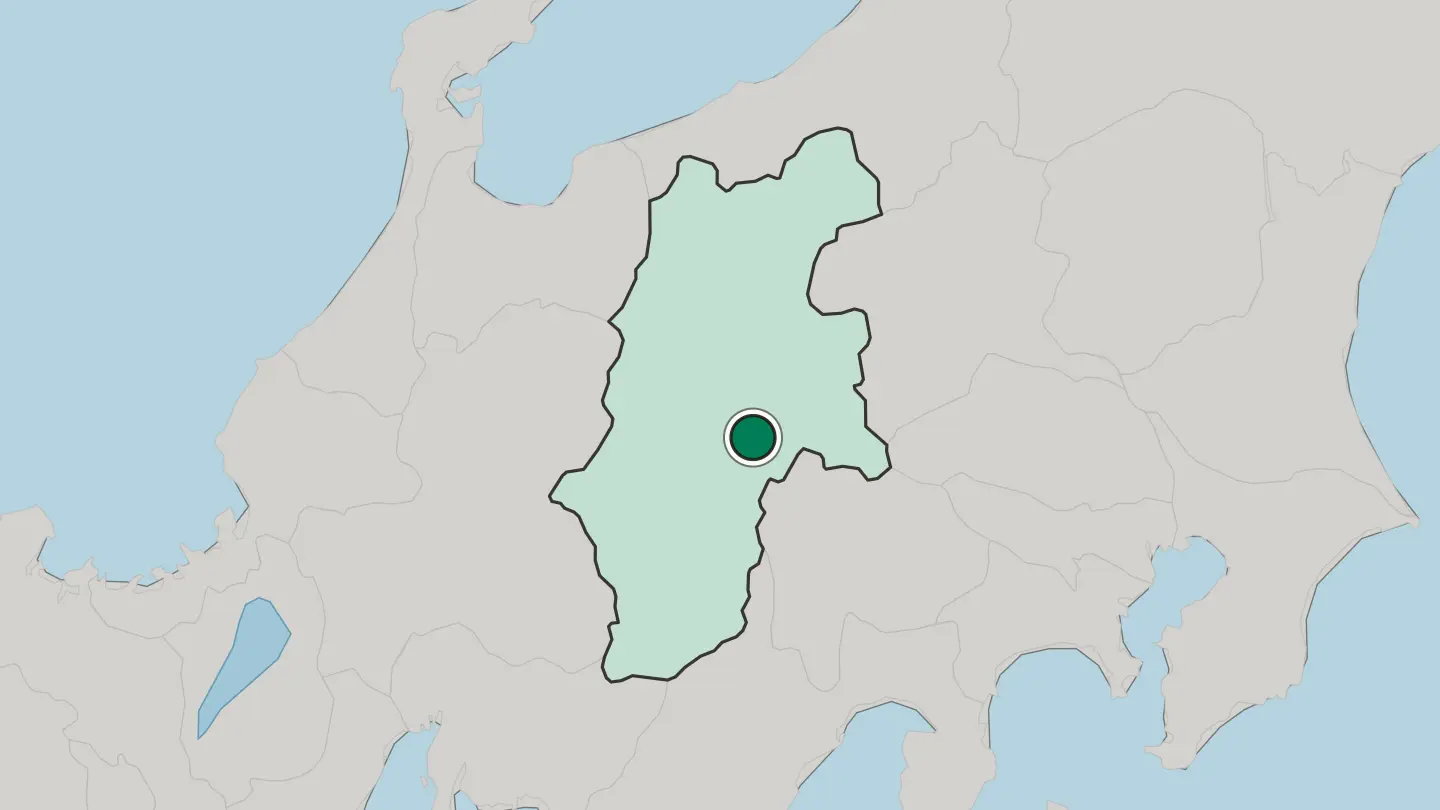
Hotel links are affiliate links: booking through them may earn us a commission, at no extra cost to you. It never affects how places are ranked. How this works
About Nagano-ken
The high ranges shape everything here.
What is Nagano-ken known for?
Nagano-ken holds nine of Japan's twelve highest peaks, and the ridges of the Japanese Alps draw hikers in summer and skiers in winter to slopes that hosted the 1998 Winter Olympics. Matsumoto guards the black-walled Matsumoto Castle, one of Japan's national treasures. Further north, pilgrims still climb the worn stone steps to Zenkō-ji, a temple whose founding predates the rise of the samurai shogunate by centuries.
Buckwheat soba, tart mountain apples, and steaming hot springs round out the prefecture's reputation.
Where is Nagano-ken?
Nagano-ken lies in the middle of Honshū, deep inside the Chūbu region and far from any coast. No stretch of coast borders it. No prefecture in Japan touches more neighbours, eight in all, from Niigata in the north to Aichi and Shizuoka in the south.
The land is overwhelmingly upright: three great ranges of the Japanese Alps rise within or along its borders. The Hida Mountains form the northern wall, the Kiso Mountains the central spine, and the Akaishi Mountains guard the southern edge toward Yamanashi and Shizuoka. Nine of Japan's twelve highest summits stand here, which is why the prefecture earns the name the roof of Japan.
Water drains this high country in every direction. The Chikuma River, the name the Shinano River carries through Nagano, gathers alpine snowmelt and flows north, out of the prefecture, to reach the Sea of Japan. The Tenryū River runs south through the Ina valley toward the Pacific, while the Kiso River threads the forested Kiso Valley on its way to Gifu.
Between the ranges sit broad, mile-high basins where the towns cluster. Lake Suwa fills one such hollow. Fields and orchards spread across the flatter floors, and everything else climbs.
What is Nagano-ken like?
People here still call their home Shinshū, the old name for Shinano Province, and the label carries a whole mountain culture. Life bends to the highlands. Cold winters and thin alpine soil pushed farmers toward buckwheat, and soba noodles turn up everywhere from village stalls to festival tables.
Snowmelt from the Hida Mountains feeds the wasabi beds of Azumino, and the same cool air ripens apples and grapes on the basin floors. Faith and old roads run through it too. Zenkō-ji has drawn pilgrims to the north for fourteen centuries, a temple that keeps to no single Buddhist sect and welcomes all of them.
Along the Kiso Valley, the stone-paved post towns of the old Nakasendō highway still stand between Kyoto and Edo, their timber inns preserved. Mountain worship shaped the calendar. Every sixth year the shrines around Lake Suwa haul giant fir pillars down the slopes in the Onbashira festival.
Winter belongs to skis and steaming baths, a rhythm the whole prefecture keeps.
What is the history of Nagano-ken?
For most of its past this was Shinano Province, a mountain country of scattered valleys rather than a single domain. That very fragmentation drew warlords. In the Sengoku age the Takeda of Kai and the Uesugi of Echigo fought five times on the Kawanakajima plain within Nagano city.
The modern prefecture took shape in 1871, when the old province was reorganised and renamed for Nagano, the temple town below Zenkō-ji. The 1998 Winter Olympics came to Nagano city, and the year before, a fresh Shinkansen line was cut from Tokyo across the mountains to reach it.
What is the climate of Nagano-ken?
Height rules the weather here. Landlocked and lifted well above the valleys, Nagano-ken swings hard between its seasons, from snow-buried winters to summers far drier than the humid Japanese lowlands. Moist air off the Sea of Japan dumps heavy snow on the northern towns, and places like Hakuba and Nozawa Onsen bury under metres of it each winter.
The high basins stay noticeably cooler, which is why Karuizawa became a summer refuge from the heat of Tokyo. That same alpine snowmelt feeds the hot springs and the soba fields alike.
How do you get to Nagano-ken?
The rail lines carry in most visitors. The Hokuriku Shinkansen runs from Tokyo up to Nagano city in well under two hours, the fast route built for the 1998 Winter Olympics. From the west, the Limited Express Shinano climbs out of Nagoya through the Kiso Valley to reach Matsumoto, the usual doorway to the Northern Alps.
A few roads cross the high passes, and Matsumoto's small airport takes some domestic flights. Landlocked and ringed by peaks, the prefecture has no port; every arrival comes over the mountains one way or another.
Common questions
What is the best area to stay in Nagano-ken?
Nagano city: temple pilgrims and first arrivals. Matsumoto: reaching the Northern Alps. Hakuba: downhill skiing and backcountry snow. Nozawa Onsen: onsen bathing between ski runs. Karuizawa: a cool-summer highland escape.
Good for
More regions in Japan
Updated October 2026