Japan · Shizuoka
Where to Stay in Fukuroi, Shizuoka
Fukuroi, constituted as Yamana Town, is a Shizuoka Prefecture city near the Shiseido Corporate Museum, the Yamaha Communication Plaza and Yusan-ji Temple.
Hotel links are affiliate links: booking through them may earn us a commission, at no extra cost to you. It never affects how places are ranked. How this works


Where to stay in Fukuroi
The practical side of choosing where to sleep.
Tsumagoi answers most of the question. Tsumagoi Resort Sai no Sato and Yamaha Recreation Tsumagoi put purpose-built rooms on the same wooded ground, which makes that side of Fukuroi the obvious base for a family or a group travelling with children rather than a checklist. Yumeria is the plainer option.
It sits closer to the working middle of the city, and a bed there suits a visitor who intends to spend the day inside the Shiseido Corporate Museum and the Shiseido Art House and wants nothing more from the evening than a short walk back. Kakegawa carries the deeper supply. The Kakegawa Ninomaru Museum of Art, the Kakegawa Stained Glass Museum and Kakegawa Kachoen give that neighbouring city enough of its own programme to justify basing there and coming across, and Kuno Castle adds a ruined castle site to the same circuit. Iwata pulls the other way. The Museum of Fragrance, Iwata and the Nemunoki Children's Museum of Art make that neighbour worth a night for anyone whose interest is collections rather than gardens, with the Junnosuke Yoshiyuki Literature Museum a further stop on that line.
Rooms in Fukuroi proper are limited. Yusan-ji Temple, the Mikuriya Kofun Group and Ikoi no Hiroba are all reached easily from any of these bases, so the choice turns on what the days are for rather than on distance.
Find hotels in Fukuroi
Direct booking searches for these neighbourhoods.
Tsumagoi
Wooded ground on Fukuroi's edge where two purpose-built resorts share one approach road and one set of grounds.Find hotels in Tsumagoishort evenings after a day in the Shiseido Corporate MuseumYumeria
The workaday middle of Fukuroi around Yumeria, within a walk of the Shiseido archives and nothing much else. Lodging is scarce in this area; reserve in advance.Find hotels in Yumeriaa base with the Kakegawa Stained Glass Museum and Kuno Castle on the doorstepKakegawa
The neighbouring city whose art museum, stained-glass collection and bird garden make a programme of their own.Find hotels in Kakegawacollection-led days at The Museum of Fragrance, IwataIwata
The neighbouring city where the fragrance collection and the Nemunoki Children's Museum of Art sit on one line out from Fukuroi.Find hotels in IwataHotel links are affiliate links: booking through them may earn us a commission, at no extra cost to you. It never affects how places are ranked. How this works
Things to do in Fukuroi
Ranked by global recognition; descriptions from Wikidata (CC0).
Museums & Galleries
1- Yamaha Communication Plaza
Castles & Historic Sites
3- 一の谷墳墓群遺跡
- 長者屋敷遺跡
- 久野城
Stadiums & Sports
1- いこいの広場
worth knowingacross 3 categories in Fukuroi
About Fukuroi
What is Fukuroi known for?
Industry keeps its own museums around Fukuroi, and the Shiseido Corporate Museum, the Shiseido Art House and the Yamaha Communication Plaza each open a manufacturer's archive to anyone who walks in. Temples predate all of that. Yusan-ji Temple holds the older religious ground, while the Mikuriya Kofun Group and Ichinotani Tomb Group Site carry the burial record further back again.
Leisure fills the gaps. Kakegawa Kachoen, Kamoso Kachoen and Tsumagoi Resort Sai no Sato are the stops a family day tends to be built from.
What are the main landmarks in Fukuroi?
The corporate archives are the unusual ones, since the Shiseido Corporate Museum, the Shiseido Art House and the Yamaha Communication Plaza open manufacturers' own collections to visitors who arrive with no connection to either firm. Older stops balance them. Yusan-ji Temple, Kuno Castle and Choja Yashiki Site cover temple, castle and excavated settlement in turn.
Gardens close the list. Kakegawa Kachoen, Kamoso Kachoen and Ikoi no Hiroba are the open-air stops, with the Kakegawa Ninomaru Museum of Art and the Kakegawa Stained Glass Museum indoors nearby.
What is the history of Fukuroi?
Graves mark the earliest layer. The Mikuriya Kofun Group and Ichinotani Tomb Group Site record burial practice on this stretch of Shizuoka Prefecture, and Choja Yashiki Site preserves the remains of a settlement whose occupants would have known that ground as ordinary farmland rather than as anything to be visited. Yusan-ji Temple came later.
Its foundation belongs to the long centuries when temple and village grew into each other, and Kuno Castle adds the fortified chapter, a castle site now read from its earthworks. The municipal record starts in 1889, when the place was constituted as Yamana Town under the reform that gave Japan its modern towns and villages, and Fukuroi grew out of that unit rather than replacing it. Manufacturing rewrote the twentieth century.
Shiseido and Yamaha both built here, and the Shiseido Corporate Museum, the Shiseido Art House, the Yamaha Communication Plaza and Yamaha Recreation Tsumagoi are the visitor-facing residue of that arrival. Culture followed the payroll. The Junnosuke Yoshiyuki Literature Museum and the Nemunoki Children's Museum of Art belong to the same later period, as does membership of the World Health Organization's Alliance for Healthy Cities.
Where is Fukuroi?
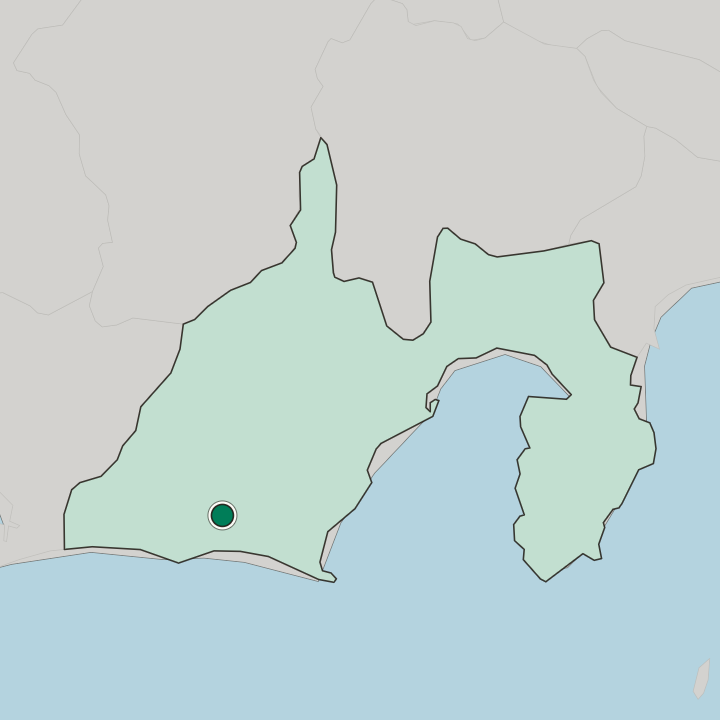
Fukuroi is compact by the standards of Shizuoka Prefecture, a small municipality whose built-up ground gives way quickly to fields and then to the low wooded slopes that carry Tsumagoi Resort Sai no Sato. Kakegawa adjoins it. Iwata lies on the far side, and the three run together closely enough that the Kakegawa Stained Glass Museum and The Museum of Fragrance, Iwata read as local stops rather than excursions.
Rising ground stays modest throughout.
What is the climate of Fukuroi?
Damp heat holds for months. Sitting in the subtropical band, Fukuroi runs to humid summers and short mild winters, a pattern that favours the gardens at Kakegawa Kachoen and Kamoso Kachoen for most of the year but makes the hottest weeks hard going outdoors. Shade matters then.
The wooded ground at Tsumagoi Resort Sai no Sato takes the edge off, and the Shiseido Art House and the Yamaha Communication Plaza absorb whatever the weather does.
How do you get to Fukuroi?
Kakegawa and Iwata are the practical gateways, since both neighbours sit on the corridor that carries traffic along this part of Shizuoka Prefecture and both are close enough to Fukuroi to make the last leg trivial. A car helps once here. Yusan-ji Temple, Kuno Castle and the Mikuriya Kofun Group are scattered across the municipality rather than lined up, and Tsumagoi Resort Sai no Sato sits further out again on its wooded slope.
Common questions
What is the best area to stay in Fukuroi?
Tsumagoi: families basing at Tsumagoi Resort Sai no Sato or Yamaha Recreation Tsumagoi. Yumeria: short evenings after a day in the Shiseido Corporate Museum. Kakegawa: a base with the Kakegawa Stained Glass Museum and Kuno Castle on the doorstep. Iwata: collection-led days at The Museum of Fragrance, Iwata.
Good for
More cities in Shizuoka
Updated October 2026