Philippines · Central Luzon
Where to Stay in San Fernando, Central Luzon
San Fernando is the capital of Pampanga, known as the Christmas Capital of the Philippines and holding a run of ancestral houses.
Hotel links are affiliate links: booking through them may earn us a commission, at no extra cost to you. It never affects how places are ranked. How this works


Where to stay in San Fernando
The practical side of choosing where to sleep.
The San Fernando Cathedral sets the reference point. Beds in the central streets keep the Augusto P. Hizon House, the Hizon-Singian House and the Henson-Hizon House on the same short itinerary, which is what most visitors to the capital of Pampanga are here to see. Paskuhan Village pulls the other way.
Purpose-built around the Christmas trade the city is known for, it answers a different reason for coming than the ancestral houses do, and a room chosen with it in mind trades the old streets for that. Distance is never the deciding factor. The Cuyugan-Dayrit House and the Lazatin House mark a third option.
Those two, with the San Jose Matulid Chapel, spread the city's interest beyond one quarter, and a room placed with them in mind gives a slower version of the same visit without leaving the City of San Fernando. Work travel matters too. San Fernando is the capital of Pampanga, so rooms fill with provincial business as well as visitors, and a December trip to the Christmas Capital of the Philippines is a different booking exercise from one made mid-year.
You suit the cathedral streets if the old houses are the point, Paskuhan Village if the Christmas name brought you, and the quieter edges if Pampanga at arm's length is what you want.
Find hotels in San Fernando
Direct booking searches for these neighbourhoods.
San Fernando Cathedral quarter
The streets around the San Fernando Cathedral, the principal church of the capital of Pampanga.Find hotels in San Fernando Cathedral quarterWalking between the Hizon-Singian House and the Lazatin HouseAncestral house streets
The blocks carrying the Augusto P. Hizon House, the Henson–Hizon House and the Hizon-Singian House.Find hotels in Ancestral house streetsVisits built around Paskuhan VillagePaskuhan Village side
Ground near Paskuhan Village, the site that gives San Fernando its Christmas Capital of the Philippines name.Find hotels in Paskuhan Village sideA slower base near the San Jose Matulid ChapelCuyugan-Dayrit and Matulid edge
The stretch holding the Cuyugan-Dayrit House and the San Jose Matulid Chapel, away from the cathedral crowd.Find hotels in Cuyugan-Dayrit and Matulid edgeHotel links are affiliate links: booking through them may earn us a commission, at no extra cost to you. It never affects how places are ranked. How this works
Things to do in San Fernando
Ranked by global recognition; descriptions from Wikidata (CC0).
Churches & Religious Sites
2- San Fernando Cathedral Heritage
- San Jose Matulid Chapel
Parks & Gardens
1- Paskuhan Village
Landmarks & Notable Places
3- Lazatin House Heritage
- Augusto P. Hizon House Heritage
- Cuyugan-Dayrit House Heritage
worth knowingacross 3 categories in San Fernando
About San Fernando
Christmas is the calling card.
What is San Fernando known for?
San Fernando carries the title Christmas Capital of the Philippines, and Paskuhan Village stands as the built expression of that reputation rather than a seasonal event alone. Heritage houses follow. The Augusto P. Hizon House, the Lazatin House and the Cuyugan-Dayrit House survive as privately built landmarks of Pampanga's capital, alongside the San Fernando Cathedral, the city's principal church.
What are the main landmarks in San Fernando?
Eight named sites carry the city. San Fernando Cathedral is the principal church, and alongside it the Augusto P. Hizon House, the Henson-Hizon House, the Hizon-Singian House, the Lazatin House and the Cuyugan-Dayrit House make up an unusually dense set of surviving ancestral residences for a provincial capital. Paskuhan Village is the outlier.
Built for the Christmas association rather than inherited from the older town, it joins the San Jose Matulid Chapel on any list of what San Fernando keeps.
What is the history of San Fernando?
The town dates from 1754. That places San Fernando's beginnings in the middle of the eighteenth century, well before it took on the administrative role it now holds as the capital of the province of Pampanga. Ancestral houses record the rest.
The Augusto P. Hizon House, the Henson-Hizon House, the Hizon-Singian House, the Lazatin House and the Cuyugan-Dayrit House survive as the built record of the households that named them, and they outnumber the civic monuments a place of this size usually keeps. A different label arrived later. San Fernando is known as the Christmas Capital of the Philippines, and Paskuhan Village gives that name a permanent site rather than leaving it to the calendar.
The cathedral holds the older thread. San Fernando Cathedral and the San Jose Matulid Chapel carry the religious history of the settlement from its founding through its growth into the component city and provincial capital it is now. Pampanga's capital sits at the centre of that story, and the sequence from a 1754 town to the City of San Fernando is legible mainly through what the households built and what the church kept.
Where is San Fernando?
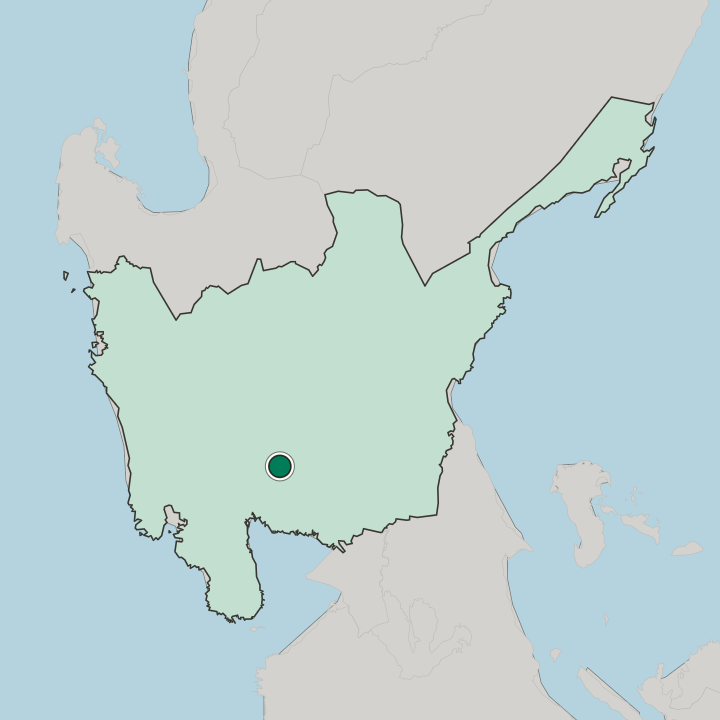
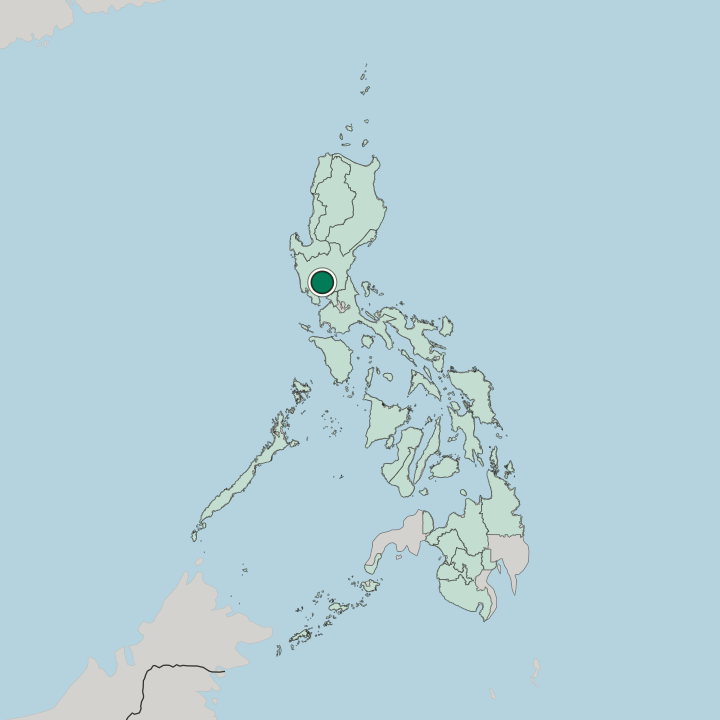
Roughly 68 square kilometres make up the city, a modest footprint for a provincial capital and small enough that Pampanga's administrative business, the cathedral and the ancestral houses occupy the same compact ground. The tropics govern the setting. Central Luzon spreads around it, with the province of Pampanga immediately outside the city limits, so San Fernando works as the administrative fixed point of its province rather than as a place set apart from it.
What is the climate of San Fernando?
Pampanga runs on wet and dry. San Fernando lies inside the tropical belt of Central Luzon, so the year turns on rain rather than temperature, and the difference between a dry-month visit and a wet-month one matters more than any swing the thermometer records. Heat is the baseline here.
The Christmas Capital of the Philippines keeps its December festivities in warm weather, which is one of the more striking things about the season San Fernando is named for.
How do you get to San Fernando?
Roads bring everyone in. San Fernando is the capital of Pampanga and a component city of Central Luzon, which puts it on the road network linking the province's towns rather than in a corner reached by one route only. Its footprint is small.
Once here, the San Fernando Cathedral, the ancestral houses and Paskuhan Village all sit inside a city of under seventy square kilometres, so local movement is a matter of short hops rather than day trips.
Common questions
What is the best area to stay in San Fernando?
San Fernando Cathedral quarter: Mornings starting at the San Fernando Cathedral. Ancestral house streets: Walking between the Hizon-Singian House and the Lazatin House. Paskuhan Village side: Visits built around Paskuhan Village. Cuyugan-Dayrit and Matulid edge: A slower base near the San Jose Matulid Chapel.
Good for
More cities in Central Luzon
Updated October 2026