Turkey
Afyonkarahisar, Turkey — Towns & Travel Guide
Afyonkarahisar is an inland province of western Turkey, marble country of hot springs and opium poppies on the Anatolian plateau.
Hotel links are affiliate links: booking through them may earn us a commission, at no extra cost to you. It never affects how places are ranked. How this works


Towns & cities in Afyonkarahisar
One town here has its own guide — it links to where to stay.

 Turkey
Afyonkarahisar
Afyonkarahisar is a city of west Anatolia, Turkey, a spa town of hot springs beneath a black rock under an old castle, in poppy country on the plateau.Where to stay →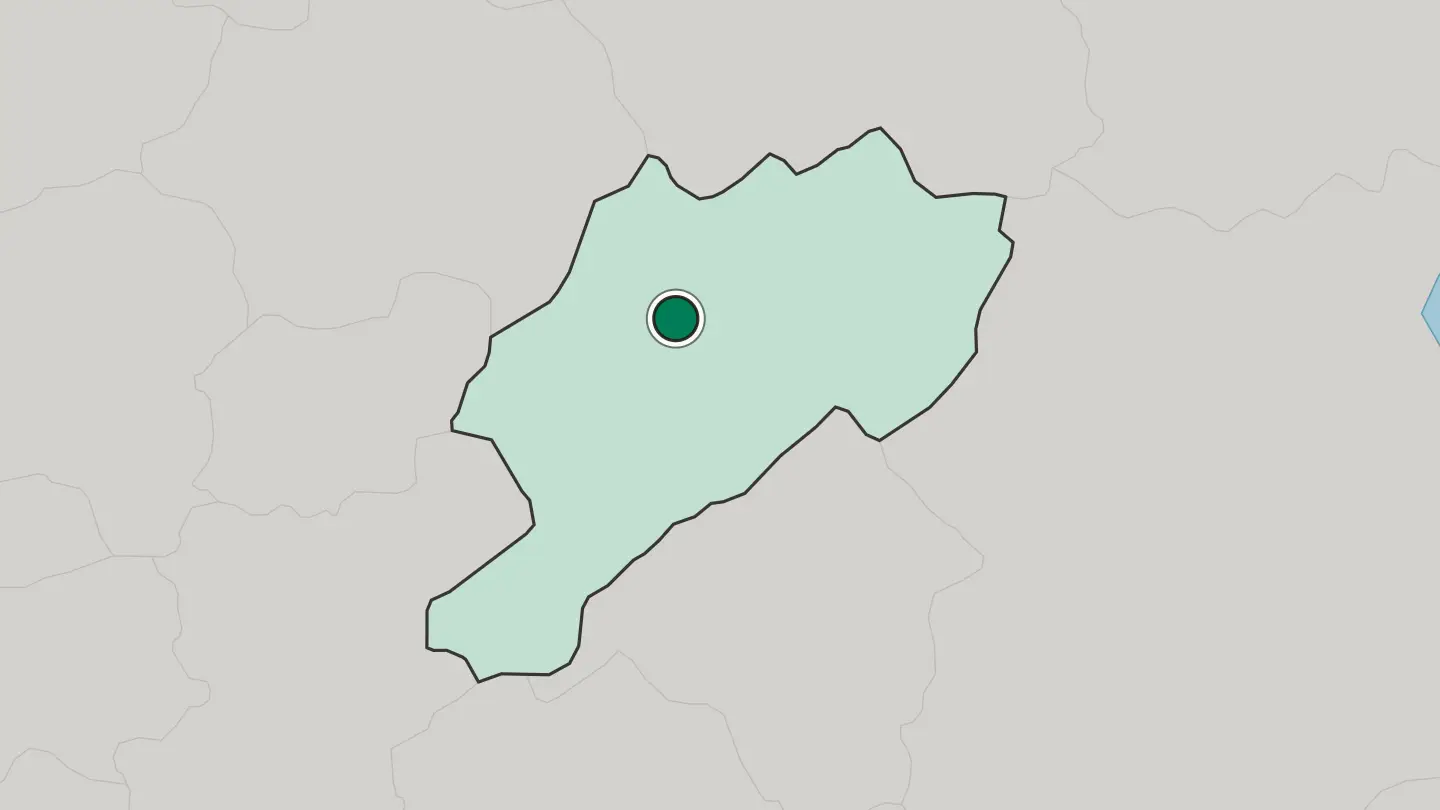
Hotel links are affiliate links: booking through them may earn us a commission, at no extra cost to you. It never affects how places are ranked. How this works
About Afyonkarahisar
Hot water made the name travel.
What is Afyonkarahisar known for?
Thermal springs break the surface at Gazlıgöl, Ömer-Gecek and Hüdai, feeding spa resorts drawing on deep mineral heat under the plain. Marble is the other export, cut from the quarries around İscehisar and shipped abroad as polished slabs. Then there is the table: buffalo-milk kaymak, garlicky sucuk sausage and cream-layered lokum, all of it prized across Turkey and tied to this one province.
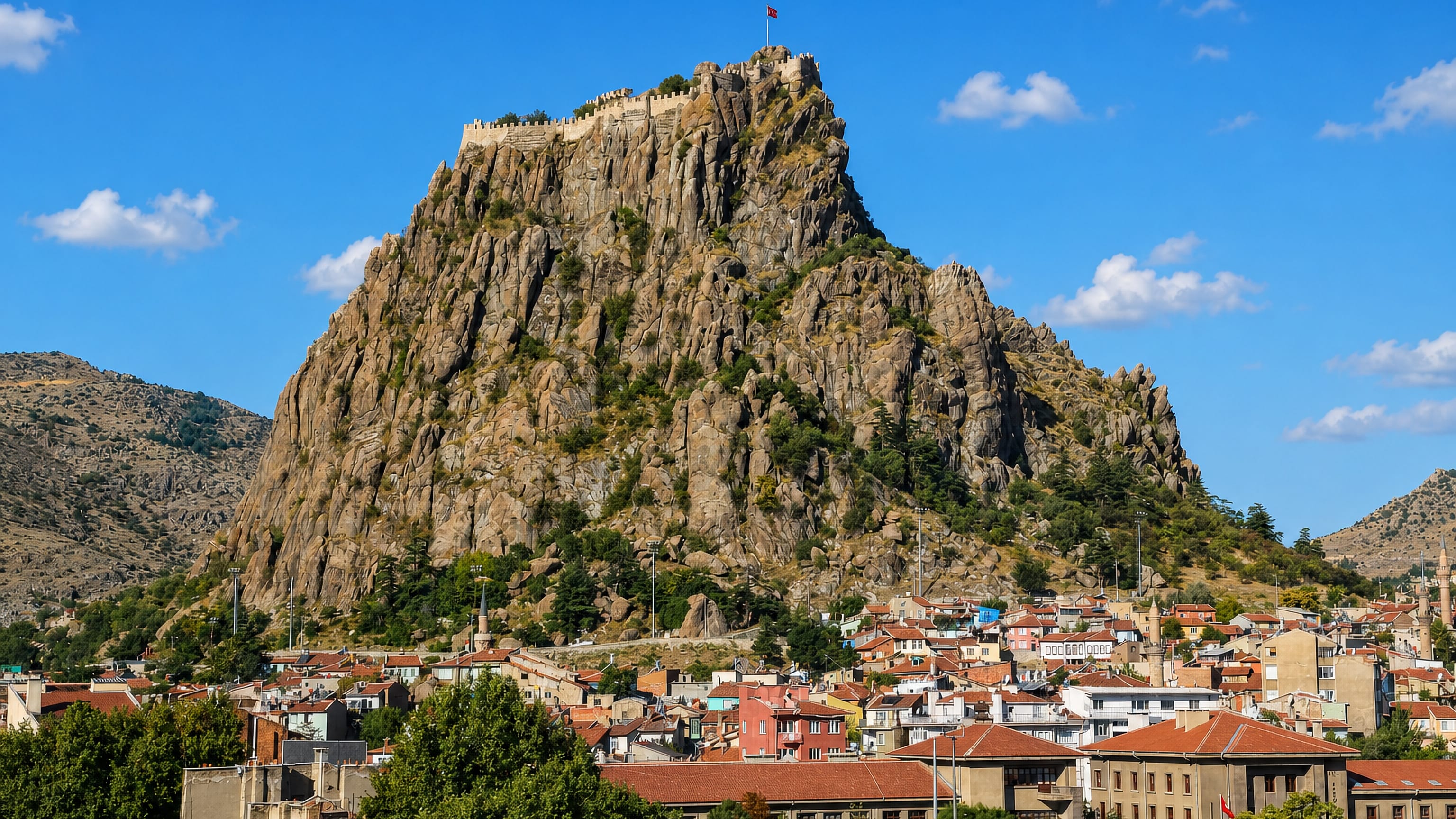
Above the city sits the fortress rock, the karahisar, the black castle that gave the place half its name.
Where is Afyonkarahisar?
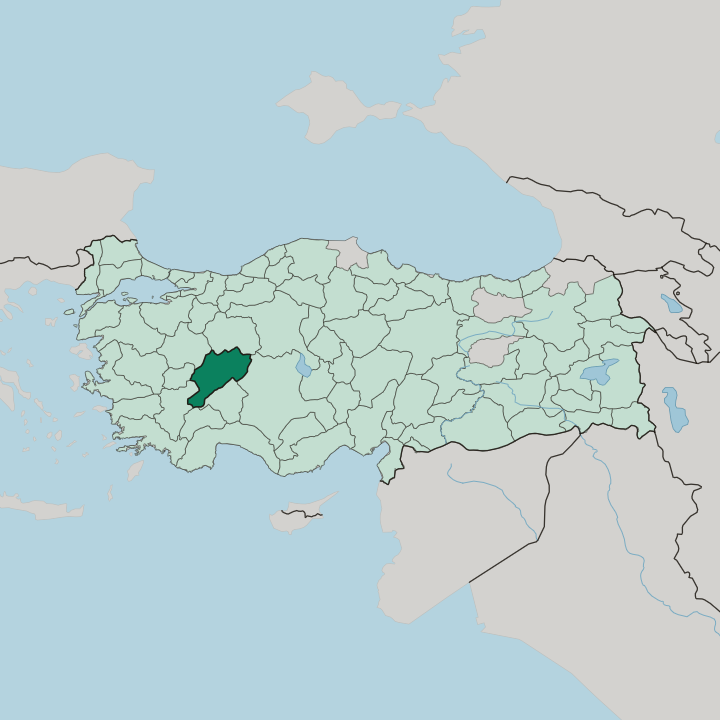
Afyonkarahisar sits inland, high on the western rim of the Anatolian plateau. Turkey's official map files it under the Aegean Region, yet the province feels like the plateau's edge rather than the coast, cut off from the sea by mountains and distance. Seven provinces ring it.
Kütahya and Eskişehir lie to the north, Konya to the east, Isparta and Burdur to the south, and Denizli and Uşak to the west. No coastline touches it anywhere. Mountains frame the basins between them.
The Sultan Dağları wall off the south-east toward Konya, while the Emir Dağları rise across the north, and between the ranges open the broad farming plains of Afyon, Sandıklı, Dinar and Bolvadin. Water gathers here before it leaves in three directions. The Büyük Menderes, the classical Maeander, rises from strong karst springs near Dinar and begins its long, looping run to the Aegean.
Northward the Akarçay drains the Afyon plain into the wide shallows of Lake Eber, a wetland loud with migrating birds. The capital stands over its plain on a dark volcanic plug. That black rock, crowned by the old castle, anchors the province and gave it the karahisar in its name.
What is Afyonkarahisar like?
Food is the local pride, and it is the buffalo that makes it. Herds on the wet plains give the thick kaymak that Afyonkarahisar spreads on bread with honey, and the same rich milk goes into its sucuk and its lokum. Breakfast here is an event, a long spread of clotted cream and honey with sucuk and warm bread that can last a whole morning.
The town keeps a whole street of pastırma and sausage makers. Its ekmek kadayıfı, a syrup-soaked bread pudding crowned with cream, is a set-piece dessert across Turkey, and the province wears its designation as a city of gastronomy with some seriousness. Older layers show through as well.
Ottoman timber houses climb the lanes below the castle rock, and the poppy fields that once scandalised the world feed a licensed pharmaceutical trade. Bathing is a habit, not a novelty. Generations have come to sweat in the sulphur pools and be scrubbed down on hot marble in the hammam.
Marble is everywhere underfoot. The stone paves the squares, faces the newer buildings and fills the workshops that cut it. Turkish is the everyday language, spoken over long spa afternoons and longer breakfasts of cream and honey.
What is the history of Afyonkarahisar?
The fortress rock came first. Hittite and Phrygian builders raised the earliest walls on the dark crag more than three thousand years ago, and successive Roman, Seljuk and Ottoman rulers held the same commanding height. Opium poppies gave the town its modern prefix.
Its sharpest hour came in the summer of 1922, when Mustafa Kemal Atatürk directed the Great Offensive from Kocatepe hill just south of the city, broke the Greek line and set the Turkish War of Independence on its final course.
What is the climate of Afyonkarahisar?
Altitude sets the weather, not the sea. High on the plateau far from the Aegean, the province runs to a dry continental pattern: cold, snowbound winters and hot, rainless summers with sharp night chill even in July. Snow lingers on the Sultan Dağları into spring.
The plains green briefly after the melt, then bake brown by high summer, and the thermal pools draw their winter crowds precisely when the frost bites hardest.
How do you get to Afyonkarahisar?
Roads and rails have always crossed here. The province is one of inland Turkey's great railway junctions, the point at which the lines from İstanbul, Ankara and İzmir converge, and long-distance trains still pass through the capital daily. Motorways fan out to Antalya, Konya and the Aegean coast.
Zafer Airport sits north toward Kütahya for the occasional flight, though many travellers land at Ankara or İzmir and drive the rest. Reaching it has never been the hard part.
Common questions
What is the best area to stay in Afyonkarahisar?
Afyonkarahisar: a first base under the castle rock. Gazlıgöl and the İhsaniye thermal belt: thermal spa nights near the Phrygian Valley. Sandıklı: the Hüdai mineral baths. Dinar: the Büyük Menderes source and ancient Apamea.
Good for
More regions in Turkey
Updated October 2026