Turkey
Amasya, Turkey — Towns & Travel Guide
Amasya is a province of northern Turkey where the Yeşilırmak river winds beneath rock-cut Pontic tombs and restored Ottoman houses.
Hotel links are affiliate links: booking through them may earn us a commission, at no extra cost to you. It never affects how places are ranked. How this works


Towns & cities in Amasya
Pick a town or city — each links to where to stay.

 Turkey
Amasya
Amasya is a historic town in a river gorge of northern Turkey, famous for the royal tombs cut into its cliffs.Where to stay →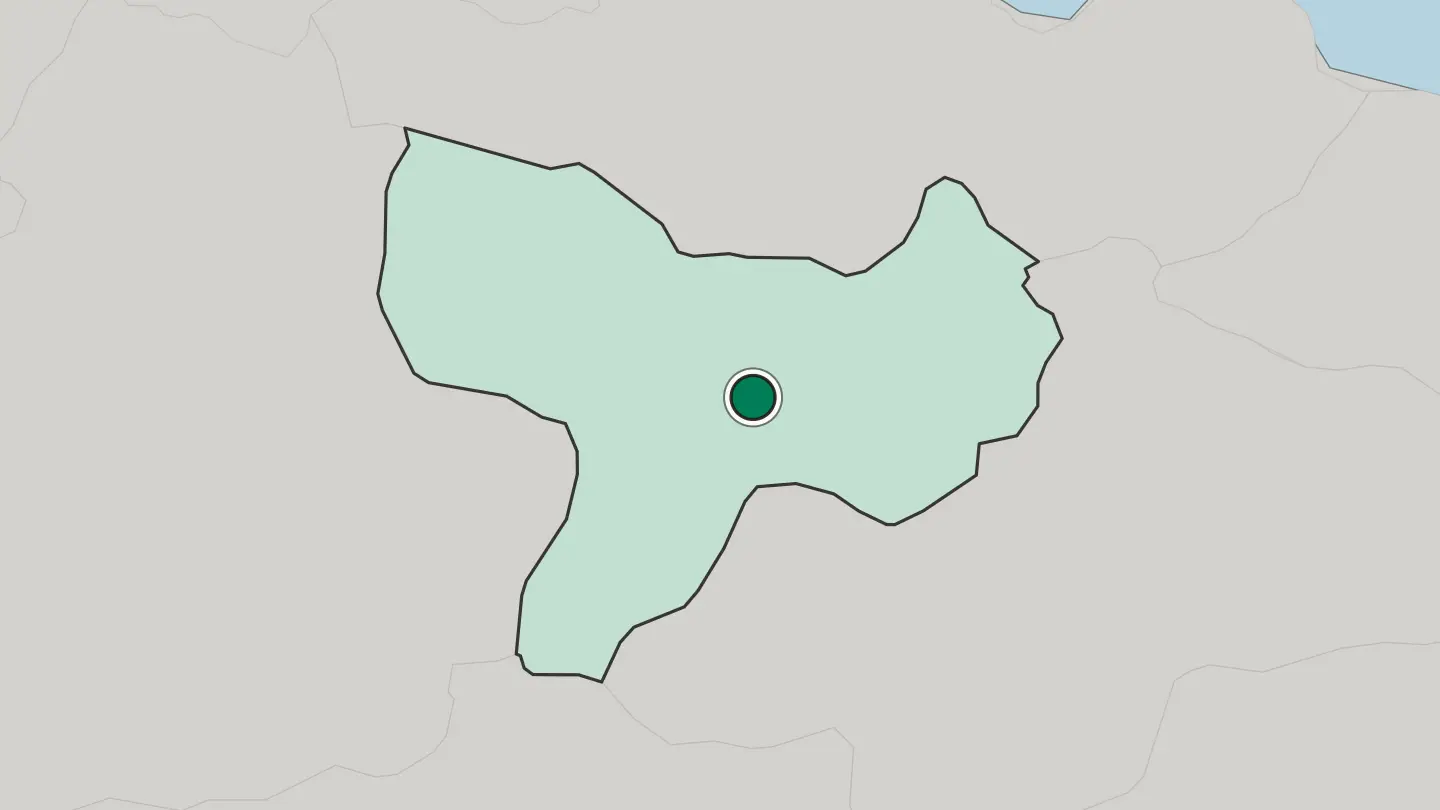 Turkey
Merzifon
Merzifon is a town of Amasya Province in the central Black Sea region, seat of its own district and keeper of the Aya Dardara Church.Where to stay →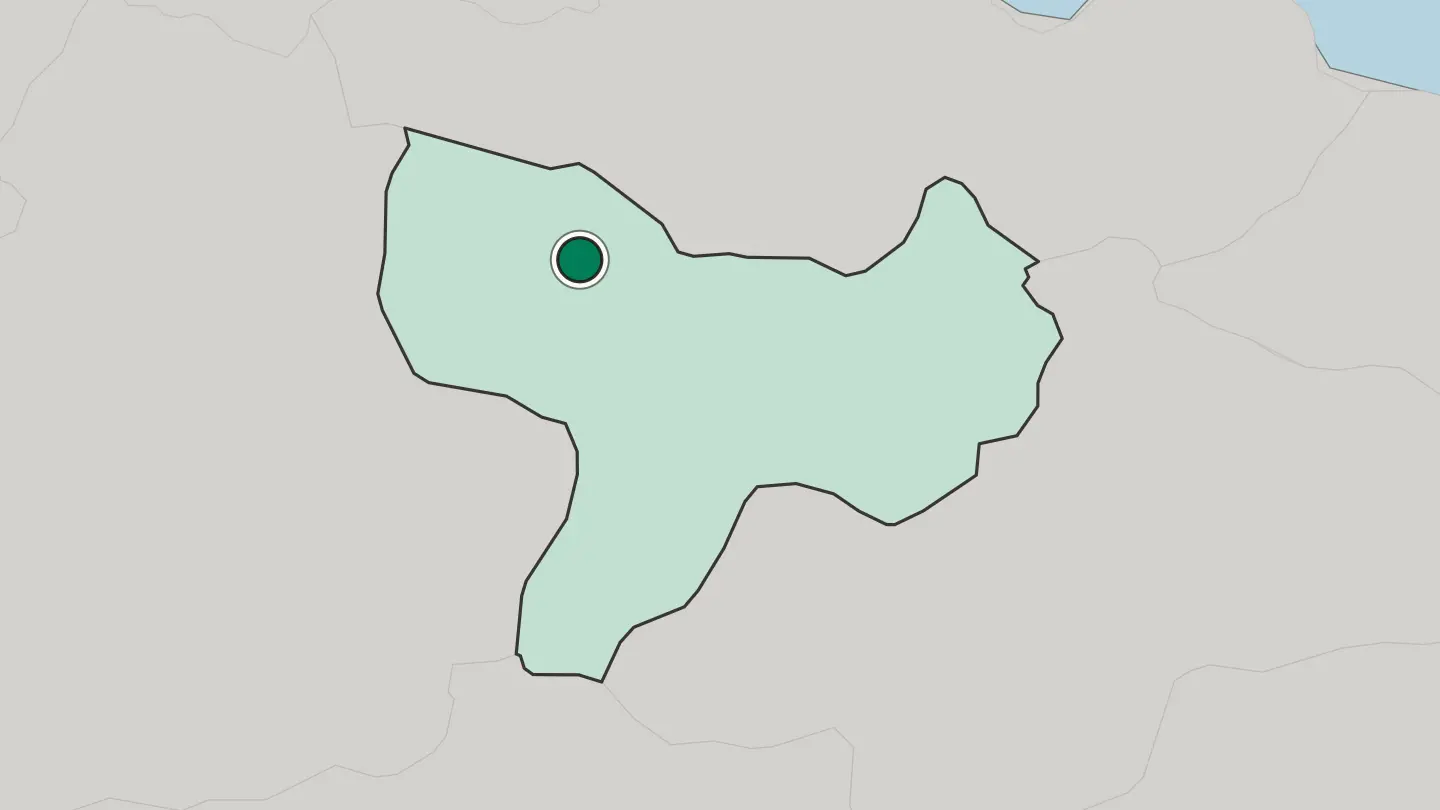
Hotel links are affiliate links: booking through them may earn us a commission, at no extra cost to you. It never affects how places are ranked. How this works
About Amasya
Amasya trades on stone and water.
What is Amasya known for?
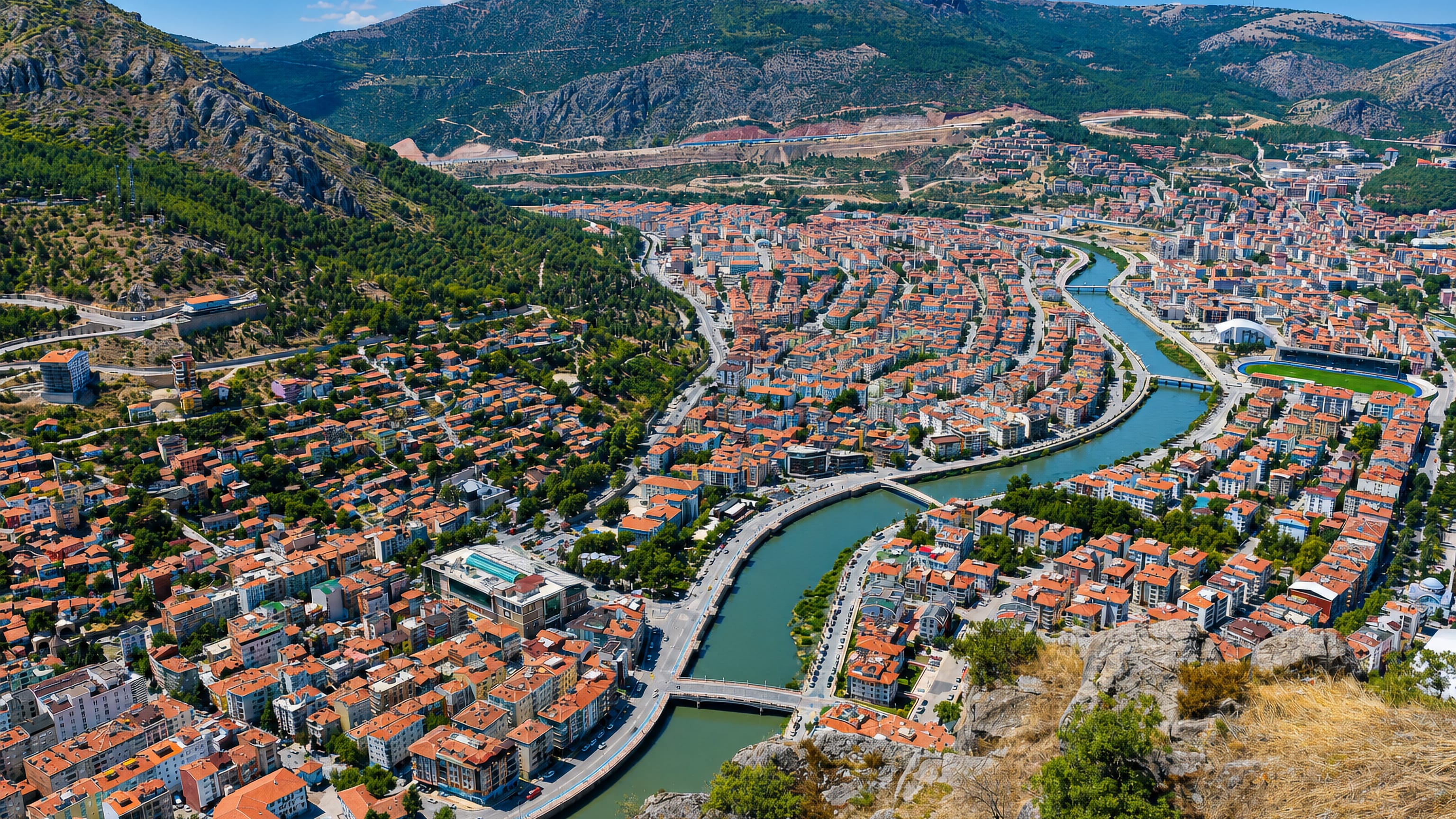
Five royal tombs of the Kingdom of Pontus are cut into the limestone face of Mount Harşena, floodlit above the Yeşilırmak that splits the old town in two. Below them stand the yalıboyu evleri, timber Ottoman mansions leaning over the river. Ottoman sultans once sent their heirs here to govern, and the town still carries the name City of the Şehzade.
The orchards matter as much. Amasya apples, the local elması, ripen red on one side and green on the other.
Where is Amasya?
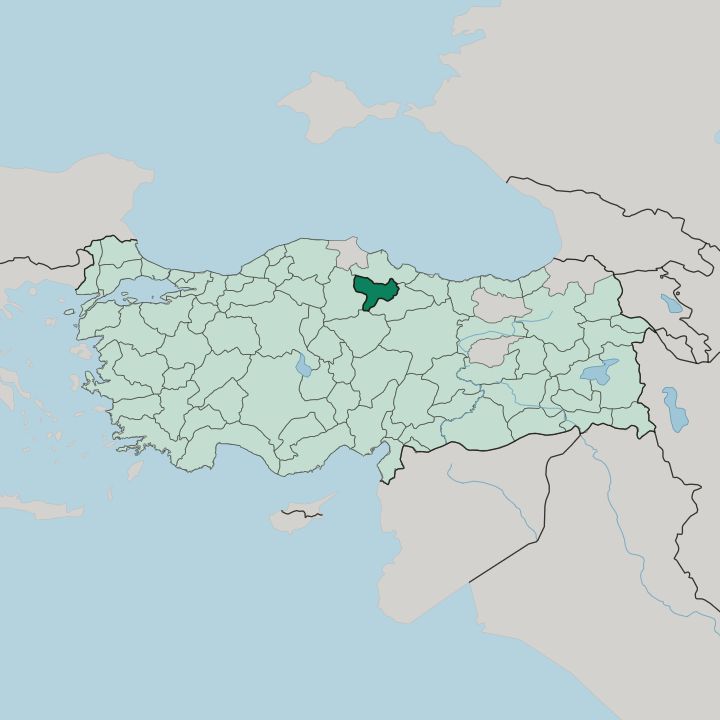
Amasya sits in northern Turkey. It belongs to the Black Sea Region, inland from the coast rather than on it. The province spreads across a belt of fertile plains that the Yeşilırmak and its tributary the Çekerek cross on their way north toward the Black Sea east of Samsun.
Between those plains the land rises into wooded ridges of the Pontic mountains. One gorge holds the capital. The city of Amasya is wedged into a narrow gorge where the Yeşilırmak has cut between near-vertical cliffs, with Mount Harşena and its castle standing over the northern bank.
The valley floor lies only a few hundred metres above sea level. Seven districts make up the province, among them Merzifon out on a broad open plain to the northwest. Ankara lies to the southwest.
Samsun and the Black Sea coast are a shorter drive to the north. That mix of sheltered river gorge, open farming plain and forested upland gives Amasya three quite different faces within a single province. The rivers water the orchards that the region lives by.
Everything here bends to the water. Roads and the railway follow the Yeşilırmak through the gorge, the only easy line through the hills.
What is Amasya like?
Amasya wears its centuries openly. The geographer Strabo was born in the Hellenistic city that grew up around the Kingdom of Pontus, and he described his home valley in the work that later mapped the ancient world. Later the Seljuks left the blue-tiled Gök Medrese, and the Ottomans raised the Bayezid II Mosque beside the river.
Princes were schooled here. Because Ottoman sultans sent their heirs to govern the town, Amasya grew a courtly manner and a refined cooking that still shows in its sweets and its prized apples. The oldest daily life survives in the yalıboyu houses on the south bank.
One of them, the Hazeranlar mansion, keeps its 19th-century rooms as a small museum. The past is not all ancient. In the summer of 1919 Mustafa Kemal issued the Amasya Circular from the town, a call that helped set the Turkish War of Independence in motion.
That single document gives the small provincial town a place in the national story. The tombs watch over all of it. Floodlit at night, the rock-cut graves of the Pontic kings hang above the modern streets.
The blend of Seljuk stone, Ottoman timber and orchard country is what gives the place its particular feel.
What is the history of Amasya?
Amasya's story begins as Amaseia. It served as the first capital of the Kingdom of Pontus, founded by the Persian Mithridatic dynasty in the centuries before Rome absorbed the region. Roman and then Byzantine rule followed for close to a thousand years.
Turkish rule came with the Danishmends after 1075, and the Seljuks and Ottomans held the town in turn. Two sultans were born here. Murad II and Selim I both came into the world at Amasya, and generations of crown princes governed from it before the Amasya Circular tied the town to the founding of modern Turkey.
What is the climate of Amasya?
Amasya keeps its own weather. The ridges of the Pontic mountains wall the valley off from the Black Sea, so the damp coastal air rarely reaches the town and the climate turns drier and more continental than the shore. Summers are hot in the sheltered gorge, winters cold but not as harsh as the Anatolian plateau to the south.
The Yeşilırmak does the rest. Its water and the long warm autumns are what ripen the apples the province is known for.
How do you get to Amasya?
Most arrive by road or rail. Amasya Merzifon Airport sits out on the plain near Merzifon, the closest airport for flights into the province, roughly an hour by road from the gorge where the capital hides. Trains follow the Yeşilırmak through the hills on the Samsun to Sivas line, stopping at the riverside station in town.
By car it is simpler. Ankara lies a few hours to the southwest, and the Black Sea port of Samsun is closer to the north.
Common questions
What is the best area to stay in Amasya?
The Yalıboyu waterfront: waking beneath the Pontic rock tombs. Merzifon: arriving or leaving by air. The south bank around Bayezid II Mosque: reaching the monuments on foot.
Good for
More regions in Turkey
Updated October 2026