United States · Colorado
Where to Stay in Broomfield, Colorado
Broomfield, set between Denver and Boulder, is Colorado's only consolidated city and county besides Denver, and keeper of the Butterfly Pavilion.
Hotel links are affiliate links: booking through them may earn us a commission, at no extra cost to you. It never affects how places are ranked. How this works


Where to stay in Broomfield
How the choice of base plays out on the ground.
Two cities pull at it. Broomfield lies northwest of Denver and southeast of Boulder, near enough to both that a bed taken here is really a bed taken in the gap between them rather than in a centre of its own. Each sits an easy drive away.
A room here suits you when the plan takes in both Denver and Boulder and neither one deserves the whole stay. The Butterfly Pavilion end works differently. Families booking around the Butterfly Pavilion and Water World are treating Broomfield as the destination itself, and those two draws account for most of the nights that have nothing to do with the road between the larger cities.
The Spirit of Flight Center falls in the same bracket. Beds nearby are unremarkable, and the whole appeal lies in how short the morning drive becomes. Old Broomfield is small.
The Bowles House, the Lewis House, and the Thede Farmhouse are what survives of the farming settlement that stood on this ground long before the consolidated county existed, and the Broomfield Depot Museum keeps the railway half of the same record. Lodging there is thin. Anyone set on a walkable historic quarter is better served by Boulder, because the Front Range Urban Corridor put its density into the older towns and left Broomfield with roads instead.
Find hotels in Broomfield
Direct booking searches for these neighbourhoods.
The Denver and Boulder gap
The stretch of Broomfield laid out between the two larger cities, taken for the short drive in either direction rather than for anything on the doorstep.Find hotels in The Denver and Boulder gapFamilies booking around the Butterfly Pavilion and Water WorldNear the Butterfly Pavilion
The attraction side of Broomfield, where the Butterfly Pavilion and Water World make a night here the point of the trip instead of a stopover.Find hotels in Near the Butterfly PavilionWalking reach of the Broomfield Depot Museum and the Bowles HouseOld Broomfield by the Depot Museum
The surviving core where the Bowles House, the Lewis House, and the Broomfield Depot Museum record the farming town that preceded the consolidated county. Lodging is scarce in this area; reserve in advance.Find hotels in Old Broomfield by the Depot MuseumHotel links are affiliate links: booking through them may earn us a commission, at no extra cost to you. It never affects how places are ranked. How this works
Things to do in Broomfield
Ranked by global recognition; descriptions from Wikidata (CC0).
Museums & Galleries
3- WOW! Children's Museum
- Broomfield Depot Museum
- Broomfield Veterans Memorial Museum
Churches & Religious Sites
2- Congregational Church Heritage
- Flatirons Community Church
Landmarks & Notable Places
8- Thede Farmhouse Heritage
- Ginacci House Heritage
- Miller House Heritage
- Robinson House Heritage
- Rhoades House Heritage
Show 3 more →
- Lewis House Heritage
- Lafayette House Heritage
- Kullgren House Heritage
worth knowingacross 3 categories in Broomfield
About Broomfield
Two governments in one.
What is Broomfield known for?
Broomfield is a consolidated city and county, a form Colorado otherwise applies only to Denver, and that single constitutional fact explains more about the place than any list of sights would. The Butterfly Pavilion draws the visitors. Water World and the Broomfield Depot Museum round out a roster pitched at families and at local memory rather than at anyone hunting a historic core.
What are the main landmarks in Broomfield?
Most of what is listed here is domestic. The Bowles House, Lewis House, Ginacci House, Rhoades House, and Miller House all carry listings, which suggests a settlement recorded building by building rather than around any one monument. Thede Farmhouse joins them.
Museums take the remainder, among them the Broomfield Depot Museum, the Broomfield Veterans Memorial Museum, the Lafayette Miners Museum, and the Louisville Historical Museum, with the Westminster Historical Society and the Congregational Church alongside.
What is the history of Broomfield?
Fields came before the town. The Bowles House and the Thede Farmhouse survive from a period when the ground between Denver and Boulder carried holdings rather than a municipality of any weight, and both are still on the register that the county keeps. The Congregational Church arrived with the settlers.
Its presence, alongside the Lewis House and the Miller House, marks the point at which a scatter of farms began behaving like a town. Coal shaped the neighbours. The Lafayette Miners Museum records the mining that ran through this stretch of the Front Range Urban Corridor, while the Louisville Historical Museum and the Westminster Historical Society keep the parallel accounts for the towns on either side of Broomfield.
Rail mattered as much. The Broomfield Depot Museum preserves the station half of a place that grew because a line came through it, and the Ginacci House and the Rhoades House date from those same decades. Consolidation came in 2001.
Broomfield stopped being a city divided among other counties and became a consolidated city and county in its own right, a step Colorado has otherwise taken only for Denver, which is why the place appears on both the municipal and the county lists. That reorganisation is the last chapter. The Butterfly Pavilion, Water World, and the Spirit of Flight Center all belong to the era after it, when the draw shifted from farms and coal toward attractions built for the metropolitan area around Denver.
Where is Broomfield?
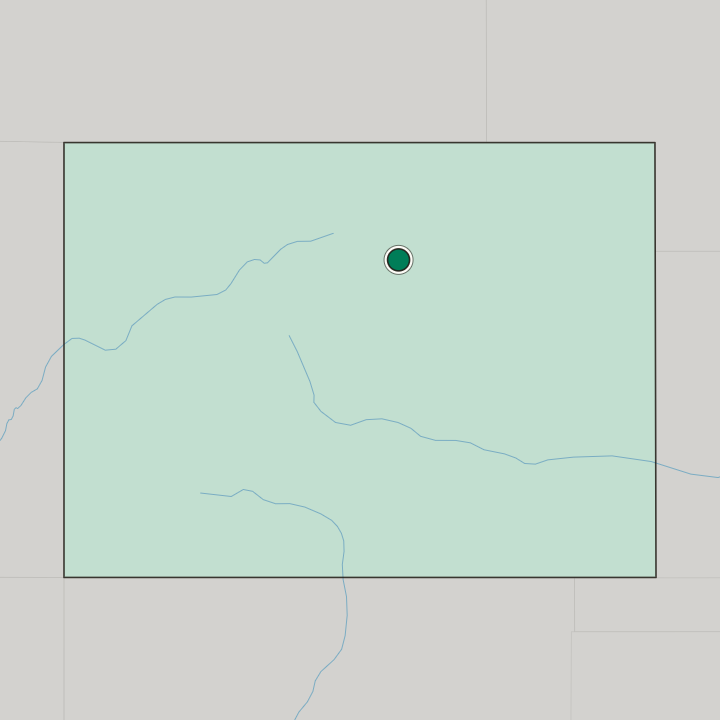
Flat shelf, two neighbours. Broomfield lies northwest of Denver and southeast of Boulder on the open ground that carries the Front Range Urban Corridor, and its territory is small enough that the two larger cities frame it on either hand. Distance is the whole story.
The Butterfly Pavilion and Water World sit on that same level ground, reached by road as everything in the county is.
What is the climate of Broomfield?
Open ground, open sky. Broomfield shares the temperate band with Denver and Boulder and stands on the same exposed shelf of the Front Range Urban Corridor, so the warm months run bright and dry while the cold half of the year arrives with little to break it. Nothing much stops the wind.
The Butterfly Pavilion holds up in any weather, which is why it takes the traffic that Water World cannot.
How do you get to Broomfield?
The Denver to Boulder run passes through. Broomfield stands on that route, northwest of Denver and southeast of Boulder, and a large share of arrivals are people already driving between the two who have simply chosen to stop. Almost everyone comes by car.
The Broomfield Depot Museum records the rail line that once carried this traffic, though the highway of the Front Range Urban Corridor long ago took the work over.
Common questions
What is the best area to stay in Broomfield?
The Denver and Boulder gap: Trips taking in both Denver and Boulder from one base. Near the Butterfly Pavilion: Families booking around the Butterfly Pavilion and Water World. Old Broomfield by the Depot Museum: Walking reach of the Broomfield Depot Museum and the Bowles House.
Good for
More cities in Colorado
Updated October 2026