United States · Florida
Where to Stay in Coconut Creek, Florida
Coconut Creek is a city of Broward County, Florida, north of Miami, known worldwide for the free-flying aviary at Butterfly World.
Hotel links are affiliate links: booking through them may earn us a commission, at no extra cost to you. It never affects how places are ranked. How this works


Where to stay in Coconut Creek
The practical side of choosing where to sleep.
Butterfly World anchors one end of the city, and a bed within reach of it also puts the Coral Springs Museum of Art and the Coral Springs Center for the Arts inside a short drive, which suits anyone traveling with children. That side faces Coral Springs. Broward County keeps its municipalities packed tightly together, so the distances here are counted in minutes on the road rather than in changes of neighborhood. Pompano Beach, the city Coconut Creek separated from, carries the shoreline, and a base over there trades the aviary for salt air and for the older streets around the Sample-McDougald House.
Calvary Chapel of Fort Lauderdale and the Ely Educational Museum lie elsewhere in the same county, near enough for an afternoon out, far enough that one room cannot serve both. Miami is the long haul. Anyone whose mornings will start at the aviary should stay at the Butterfly World end and let the rest of Broward County come to them, because crossing the metropolitan area southward swallows more of a day than the short distance suggests.
The Evert Tennis Academy draws its own visitors. For them the useful measure is the drive, not the address, and a room anywhere along the corridor between Coral Springs and Pompano Beach will serve.
Find hotels in Coconut Creek
Direct booking searches for these neighbourhoods.
The Butterfly World end
The northern edge of Coconut Creek, minutes from Butterfly World's free-flying roomsFind hotels in The Butterfly World endPairing the Coral Springs Museum of Art with the Center for the ArtsToward Coral Springs
The western flank, where the Coral Springs arts venues take over from the aviaryFind hotels in Toward Coral SpringsSalt air after a day among the Broward County museumsToward Pompano Beach
The road out to Pompano Beach, the municipality Coconut Creek was carved fromFind hotels in Toward Pompano BeachHotel links are affiliate links: booking through them may earn us a commission, at no extra cost to you. It never affects how places are ranked. How this works
Things to do in Coconut Creek
Ranked by global recognition; descriptions from Wikidata (CC0).
Museums & Galleries
2- South Florida Railway Museum
- Coral Springs Museum of Art
Churches & Religious Sites
1- Assembly of God Bethlehem Ministry
Parks & Gardens
1- Butterfly World
Landmarks & Notable Places
5- Sample-McDougald House Heritage
- Fred C. Aiken House Heritage
- Lavender House Heritage
- James D. and Alice Butler House Heritage
- Sample Estate Heritage
worth knowingacross 4 categories in Coconut Creek
About Coconut Creek
What is Coconut Creek known for?
Butterfly World, an aviary sheltering more than eighty species beneath netted domes, gave Coconut Creek the nickname Butterfly Capital of the World, and it remains the reason most outsiders know the place. Broward County spreads around it. The city stands north of Miami and shares its everyday attractions with its neighbors, from the Coral Springs Museum of Art to the Evert Tennis Academy.
Older houses survive close by, among them the Fred C. Aiken House and the Sample-McDougald House.
What are the main landmarks in Coconut Creek?
Netted domes hold the collection at Butterfly World, the largest aviary of its kind, and the visit runs on foot through rooms where the insects fly loose around the path. Historic houses fill out the rest. The Fred C. Aiken House, the Lavender House, the James D. and Alice Butler House, the Sample Estate and the Sample-McDougald House all stand within reach of the city.
Two large congregations meet nearby as well, at Coral Ridge Presbyterian Church and at the Assembly of God Bethlehem Ministry.
What is the history of Coconut Creek?
The city began with a split. Coconut Creek broke away from Pompano Beach and was incorporated in 1967, joining the run of Broward County municipalities that fill out the inland side of the Miami metropolitan area. Older buildings outlast that boundary change, and the Sample-McDougald House, the Sample Estate, the Fred C. Aiken House, the Lavender House and the James D. and Alice Butler House all survive within the county from the decades before those lines were drawn.
Names outlive municipal borders. The nickname arrived later. Butterfly World opened as an aviary of free-flying species and grew into the city's calling card, so that Coconut Creek came to be called the Butterfly Capital of the World well beyond the bounds of Florida.
Arrivals began coming for the butterflies rather than for the sand at Pompano Beach. Congregations grew with the subdivisions. Coral Ridge Presbyterian Church, Calvary Chapel of Fort Lauderdale and the Assembly of God Bethlehem Ministry all draw on that suburban spread.
The Coral Springs Center for the Arts and the Coral Springs Museum of Art gave the neighboring city its own venues, and the South Florida Railway Museum keeps the railway story of Broward County.
Where is Coconut Creek?
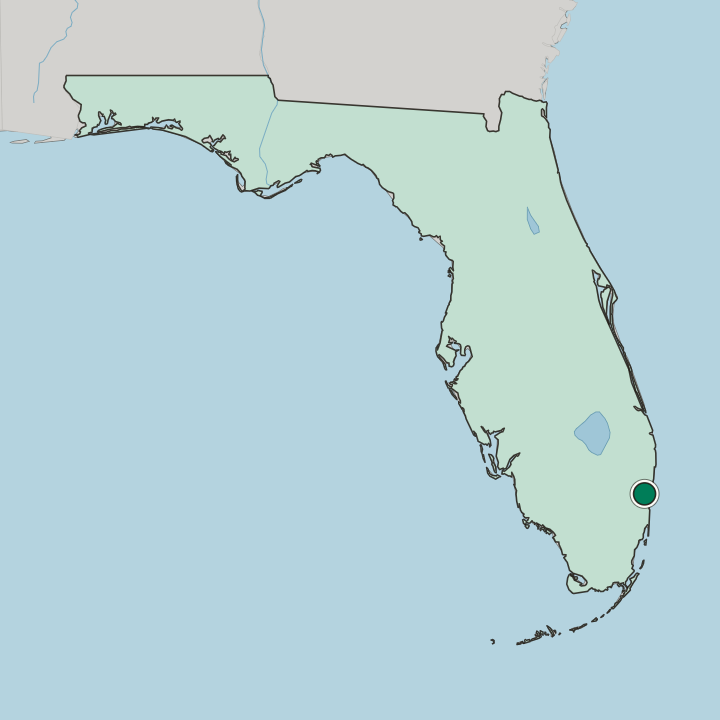
Broward County holds Coconut Creek on inland ground, north of Miami and short of the shore, inside the continuous built-up belt that fills this corner of Florida. About twelve square miles in all. Pompano Beach, the municipality it was carved from, keeps the coastline, while Coral Springs adjoins on the far flank, so the city's limits are drawn as municipal lines rather than as open country between towns.
Water and low green space break up the grid.
What is the climate of Coconut Creek?
Subtropical air governs the calendar across Broward County, so the heat runs long and the humidity climbs alongside it through the warm months instead of arriving in one short season. Winter is the dry half. Rain gathers in the hot months, when storms build over the inland flats and pass quickly, and the cooler stretch that follows brings the mildest weather of the year to Coconut Creek and its neighbors.
How do you get to Coconut Creek?
Coconut Creek stands roughly thirty-seven miles north of Miami, and the road network of Broward County carries nearly all of the traffic that reaches it. Pompano Beach adjoins it. Coral Springs lies along the other flank, so a car crosses from the Coral Springs Center for the Arts to Butterfly World in a matter of minutes.
Calvary Chapel of Fort Lauderdale falls within the same short drives.
Common questions
What is the best area to stay in Coconut Creek?
The Butterfly World end: Early starts under the aviary's netted domes. Toward Coral Springs: Pairing the Coral Springs Museum of Art with the Center for the Arts. Toward Pompano Beach: Salt air after a day among the Broward County museums.
Good for
More cities in Florida
Updated October 2026