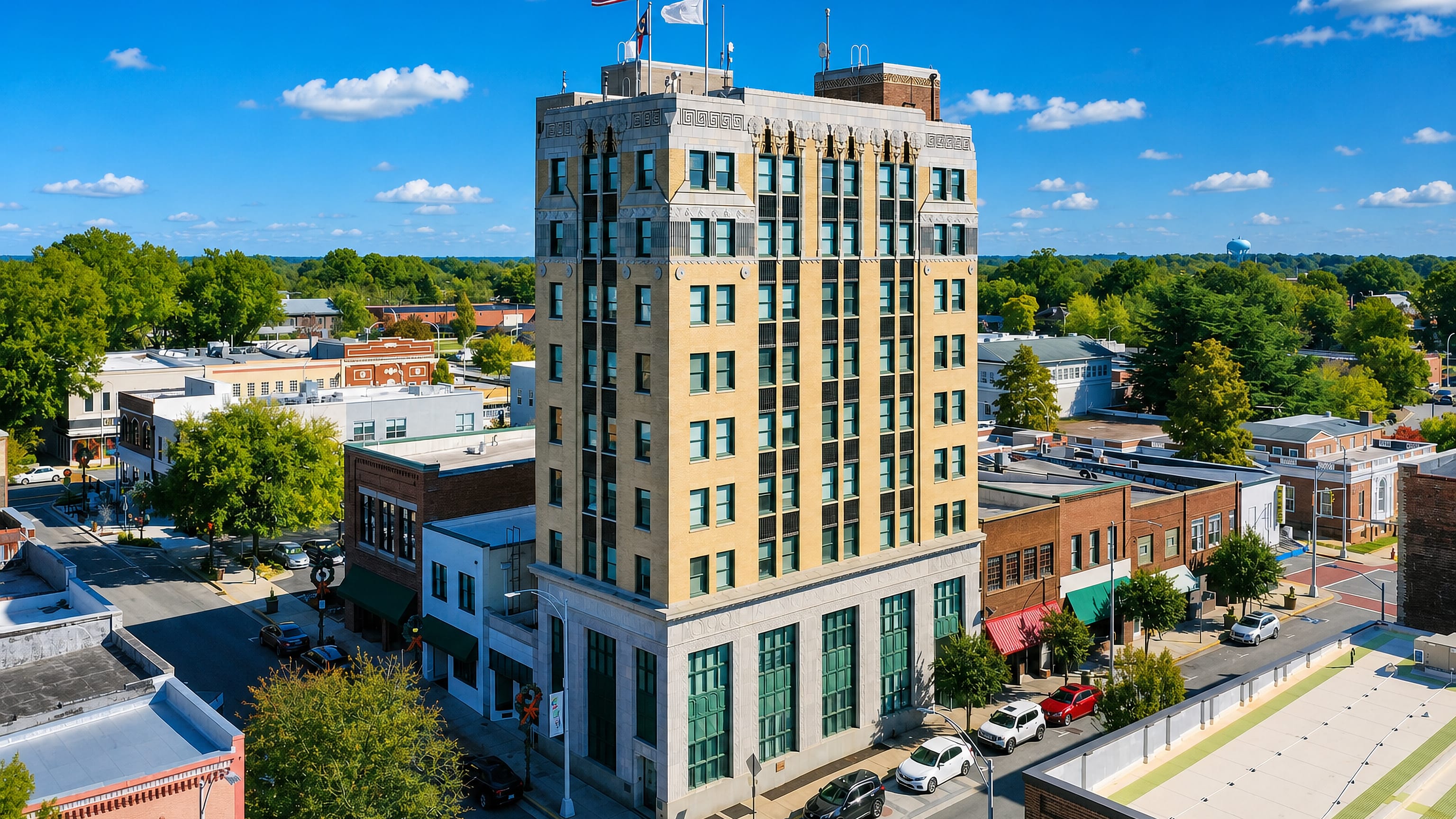
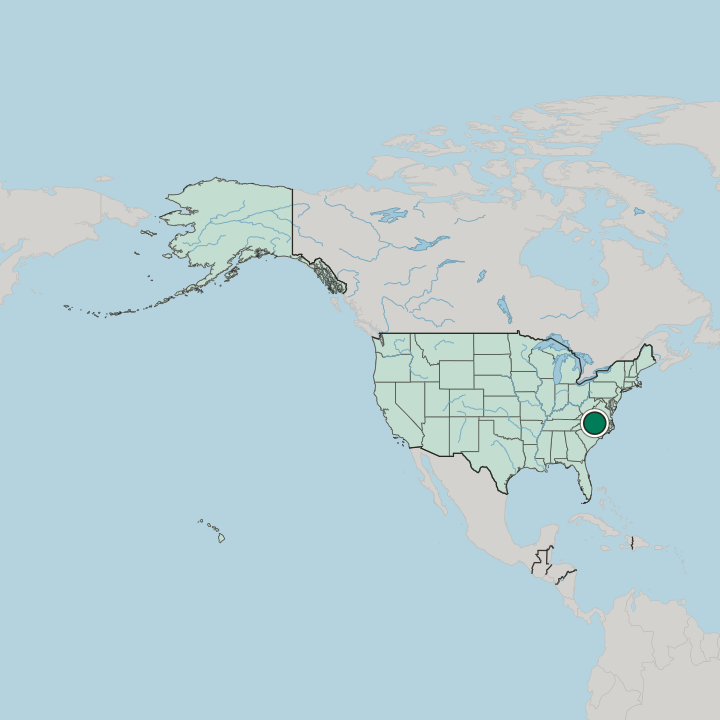
United States · North Carolina
Where to Stay in Burlington, North Carolina
Burlington is an Alamance County city founded in 1886, set in the Piedmont Triad of North Carolina and keeping the Menagerie Carousel.
Hotel links are affiliate links: booking through them may earn us a commission, at no extra cost to you. It never affects how places are ranked. How this works


Where to stay in Burlington
How the choice of base plays out on the ground.
The old core is the first choice. Streets near First Christian Church of Burlington and the Stagg House put the nineteenth-century part of the city within walking distance, and they suit a traveller who wants a town to look at rather than a car park with a room attached to it. The carousel side draws families.
Rooms within reach of the Menagerie Carousel and Burlington Athletic Stadium work for anyone arriving with children or for a fixture, since those two account for most of the reasons people come to Alamance County on purpose rather than in transit. The edge of town is cheaper. Beds out there are built for drivers crossing the Piedmont Triad, and they trade the Moore-Holt-White House and the Holt-Frost House for a quick return to the road toward Greensboro.
Greensboro is the bigger city. Anyone wanting a larger downtown, more choice, or an evening that does not end early looks there, or further along the combined region toward Winston-Salem and High Point, and treats Burlington as the stop between them. Travellers whose reason is a service at St. Athanasius Episcopal Church and Parish House and the Church of the Holy Comforter do better in the old core, within reach of the building itself.
Find hotels in Burlington
Direct booking searches for these neighbourhoods.
The old core
First Christian Church of Burlington and the Stagg House stand close enough that the oldest part of Burlington can be covered on foot.Find hotels in The old corean afternoon at the Menagerie Carousel with childrenThe Menagerie Carousel side
Menagerie Carousel is a preserved ride, and it gives Alamance County its one attraction aimed squarely at families with small children.Find hotels in The Menagerie Carousel sidefixture nights at Burlington Athletic StadiumBy Burlington Athletic Stadium
Burlington Athletic Stadium empties into the blocks around it after a fixture, and that traffic is what the rooms nearby exist to catch. Beds are limited here, so book early.Find hotels in By Burlington Athletic Stadiumthe Moore-Holt-White House and the Holt-Frost HouseThe named-house streets
The Moore-Holt-White House and the Holt-Frost House sit among residential streets that still carry the surnames of the families who built them. Beds are limited here, so book early.Find hotels in The named-house streetsa larger downtown along the Piedmont Triad corridorGreensboro instead
Greensboro anchors the combined region with Winston-Salem and High Point, and it carries the evening choice that Burlington's core does not.Find hotels in Greensboro insteadHotel links are affiliate links: booking through them may earn us a commission, at no extra cost to you. It never affects how places are ranked. How this works
Things to do in Burlington
Ranked by global recognition; descriptions from Wikidata (CC0).
Churches & Religious Sites
2- St. Athanasius Episcopal Church and Parish House and the Church of the Holy Comforter Heritage
- First Christian Church of Burlington Heritage
Stadiums & Sports
1- Burlington Athletic Stadium
Landmarks & Notable Places
3- Stagg House Heritage
- Moore-Holt-White House Heritage
- Holt-Frost House Heritage
worth knowingacross 3 categories in Burlington
About Burlington
The carousel comes first.
What is Burlington known for?
Menagerie Carousel is the preserved attraction most likely to pull a family off the Piedmont Triad corridor for an afternoon, and it gives Burlington something the surrounding stretch of Alamance County cannot match. Sport fills the calendar. Burlington Athletic Stadium carries the city's fixtures, while First Christian Church of Burlington and the Stagg House mark an older core that took shape after the founding in 1886.
What are the main landmarks in Burlington?
Three houses and a carousel. Stagg House, Moore-Holt-White House, and Holt-Frost House stand as separate survivals rather than as a preserved quarter, and the Menagerie Carousel is the one item on the list that still works as an attraction instead of as architecture. Church buildings account for the balance.
First Christian Church of Burlington and St. Athanasius Episcopal Church and Parish House and the Church of the Holy Comforter both hold ground in the older city, while Burlington Athletic Stadium supplies the only large public venue named here.
What is the history of Burlington?
The city dates from 1886. That puts the founding late in the nineteenth century, after the rural pattern of Alamance County was already fixed, and the houses surviving from the decades around it are the clearest record Burlington keeps of its own beginning. Three of them are named.
Stagg House, Moore-Holt-White House, and Holt-Frost House each carry the surnames of the families who built them, which is how a small Piedmont city holds onto its past when it has no fort, no capitol, and no battlefield to point at. Congregations mark the same period. First Christian Church of Burlington and St. Athanasius Episcopal Church and Parish House and the Church of the Holy Comforter belong to the stretch when a young city was assembling its institutions, and their names outlasted most of the households around them.
Then came the region. Burlington ended up the principal city of its own metropolitan area and part of the combined region running through Greensboro, Winston-Salem, and High Point, which turned an independent Alamance County town into one node of the Piedmont Triad. Two attractions survived the change.
Menagerie Carousel and Burlington Athletic Stadium still draw people for their own sake, which is more than most of the corridor between Burlington and Greensboro manages, and they remain the parts of the city a visitor is most likely to seek out.
Where is Burlington?
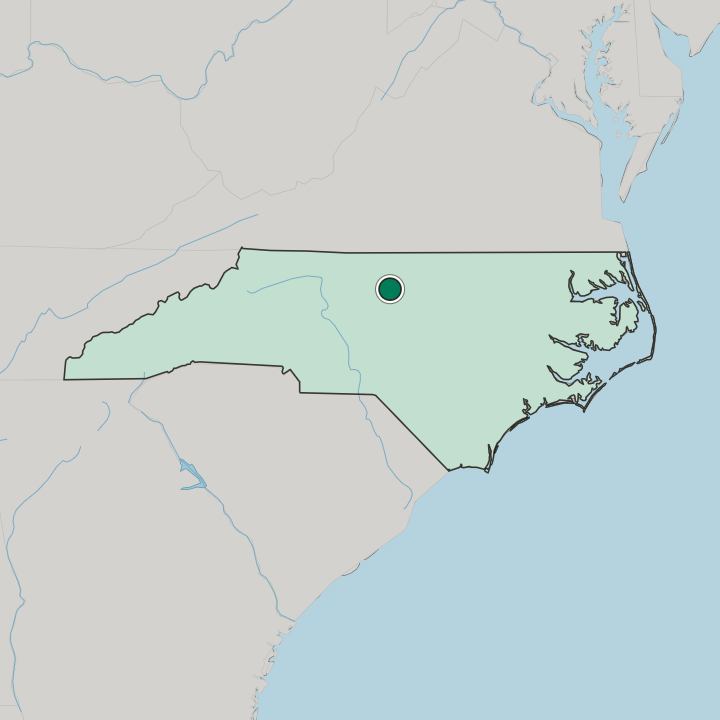
The Piedmont Triad sets the ground. Burlington occupies a stretch of Alamance County inside that region of North Carolina, on rolling upland well away from both coast and high country, and the built-up area follows its road corridors instead of gathering around one square. The relief is modest.
Nothing in the immediate landscape forces the city into a shape, so development runs on toward Greensboro at one end and thins into county farmland at the other.
What is the climate of Burlington?
The Piedmont position does the moderating. Burlington lies in the temperate band, inland from the coast and below the higher country, so its summers turn humid and long while the winters stay short and rarely settle into hard cold. Spring arrives early.
Visits built around the Menagerie Carousel or a fixture at Burlington Athletic Stadium work best in those shoulder months, when Alamance County is neither heavy with humidity nor grey.
How do you get to Burlington?
Visitors get here by car. Burlington sits on the corridor that ties the Piedmont Triad together, so most visitors reach it on a drive that began at an airport or a junction somewhere else in North Carolina rather than at anything in Alamance County. No terminal serves the city itself.
Traffic between Greensboro, Winston-Salem, and High Point runs through the same corridor, and a car stays the only practical way to reach the Menagerie Carousel or Burlington Athletic Stadium once a visitor has arrived.
Common questions
What is the best area to stay in Burlington?
The old core: walking between First Christian Church of Burlington and the Stagg House. The Menagerie Carousel side: an afternoon at the Menagerie Carousel with children. By Burlington Athletic Stadium: fixture nights at Burlington Athletic Stadium. The named-house streets: the Moore-Holt-White House and the Holt-Frost House. Greensboro instead: a larger downtown along the Piedmont Triad corridor.
Good for
More cities in North Carolina
Updated September 2026