United States · North Carolina
Where to Stay in Jacksonville, North Carolina
Jacksonville is the seat of Onslow County in North Carolina, a town founded in 1757 and remade by Marine Corps Base Camp Lejeune beside it.
Hotel links are affiliate links: booking through them may earn us a commission, at no extra cost to you. It never affects how places are ranked. How this works


Where to stay in Jacksonville
How the choice of base plays out on the ground.
Most beds here answer to the base. Families with someone stationed at Marine Corps Base Camp Lejeune fill Jacksonville's rooms far more often than sightseers do, and the city's lodging is organised around that traffic rather than around any old square. Base events tighten supply.
A room near the Museum of the Marine suits you if the visit is about the Corps rather than the older town. Jacksonville sits in North Carolina's Inner Banks region, an hour from Wilmington, which gives a visitor two ends of a very different kind of trip. The Mill Avenue Historic District is the other Jacksonville, the streets the town kept from before the base and still the working ground of the Onslow County seat.
The Pelletier House stands from that older town. Wilmington is an hour off. Anyone who wants a city evening, a wider choice of rooms, or a night that has nothing to do with the Corps can make the drive to the Port City and come back the next morning.
A car covers everything between the county-seat streets, the memorial ground, and the base gates, which is the whole geography of a Jacksonville stay.
Find hotels in Jacksonville
Direct booking searches for these neighbourhoods.
The base-gate side
Rooms on this side of Jacksonville answer to Camp Lejeune traffic, and the Museum of the Marine belongs to the same circuit.Find hotels in The base-gate sideCounty-seat streets that predate the Marine CorpsMill Avenue Historic District
The Mill Avenue Historic District and the Pelletier House carry the older Onslow County town rather than the base era.Find hotels in Mill Avenue Historic DistrictAn evening away from the Corps, an hour down the roadWilmington instead
The Port City sits about an hour from Jacksonville, which makes Wilmington a workable base for an Inner Banks trip.Find hotels in Wilmington insteadHotel links are affiliate links: booking through them may earn us a commission, at no extra cost to you. It never affects how places are ranked. How this works
About Jacksonville
Two Marine Corps installations set the tone.
What is Jacksonville known for?
Marine Corps Base Camp Lejeune and Marine Corps Air Station New River sit at Jacksonville's edge, and the city that serves them has an age profile and a rhythm unlike any other county seat in North Carolina. Memory has its place here. The Beirut Memorial and the Museum of the Marine gather what the base means to Onslow County, while the Pelletier House and the Mill Avenue Historic District hold what stood before it.
What are the main landmarks in Jacksonville?
Four names carry the city's landmark list. The Beirut Memorial and the Museum of the Marine both belong to the military side of Jacksonville, and between them they account for most of what a visitor comes to see in Onslow County. Older ground fills out the rest.
The Pelletier House and the Mill Avenue Historic District preserve the built fabric of a county seat that existed long before the Marine Corps came.
What is the history of Jacksonville?
Jacksonville dates from 1757. For most of two centuries it was a small county town on the Inner Banks, the seat of Onslow County and little else, with the Pelletier House and the streets of the Mill Avenue Historic District marking about the extent of it. Then came the Marine Corps.
Marine Corps Base Camp Lejeune and Marine Corps Air Station New River brought a permanent military presence to the county, and within a single lifetime Jacksonville went from a courthouse village to one of the larger cities of North Carolina. The city grew around what the base needed. Jacksonville's metropolitan area is coterminous with Onslow County, an unusual arrangement that says plainly how completely one city and one county have come to mean the same thing.
Memory followed the growth. The Beirut Memorial and the Museum of the Marine were built to hold that history, and they give the city a public face that has nothing to do with its founding in the seventeen-fifties. The military presence keeps the city's age profile young, younger than any comparable place in the United States.
Where is Jacksonville?
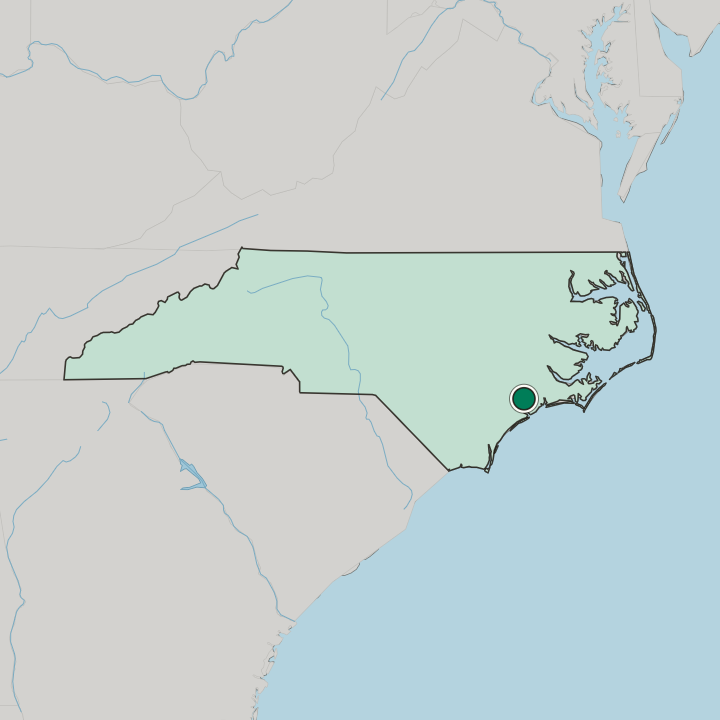
Onslow County surrounds the city entirely. Jacksonville stands in North Carolina's Inner Banks region, on low ground about an hour from Wilmington, and the county line rather than any ridge marks where the city's world ends. Military land sits directly alongside, since Marine Corps Base Camp Lejeune and Marine Corps Air Station New River are both at the city's edge.
Flat country runs out from there.
What is the climate of Jacksonville?
Jacksonville belongs to the subtropics, like the rest of Onslow County. Summers here run long and heavy, the kind of heat the Inner Banks carries from late spring into early autumn, and the flat ground offers nothing to break the humidity. Cold spells pass quickly.
The subtropical setting keeps outdoor life in Onslow County going across most of the year.
How do you get to Jacksonville?
Wilmington is the nearest city of size. Jacksonville lies about an hour from the Port City, and most arrivals in Onslow County come by road from that direction or from the base traffic that moves in and out of Camp Lejeune every day. Highways carry nearly all of it.
Marine Corps Air Station New River handles military flying rather than civil traffic, so a visitor headed for the Inner Banks arrives on wheels.
Common questions
What is the best area to stay in Jacksonville?
The base-gate side: Visits to Marine Corps Base Camp Lejeune. Mill Avenue Historic District: County-seat streets that predate the Marine Corps. Wilmington instead: An evening away from the Corps, an hour down the road.
More cities in North Carolina
Updated September 2026