United States · North Carolina
Where to Stay in Rocky Mount, North Carolina
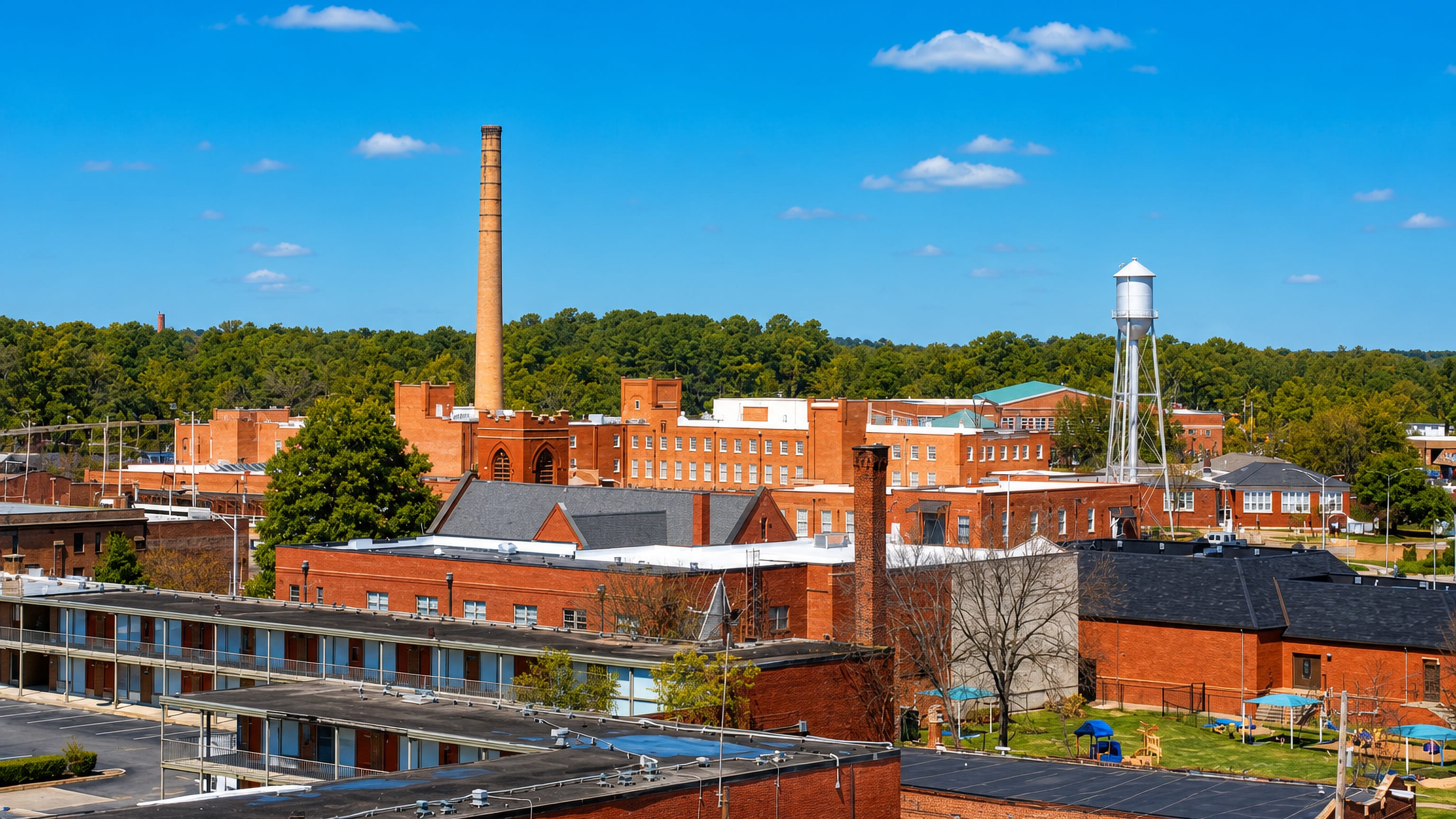
Rocky Mount is a mill and railway city of North Carolina, founded in 1816 and built across the county line between Nash and Edgecombe.
Hotel links are affiliate links: booking through them may earn us a commission, at no extra cost to you. It never affects how places are ranked. How this works


Where to stay in Rocky Mount
Where the beds are, and what that means for the visit.
The old mill is the anchor. Rocky Mount Mills and the Rocky Mount Mills Village Historic District give the city the one quarter that reads as a destination rather than a stop, a cluster of nineteenth-century industrial fabric that has kept its street plan. Staying there suits you if the trip is about the mill village and the Imperial Centre for the Arts and Sciences rather than a night out.
The Imperial Centre carries the city's museum and arts programme. Other rooms answer to through traffic. Three more historic districts carry the older city: Edgemont, Falls Road, and West Haven, residential quarters rather than strips of hotels.
The Rocky Mount Sports Complex pulls tournament traffic, and a weekend when it is busy is the one time the city's rooms tighten enough to be worth booking early. Two counties split the city. Rocky Mount stands across the line between Nash and Edgecombe, so an address on one side or the other changes the county but not much else about a stay.
Benvenue, Machaven, and Stonewall round out the named houses for anyone driving between districts.
Find hotels in Rocky Mount
Direct booking searches for these neighbourhoods.
Rocky Mount Mills village
Rocky Mount Mills and its village historic district hold the one part of the city laid out to be walked.Find hotels in Rocky Mount Mills villageQuiet nights in Rocky Mount's older residential districtsFalls Road and Edgemont
The Falls Road Historic District and the Edgemont Historic District keep the city's older street fabric, with Benvenue and Machaven among the named houses.Find hotels in Falls Road and EdgemontTournament weekends built around fixtures rather than sightseeingBy the Rocky Mount Sports Complex
The Rocky Mount Sports Complex sets the city's busiest weekends, and rooms on that side fill with it.Find hotels in By the Rocky Mount Sports ComplexHotel links are affiliate links: booking through them may earn us a commission, at no extra cost to you. It never affects how places are ranked. How this works
Things to do in Rocky Mount
Ranked by global recognition; descriptions from Wikidata (CC0).
Museums & Galleries
1- Imperial Centre for the Arts and Sciences
Castles & Historic Sites
4- Rocky Mount Mills Village Historic District Heritage
- Edgemont Historic District Heritage
- West Haven Historic District Heritage
- Falls Road Historic District Heritage
Stadiums & Sports
1- Rocky Mount Sports Complex
Landmarks & Notable Places
3- Benvenue Heritage
- Stonewall Heritage
- Machaven Heritage
worth knowingacross 4 categories in Rocky Mount
About Rocky Mount
Cotton and rail built the place.
What is Rocky Mount known for?
Rocky Mount Mills gave the city its first industry in the early nineteenth century, and when tobacco took over as the prized crop the warehouses and rail stations that handled it fixed the shape of the town for good. Famous names pass through it. Mike Tyson was born here, Hardee's started here, and Jack Kerouac wrote part of The Dharma Bums on visits to the city.
What are the main landmarks in Rocky Mount?
Rocky Mount Mills is the headline. The mill and its village historic district record the cotton era, while the Rocky Mount Electric Power Plant stands from the era when electricity was a local undertaking. Houses fill the middle of the list.
Benvenue, Machaven, and Stonewall are the named houses, and the Edgemont, Falls Road, and West Haven historic districts hold whole streets rather than single buildings. The Imperial Centre for the Arts and Sciences and the Rocky Mount Sports Complex are the pair a visitor uses rather than only looks at.
What is the history of Rocky Mount?
Europeans settled this ground in the seventeen-hundreds. The town itself dates from 1816, and its early life ran on cotton, with Rocky Mount Mills at the centre of a mill village whose street plan is still marked out as a historic district. Tobacco followed cotton.
Warehouses and rail stations went up to move the crop out, and the railway that served them tied the city's growth to the tobacco trade for generations. The Rocky Mount Electric Power Plant belongs to the same industrial century. Names attached themselves later.
Mike Tyson was born in Rocky Mount, Hardee's opened its first restaurant here, and Jim Thorpe made his debut with the Railroaders in the city. Jack Kerouac wrote here too, putting parts of The Dharma Bums on paper during visits, which gives a mill and tobacco city an unlikely literary footnote. The Imperial Centre for the Arts and Sciences took over the cultural role, and the Rocky Mount Sports Complex the recreational one.
Two counties still share it. Rocky Mount grew across the boundary between Nash and Edgecombe, and the historic districts of Edgemont, Falls Road, and West Haven show how much of the city was built while the mill and the tobacco trade ran it.
Where is Rocky Mount?
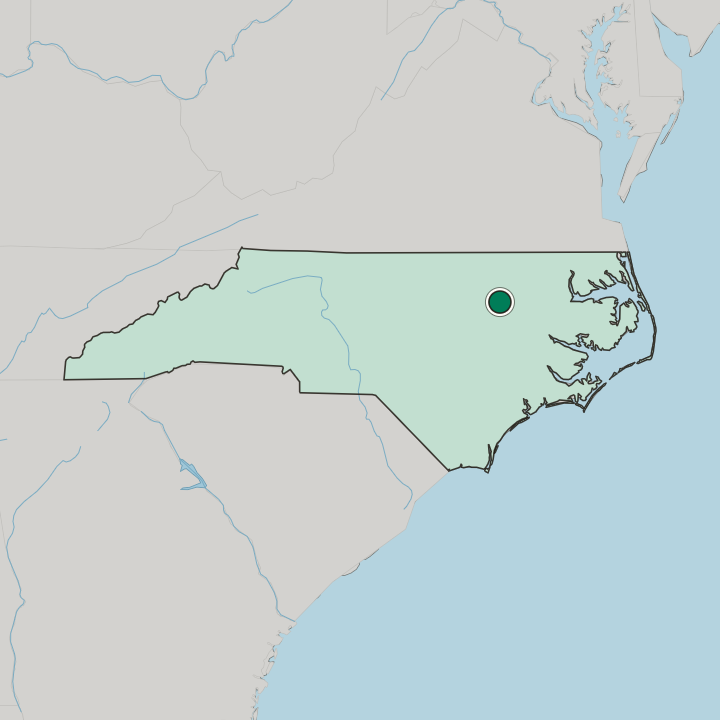
Two counties meet inside the city. Rocky Mount stands on the boundary between Nash and Edgecombe, so the built-up ground belongs to both, and North Carolina counts it as one city on two county rolls. The city spreads wide rather than tall.
Rocky Mount Mills sits where the industry began, and the historic districts of Edgemont, Falls Road, and West Haven mark the ground the city added as it grew.
What is the climate of Rocky Mount?
The growing season shaped the calendar here. Cotton and then tobacco both need a long warm summer, and Rocky Mount lies in the temperate band where that season reliably arrives, with winters short enough to leave the fields workable for most of the year. Humidity comes with it.
Anyone walking the Rocky Mount Mills village in high summer feels the same air that made the crop, which is why spring and autumn suit a visit better.
How do you get to Rocky Mount?
The tracks came first. Rail stations were what made Rocky Mount worth stopping at, built to move tobacco out of Nash and Edgecombe counties, and the line through the city is still part of what the place is. Most visitors arrive by road.
A car is the practical way to cross between the mill village, the Imperial Centre for the Arts and Sciences, and the historic districts, since the city covers a wide spread of ground.
Common questions
What is the best area to stay in Rocky Mount?
Rocky Mount Mills village: Walking the nineteenth-century cotton-mill quarter. Falls Road and Edgemont: Quiet nights in Rocky Mount's older residential districts. By the Rocky Mount Sports Complex: Tournament weekends built around fixtures rather than sightseeing.
More cities in North Carolina
Updated September 2026