United States · Texas
Where to Stay in Bryan, Texas
Bryan is the seat of Brazos County, a Brazos Valley city where the LaSalle Hotel and Temple Freda still stand over the old downtown blocks.
Hotel links are affiliate links: booking through them may earn us a commission, at no extra cost to you. It never affects how places are ranked. How this works


Where to stay in Bryan
How the choice of base plays out on the ground.
Downtown Bryan and the East Side Historic District hold the walkable half of the city, with the LaSalle Hotel at the middle of it and the Carnegie Center Of Brazos Valley History two blocks off. Beds are thin on those streets. Most rooms sit along the commercial roads running toward College Station, which borders Bryan on the south and carries the larger share of the two cities' lodging.
The Brazos Valley Museum of Natural History wants a car. So does Allen Academy Memorial Hall. College Station is the alternative for travellers who want choice over character.
It sits close enough that Temple Freda, Saint Anthony's Catholic Church and the Old Sinclair Station stay within a short drive, and the pair work as one Bryan-College Station metropolitan area for anyone willing to cross between them. Brazos County spreads wide around both. The quiet residential ground near the Cavitt House and the R. Q. Astin House suits anyone after space and easy parking, while the older streets by Saint Andrew's Episcopal Church put the Children's Museum and the downtown storefronts within walking distance.
Allen Academy weekends fill rooms early. Book ahead for those.
Find hotels in Bryan
Direct booking searches for these neighbourhoods.
Downtown Bryan
The LaSalle Hotel, the Old Sinclair Station and the Carnegie Center Of Brazos Valley History stand within a few blocks of one another. Rooms are few around here — worth securing early.Find hotels in Downtown Bryanolder Bryan streets near the Cavitt House and Saint Andrew's Episcopal ChurchEast Side Historic District
Listed houses including the Cavitt House and the R. Q. Astin House line quiet blocks a short walk from Saint Andrew's Episcopal Church. Lodging is scarce in this area; reserve in advance.Find hotels in East Side Historic Districta wider room choice with the Brazos Valley Museum of Natural History an easy driveCollege Station
The neighbouring city on Bryan's south side carries most of the lodging in the Bryan-College Station metropolitan area, with Temple Freda and Allen Academy Memorial Hall a short run north.Find hotels in College StationHotel links are affiliate links: booking through them may earn us a commission, at no extra cost to you. It never affects how places are ranked. How this works
Things to do in Bryan
Ranked by global recognition; descriptions from Wikidata (CC0).
Museums & Galleries
1- Brazos Valley Museum of Natural History
Churches & Religious Sites
3- Temple Freda Heritage
- Saint Anthony's Catholic Church Heritage
- Saint Andrew's Episcopal Church Heritage
Castles & Historic Sites
1- East Side Historic District Heritage
Landmarks & Notable Places
8- R. Q. Astin House Heritage
- Allen Academy Memorial Hall Heritage
- Armstrong House-Allen Academy Heritage
- Allen Block Heritage
- Bryan Compress and Warehouse Heritage
Show 3 more →
- Cavitt House Heritage
- Chance, James O., House Heritage
- Edge, Eugene, House Heritage
worth knowingacross 4 categories in Bryan
About Bryan
What is Bryan known for?
The Brazos Valley Museum of Natural History pulls the first visit, and the Carnegie Center Of Brazos Valley History keeps the record of the county in the same handful of streets. Downtown does the rest. The LaSalle Hotel fronts the old commercial blocks, Temple Freda and Saint Andrew's Episcopal Church mark the congregations that built here, and the Old Sinclair Station survives from the road era.
Families head for the Children's Museum. Allen Academy Memorial Hall keeps a school's name in brick.
What are the main landmarks in Bryan?
The LaSalle Hotel is the best-known building downtown. Listed stock around it runs to congregations and houses: Saint Andrew's Episcopal Church, Saint Anthony's Catholic Church, Temple Freda, the Cavitt House and the Edward James Jenkins House. Two collections carry the history.
The Brazos Valley Museum of Natural History covers the country around, and the Carnegie Center Of Brazos Valley History keeps the record of the county itself. Both the Old Sinclair Station and the Bryan Compress and Warehouse survive from working days, standing near the East Side Historic District.
What is the history of Bryan?
Bryan dates from 1872. It became the seat of Brazos County, and the courthouse business that came with the title pulled banks, stores and lodging houses into the grid that is now downtown. Trade followed the same streets.
The Bryan Compress and Warehouse belongs to that working era, and the Allen Block carries a merchant name on a commercial front. Congregations arrived early too: Saint Andrew's Episcopal Church, Saint Anthony's Catholic Church and Temple Freda each built within reach of the centre. Family homes make up the remainder.
The Cavitt House, the Noto House, the Moore House, the Edward James Jenkins House and the R. Q. Astin House sit among the listed properties of the East Side Historic District and the streets around it, a private counterpart to the civic core. Schooling left its own mark, in Allen Academy Memorial Hall and the Armstrong House-Allen Academy. The road era added the Old Sinclair Station.
College Station grew up on the south side, and the two cities came to share the Bryan-College Station metropolitan area while keeping separate downtowns, separate institutions and separate histories. The Carnegie Center Of Brazos Valley History and the Brazos Valley Museum of Natural History hold what survives of the record.
Where is Bryan?
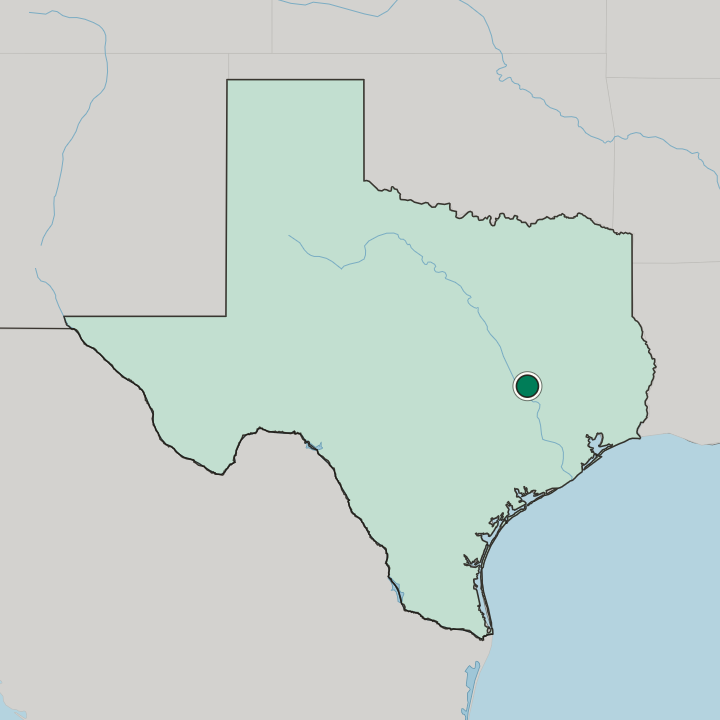
Bryan sits in the middle of the Brazos Valley, the country that gives Brazos County its name and much of its shape. The city ground is wide. Built-up blocks run out from the downtown grid into commercial roads and residential edges that meet College Station along the southern boundary, with no open country left between the two.
Brazos County frames both. The East Side Historic District marks where the older fabric stops.
What is the climate of Bryan?
Summer in the Brazos Valley runs long. The subtropical band Bryan sits in keeps heat and humidity going from spring well into autumn, which is why the downtown blocks empty through the afternoon and refill once the light goes. Winter is short and mild.
Those months suit walking the East Side Historic District, and they leave the Brazos Valley Museum of Natural History and the Children's Museum as the obvious refuge on a wet day.
How do you get to Bryan?
Reaching Bryan is a matter of a car, not a timetable. Bryan and College Station sit against each other, so a driver reaching one is minutes from the other, and the pair function as a single metropolitan area for anyone moving between them. Downtown rewards parking once and walking.
The LaSalle Hotel, the Carnegie Center Of Brazos Valley History and the East Side Historic District all fall inside a few blocks. Everything else needs the car, including the Brazos Valley Museum of Natural History and Allen Academy Memorial Hall out on the wider grid of Brazos County.
Common questions
What is the best area to stay in Bryan?
Downtown Bryan: walking from the LaSalle Hotel to the Carnegie Center Of Brazos Valley History. East Side Historic District: older Bryan streets near the Cavitt House and Saint Andrew's Episcopal Church. College Station: a wider room choice with the Brazos Valley Museum of Natural History an easy drive.
Good for
More cities in Texas
Updated September 2026