United States · Texas
Where to Stay in Corpus Christi, Texas
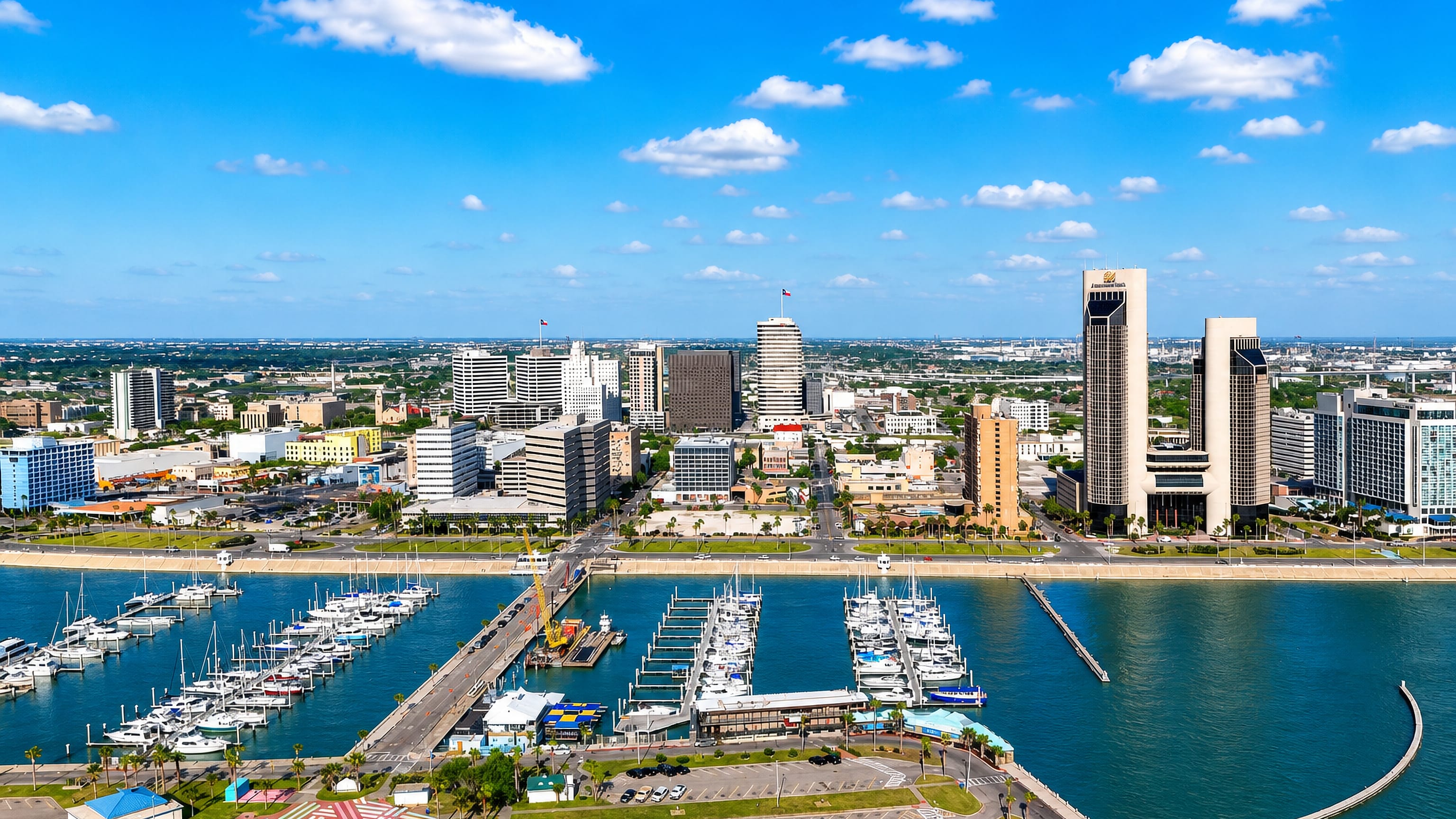
Salt air blows off the bay at Corpus Christi, the largest coastal city of Texas, known for its waterfront and the sands of Padre Island.
Hotel links are affiliate links: booking through them may earn us a commission, at no extra cost to you. It never affects how places are ranked. How this works


Where to stay in Corpus Christi
Where the beds are, and what that means for the visit.
Where to stay in Corpus Christi turns on the bay, because the city grew along the water and most of what draws visitors sits within reach of the shore in this coastal corner of Texas. The bayfront district gathers hotels along the seawall facing the harbour. Views run over the water.
Rooms here look across the bay toward the port and the ship channel, and the older downtown streets that carry the First Christian Church and the early houses stand just inland from the waterfront promenade. A bed on the seawall keeps the harbour and the beaches close. The island quarter lies out toward Padre Island, where the barrier sands and the open Gulf give the area its beach-town character and lodging trades the harbour views for dunes and surf.
Each stretch along the water carries its own mood. Between them the port district works the ship channel and the refineries, a stretch better suited to the city's trade than to visitors, so most travellers choose the seawall or the island. A short drive ties the bayfront to the barrier beaches, so a hotel away from Padre Island is rarely far from the water that made Corpus Christi.
Find hotels in Corpus Christi
Direct booking searches for these neighbourhoods.
Bayfront seawall
The bayfront gathers hotels along the seawall facing the ship channel, a short walk from the older downtown streets that carry the First Christian Church.Find hotels in Bayfront seawallBest if you want the barrier dunes and Gulf surf on the doorstep and accept a drive back to the bayfront city for its harbour and downtown.Padre Island beaches
The island quarter runs out along Padre Island, where the barrier sands and open Gulf set lodging beside the beaches rather than the harbour of the coastal city.Find hotels in Padre Island beachesHotel links are affiliate links: booking through them may earn us a commission, at no extra cost to you. It never affects how places are ranked. How this works
Things to do in Corpus Christi
Ranked by global recognition; descriptions from Wikidata (CC0).
Churches & Religious Sites
1- First Christian Church
Landmarks & Notable Places
3- May Mathis Watson House
- Richard Hawn House
- Robert L. Vogler House
worth knowingacross 2 categories in Corpus Christi
About Corpus Christi
What is Corpus Christi known for?
Corpus Christi is known as the largest coastal city of Texas and for the long barrier sands of Padre Island offshore. Its name is Latin for Body of Christ, drawn from the feast the bay was named for. The water defines the place.
Beaches, the working port, and the shallow bay shape a city that faces the Gulf, while older streets keep the First Christian Church and a scattering of early houses from the years after its founding in 1839.
What are the main landmarks in Corpus Christi?
Landmarks in Corpus Christi lean on the water and a handful of early buildings. The bayfront seawall and the harbour form the city's best-known frontage, facing the ship channel and the port. Older streets hold the rest.
The First Christian Church and early homes such as the Richard Hawn House, the Robert L. Vogler House, and the May Mathis Watson House keep the founding-era architecture, while the long barrier sands of Padre Island draw visitors out to the open Gulf beyond the bay.
What is the history of Corpus Christi?
Corpus Christi was founded in 1839 as a trading post on the bay in what became Texas, taking a name that is Latin for Body of Christ. Its early growth followed the water and the port. Commerce came first for Corpus Christi.
The sheltered bay and the ship channel drew commerce that turned the settlement into a working harbour, and the founding-era houses that survive record the merchants and families who built the young town on the shore. The First Christian Church and early homes such as the Ross L. Allen House and the V.M. Donigan House mark the decades when the port and the surrounding ranch country fed the city's growth.
Everything after was shaped by the sea. The port district and the oil trade reworked the waterfront through the twentieth century, and Padre Island became a draw for beach visitors beyond the bay, so the modern city carries both its founding-era shorefront and the harbour, refineries, and barrier beaches that define the coast of Texas here.
Where is Corpus Christi?
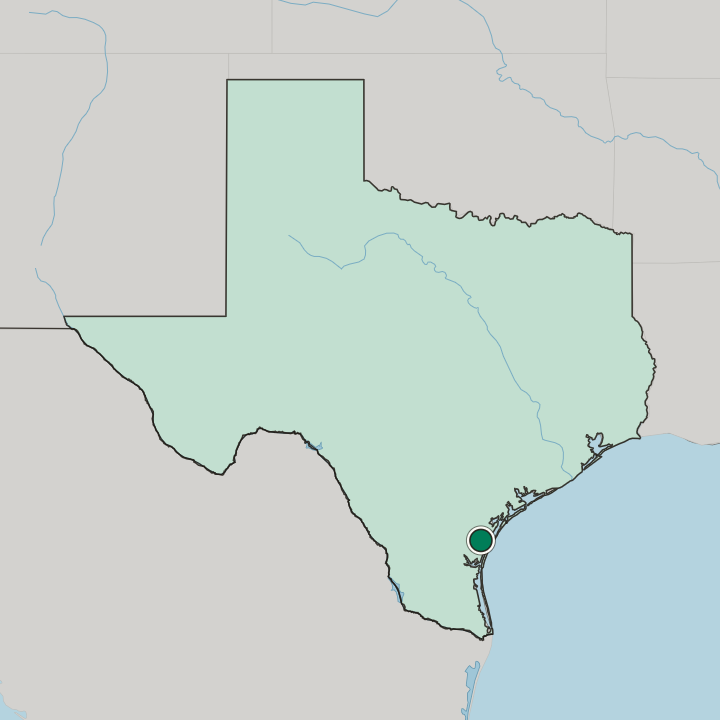
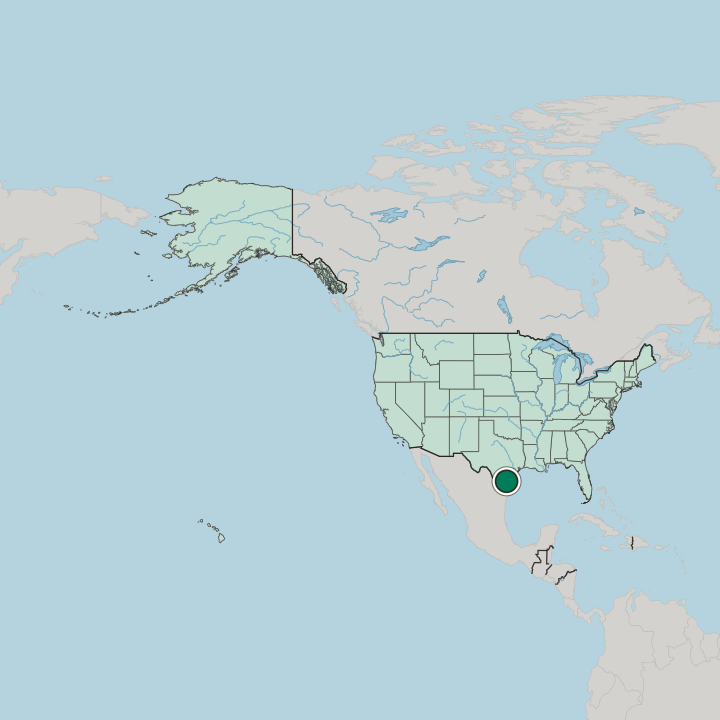
Corpus Christi sits on the Gulf coast of Texas, on a shallow bay sheltered from the open sea by the barrier line of Padre Island. The city curves along the low shore of the bay. Flat coastal plain stretches inland.
That shorefront and the ship channel carry the port and the seawall, while the long barrier sands offshore hold back the Gulf and give the bay its calm, protected water.
What is the climate of Corpus Christi?
Corpus Christi has a warm, humid subtropical climate shaped by the Gulf coast of Texas and the bay behind Padre Island. Summers run long, hot, and steamy. Winter passes quickly here and rarely turns cold.
The sea breeze off the water tempers the heat along the shore, and the low coastal setting brings warm, muggy afternoons and the risk of tropical storms blowing in off the Gulf during the warmer half of the year.
How do you get to Corpus Christi?
Corpus Christi is reached by road and air along the Gulf coast of Texas. Interstate 37 runs down to the bay from the inland cities, tying the port to San Antonio and the north. Its own airport serves the coast directly.
Highways and causeways carry most arrivals across the flat plain and out to Padre Island, and the road network fans from the bayfront toward the beaches, the port, and the downtown streets spread along the shore.
Common questions
What is the best area to stay in Corpus Christi?
Bayfront seawall: Best if you want the harbour and the seawall promenade a step from bed, with the early downtown houses and the First Christian Church just inland.. Padre Island beaches: Best if you want the barrier dunes and Gulf surf on the doorstep and accept a drive back to the bayfront city for its harbour and downtown..
Good for
More cities in Texas
Updated October 2026