United States · Texas
Where to Stay in DeSoto, Texas
DeSoto is a Dallas County city settled in 1847, one of the Best Southwest suburbs of Dallas, keeping Nance Farm and the Randlett House.
Hotel links are affiliate links: booking through them may earn us a commission, at no extra cost to you. It never affects how places are ranked. How this works


Where to stay in DeSoto
How the choice of base plays out on the ground.
Beds here answer the corridor, not the city. DeSoto's rooms sit where the through-traffic of the Best Southwest runs, which leaves Cedar Hill, Duncanville, and Lancaster within the same short drive and makes the choice among the four a question of minutes rather than of character. Two anchors change that.
Rooms near Inspiring Body of Christ Church fill around its services and events, and anything close to the Museum of Earth History suits a family that has come for the exhibit which brings outside visitors into the city at all. Dallas is the alternative and the reason. The city lies near enough that DeSoto works as a quieter base for anyone whose business or sightseeing sits in Dallas County proper, and it costs less for precisely that reason.
Old DeSoto is thin on rooms. Nance Farm, the Randlett House, and the W. A. Strain Farm-Strain House stand among residential streets with almost nothing to sleep in nearby, so seeing them means a drive out from the corridor. Cedar Hill takes the overflow.
When something large fills the rooms in one of the Best Southwest cities, the next town along usually still has beds, and the distance between them barely registers.
Find hotels in DeSoto
Direct booking searches for these neighbourhoods.
The through-corridor
DeSoto's rooms line the road the four Best Southwest cities share, which puts every one of them inside the same short drive.Find hotels in The through-corridorservices and events at Inspiring Body of Christ ChurchNear Inspiring Body of Christ Church
Inspiring Body of Christ Church gathers a congregation large enough that its calendar, rather than the city's, decides when these rooms fill.Find hotels in Near Inspiring Body of Christ Churcha family day at the Museum of Earth HistoryBy the Museum of Earth History
The Museum of Earth History is the exhibit that brings outside visitors into DeSoto instead of merely through it.Find hotels in By the Museum of Earth HistoryNance Farm and the W. A. Strain Farm-Strain HouseThe old farm streets
Nance Farm, the Randlett House, and the W. A. Strain Farm-Strain House survive among residential blocks that carry almost no lodging of their own. Rooms are few around here — worth securing early.Find hotels in The old farm streetsbusiness or sightseeing in Dallas itselfDallas instead
Dallas carries what a Dallas County suburb settled in 1847 never built, and DeSoto's worth is being the quieter side of the same county.Find hotels in Dallas insteadHotel links are affiliate links: booking through them may earn us a commission, at no extra cost to you. It never affects how places are ranked. How this works
About DeSoto
The Best Southwest defines the address.
What is DeSoto known for?
DeSoto shares that grouping with Cedar Hill, Duncanville, and Lancaster, four suburbs that read as one built-up area on the Dallas County map even though each of them keeps a separate city hall. Two farms survived. Nance Farm and the W. A. Strain Farm-Strain House remain from the settlement of 1847, while the Museum of Earth History and Inspiring Body of Christ Church bring in people who came for neither the farms nor the history.
What are the main landmarks in DeSoto?
Farms and a church. Nance Farm and the W. A. Strain Farm-Strain House hold the ground the city later grew over, and the Randlett House stands with them as the third of DeSoto's named survivals from the settlement period. The rest is modern.
Inspiring Body of Christ Church works at a scale that makes it a landmark in its own right, while the Museum of Earth History gives Dallas County an exhibit with no connection to the farms at all.
What is the history of DeSoto?
Settlement dates from 1847. That is early for this part of Dallas County, long before Dallas spread outward far enough to meet it, and the DeSoto of that period was farmland rather than anything that would have been recognised as a town. Names survive on buildings.
Nance Farm, the W. A. Strain Farm-Strain House, and the Randlett House are what remain of the first century, standing now inside a street grid laid out for commuters. Suburban growth did the rest. DeSoto became a residential city as Dallas widened across the county, and it ended up grouped with Cedar Hill, Duncanville, and Lancaster under the Best Southwest name, an identity resting on shared geography rather than on any shared founding.
Institutions followed the houses. Inspiring Body of Christ Church grew into a gathering place of a size the farm settlement could never have supported, and the Museum of Earth History added a visitor attraction to a city that had gone without one. The farms are the counterweight.
Between them, Nance Farm and the W. A. Strain Farm-Strain House keep 1847 visible in a place whose built fabric otherwise belongs almost entirely to the suburban era, which is why the two of them carry more weight here than their size suggests.
Where is DeSoto?
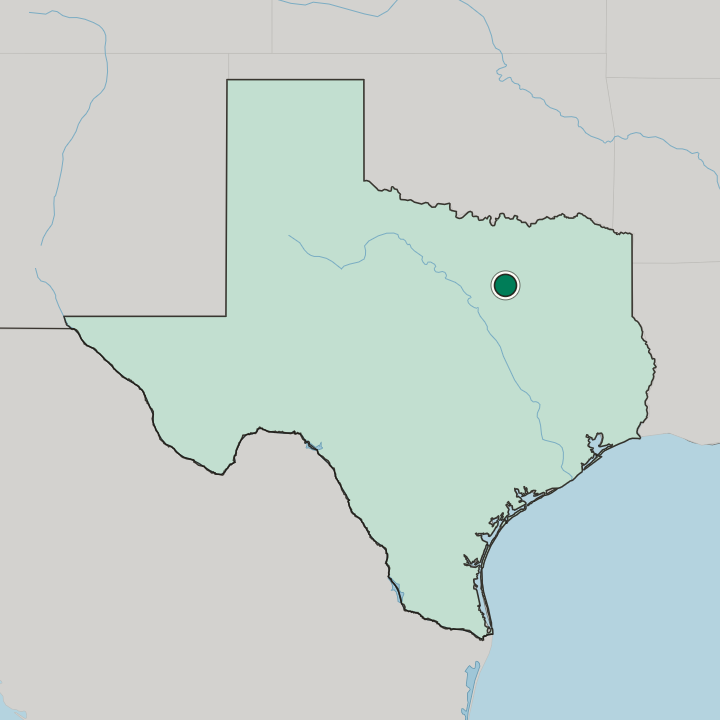
Dallas County holds the ground. DeSoto covers about fifty-six square kilometres of it, running together with Cedar Hill, Duncanville, and Lancaster so continuously that the boundaries between the four are legal facts rather than anything a driver would notice. No feature forces a centre.
The street grid spreads evenly across the city, and the old farm sites, Nance Farm among them, occupy the same easy ground the subdivisions took.
What is the climate of DeSoto?
Warm months outnumber cool ones in DeSoto. DeSoto sits inland in the subtropical band with no coast near enough to temper it, so heat builds through a long stretch of the year while the winter stays brief and mild by most standards. Sun cover counts for more than rain cover.
A walk at Nance Farm or an afternoon at the Museum of Earth History is easier in spring or autumn, when Dallas County carries neither the summer heat nor its few genuinely cold weeks.
How do you get to DeSoto?
Everything arrives by car. DeSoto keeps no terminal of its own, so travellers come in on the road from Dallas or from one of the neighbouring Best Southwest cities, and that last stretch is short enough to count as an afterthought. Dallas supplies the connections.
Long-distance arrivals land in the city rather than in the suburb, and the run out to Nance Farm, the Museum of Earth History, or Inspiring Body of Christ Church is much the same whichever of the four cities a visitor sleeps in.
Common questions
What is the best area to stay in DeSoto?
The through-corridor: a base shared with Cedar Hill, Duncanville, and Lancaster. Near Inspiring Body of Christ Church: services and events at Inspiring Body of Christ Church. By the Museum of Earth History: a family day at the Museum of Earth History. The old farm streets: Nance Farm and the W. A. Strain Farm-Strain House. Dallas instead: business or sightseeing in Dallas itself.
Good for
More cities in Texas
Updated October 2026