
United States · Texas
Where to Stay in Tyler, Texas
Tyler is the seat of Smith County in eastern Texas, laid out in 1846 and known for the largest municipal rose garden in the country.
Hotel links are affiliate links: booking through them may earn us a commission, at no extra cost to you. It never affects how places are ranked. How this works


Where to stay in Tyler
Where the beds are, and what that means for the visit.
The rose garden decides most trips. Rooms within reach of the municipal rose garden put the Texas Rose Festival on the doorstep in October, which suits you if the flowers are the reason for coming at all. Autumn is the busy season.
Outside those weeks the same streets are quiet, and the walk from the garden to the Tyler Museum of Art takes only a few minutes. Marvin Methodist Episcopal Church, South and St. James Colored Methodist Episcopal Church stand within the same part of town, and both belong to the record of how Tyler grew after 1846. The streets stay walkable.
The old houses make the other choice. Goodman-LeGrand House, the Whitaker-McClendon House and Christ Episcopal Church stand among the older streets, and staying there keeps the museums and the churches on foot. Families lean the other way.
Caldwell Zoo and Discovery Science Place pull the younger crowd, and beds near them save a drive at the end of a long day. Everywhere else means driving. Smith County roads carry the rest of it, and anyone staying out toward the county edge trades the walk for space and an easier run back to the highway.
Find hotels in Tyler
Direct booking searches for these neighbourhoods.
The rose garden side
The municipal rose garden and its festival week sit within a short walkFind hotels in The rose garden sideWalkers tracing the county seat's surviving family homesThe old-house streets
Goodman-LeGrand House, the Whitaker-McClendon House and Christ Episcopal Church stand a few blocks apartFind hotels in The old-house streetsFamilies splitting a day between the zoo and Discovery Science PlaceNear Caldwell Zoo
Caldwell Zoo and Discovery Science Place take a short drive from one anotherFind hotels in Near Caldwell ZooHotel links are affiliate links: booking through them may earn us a commission, at no extra cost to you. It never affects how places are ranked. How this works
Things to do in Tyler
Ranked by global recognition; descriptions from Wikidata (CC0).
Museums & Galleries
1- Tyler Museum of Art
Churches & Religious Sites
3- Marvin Methodist Episcopal Church, South Heritage
- St. James Colored Methodist Episcopal Church Heritage
- Christ Episcopal Church
Landmarks & Notable Places
4- Goodman-LeGrand House Heritage
- Whitaker-McClendon House Heritage
- John B. Douglas House Heritage
- LL and Minnie Jester House Heritage
worth knowingacross 3 categories in Tyler
About Tyler
Roses set the calendar here.
What is Tyler known for?
The municipal rose garden is the largest of its kind in the country, and the Texas Rose Festival gives Tyler its busiest days each October. Museum days fill everything else. The Tyler Museum of Art and Discovery Science Place sit near the older streets, while Caldwell Zoo draws families in from across Smith County and the country around.
What are the main landmarks in Tyler?
The rose garden comes first. Caldwell Zoo, the Tyler Museum of Art and Discovery Science Place carry the visitor list after it, each an easy stop within the city. Older buildings hold the rest.
Goodman-LeGrand House, the Bonner-Whitaker-McClendon House and the Butler House stand among the surviving family homes, while Christ Episcopal Church, Marvin Methodist Episcopal Church, South and St. James Colored Methodist Episcopal Church mark congregations that built early in Smith County.
What is the history of Tyler?
The county seat came first. Tyler was laid out in 1846 as the seat of Smith County and took its name from John Tyler, the tenth President of the United States. Churches followed the plan.
Christ Episcopal Church, Marvin Methodist Episcopal Church, South and St. James Colored Methodist Episcopal Church belong to the era when the town was still finding its shape, and their names record separate congregations of the same decades. Trade held it together. The farms of Smith County sold through Tyler, and the streets nearby filled with the houses of merchants and county officers.
Roses changed the picture. Growers around Smith County turned the ground of eastern Texas over to roses, and the city answered with the largest municipal rose garden in the country. The Texas Rose Festival came out of that trade and still fills the city each October.
Houses tell the older story. Goodman-LeGrand House, the Whitaker-McClendon House, the Lindsey House and the Ramey-Grainger House survive from the generations that ran the county seat, and their names double as a directory of the families who built it. The Tyler Museum of Art and Discovery Science Place came much later.
Caldwell Zoo joined them.
Where is Tyler?
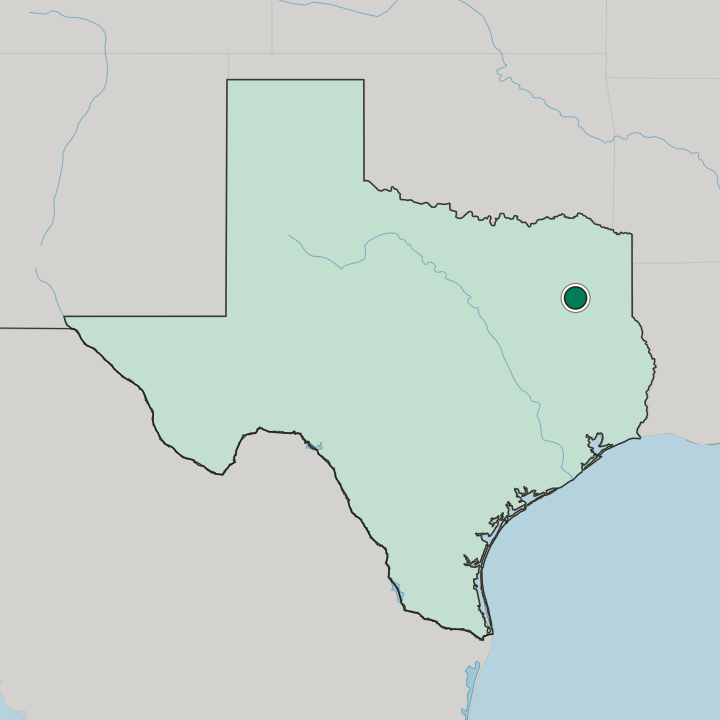
Smith County spreads out around it. Tyler stands inland in eastern Texas, the seat of its county and the principal city of the Tyler metropolitan statistical area. The land rolls gently.
Farm ground runs out from the edge of the city, and the rose fields that gave Tyler its name in the trade lie among it.
What is the climate of Tyler?
Summer sits heavy on eastern Texas, and Tyler spends months in subtropical warmth before the first cool spell of the season reaches Smith County. Winters are brief. Rain keeps the rose fields going through the growing months, and the air stays humid well into the October weeks of the Texas Rose Festival.
How do you get to Tyler?
Driving is how people arrive. Tyler holds the road junctions of Smith County, and the highways that cross eastern Texas feed traffic into the city from the farm towns and from the wider Tyler metropolitan statistical area. Distances here are ordinary.
Once in town, the municipal rose garden, Caldwell Zoo and the Tyler Museum of Art each sit a short drive apart rather than along one walkable street.
Common questions
What is the best area to stay in Tyler?
The rose garden side: Trips timed to the Texas Rose Festival in October. The old-house streets: Walkers tracing the county seat's surviving family homes. Near Caldwell Zoo: Families splitting a day between the zoo and Discovery Science Place.
Good for
More cities in Texas
Updated September 2026