Belgium · Flanders · Gent
Dampoort (Ghent), Gent — Area Guide & Where to Stay
Dampoort is a district east of central Gent that lost its city gate in 1828 and gained a walled neo-Gothic beguinage, the Groot Begijnhof, in 1874.
Hotel links are affiliate links: booking through them may earn us a commission, at no extra cost to you. It never affects how places are ranked. How this works


Where to stay in Dampoort (Ghent)
Where visitors usually base themselves, and why.
Dampoort puts a mainline platform where other Gent districts put a hotel lobby, and Gent-Dampoort sits at its north-west corner. Beds here are flats above shopfronts on the Antwerpsesteenweg and the Land van Waaslaan, the arterial roads that fan east from the junction. Quiet comes further in.
Behind the Jan Roomsstraat the Groot Begijnhof keeps its own walls and its own gate, and the Scheldeoord blocks at the southern end face inward onto courtyards. St Bavo's Cathedral is a walk west into the Binnenstad, not a doorstep here. You will want this base if the first train out matters more than the first coffee.
Things to do in and around Gent
Ranked by global recognition; descriptions from Wikidata (CC0).
Museums & Galleries
3- Saint Peter's Abbey Heritage
- Museum of Fine Arts Ghent (MSK)
- Huis van Alijn
Churches & Religious Sites
8- St Bavo's Cathedral Heritage
- Saint Nicholas' Church Heritage
- Saint Michael's Church, Ghent Heritage
- Sint-Jacobskerk Heritage
- Our-Lady Ter Hooyen Heritage
Show 3 more →
- Sint-Annakerk Heritage
- St. Stefanus, Ghent Heritage
- Caermers monastry Heritage
Landmarks & Notable Places
3- Tolhuisje Heritage
- Toreken Heritage
- De Gekroonde Hoofden Heritage
worth knowingacross 3 categories in and around Gent
About Dampoort (Ghent)
What are the main landmarks in Dampoort (Ghent)?
Dampoort holds a walled beguinage, a neo-Gothic parish church and two interwar blocks on the Schelde bank. The Groot Begijnhof stands behind a crenellated gate front at the end of the Jan Roomsstraat, laid out from 1873 by Arthur Verhaegen on a medieval pattern. Eighty houses stand inside its walls.
Its Begijnhofkerk follows plans by Jean-Baptiste Bethune. The Heilig Hartkerk on the Heilig-Hartplein went up in 1881-1883, its west tower gaining a spire in 1910. Scheldeoord shuts the southern end: two blocks of 1929 by Paul De Taeye in yellow Nieuwpoort brick.
St Bavo's Cathedral belongs to the Binnenstad, west of here.
What is the history of Dampoort (Ghent)?
Dampoort is named for a gate that no longer stands. The Dampoort was the city's eastern gate, opening the road toward the Waasland and Antwerp, and it came down in 1828 so the Handelsdok could be dug. The dock outlived the gate.
A station opened here in 1861 under the name Gent-Eecloo, a terminus for the line to Eeklo. In 1911 the Eeklo and Antwerp lines were welded together on a raised embankment and the stop became Gent-Dampoort. Duke Engelbert August van Arenberg had bought eight hectares of the Nieuwhofkouter in 1872 for the beguines turned out of the old Gent beguinage, and they took up the new one on 29 September 1874.
Where is Dampoort (Ghent)?
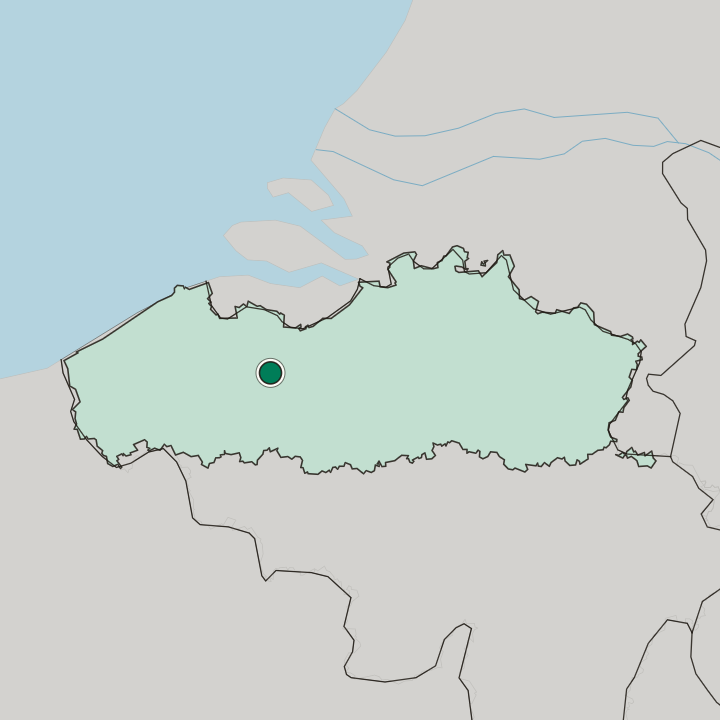
Dampoort runs east from Macharius-Heirnis in Gent to the Destelbergen boundary, with Sint-Amandsberg along its north and Gentbrugge along its south.
Good for
More areas in Gent
Updated October 2026