Belgium · Flanders
Where to Stay in Gent, Flanders
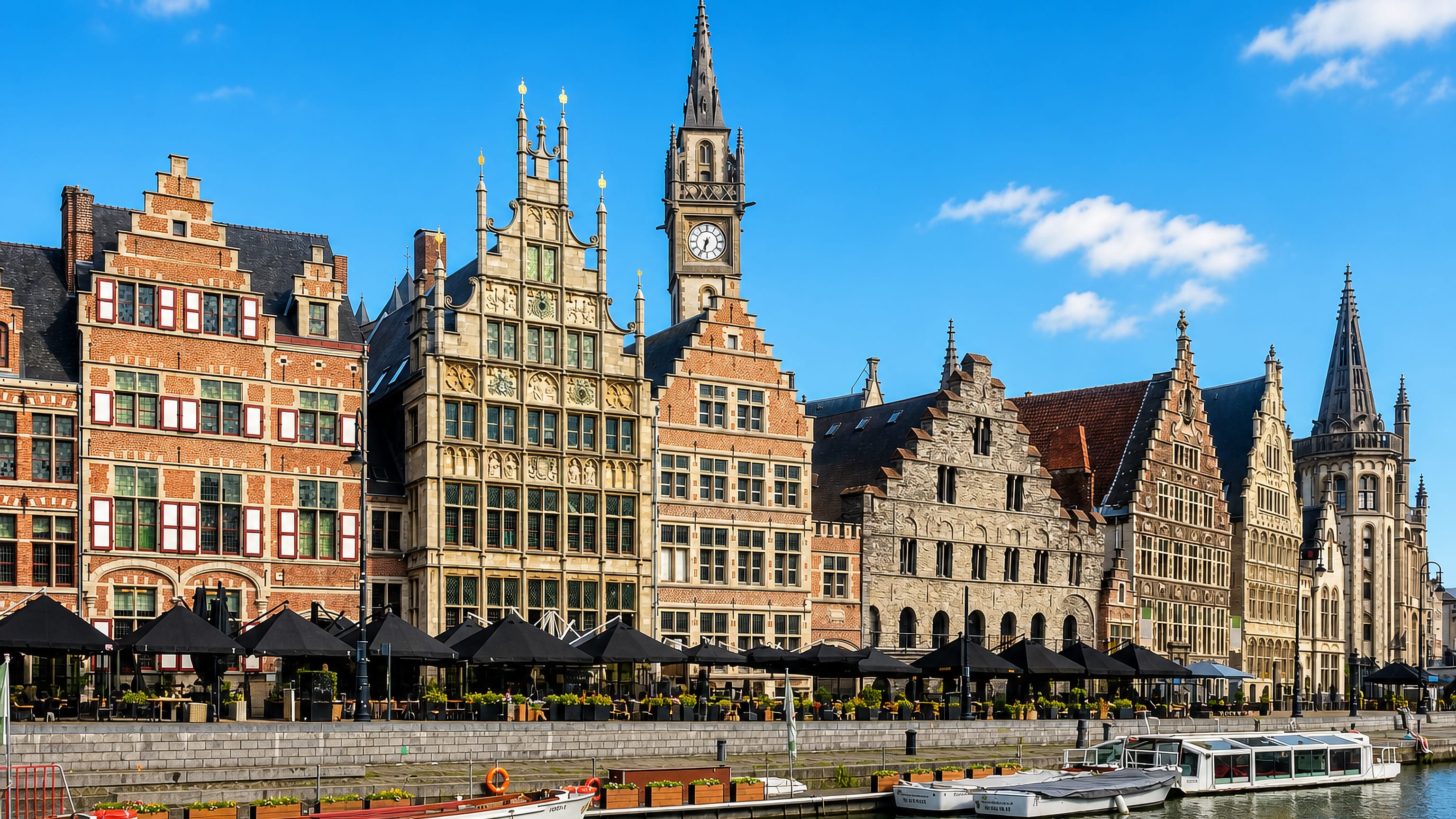
Gent, or Ghent, is the port and university capital of East Flanders, with the Belfry of Ghent and St Bavo's Cathedral in its car-free core.
Hotel links are affiliate links: booking through them may earn us a commission, at no extra cost to you. It never affects how places are ranked. How this works


Where to stay in Gent
Each area has its own feel; here's who each one suits.

 GentBelgium
Muide
Muide is a working-class harbour quarter in northern Gent, strung along the Voormuide between the Tolhuisdok and the Voorhaven.Where to stay →GentBelgiumWaalse Krook
Waalse Krook curves with the Scheldt in central Gent, a quarter of old tanners' lanes where De Krook and the Wintercircus stand.Where to stay →GentBelgiumHoly Corner
Holy Corner is the English name for the Sint-Elisabethbegijnhof, a walled beguine town of Gent from 1234 whose brick houses still line the Begijnhofdries.Where to stay →GentBelgiumEkkergem
Ekkergem lies just west of Gent's old centre, an ancient parish gathered on its Sint-Martinuskerk.Where to stay →GentBelgiumPatershol
Brick and sandstone fronts crowd Patershol, a medieval quarter of Gent between the Geldmunt and the Leie, known for the Caermersklooster.Where to stay →GentBelgiumZuid
Old rail ground carries the lawns of the Koning Albertpark at Zuid, a district of Gent laid out around the Woodrow Wilsonplein.Where to stay →GentBelgiumPrinsenhof
Prinsenhof is a quarter of Gent grown around Hof ten Walle, the palace of the Counts of Flanders where Charles V was born in 1500.Where to stay →GentBelgiumPortus Ganda
Masts crowd the basin off the Veermanplein at Portus Ganda, a marina quarter of Gent built in 2005 at the historic junction of the Leie and the Scheldt.Where to stay →GentBelgiumRabot
Rabot takes its name from the towered sluice on the Lieve, north of Gent's centre in the belt the textile mills built.Where to stay →GentBelgiumSint-Macharius
Romanesque abbey walls stand in open grass at Sint-Macharius, a district east of central Gent named for a pilgrim who died in the Sint-Baafsabdij.Where to stay →GentBelgiumMalem, Ghent
White brick under black tiled roofs repeats street after street in Malem, a 1950s garden district of Gent on an island between two arms of the Leie.Where to stay →GentBelgiumDampoort (Ghent)
Dampoort is a district east of central Gent that lost its city gate in 1828 and gained a walled neo-Gothic beguinage, the Groot Begijnhof, in 1874.Where to stay →All neighbourhoods (42)
GentBelgiumHeirnis
Heirnis carries fish names on the streets inside Gent's ring road, a residential district between the Visserijvaart and the Schelde, east of the centre.Where to stay →GentBelgiumRooigem
Meadow water stands at Rooigem's western edge in the Bourgoyen-Ossemeersen, a quarter of Gent that the Rooigemlaan of 1897 cut away from the Brugse Poort.Where to stay →GentBelgiumMiljoenenkwartier
Wrought-iron gates and clipped gardens line the Congreslaan in Miljoenenkwartier, an interwar villa quarter of Gent built on the 1913 world's fair site.Where to stay →GentBelgiumBrugse Poort
Brugse Poort takes its name from a city gate that stood until 1860, in the working-class belt northwest of medieval Gent.Where to stay →GentBelgiumSint-Pieters-Aalst
Sint-Pieters-Aalst is a former hamlet south of Gent's old walls, near the Sint-Pietersstation.Where to stay →GentBelgiumSint-Amandsberg
Sint-Amandsberg is a deelgemeente of Ghent, an independent commune from 1872 until the 1977 reorganisation, its largest deelgemeente after Ghent itself.Where to stay →GentBelgiumLedeberg
Brick workers' rows fill Ledeberg, Gent's smallest district, a tight quarter southeast of the centre where the E17 viaduct rides over Ledebergplein.Where to stay →GentBelgiumBloemekenswijk
Bloemekenswijk carries the flower street names that gave it its own, north of the Gent city centre on the edge of Wondelgem and Mariakerke.Where to stay →GentBelgiumNew Ghent
New Ghent, or Nieuw Gent, is a social housing district of Gent, laid out between the Ringvaart and De Pintelaan south of the centre.Where to stay →GentBelgiumMoscou
The tram out of central Gent stops for good at Moscou, a workers' quarter of Gentbrugge named for the Russian camp pitched on its fields in 1815.Where to stay →GentBelgiumDrongen
Drongen is a sub-municipality on the western side of Gent, a spread of parish churches and village streets that governed itself until 1977.Where to stay →GentBelgiumMariakerke
Mariakerke is a deelgemeente of Ghent in East Flanders, an independent commune until the 1977 reorganisation, and an old village that was mostly marsh.Where to stay →GentBelgiumGentbrugge
Gentbrugge takes its name from a bridge toward Gent, and the deelgemeente has answered to that city since 1977.Where to stay →GentBelgiumAfsnee
Afsnee is a village district of Gent on the Leie, where a hand-worked ferry crosses below a Romanesque church of Tournai limestone.Where to stay →GentBelgiumMeulestede
Meulestede is a harbour-side district of Gent, a low run of workers' housing along the Meulesteedsesteenweg between the docks and Wondelgem.Where to stay →GentBelgiumWondelgem
Wondelgem is an urbanised deelgemeente of Gent, north of Gent-centrum and a municipality in its own right until 1977.Where to stay →GentBelgiumWestveld
Westveld is a residential wijk in Sint-Amandsberg, east of the old village core and inside Gent.Where to stay →GentBelgiumSint-Denijs-Westrem
Sint-Denijs-Westrem is a deelgemeente, or sub-municipality, of Gent, south of the centre beside Afsnee and Zwijnaarde.Where to stay →GentBelgiumOude Bareel
Oude Bareel is a residential district in eastern Sint-Amandsberg, part of Gent, grouped around a yellow-brick church on the Antwerpsesteenweg.Where to stay →GentBelgiumZwijnaarde
Zwijnaarde is a deelgemeente south of the Gent centre, self-governing until 1977, with Sint-Niklaaskerk at the village core.Where to stay →GentBelgiumLuchteren
Luchteren is the rural parish of Drongen in Gent, where the Onze-Lieve-Vrouwekerk, a school and one café share the Gavergrachtstraat.Where to stay →GentBelgiumOostakker
Oostakker is a sub-municipality of Gent in East Flanders, north-east of the city centre, with the Oostakker Basilica as its landmark.Where to stay →GentBelgiumHalewijn
Eighteenth-century farmhouses line Halewijnstationstraat in Halewijn, a rural hamlet of Drongen in Gent that lost its railway halt in 1984.Where to stay →GentBelgiumBaarle
Baarle is a village parish of Drongen in Gent, where the Sint-Martinuskerk stands on Baarledorpstraat and the Baarleveer crosses the Leie.Where to stay →GentBelgiumDesteldonk
Desteldonk strings two village cores along a sand ridge in Gent, the Onze-Lieve-Vrouw-Geboortekerk at one end and the gemeentehuis of 1884 at the other.Where to stay →GentBelgiumRodenhuize
A 110-metre cooling tower marks Rodenhuize, a hamlet of Gent that the port swallowed, its name left on the Rodenhuizedok and the Rodenhuizekaai.Where to stay →GentBelgiumTerdonk
A ferry slip and two streets of houses are what is left of Terdonk, a hamlet of Gent on the west bank of the Kanaal Gent-Terneuzen.Where to stay →GentBelgiumMendonk
Mendonk is a ribbon village on the Moervaart in Gent, its Sint-Baafskerk holding the penitentiesteen that legend calls Saint Bavo's pillow.Where to stay →GentBelgiumSint-Kruis-Winkel
Sint-Kruis-Winkel is a canal village at the north end of Gent, the Heilig Kruiskerk tower above its fields and the Kanaal Gent-Terneuzen to the west.Where to stay →GentBelgiumPortus aan de Reep
Tournai limestone rises from the Nederschelde at the Geeraard de Duivelsteen in Portus aan de Reep, the oldest civil core of Gent, walled in 879.Where to stay →Hotel links are affiliate links: booking through them may earn us a commission, at no extra cost to you. It never affects how places are ranked. How this works
Find hotels in Gent
Direct booking searches for these neighbourhoods.
The Belfry and St Bavo's
The Belfry of Ghent and St Bavo's Cathedral stand in the restored core that is closed to carsFind hotels in The Belfry and St Bavo'sQuieter nights near Saint Peter's Abbey and the Museum of Fine Arts GhentAround Saint Peter's Abbey
Saint Peter's Abbey anchors this part of Gent, with the Stedelijk Museum voor Actuele Kunst on the same errandFind hotels in Around Saint Peter's AbbeyDrivers who want parking rather than the car-free core of GentThe Flanders Sports Arena side
Past the centre Gent runs on for more than one hundred and fifty square kilometres, and the Flanders Sports Arena sits out in that ground. Rooms are few around here — worth securing early.Find hotels in The Flanders Sports Arena sideHotel links are affiliate links: booking through them may earn us a commission, at no extra cost to you. It never affects how places are ranked. How this works
Things to do in Gent
Ranked by global recognition; descriptions from Wikidata (CC0).
Museums & Galleries
3- Saint Peter's Abbey Heritage
- Gallic Farm Heritage
- Museum of Fine Arts Ghent (MSK)
Churches & Religious Sites
8- St Bavo's Cathedral Heritage
- Saint Nicholas' Church Heritage
- Saint Michael's Church, Ghent Heritage
- Oostakker Basilica Heritage
- Sint-Jacobskerk Heritage
Show 3 more →
- Our-Lady Ter Hooyen Heritage
- Sint-Annakerk Heritage
- St. Stefanus, Ghent Heritage
Stadiums & Sports
2- Flanders Sports Arena
- Vlaams Wielercentrum Eddy Merckx
Landmarks & Notable Places
5- Van Wassenhove House Heritage
- Tolhuisje Heritage
- Toreken Heritage
- Torenhuis Heritage
- Architect's house of Leopold Braeckman Heritage
worth knowingacross 4 categories in Gent
About Gent
Gent was once among the richest cities in Europe.
What is Gent known for?
That standing came in the Middle Ages, and the architecture of its churches and merchant houses still carries the evidence, restored across a centre closed to cars. Ghent is the English form. The city is the capital of East Flanders and its largest, third in Belgium behind Brussels and Antwerp, and it works as both a port and a university city.
The Belfry of Ghent rises above it.
What are the main landmarks in Gent?
The Belfry of Ghent and St Bavo's Cathedral head the list. Saint Nicholas' Church, Saint Michael's Church, Sint-Jacobskerk, Sint-Annakerk, Sint-Coletakerk, Sint-Jan-Baptistkerk and Saint Martin's Church carry the rest of the church record, with Saint Peter's Abbey, Abdij Ter Hage and the Caermers monastery for the monastic side. Museums are the modern half.
The Museum of Fine Arts Ghent, the Design Museum Gent, the STAM Ghent City Museum, Huis van Alijn and the Ghent University Museum all appear, alongside the Tolhuisje and the Toreken.
What is the history of Gent?
Gent was powerful in the Middle Ages. The city ranked among the richest and most powerful in Europe then, and the churches and merchant houses that survive in its centre were built by that money rather than by later fashion. The Belfry of Ghent belongs to that age.
So do St Bavo's Cathedral, Saint Nicholas' Church and Saint Peter's Abbey, which together fix the shape of the old city more firmly than any street plan. Industry came later. The Museum of Industry keeps that chapter, while the Museum of Fine Arts Ghent, the Design Museum Gent and the Stedelijk Museum voor Actuele Kunst hold what the city gathered afterwards.
Gent is also a university city. The Ghent University Museum sits among its landmarks, and the STAM Ghent City Museum and Huis van Alijn tell the municipal and domestic sides of the same long story. Older fragments hold on.
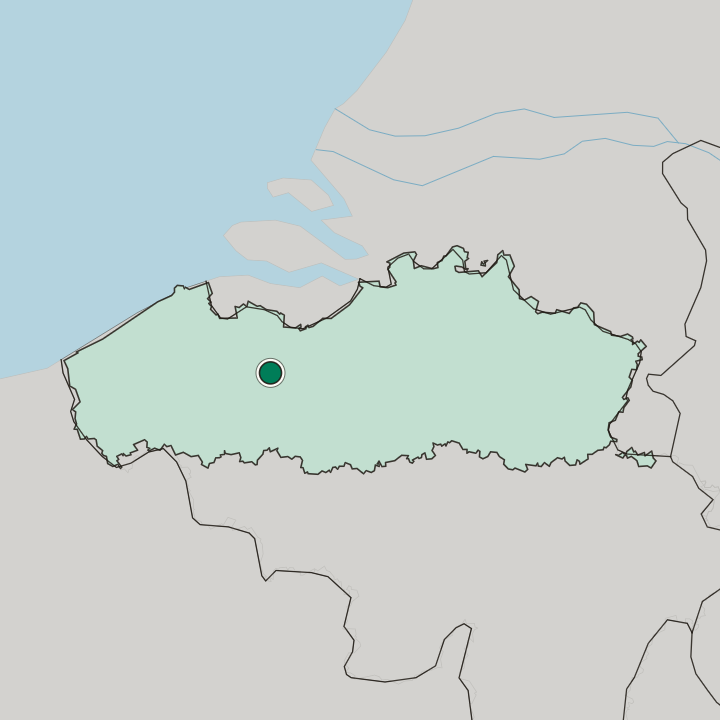
Abdij Ter Hage, the Caermers monastery, the Tolhuisje, the Toreken and Our-Lady Ter Hooyen survive from a city that was rebuilt around them rather than over them. East Flanders made Gent its capital. The province sits inside the Flemish Region of Belgium, and only Brussels and Antwerp are larger than the port city at its head.
Where is Gent?
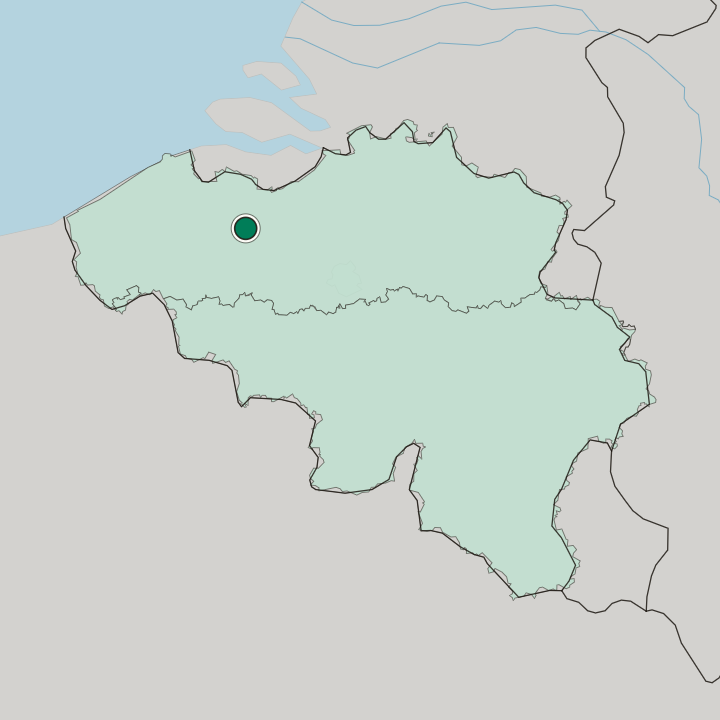
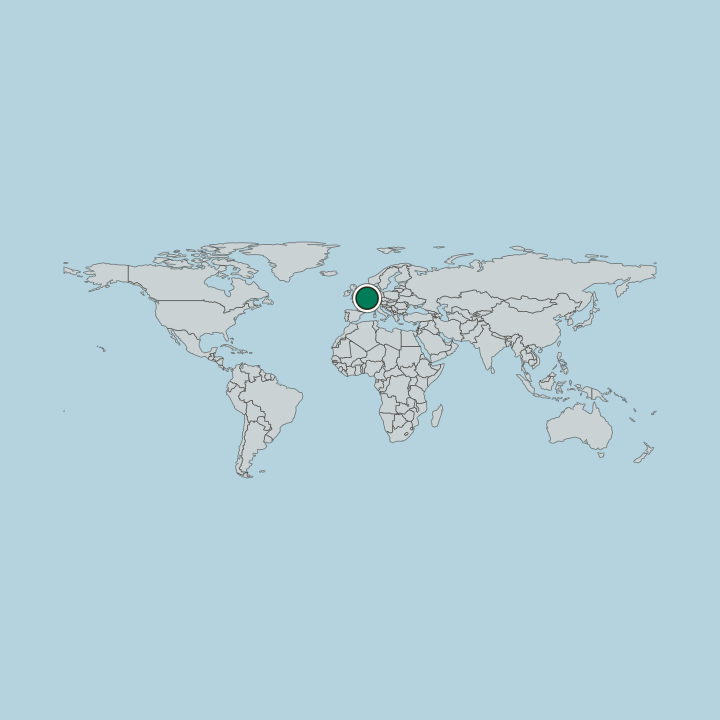
Gent covers more than one hundred and fifty square kilometres. The municipality is the largest city of East Flanders and the third largest in Belgium, behind Brussels and Antwerp, with a port at work inside it. The old core sits at the middle.
Cars are kept out of it, so the walk from the Belfry of Ghent to Saint Peter's Abbey is a different experience from anything in the outer municipality.
What is the climate of Gent?
Gent shares the damp temperate weather of East Flanders. Rain is distributed across the year rather than concentrated, and neither the summer heat nor the winter cold reaches the extremes that a more continental position would bring. Overcast skies come with the territory.
The car-free centre is easier in that weather than most, since the walk from St Bavo's Cathedral to Huis van Alijn is short and the museums are indoors.
How do you get to Gent?
Brussels and Antwerp are the reference points. Gent is the third largest city in Belgium after them, and arrivals from either direction reach a municipality that spreads over more than one hundred and fifty square kilometres before the old centre begins. The port is part of the city, and the university with it.
Once inside, the last stage is on foot: the core is closed to cars, so the Belfry of Ghent, St Bavo's Cathedral and Saint Nicholas' Church are reached the same way whatever brought anyone to Gent. Antwerp is the larger neighbour.
Common questions
What is the best area to stay in Gent?
The Belfry and St Bavo's: First visits that want the Belfry of Ghent and St Bavo's Cathedral at the door. Around Saint Peter's Abbey: Quieter nights near Saint Peter's Abbey and the Museum of Fine Arts Ghent. The Flanders Sports Arena side: Drivers who want parking rather than the car-free core of Gent.
Good for
More cities in Flanders
Updated October 2026