Belgium · Flanders · Gent
Sint-Amandsberg, Gent — Area Guide & Where to Stay
Sint-Amandsberg is a deelgemeente of Ghent, an independent commune from 1872 until the 1977 reorganisation, its largest deelgemeente after Ghent itself.
Hotel links are affiliate links: booking through them may earn us a commission, at no extra cost to you. It never affects how places are ranked. How this works


Where to stay in Sint-Amandsberg
How the choice of base plays out on the ground.
Ghent's centre is a short ride west. Sint-Amandsberg holds several quarters of its own, among them the Westveld, the Oude Bareel and the Achtendries, and the old commune centre keeps its town hall and the Sint-Amanduskerk. Water and sport lie south.
The Sint-Baafskouterpark, a former tip on marsh ground turned into a nature area, joined the Rozebroeken domain in 2012, where the LAGO pool was the first full Olympic pool in Belgium. A market fills the weekend nearest the ninth of May.
Things to do in and around Gent
Ranked by global recognition; descriptions from Wikidata (CC0).
Museums & Galleries
3- Saint Peter's Abbey Heritage
- Museum of Fine Arts Ghent (MSK)
- Huis van Alijn
Churches & Religious Sites
8- St Bavo's Cathedral Heritage
- Saint Nicholas' Church Heritage
- Saint Michael's Church, Ghent Heritage
- Oostakker Basilica Heritage
- Sint-Jacobskerk Heritage
Show 3 more →
- Our-Lady Ter Hooyen Heritage
- Sint-Annakerk Heritage
- St. Stefanus, Ghent Heritage
Landmarks & Notable Places
3- Tolhuisje Heritage
- Toreken Heritage
- De Gekroonde Hoofden Heritage
worth knowingacross 3 categories in and around Gent
About Sint-Amandsberg
What are the main landmarks in Sint-Amandsberg?
The Groot Begijnhof is the set piece here. It was built in 1873 and 1874 and renovated through 2008, and it exists because a quarrel between the Sint-Elisabeth beguinage and the liberal city council closed the Ghent Groot Begijnhof. More than seven hundred beguines moved in.
Their new home stood ready as the old one shut, which is why the buildings are all of one date. Churches account for much of the rest. The Sint-Amanduskerk stands at the old centre with the Campo Santo cemetery on the hill beside it, and the Sint-Bernadettekerk, the Onze-Lieve-Vrouwkerk of the Oude Bareel, the Heilig Kruiskerk and the Heilig Hartkerk are the others.
Two castles and a hall survive. Kasteel Potuit and Kasteel Silford stand on the Antwerpsesteenweg and at the Gustaaf Carelshof, with the Hof van Heirlegem, the Villa Marcelle and the Woning Hartmann among the rest.
What is the history of Sint-Amandsberg?
A legend gave the hill its name. Saint Amandus of Ghent is said to have brought a hanged man back to life on this ground, and the berg where it happened was called the Amandsberg after him. Settlement here goes back to the seventh century.
That is the earliest known on the site, and large parts of the area stayed in farming and market gardening into the nineteenth and early twentieth centuries. The commune was created in 1872. It was split off from Oostakker that year, and two years later the closure of the Ghent Groot Begijnhof brought the beguines and their new begijnhof with them.
A zeppelin came down here in 1915. The English pilot Reginald Warneford shot down the LZ 37 on 7 June, and a street near the crash site carries his name.
Where is Sint-Amandsberg?
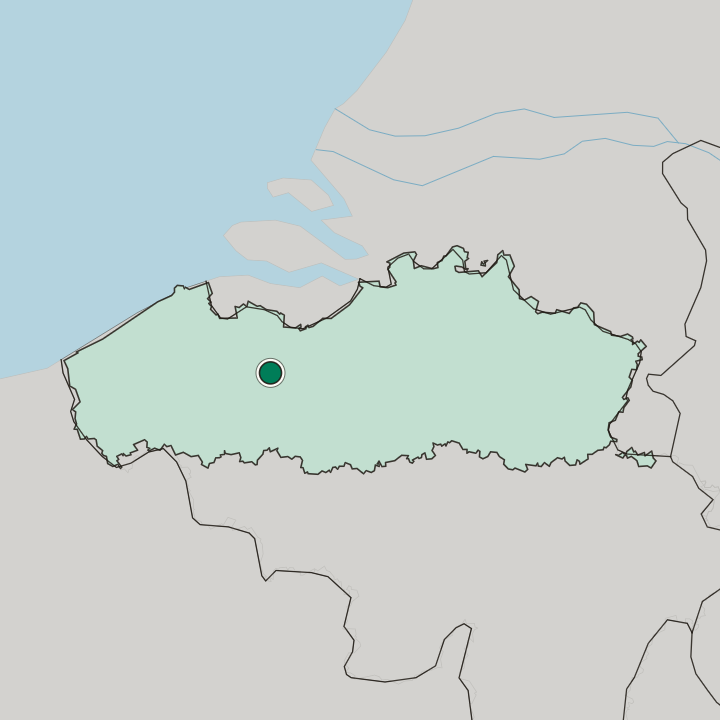
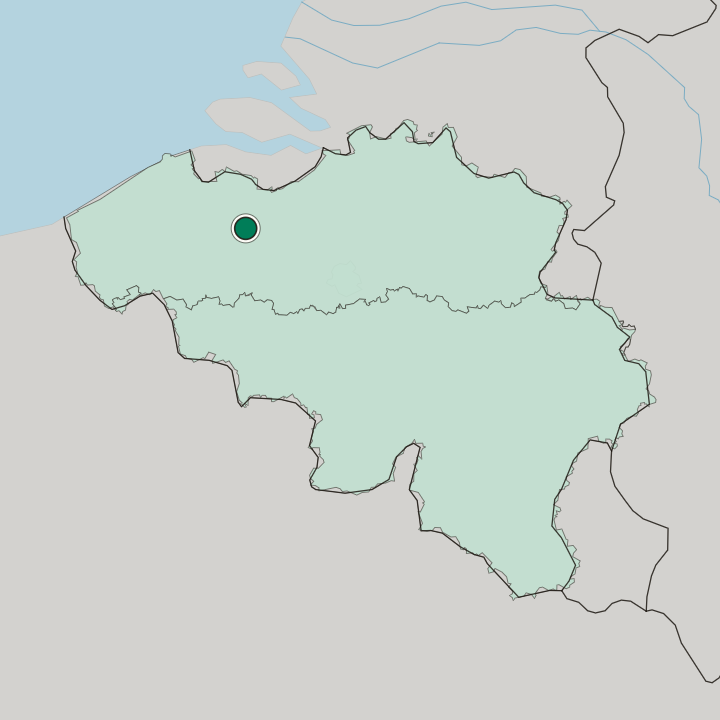
Sint-Amandsberg lies north-east of the Ghent centre in East Flanders, built onto the Ghent agglomeration, bounded to the south by the Scheldt and rising to about nineteen metres on a drift-sand ridge.
Good for
More areas in Gent
Updated October 2026