Belgium · Flanders · Gent
Halewijn, Gent — Area Guide & Where to Stay
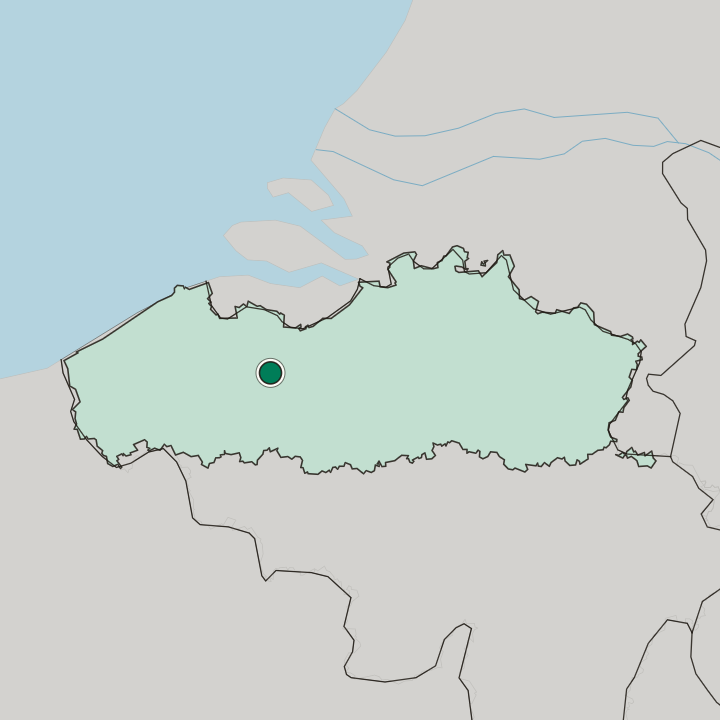
Eighteenth-century farmhouses line Halewijnstationstraat in Halewijn, a rural hamlet of Drongen in Gent that lost its railway halt in 1984.
Hotel links are affiliate links: booking through them may earn us a commission, at no extra cost to you. It never affects how places are ranked. How this works


Where to stay in Halewijn
The practical side of choosing where to sleep.
Halewijn keeps no lodging of its own. Trains stopped here until 1984, and travellers arriving by rail use Station Drongen, a little over two kilometres east on the Gent to Oostende line, while the wider supply of rooms waits in the Gent centre. Landegem, the next stop west, belongs to Deinze.
Pick a base on this side of Gent if you want the Halewijnkouter fields and the farm lanes off Adolf Lootensstraat at the end of a short ride rather than a room among city streets.
Things to do in and around Gent
Ranked by global recognition; descriptions from Wikidata (CC0).
Churches & Religious Sites
3- Sint-Gerolf church Heritage
- Sint-Gerolfkapel Heritage
- Onze-Lieve-Vrouwekerk Heritage
Landmarks & Notable Places
2- Van Wassenhove House Heritage
- Torenhuis Heritage
worth knowingacross 2 categories in and around Gent
About Halewijn
What are the main landmarks in Halewijn?
Halewijn's landmarks are farmyards rather than monuments. The Schuttershoeve stands at Adolf Lootensstraat 50, an eighteenth-century farmhouse of five bays with two more added later, its shuttered windows cut with heart-shaped openings and its gable carrying an anchor of the same shape. Populierenhof sits down the same street at number 14.
On Halewijnstationstraat the farmhouse at number 24 keeps an eighteenth-century basket-arch door, the farm at number 43 is dated 1793 by the anchors in its left gable, and a moated smallholding sits in the bend at number 33.
What is the history of Halewijn?
Halewijn was already a sizeable hamlet when the Ferraris map of the 1770s recorded it as Hallwyn. Millers worked the Halewijnkouter. The Halewijnmolen, a wooden post mill grinding grain there, is named in writing as early as 1448, and an advertisement in the Gazette van Gend of 29 October 1792 called it the Alewynmolen.
The Atlas der Buurtwegen of 1841 wrote the place Haelewyn. German troops dynamited the mill as they withdrew in October 1918, and the last of it came down in 1927.
Good for
More areas in Gent
Updated October 2026