Belgium · Flanders · Gent
Muide, Gent — Area Guide & Where to Stay
Muide is a working-class harbour quarter in northern Gent, strung along the Voormuide between the Tolhuisdok and the Voorhaven.
Hotel links are affiliate links: booking through them may earn us a commission, at no extra cost to you. It never affects how places are ranked. How this works


Where to stay in Muide
Where the beds are, and what that means for the visit.
Muide carries almost no visitor lodging of its own, so a stay on this side of Gent usually means a room near Gent-Dampoort or in the Oude Dokken conversion along the Handelsdok, then tram T4 north to the Muidebrug. The quarter suits you if a working canal is the point. Terraced workers' houses line the Meulesteedsesteenweg, houseboats moor along the old docks, and the restored Voorhaven warehouses stand where another district would put a hotel strip.
Voorhavenpark ends the walk in green.
Things to do in and around Gent
Ranked by global recognition; descriptions from Wikidata (CC0).
Museums & Galleries
3- Saint Peter's Abbey Heritage
- Museum of Fine Arts Ghent (MSK)
- Huis van Alijn
Churches & Religious Sites
8- St Bavo's Cathedral Heritage
- Saint Nicholas' Church Heritage
- Saint Michael's Church, Ghent Heritage
- Sint-Jacobskerk Heritage
- Our-Lady Ter Hooyen Heritage
Show 3 more →
- Sint-Annakerk Heritage
- St. Stefanus, Ghent Heritage
- Caermers monastry Heritage
Stadiums & Sports
2- Flanders Sports Arena
- Vlaams Wielercentrum Eddy Merckx
Landmarks & Notable Places
2- Tolhuisje Heritage
- Toreken Heritage
worth knowingacross 4 categories in and around Gent
About Muide
What are the main landmarks in Muide?
Muide's grandest survivals stand at the Voorhaven, the harbour front Emile Braun laid out on the Gent-Terneuzen canal, where the warehouses numbered 20, 22, 23 and 26 survive from a building campaign of 1885 to 1892 and hold offices and lofts. Warehouse 21 is gone. Voorhavenpark opened on its footprint in 2021, and old tram rails and rolling-stock parts serve there as picnic tables and planters.
The Sint-Theresia van Avilakerk stands on the Meulesteedsesteenweg, a brick chapel of 1882 under an octagonal roof turret, made a parish church in 1909. The Muidebrug swings open over the Tolhuisdok.
What is the history of Muide?
Muide came into Gent's hands as marshland, sold off in pieces: Margaretha van Constantinopel and Gwijde van Dampierre gave up the ground between the Sint-Baafsabdij and the Muidebrug in March 1269, and in 1299 Robert, eldest son of the Count of Flanders, sold the Muide and Marialand to the city. A road did the rest. The grote straete ter Muden of 1334, later the Muidestraat, ran north to Meulestede past windmills, hayfields and garden plots, and the people along it were craftsmen and fishers working the small waterways.
Digging the Handelsdok in 1829 turned that lane into a dock quarter.
Where is Muide?
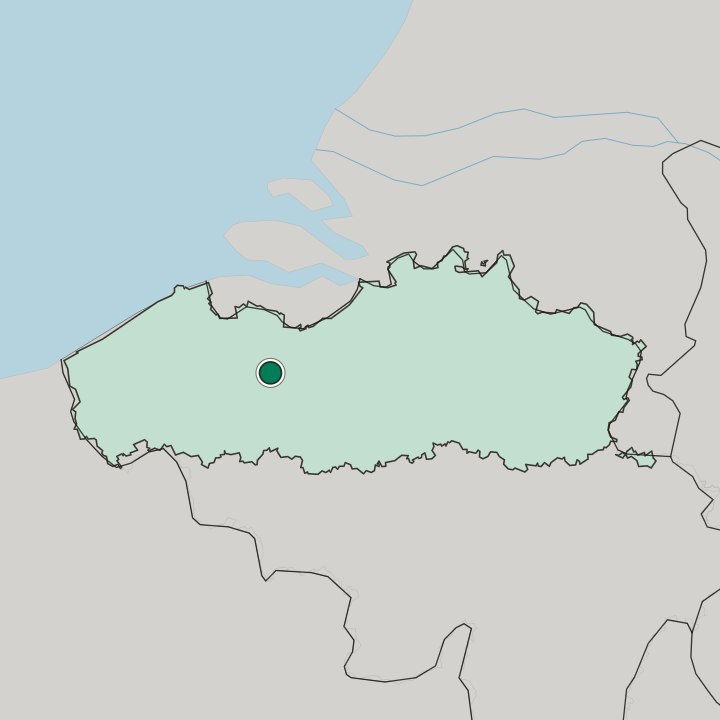
Muide fills the strip between the Handelsdok and the Gent-Terneuzen canal, north of Gent-Dampoort. Meulestede continues it northward. The Voorhaven quays divide the two, the railway to Eeklo and the Wiedauwkaai run along the west, and the Houtdok separates the quarter from the Afrikalaan works on the east.
Good for
More areas in Gent
Updated October 2026