Brazil · São Paulo
Where to Stay in Bragança Paulista, São Paulo
Bragança Paulista is a São Paulo hill town gathered around Lake Taboão, with sausage-making and the Fazenda Dona Carolina among its marks.
Hotel links are affiliate links: booking through them may earn us a commission, at no extra cost to you. It never affects how places are ranked. How this works


Where to stay in Bragança Paulista
Where the beds are, and what that means for the visit.
The lake is the obvious base. Rooms beside Lake Taboão trade the convenience of the grid for water and quiet, and for most visitors that is the right trade, since the reason to come here at all is the setting rather than a list of sights. The centre is the alternative.
Streets around the Museu Municipal Oswaldo Russomano put the town's food within walking distance, which matters in a place known for its sausage-makers, and the museum itself is a short stop rather than an afternoon. A third choice sits well out of town. The Fazenda Dona Carolina stands in the rural half of the municipality, and staying anywhere near it means committing to the drive, because nothing else out there is within walking range of anything.
Beds are few across the municipality. Anyone travelling without a car should stay by the lake or in the grid and leave the estate country for a day out. Bragança Paulista sits high, around 817 metres, so evenings cool off more than the tropics suggest.
That alone shifts the calculation between a lakeside room and one in the centre, since the walk back after dark is pleasant here in a way it rarely is lower down.
Find hotels in Bragança Paulista
Direct booking searches for these neighbourhoods.
Beside Lake Taboão
Lake Taboão is the one setting in Bragança Paulista worth waking up beside, and the water keeps those streets quieter than the centre.Find hotels in Beside Lake Taboãoreaching the sausage-makers and the municipal collection on footThe grid by the Museu Municipal Oswaldo Russomano
The Museu Municipal Oswaldo Russomano and the town's food streets share one grid, which is where the sausage-makers are easiest to find.Find hotels in The grid by the Museu Municipal Oswaldo Russomanoestate country in the rural half of the municipalityOut by the Fazenda Dona Carolina
The Fazenda Dona Carolina stands well outside the town grid, where rooms are few and the drive back in is part of every day. Beds are limited here, so book early.Find hotels in Out by the Fazenda Dona CarolinaHotel links are affiliate links: booking through them may earn us a commission, at no extra cost to you. It never affects how places are ranked. How this works
About Bragança Paulista
Sausages and a lake.
What is Bragança Paulista known for?
Bragança Paulista is known for its sausage-making and for Lake Taboão, and those two things account for more of the town's name beyond São Paulo than any monument does. The Fazenda Dona Carolina carries the estate side of the record. Local history sits in the Museu Municipal Oswaldo Russomano, the one place in town where the whole account is gathered under a single roof.
What are the main landmarks in Bragança Paulista?
Three entries, and one lake. The Museu Municipal Oswaldo Russomano holds the municipal collection, and the Fazenda Dona Carolina represents the estate landscape outside the built-up area. The Doutor Jorge Tibiriçá school completes the listed set, a civic building rather than an attraction.
Lake Taboão is what most arrivals actually come to see, and it does more work than the three of them combined.
What is the history of Bragança Paulista?
Estates came before the town. The Fazenda Dona Carolina stands in the rural half of the municipality and belongs to the age when holdings of that kind, rather than streets, organised this part of the state of São Paulo. It is the oldest structure the place still shows.
Around it the working landscape has changed less than the town has, which is why the estate reads as a survivor and not a restoration. The town's reputation was made by food. Sausage-making is what carries the name of Bragança Paulista beyond its own boundary, a craft tradition rather than a monument, and one that no museum case can hold in the way a building holds a date.
Lake Taboão gave it a second draw. Water changed what the place is for, turning a working municipality on high ground into somewhere people travel to for a weekend, and that shift is more recent than anything the fazenda represents. Civic institutions fill the gap between the two.
The Museu Municipal Oswaldo Russomano keeps the municipal collection and the school named for Doutor Jorge Tibiriçá carries a name the town chose to honour, and between them they mark the point at which the place began building for itself rather than for the estates.
Where is Bragança Paulista?
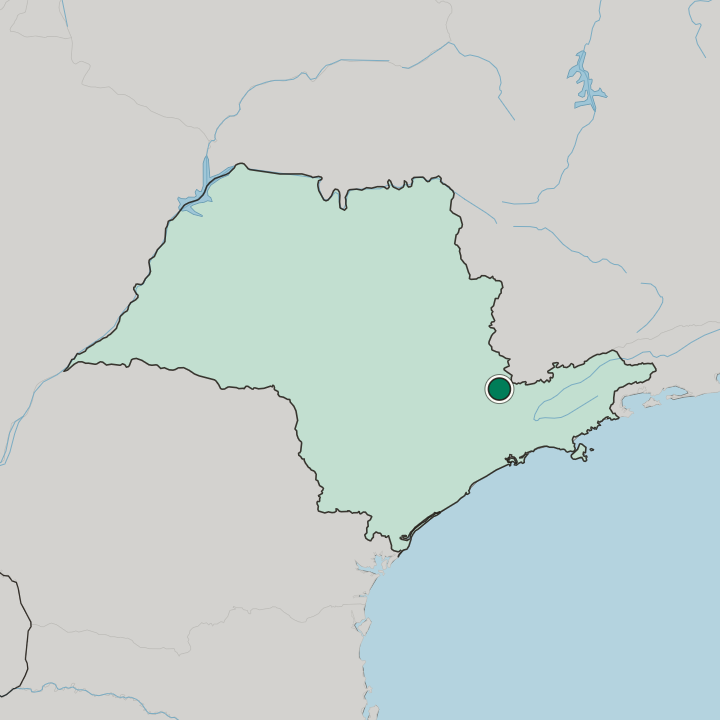
High ground, and a lake in it. Bragança Paulista sits at about 817 metres above sea level, which puts it well up from the coastal plain and gives the municipality the cooler nights that go with that height. Lake Taboão is the local landmark.
Beyond the built-up grid the territory runs on into farm country and the estate landscape around the Fazenda Dona Carolina, a rural half that covers far more ground than the town does. Jundiaí sits about 45 kilometres to the south-west, and Atibaia is nearer still.
What is the climate of Bragança Paulista?
The lake and the height set the tone. Bragança Paulista lies in the tropics, but 817 metres of elevation takes the edge off the heat, and evenings beside Lake Taboão run cooler than the streets behind them. Rain arrives with the warm months.
The wet stretch falls around the turn of the year while the middle of the calendar is drier, which is the easier half for walking the lake shore or driving out to the fazenda country.
How do you get to Bragança Paulista?
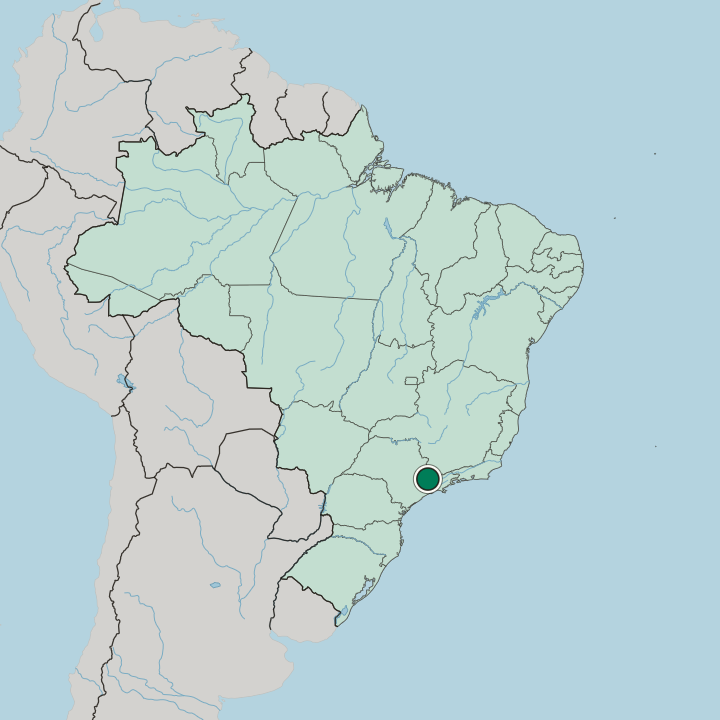
Count on a car to get up here. Bragança Paulista is reached by road from São Paulo, the state capital, and the drive delivers arrivals straight onto the high ground the town occupies. Once here, the grid is walkable.
Lake Taboão and the Museu Municipal Oswaldo Russomano are both manageable on foot, but the Fazenda Dona Carolina and the rest of the rural half of the municipality need a car. Atibaia lies about 20 kilometres to the south, and Campinas about 50 kilometres to the west.
Common questions
What is the best area to stay in Bragança Paulista?
Beside Lake Taboão: waterside evenings with the town grid a short run away. The grid by the Museu Municipal Oswaldo Russomano: reaching the sausage-makers and the municipal collection on foot. Out by the Fazenda Dona Carolina: estate country in the rural half of the municipality.
Good for
More cities in São Paulo
Updated September 2026