Brazil · São Paulo
Where to Stay in Jundiaí, São Paulo
Grapes, figs and a forested range. Jundiaí is a city of the Campinas Region of São Paulo, under the Serra de Japi north of São Paulo.
Hotel links are affiliate links: booking through them may earn us a commission, at no extra cost to you. It never affects how places are ranked. How this works


Where to stay in Jundiaí
Where visitors usually base themselves, and why.
Beds split three ways here. The centre keeps the Museu Histórico e Cultural de Jundiaí, the Pinacoteca Diógenes Duarte Paes and the Igreja Nossa Senhora da Conceição inside a walkable few blocks, which makes it the practical base for anyone arriving without a car. Farm country is the second choice.
Vineyards and fruit growers hold the ground beyond the built-up area, and a room out there catches the visiting hours of the farms in the morning instead of after a long drive. The Serra de Japi decides the third. Rooms taken for the range trade museum access for a start close to the forest, which matters when the walking begins early and the light on the slopes is worth the effort of getting up for.
Distances inside the municipality are real. Jundiaí works poorly as a single base for all three interests, and the Mosteiro de São Bento sits far nearer the centre than either of the outer options does.
Find hotels in Jundiaí
Direct booking searches for these neighbourhoods.
The centre
The Museu Histórico e Cultural de Jundiaí and the Igreja Nossa Senhora da Conceição stand a few blocks apartFind hotels in The centreMorning visits to the wineries and fruit farms outside JundiaíVineyard and fruit-farm country
The farms that open to visitors work the ground beyond the built-up area, well away from the Mosteiro de São Bento. Lodging is scarce in this area; reserve in advance.Find hotels in Vineyard and fruit-farm countryEarly starts on the Serra de Japi trailsUnder the Serra de Japi
The rainforest of the Serra de Japi rises directly above this edge of the municipality. Lodging is scarce in this area; reserve in advance.Find hotels in Under the Serra de JapiHotel links are affiliate links: booking through them may earn us a commission, at no extra cost to you. It never affects how places are ranked. How this works
Things to do in Jundiaí
Ranked by global recognition; descriptions from Wikidata (CC0).
Museums & Galleries
3- Pinacoteca Diógenes Duarte Paes Heritage
- Museu da Companhia Paulista
- Museu Histórico e Cultural de Jundiaí
Churches & Religious Sites
2- Mosteiro de São Bento Heritage
- Igreja Nossa Senhora da Conceição Heritage
Castles & Historic Sites
1- Esquadra (monument)
worth knowingacross 3 categories in Jundiaí
About Jundiaí
Wine and fruit bring the traffic.
What is Jundiaí known for?
Farms around Jundiaí open their gates to visitors, and the wineries working the same ground have made the municipality a weekend run out of São Paulo rather than a stop on the way to Campinas. The Serra de Japi rises behind all of it. Rainforest still covers that range, which gives the city a protected upland edge of a kind that few municipalities of comparable size in the state can point to.
What are the main landmarks in Jundiaí?
The monastery sets the tone. Mosteiro de São Bento and the Igreja Nossa Senhora da Conceição carry the religious fabric, while the Pinacoteca Diógenes Duarte Paes and the Museu Histórico e Cultural de Jundiaí divide art from civic record between them. Esquadra stands as a monument.
Sport keeps its own archive at the Centro de Memória do Esporte Jundiaiense, a rarer sort of collection than the picture galleries and parish churches that surround it.
What is the history of Jundiaí?
Settlement dates from 1655. The town took root on the ground between São Paulo and Campinas, a position that decided a great deal about how it grew, and religious foundations followed early enough that Mosteiro de São Bento remains among the oldest fabric standing in the municipality. Agriculture led the way.
Fruit and vines suited the slopes below the Serra de Japi, and the growers who still open their gates to visitors work the same kind of ground that supported the settlement in its first centuries. Company names mark the next chapter. Museu da Companhia Paulista keeps one of them in the municipal register, and the collections at the Museu Histórico e Cultural de Jundiaí and the Pinacoteca Diógenes Duarte Paes fill in what the town made of the century that followed.
Growth pushed outward from there. Jundiaí counts as a city in its own right rather than a way station between two larger ones, with the Serra de Japi protected above it and the Centro de Memória do Esporte Jundiaiense recording the part of civic life that museums usually leave out.
Where is Jundiaí?
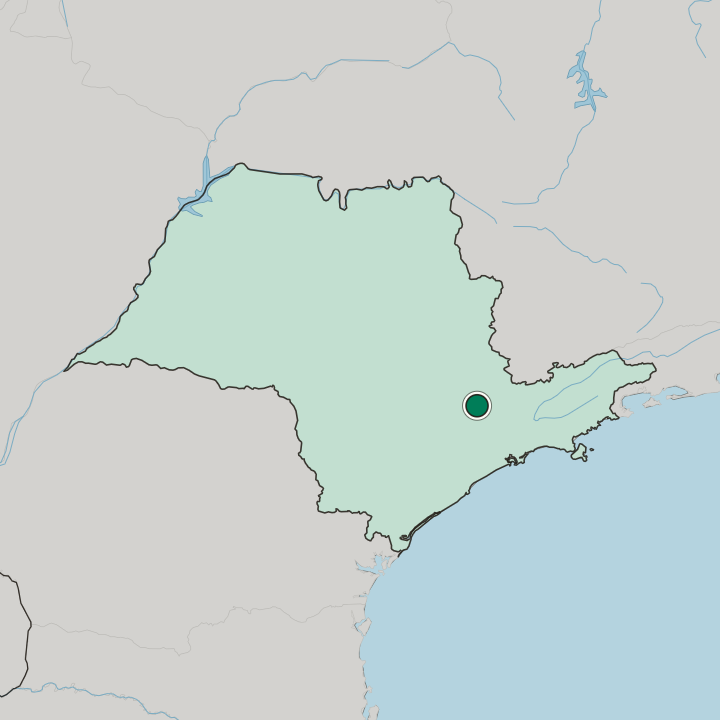
The range does the framing. Jundiaí covers about 431 square kilometres of the Campinas Region, roughly 57 kilometres north of São Paulo and short of Campinas along the same axis, with the Serra de Japi holding the part of the municipality that was never built on. Rainforest keeps that ground.
Slopes rise steeply enough behind the built-up area that the contrast between city blocks and standing forest registers before anything else does.
What is the climate of Jundiaí?
The Serra de Japi shades the upper municipality. Tropical warmth is the base condition across this part of São Paulo state, though the range holds a cooler and wetter regime of its own beneath closed rainforest, while the built-up ground below it runs warmer through the long summer. Seasons invert the north.
Rain concentrates in the warm half of the year.
How do you get to Jundiaí?
Arrival is a short run. Roughly 57 kilometres separate Jundiaí from São Paulo, and the corridor that carries on to Campinas takes most of the movement in both directions, so the road along that axis is the ordinary way in. Weekend traffic thickens it.
Visitors bound for the wineries or the Serra de Japi carry on past the built-up centre, since the farms and the range both lie out in the wider municipality.
Common questions
What is the best area to stay in Jundiaí?
The centre: Museum days built around the Pinacoteca Diógenes Duarte Paes. Vineyard and fruit-farm country: Morning visits to the wineries and fruit farms outside Jundiaí. Under the Serra de Japi: Early starts on the Serra de Japi trails.
Good for
More cities in São Paulo
Updated October 2026