Brazil · São Paulo
Where to Stay in Marília, São Paulo
A young city by state standards. Marília was founded in 1928 in the interior of São Paulo, 443 kilometres by road from the state capital.
Hotel links are affiliate links: booking through them may earn us a commission, at no extra cost to you. It never affects how places are ranked. How this works


Where to stay in Marília
How the choice of base plays out on the ground.
Business travel fills most rooms. Marília works as a regional centre for its part of the interior, and the beds follow that pattern, clustering where the offices and the Escola SESC-SENAC stand rather than around anything a visitor would call a sight. The centre still walks well.
A stay there keeps the Museu de Paleontologia de Marília and the Casa Assobradada within reach on foot, which is about as compact as the city's list of attractions gets. The old works pull the other way. Ground near the Indústrias Reunidas Fábricas Matarazzo belongs to the industrial quarter, which is useful to anyone whose reason for coming is that complex or the firms that grew up beside it, and quieter after dark than the streets near the shops.
Beyond that, the municipality is farmland. Rooms scattered across the 1170 square kilometres outside the built-up grid suit a car and a longer stay, and they leave the paleontology collections a drive rather than a walk away.
Find hotels in Marília
Direct booking searches for these neighbourhoods.
The Marília city centre
Casa Assobradada and the shopping streets fall inside the same walkable gridFind hotels in The Marília city centreVisits tied to the Indústrias Reunidas Fábricas Matarazzo complexThe Matarazzo works quarter
The Indústrias Reunidas Fábricas Matarazzo complex anchors this industrial ground away from the shops. Rooms are few around here — worth securing early.Find hotels in The Matarazzo works quarterCar-based stays across Marília's 1170 square kilometresThe farmland beyond
Farmland fills the municipality outside the built-up grid, well away from the Escola SESC-SENAC. Beds are limited here, so book early.Find hotels in The farmland beyondHotel links are affiliate links: booking through them may earn us a commission, at no extra cost to you. It never affects how places are ranked. How this works
About Marília
Fossils get their own museum.
What is Marília known for?
The Museu de Paleontologia de Marília gives the city an unusual specialism for the interior, while the Indústrias Reunidas Fábricas Matarazzo record the industrial phase that arrived with the municipality's first decades. Two buildings round it out. Escola SESC-SENAC and Casa Assobradada carry the schooling and the domestic architecture that a city built inside a single century has had time to place on its heritage list.
What are the main landmarks in Marília?
The old factory dominates. Indústrias Reunidas Fábricas Matarazzo left a complex that still carries the Matarazzo name through the municipal heritage list, and sheer scale is the plainest thing about works of that kind. Casa Assobradada is smaller.
That raised house survives from the residential side of the same period, the Escola SESC-SENAC adds the institutional strand, and the Museu de Paleontologia de Marília holds the collections that give the city its scientific claim.
What is the history of Marília?
The city is younger than its state. Marília dates from 1928, which places the whole of its history inside the industrial century rather than in the colonial or imperial past that most São Paulo municipalities can point to, and everything on its heritage list belongs to that short span. Rail did the opening.
A railway line measures 529 kilometres between the city and São Paulo, a longer figure than the 443 kilometres of highway, and the difference between the two says a good deal about how the interior was reached before the roads came. Industry gave the place its shape. Indústrias Reunidas Fábricas Matarazzo brought manufacturing at a scale the young municipality had not been laid out for, and the works remain the heaviest single item on the local register.
Institutions came next. Escola SESC-SENAC stands for the training that such industry required, Casa Assobradada preserves a domestic type from the same decades, and the Museu de Paleontologia de Marília turned the ground itself into a subject of study. The straight-line distance to São Paulo is 376 kilometres.
That gap is wide enough to explain why Marília has worked as a centre for its own region rather than as an outpost of the capital.
Where is Marília?
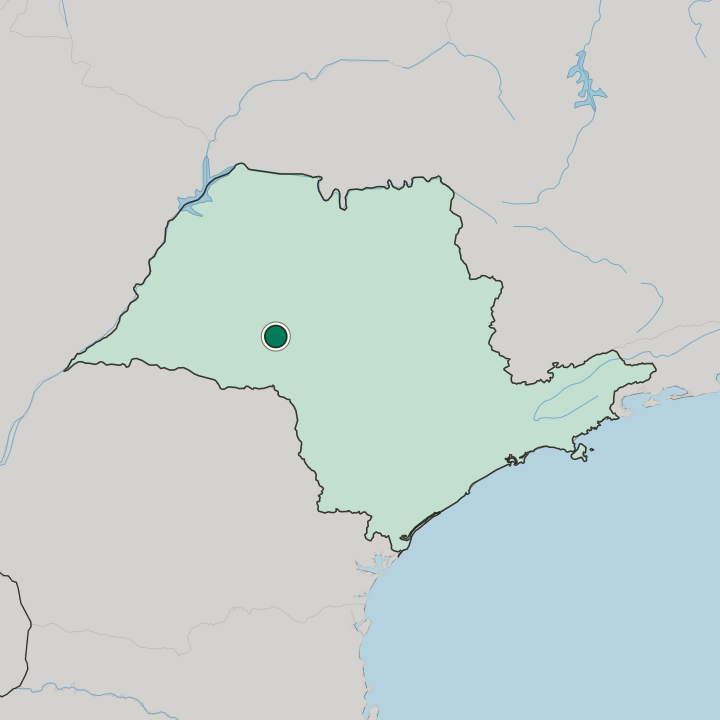
A wide municipal boundary takes in far more than the town. Marília covers about 1170 square kilometres of the interior plateau near 675 metres above the sea, which leaves the built-up grid a small part of a territory given over mostly to farmland. Remoteness completes the picture.
São Paulo lies 376 kilometres off in a straight line and 443 by road, far enough that the city serves its own part of the interior first.
What is the climate of Marília?
The interior runs hot in summer. Tropical air governs this part of São Paulo through the whole year, and the plateau near 675 metres above the sea takes only the edge off it, so the gap between the warm months and the cool ones shows up more in rainfall than in the thermometer. Dry spells come mid-year.
Nights ease off.
How do you get to Marília?
Most people drive the 443 kilometres. Marília sits far enough into the interior of São Paulo that the run out from the capital is a half-day at the wheel rather than a commute, and the railway distance of 529 kilometres shows how much less direct the older route was. A straight line would be 376.
The road is the rule.
Common questions
What is the best area to stay in Marília?
The Marília city centre: Short stays walking to the Museu de Paleontologia de Marília. The Matarazzo works quarter: Visits tied to the Indústrias Reunidas Fábricas Matarazzo complex. The farmland beyond: Car-based stays across Marília's 1170 square kilometres.
More cities in São Paulo
Updated September 2026