Brazil · São Paulo
Where to Stay in São Caetano do Sul, São Paulo
São Caetano do Sul packs an 1877 foundation, a car museum and a magic museum into 15 square kilometres of São Paulo state. Distances stay small.
Hotel links are affiliate links: booking through them may earn us a commission, at no extra cost to you. It never affects how places are ranked. How this works


Where to stay in São Caetano do Sul
The practical side of choosing where to sleep.
Fifteen square kilometres leaves little room for a bad choice. São Caetano do Sul is small enough that a bed anywhere inside it puts the Historical Museum of São Caetano do Sul, the Museu do Automóvel de São Paulo and the Holy Trinity church into the same short set of trips, which is not true of most municipalities in São Paulo state. The centre still holds the edge.
Its blocks carry the everyday shops, the shortest walks to the municipal collections, and the beds that fill first. Pick by what you intend to see first. Anyone here for the Museu de Arte Mágica, Ilusionismo, Prestidigitação e Ventriloquia João Peixoto dos Santos does best near the middle, because that collection is the single reason a good share of visitors come at all.
Cars argue for the far side. A room near the Museu do Automóvel de São Paulo spares the parking hunt, while the streets by Vila Alpina and the Centenário de Vila Ema stay quieter after dark, which counts for something even in a municipality where nothing is more than a few minutes from anything else.
Find hotels in São Caetano do Sul
Direct booking searches for these neighbourhoods.
The Historical Museum centre
The Historical Museum of São Caetano do Sul and the everyday shops share one walkable grid.Find hotels in The Historical Museum centreDrivers arriving for the Museu do Automóvel de São PauloThe Museu do Automóvel side
The Museu do Automóvel de São Paulo and its parking are the reason to sit on this side.Find hotels in The Museu do Automóvel sideQuieter nights near the Holy Trinity church at Vila AlpinaToward Vila Alpina
The Holy Trinity church at Vila Alpina marks the calmer end of the built-up grid.Find hotels in Toward Vila AlpinaHotel links are affiliate links: booking through them may earn us a commission, at no extra cost to you. It never affects how places are ranked. How this works
About São Caetano do Sul
Three museums do most of the work.
What is São Caetano do Sul known for?
The Museu de Arte Mágica, Ilusionismo, Prestidigitação e Ventriloquia João Peixoto dos Santos collects conjuring and ventriloquism, an unlikely holding for a municipality of this size, while the Museu do Automóvel de São Paulo answers it with motor cars. The municipal record sits apart. That belongs to the Historical Museum of São Caetano do Sul, with the Holy Trinity church at Vila Alpina supplying the older devotional anchor.
What are the main landmarks in São Caetano do Sul?
Conjuring has its own museum here. The Museu de Arte Mágica, Ilusionismo, Prestidigitação e Ventriloquia João Peixoto dos Santos gathers stage magic, illusion and ventriloquism under the name of João Peixoto dos Santos, and the Museu do Automóvel de São Paulo replies with motor cars. Civic ground is marked twice over.
The Historical Museum of São Caetano do Sul keeps the municipal record, the Holy Trinity church at Vila Alpina the devotional one, and the Centenário de Vila Ema stands as a monument in its own right.
What is the history of São Caetano do Sul?
The foundation year here is 1877. That is late for São Paulo state, and the municipality that followed never spread beyond the 15 square kilometres it still occupies, so its whole recorded life has been played out on ground a visitor can cross in an afternoon. The Historical Museum of São Caetano do Sul keeps that record, and it is the obvious first stop for anyone curious about how the municipality came to be.
Its holdings run to the town's own century and a half rather than to the deeper colonial past that older neighbours can claim. What came next was institutional. The Holy Trinity church at Vila Alpina and the Centenário de Vila Ema belong to the phase in which a young municipality acquires its parishes and its monuments, each one fixing a date the town wanted kept.
Collections arrived after that. The Museu do Automóvel de São Paulo and the Museu de Arte Mágica, Ilusionismo, Prestidigitação e Ventriloquia João Peixoto dos Santos read as private enthusiasms turned public, and they are the reason a municipality of 15 square kilometres ends up holding three museums that far larger cities in Brazil never assembled.
Where is São Caetano do Sul?
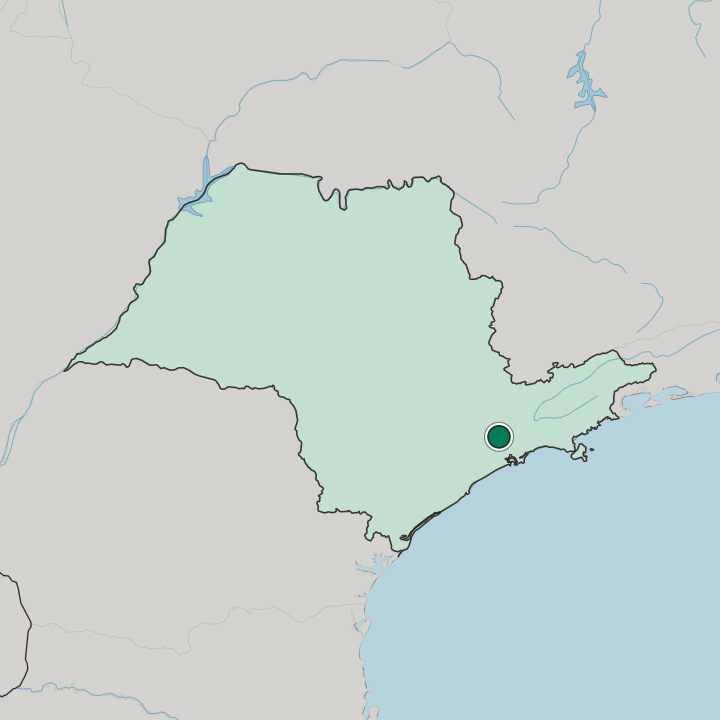
Fifteen square kilometres is the whole of it. São Caetano do Sul is built up almost end to end, with no open country left between its quarters and boundaries that come up quickly whichever way a street runs. No corner of it sits far off.
The Holy Trinity church at Vila Alpina and the Centenário de Vila Ema stand inside the same compact grid as the museums, which is why a full day in this corner of São Paulo state needs no transfer of any length.
What is the climate of São Caetano do Sul?
Warmth peaks when the northern year is at its coldest. São Caetano do Sul lies in the subtropical band of the southern hemisphere, so the hottest weeks come around January and the coolest around July, with neither half of the year turning severe enough to reorganise a trip. Seasons here stay gentle.
That evenness counts for more in a place this compact, where walking between the Historical Museum of São Caetano do Sul and the Museu do Automóvel de São Paulo is the ordinary way to spend an afternoon.
How do you get to São Caetano do Sul?
A car gets you in. São Caetano do Sul is a compact municipality of São Paulo state, reached from the surrounding built-up ground rather than from anywhere a traveller would call remote, and the drive in ends almost as soon as the boundary is crossed. Then walking takes over.
Fifteen square kilometres puts the Historical Museum of São Caetano do Sul, the Holy Trinity church at Vila Alpina and the Museu do Automóvel de São Paulo within a range that a car makes barely faster than feet.
Common questions
What is the best area to stay in São Caetano do Sul?
The Historical Museum centre: Short stays keeping the São Caetano museum blocks on foot. The Museu do Automóvel side: Drivers arriving for the Museu do Automóvel de São Paulo. Toward Vila Alpina: Quieter nights near the Holy Trinity church at Vila Alpina.
Good for
More cities in São Paulo
Updated October 2026