Germany · Bavaria · Nuremberg
Buchenbühl, Nuremberg — Area Guide & Where to Stay
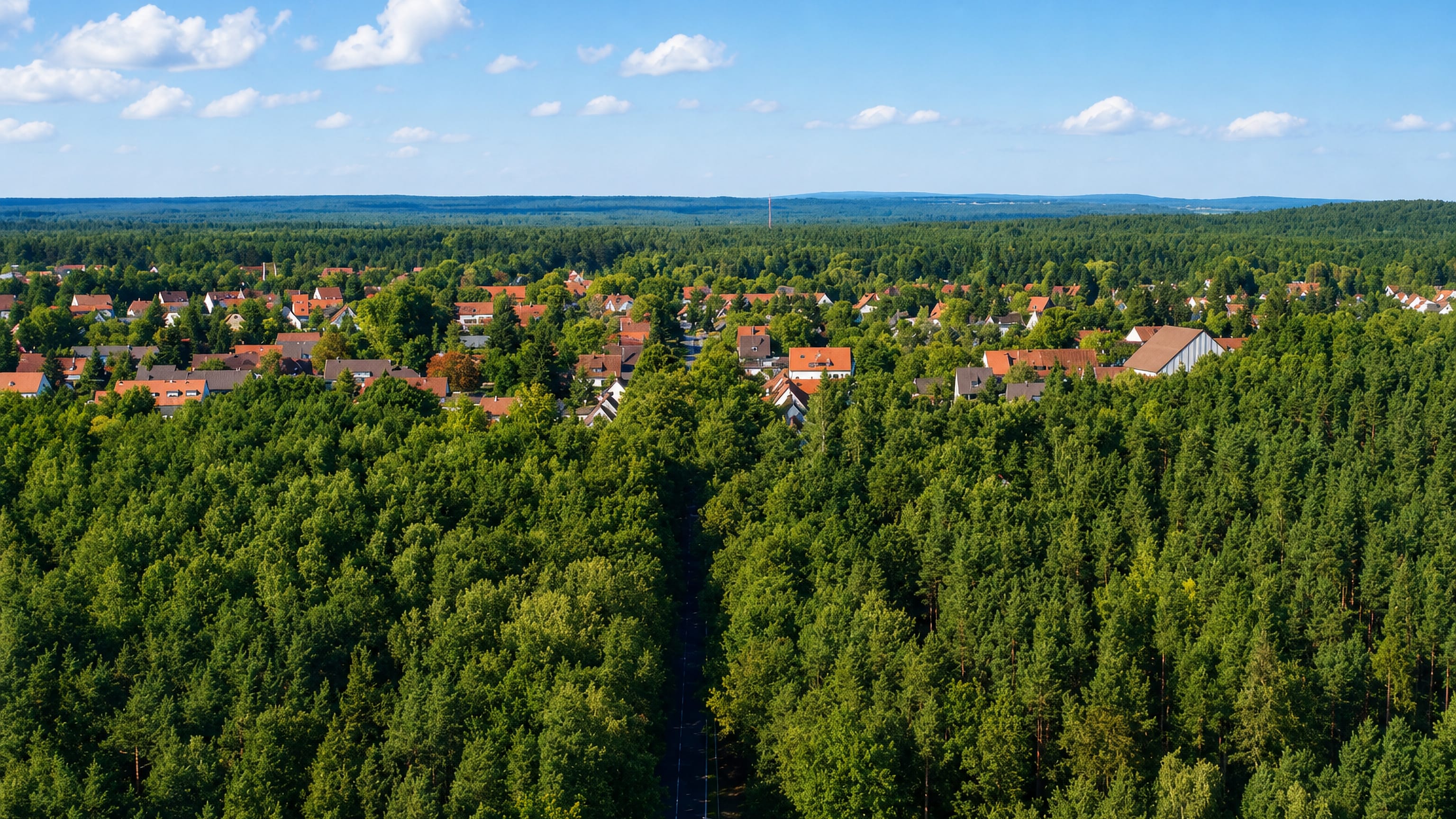
Buchenbühl is a Nuremberg Stadtteil built from 1919 by discharged soldiers in the Sebalder Reichswald, below the hill that gives it its name.
Hotel links are affiliate links: booking through them may earn us a commission, at no extra cost to you. It never affects how places are ranked. How this works


Where to stay in Buchenbühl
Where the beds are, and what that means for the visit.
This is a forest settlement, not a hotel address. Buchenbühl lies inside the Sebalder Reichswald with the Fränkische Marienweg running through it, which suits walkers better than sightseers, and Nuremberg proper is where the rooms are. A bus has served it since 1928.
Line 21 connects the settlement to Ziegelstein and to the Nuremberg U-Bahn, and the Gräfenbergbahn still passes through. Its old halt closed in 1983.
About Buchenbühl
What are the main landmarks in Buchenbühl?
Germany's first dinosaur was dug out of this hill. A Plateosaurus skeleton came from the slopes of the Buchenbühl in 1834, and finds nearby point to late Neolithic settlement that cannot be dated more closely. The Paulusstein marks the old centre.
It is a memorial stone on the road from Nuremberg to Kalchreuth and Heroldsberg, and the settlement was laid out around it. Two churches followed much later. The Himmelfahrtskirche was consecrated in 1961, a plain frame with careful light for three wooden sculptures by Otto Fuchs, a carver who lived in Buchenbühl, and Maria-Hilf came from a church foundation of 1963.
What is the history of Buchenbühl?
Buchenbühl was begun in 1919 on the initiative of a soldiers' council. The council of the III Army Corps started clearing the Reichswald south of the Gräfenbergbahn without permission and without money, to give work to discharged soldiers and to armaments workers who had lost their jobs. Jakob Schmeissner and Ludwig Ruff drew the plans.
The Siedlungswerk Nürnberg was founded as a public corporation on 2 May of that year to put the financing in order, and the settlers built the first two-storey semi-detached houses themselves. Plots ran to two thousand square metres. That size was meant to let each household feed itself, so every property had a small stable annexe, and the rights to the finished houses were drawn by lot among the settlers.
Nuremberg took the settlement on 22 July 1922. Single-storey houses were added from the 1930s into the 1960s, and building fell away sharply in the 1970s because the airport opened in 1955 comes within 800 metres of the settlement.
Where is Buchenbühl?
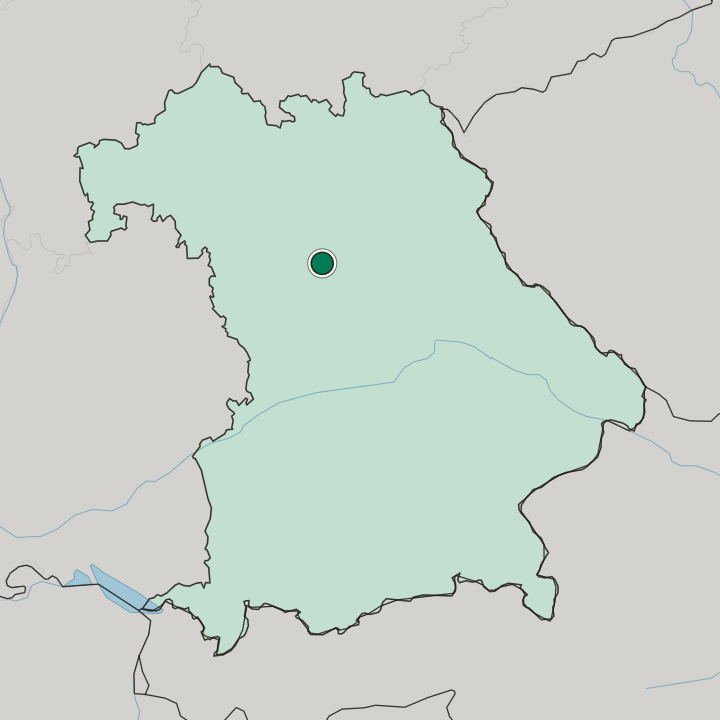
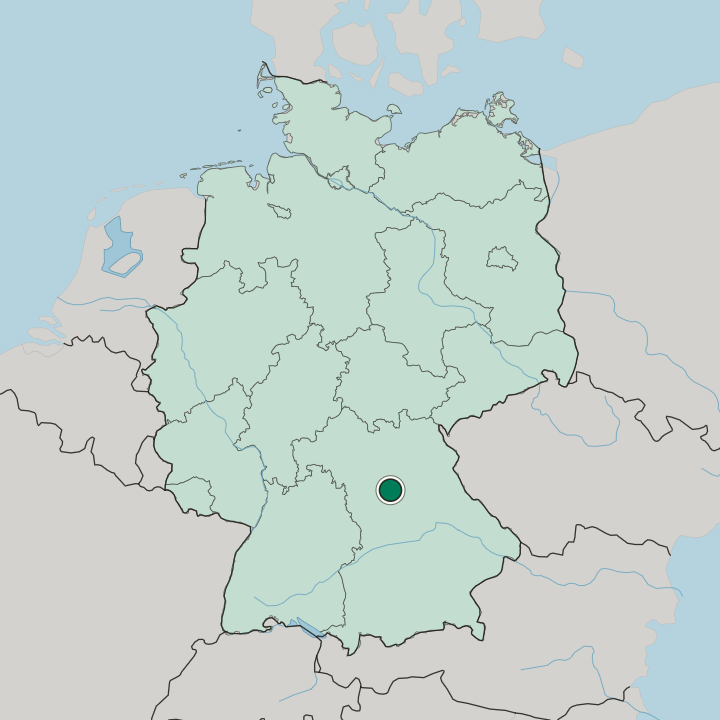
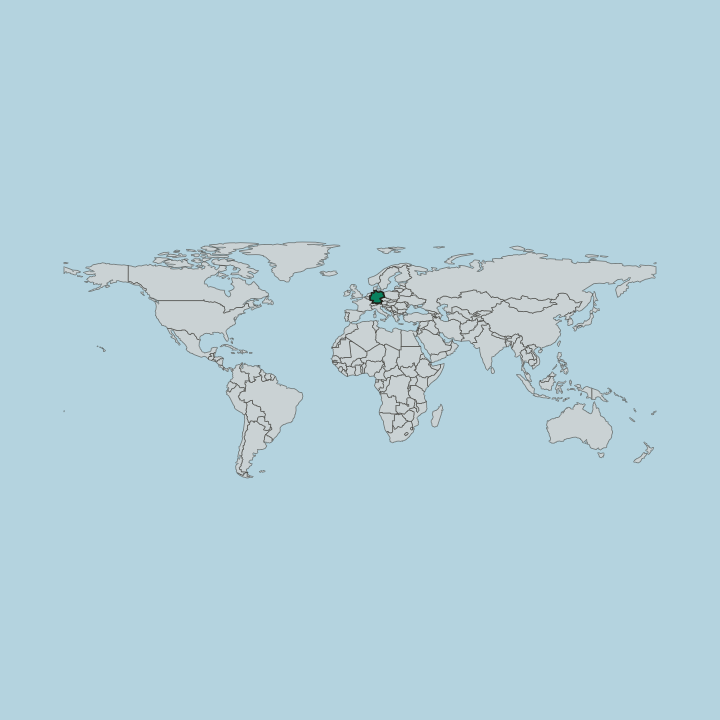
Buchenbühl stands in the middle of the Sebalder Reichswald about a kilometre south-west of the hill called the Buchenbühl, on the westernmost spur of the Haidberg in the Ziegelstein Gemarkung of Nuremberg.
Good for
More areas in Nuremberg
Updated September 2026