Germany · Saxony
Where to Stay in Chemnitz, Saxony
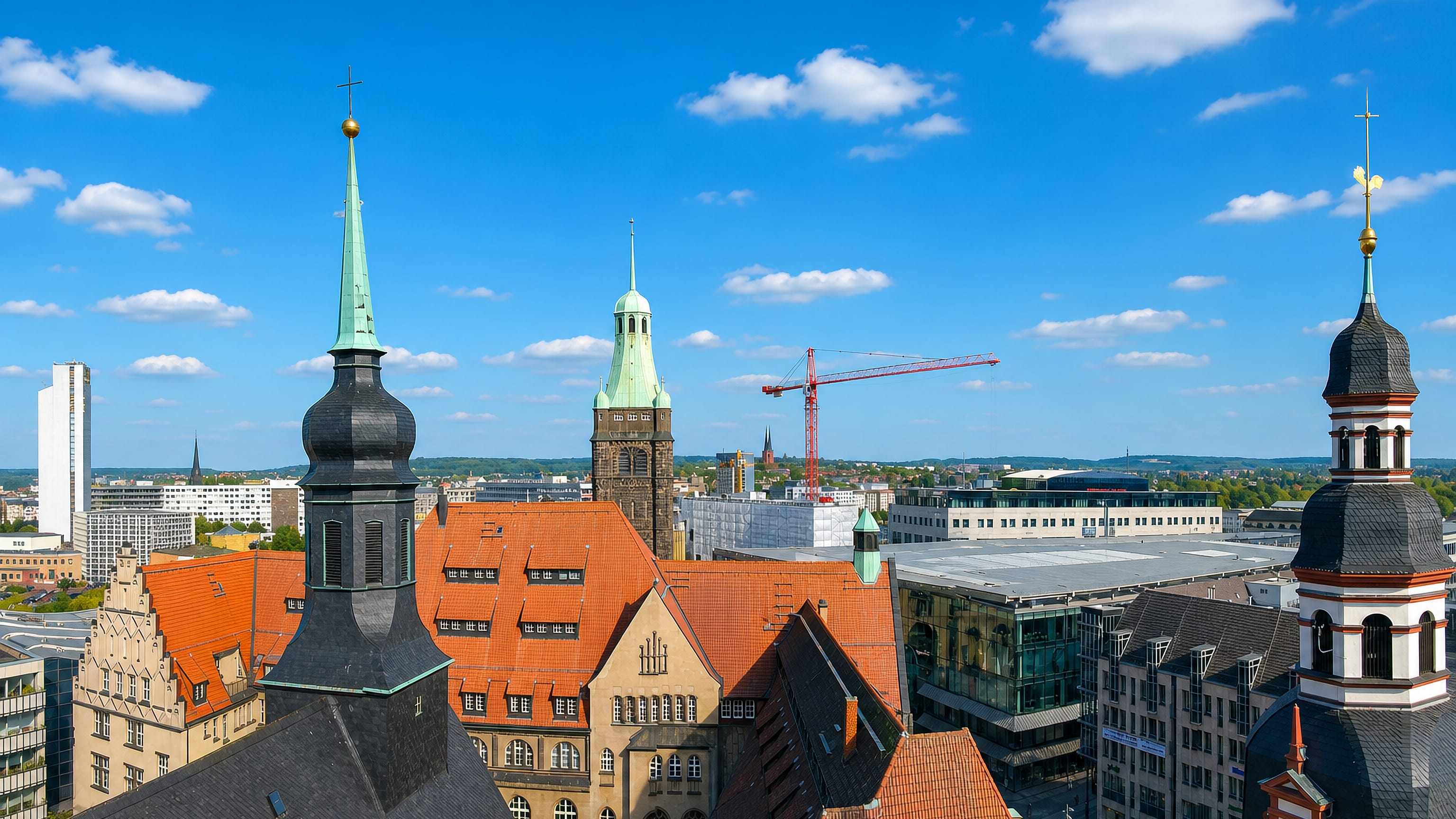
Chemnitz lies at the foot of the Erzgebirge in southwestern Saxony, an old industrial city marked by the Roter Turm and its museums of machines.
Hotel links are affiliate links: booking through them may earn us a commission, at no extra cost to you. It never affects how places are ranked. How this works


Where to stay in Chemnitz
Where you base yourself shapes the visit — here's the character of each area.

 ChemnitzGermany
Altchemnitz
Altchemnitz is a district of Chemnitz around a listed station on the line to Stollberg, with a school, a war memorial and rows of protected houses.Where to stay →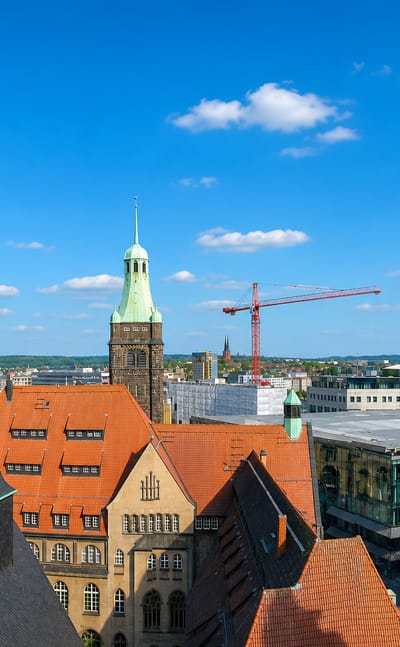 ChemnitzGermany
Bernsdorf
Bernsdorf is a Stadtteil in the south-east of Chemnitz, close to the centre, and the hub of student life around the Technische Universität Chemnitz.Where to stay → ChemnitzGermany
Altendorf
Altendorf is a Chemnitz district strung along Limbacher Straße, where a Hoffmann kiln and two listed railway bridges stand among the houses.Where to stay → ChemnitzGermany
Kappel
Kappel is a compact Chemnitz district given over to museum halls, among them the Industrial Museum Chemnitz and the German Games Museum.Where to stay → ChemnitzGermany
Gablenz
Gablenz is a neighbourhood in the southeastern part of Chemnitz, a few square kilometres of housing strung along Augustusburger Straße.Where to stay →ChemnitzGermanySchönau
Schönau is a Chemnitz district built around the Wanderer-Werke and the workers' estate the factory raised on Peter-Mitterhofer-Straße.Where to stay → ChemnitzGermany
Furth
Furth is the Chemnitz district strung along Chemnitztalstraße, whose listed house fronts run on toward Glösa and its St. Jodokuskirche.Where to stay → ChemnitzGermany
Helbersdorf
Helbersdorf is a small Chemnitz district where protection reaches only a handful of addresses on Helbersdorfer Straße and Dittersdorfer Straße.Where to stay →ChemnitzGermanySiegmar
Chemnitz Zoo sits inside Siegmar, a district of some three and a half square kilometres on the Zwickauer Straße side of Chemnitz.Where to stay →ChemnitzGermanyErfenschlag
Erfenschlag is the Chemnitz district of old mill addresses, where An der Ölmühle and An der Walzenmühle stand near the Christuskirche.Where to stay → ChemnitzGermany
Harthau
Harthau is a district of Chemnitz, its listed frontages strung along Annaberger Straße between the Alte Kirche and the Luther Church.Where to stay →ChemnitzGermanyEbersdorf
Ebersdorf is a Chemnitz district gathered around the Stiftskirche, its farmsteads and school museum strung along Mittweidaer Straße.Where to stay →All neighbourhoods (17)
ChemnitzGermanyRabenstein
Rabenstein covers about seven square kilometres of Chemnitz, and Rabenstein Castle is the fixed point the district is known by.Where to stay →ChemnitzGermanyAdelsberg
Adelsberg is a district in the south-east of Chemnitz that has kept its village character, named after the 508-metre hill in its east.Where to stay → ChemnitzGermany
Euba
Euba is a Chemnitz district lined along Hauptstraße, with its own church, a war memorial and the dam wall of the Talsperre Euba.Where to stay →ChemnitzGermanyEinsiedel
Einsiedel is a Chemnitz district of eleven square kilometres, taking in the Einsiedel Dam, the Einsiedler Hauptstraße and the Berbisdorf church.Where to stay →ChemnitzGermanyGrüna
Grüna runs to nearly fourteen square kilometres of Chemnitz, with the Kreuzkirche and a register of village-street houses to its name.Where to stay →Hotel links are affiliate links: booking through them may earn us a commission, at no extra cost to you. It never affects how places are ranked. How this works
Find hotels in Chemnitz
Direct booking searches for these neighbourhoods.
Zentrum
Wraps the medieval Roter Turm and the Stadtkirche St. Jakobi beside the main shopping lanesFind hotels in ZentrumA quieter, elegant stay among the old apartment blocksKaßberg
Climbs a low rise lined with one of the largest surviving grand residential quartersFind hotels in KaßbergA green base near the castle-hill museumSchloßberg
Sits below the Schloßbergmuseum on its wooded hill away from the busy centreFind hotels in SchloßbergHotel links are affiliate links: booking through them may earn us a commission, at no extra cost to you. It never affects how places are ranked. How this works
Things to do in Chemnitz
Ranked by global recognition; descriptions from Wikidata (CC0).
Museums & Galleries
3- Art Collections Chemnitz Heritage
- Gunzenhauser Museum Heritage
- Staatliches Museum für Archäologie Chemnitz
Churches & Religious Sites
8- Schlosskirche Chemnitz Heritage
- Stadtkirche St. Jakobi Heritage
- St. Petri church Heritage
- St. Markuskirche Heritage
- Evangelisch-Lutherische Kirche Chemnitz Kaßberg Heritage
Show 3 more →
- St. Johannes Nepomuk (Chemnitz) Heritage
- St. Johanniskirche Heritage
- St.-Michaelis-Kirche Chemnitz Heritage
Castles & Historic Sites
6- Rabenstein Castle Heritage
- Torell-Stein Heritage
- Kriegerdenkmal Chemnitz-Grüna Heritage
- Einzeldenkmale der Sachgesamtheit Stiftsfriedhof Ebersdorf Heritage
- Denkmal für antifaschistische Widerstandskämpfer Heritage
Show 1 more →
- Kriegerdenkmal Chemnitz-Altchemnitz Heritage
Stadiums & Sports
3- Haus der Körperkultur Heritage
- Richard-Hartmann-Halle
- Eissportzentrum Chemnitz
Landmarks & Notable Places
8- Roter Turm Heritage
- Schloss Rabenstein Heritage
- Annaberger Straße 155 Chemnitz Heritage
- Befehlsturm Sportforum Chemnitz Heritage
- Erdmannsdorfer Straße 2-10 Chemnitz Altchemnitz Heritage
Show 3 more →
- Wohnhaus, Boettcherstraße 3 Chemnitz-Rabenstein Heritage
- Adelsbergstraße 214, Chemnitz Heritage
- Klaffenbacher Straße 70, 72 Chemnitz Heritage
worth knowingacross 5 categories in Chemnitz
About Chemnitz
What is Chemnitz known for?
Chemnitz is known as an old centre of industry in southwestern Saxony, at the foot of the Erzgebirge. Machines made its name. The Industrial Museum Chemnitz and the Richard-Hartmann-Halle recall the engineering trade that shaped the city, while the medieval Roter Turm and the Art Collections Chemnitz hold its older and its finer sides.
Ranked behind only Dresden and Leipzig, it stands among the leading cities of Saxony.
What are the main landmarks in Chemnitz?
Chemnitz's landmarks mix the medieval town with the machine age, spread from the old market out to the castle hill and the halls where its engineering past is kept and shown. The stubby Roter Turm and the Stadtkirche St. Jakobi mark the medieval core. Two halls hold the engines and looms of its industrial years: the Industrial Museum Chemnitz and the Richard-Hartmann-Halle.
The Art Collections Chemnitz and the Gunzenhauser Museum keep the paintings, while the Schloßbergmuseum crowns the castle hill. Iron and stone define it.
What is the history of Chemnitz?
Chemnitz grew up around a monastery below the Erzgebirge and was granted city status in 1170. Trade came early. Placed at the foot of the ore-rich mountains, the medieval town prospered on the traffic in metals and cloth, raising the Stadtkirche St. Jakobi and the stubby Roter Turm that still mark the old market.
From the sixteenth century it drew weavers and merchants who tied its wealth to the mines above. Industry remade the place entirely. In the nineteenth century engineering works, mills, and machine halls filled the valley, and the city became one of the great manufacturing centres of Saxony, its trade preserved now in the Industrial Museum Chemnitz and the Richard-Hartmann-Halle.
War and the years of division scarred and rebuilt the centre more than once. The Art Collections Chemnitz and the Schloßbergmuseum carry the older story alongside the machines. That industrial past still shapes the streets.
Where is Chemnitz?
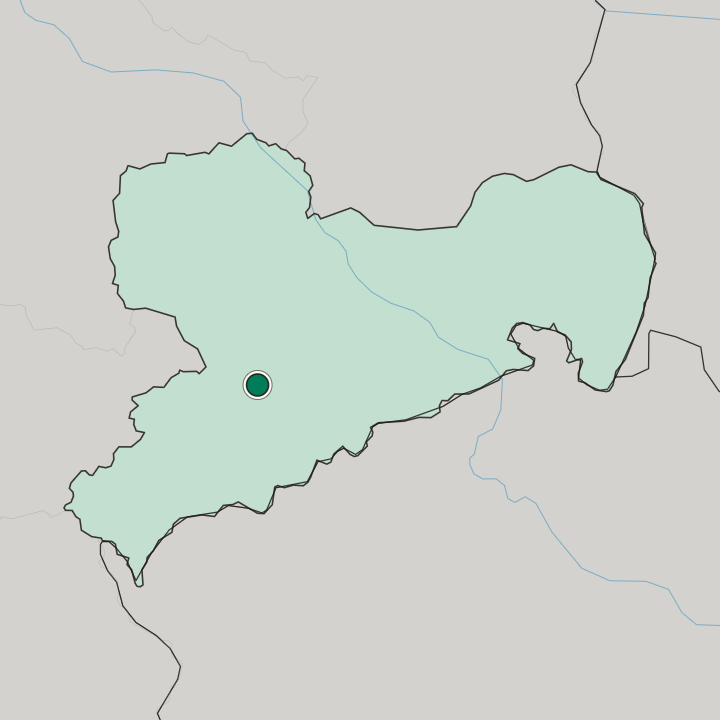
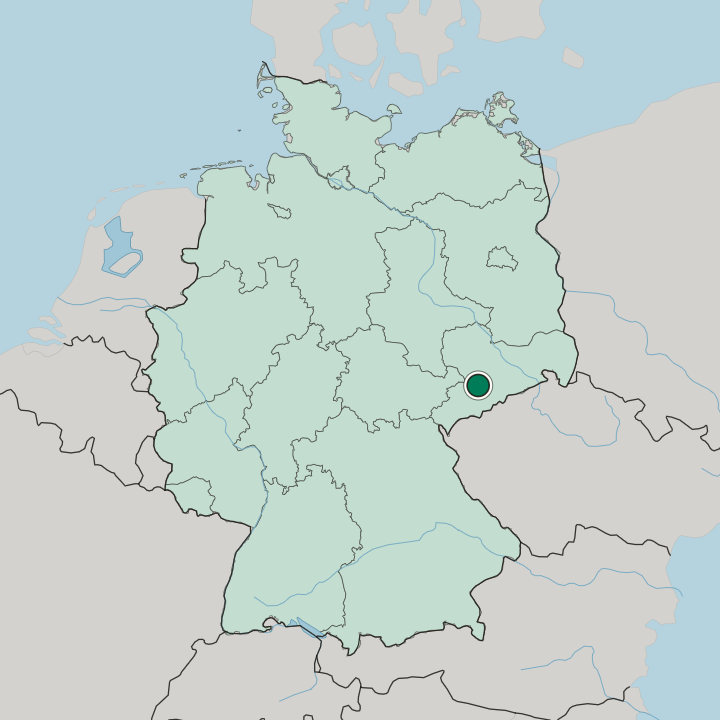
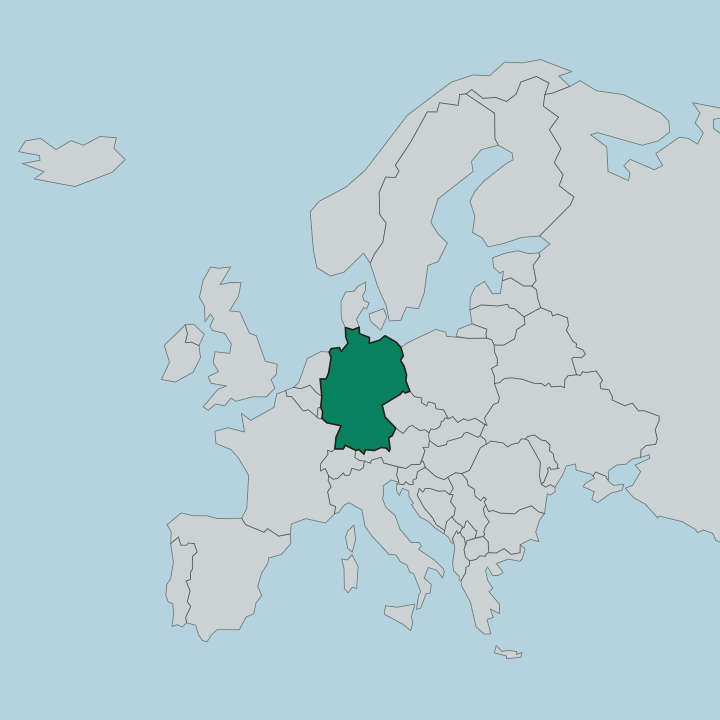
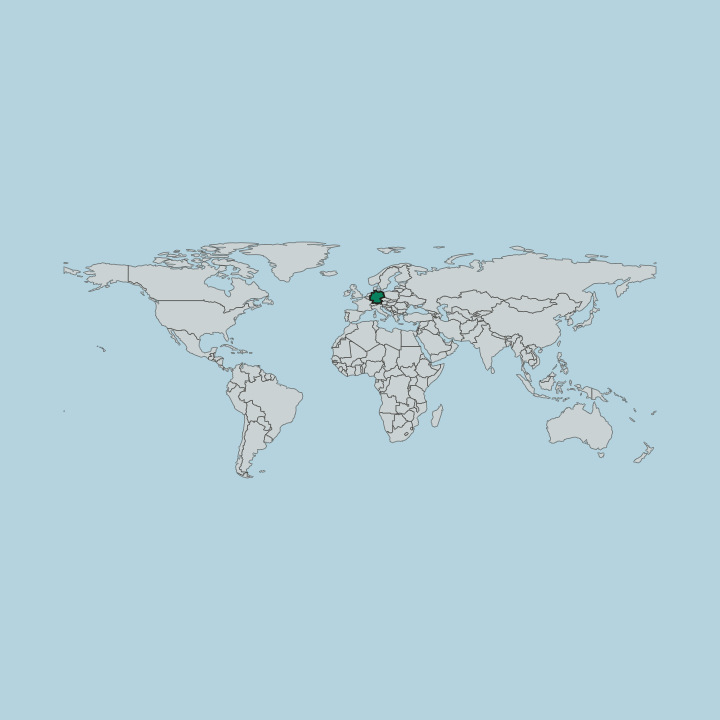
Chemnitz lies in southwestern Saxony, in the east of Germany, at the northern foot of the Erzgebirge. The city fills a shallow river valley where the land begins to rise toward the ore-bearing mountains along the Czech border to the south. Wooded hills close it in.
This place below the Erzgebirge, on the old routes between the Saxon plain and the mines, has long tied the city to the mountains above.
What is the climate of Chemnitz?
Chemnitz has a cool, moist upland climate, shaped by its place at the foot of the Erzgebirge in southwestern Saxony. Winters run cold and snowy, with the weather turning harder still on the mountain slopes rising to the south. Summers stay mild and green.
Rain and cloud come often off the hills, and the city sits wetter and cooler than the lower Saxon plain to the north through much of the year.
How do you get to Chemnitz?
Chemnitz sits on the rail and road lines that cross southwestern Saxony, and its main station links the city with Dresden and Leipzig to the north. Trains and trams meet in the centre. Roads climb south from the city into the Erzgebirge toward the Czech border.
Most visitors arrive by train or road.
Common questions
What is the best area to stay in Chemnitz?
Zentrum: First-time visitors who want the Roter Turm and the market square at the door. Kaßberg: A quieter, elegant stay among the old apartment blocks. Schloßberg: A green base near the castle-hill museum.
Good for
More cities in Saxony
Updated October 2026