Germany · Schleswig-Holstein
Where to Stay in Kiel, Schleswig-Holstein
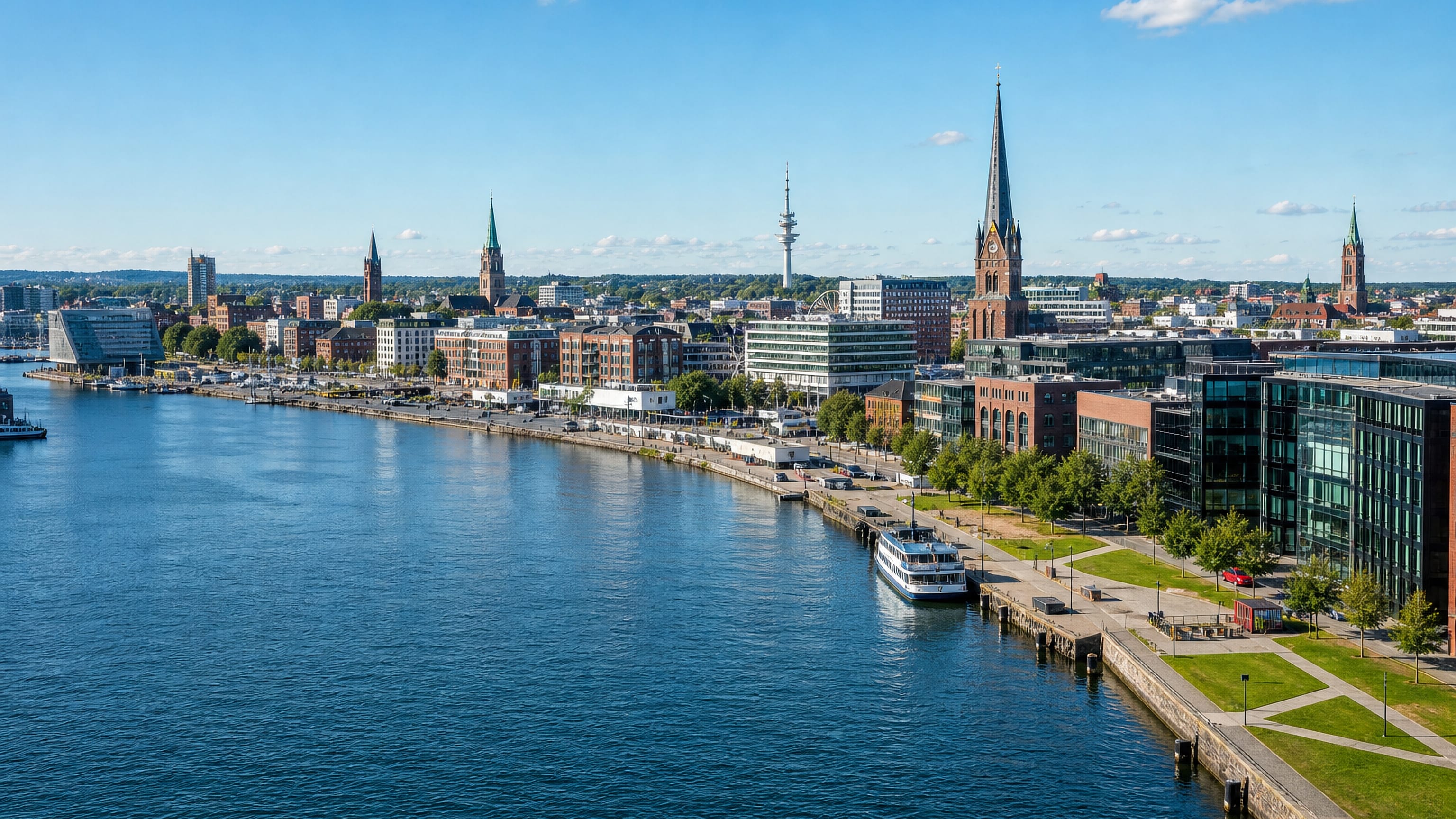
Ship horns carry up the Kieler Förde to Kiel, capital of Schleswig-Holstein on the Baltic, known for its sailing week and the Kiel Canal.
Hotel links are affiliate links: booking through them may earn us a commission, at no extra cost to you. It never affects how places are ranked. How this works


Where to stay in Kiel
The right area depends on your trip — here's what each neighbourhood is best for.

 KielGermanyFerry piers and St. Nikolai on the doorstep
Altstadt
At the head of the water on the Alter MarktAltstadt → KielGermanyMorning walks along the Kiellinie past the yachts
Düsternbrook
The villa slope above the western shore promenadeDüsternbrook → KielGermanyCheaper beds within sight of the shipyard cranes
Gaarden
Eastern shore, reached by the small Förde ferriesGaarden → KielGermanyWatching ships drop through the canal locks
Holtenau
Out where the Kiel Canal meets the FördeHoltenau → KielGermany
Vorstadt
Vorstadt packs Kiel's Rathausplatz, the Kiel Opera House and the town hall tower into barely half a square kilometre.Where to stay → KielGermany
Damperhof
Two churches and a bank on Lorentzendamm give Damperhof its shape, a half-square-kilometre district of Kiel.Where to stay → KielGermany
Brunswik
Brunswik is one of Kiel's smallest districts, a tight quarter of Schleswig-Holstein wedged between Damperhof, Düsternbrook and Blücherplatz.Where to stay →KielGermanySchreventeich
A burial ground and one named house, the Alter Urnenfriedhof and the Stephan-Heinzel-Haus, mark Schreventeich, a quarter of Kiel in Schleswig-Holstein.Where to stay →KielGermanySüdfriedhof
Heilandskirche, the Felsenhalle and the Margarinefabrik Seibel mark Südfriedhof, a district of Kiel in Schleswig-Holstein.Where to stay →KielGermanyRavensberg
Ravensberg holds the university side of Kiel, with the Universitätskirche and Christian-Albrechts-Platz standing inside the quarter.Where to stay →KielGermanyBlücherplatz
Blücherplatz is a Kiel quarter whose listed buildings are churches, the Ansgarkirche and the Osterkirche among them.Where to stay →KielGermanyEllerbek
Ellerbek is a Stadtteil of Kiel on the eastern shore of the Förde, between Gaarden-Ost, Elmschenhagen-Nord and Wellingdorf. It began as a fishing village.Where to stay →All neighbourhoods (20)
KielGermanyWellingdorf
Wellingdorf is a Stadtteil of Kiel on the east bank of the Förde at the mouth of the Schwentine, first mentioned in 1315 as Belendorp.Where to stay →KielGermanyGaarden-Süd und Kronsburg
Gaarden-Süd und Kronsburg joins two Kiel neighbourhoods under one name, marked by the Kiel Transmission Tower and St Markuskirche.Where to stay → KielGermany
Neumühlen-Dietrichsdorf
Neumühlen-Dietrichsdorf carries two names as one district of Kiel, in Schleswig-Holstein, with the Paul Gerhardt church as its landmark.Where to stay →KielGermanyHassee
Hassee is a Stadtteil of Kiel whose name goes back to Hertse, recorded in 1222, and which stayed an independent commune until Kiel took it in 1910.Where to stay →KielGermanySteenbek-Projensdorf
Steenbek-Projensdorf lies about five kilometres north of Kiel's centre, a district pairing two names and holding the Tannenberg wildlife park.Where to stay →KielGermanyKlausbrook
No landmark is listed in Klausbrook, a small Kiel district ringed by Kopperpahl, Suchsdorf, Steenbek-Projensdorf and Ravensberg.Where to stay →KielGermanyNeumeimersdorf
Neumeimersdorf spreads across nearly eight square kilometres of Kiel, a district whose one listed landmark is the Haubarg aus Witzwort.Where to stay →KielGermanySuchsdorf
Suchsdorf is a Stadtteil in the northwest of Kiel, five to ten kilometres from the centre, a commune of the Kreis Rendsburg until Kiel took it in 1958.Where to stay →Hotel links are affiliate links: booking through them may earn us a commission, at no extra cost to you. It never affects how places are ranked. How this works
Things to do in Kiel
Ranked by global recognition; descriptions from Wikidata (CC0).
Museums & Galleries
3- Stadtmuseum Warleberger Hof Heritage
- Kiel Maritime Museum
- Kunsthalle Kiel
Churches & Religious Sites
8- St. Nikolai, Kiel Heritage
- St. Nicholas Church Heritage
- Pauluskirche (Kiel) Heritage
- Ansgarkirche, Kiel Heritage
- St. Heinrich, Kiel Heritage
Show 3 more →
- Dankeskirche Heritage
- Michaeliskirche Heritage
- St.-Andreas-Kirche Heritage
Castles & Historic Sites
3- Carl-Loewe-Denkmal Heritage
- Kiel Castle
- Friedrich Wilhelm Memorial (Kiel)
Stadiums & Sports
1- Sportforum of Kiel University Heritage
Landmarks & Notable Places
4- Ravensberg Watertower Heritage
- Stephan-Heinzel-Haus Heritage
- Sparkasse Lorentzendamm (Kiel) Heritage
- Haus der Bäckerinnung Heritage
worth knowingacross 5 categories in Kiel
About Kiel
What is Kiel known for?
Kiel is the capital of Schleswig-Holstein and the largest German city on the Baltic, laid along the Kieler Förde where the boats for Scandinavia load at the head of the water. Sailing runs the summer. Kiel Week fills the inlet with rigs from everywhere, the Kiel Canal starts at the Holtenau locks and carries shipping through to the North Sea, and the Kunsthalle and the Kiel Maritime Museum keep the collections down beside the quays.
What are the main landmarks in Kiel?
Kiel's landmarks all stand within sight of the Förde. St. Nikolai stands on the Alter Markt as the one medieval church left standing after the bombing, and the Kieler Kloster and the Warleberger Hof survive near it as the oldest secular buildings in the town. Art faces the Förde.
Kunsthalle Kiel and the Zoological Museum of Kiel University line the shore road, the Kiel Maritime Museum works out of the old Fischhalle on the quay, and the Ravensberg Watertower and the Kiel Transmission Tower mark the high ground behind the centre.
What is the history of Kiel?
Kiel took its town rights in 1242. A Holstein count laid the streets on a spit between the Förde and an inland water, and the Kieler Kloster went up soon after for the Franciscans. The town joined the Hanseatic League and was later thrown out of it.
Fortune arrived much later: a university was founded in 1665, the dukes held a residence in Kiel Castle, and in the nineteenth century the Prussian navy chose this inlet for its Baltic base, which turned a small market town into a yard town of slipways, barracks and workers' terraces. The canal came in 1895, cut clean across the neck of the Jutland Peninsula to Brunsbüttel so that warships could reach the North Sea without rounding Denmark. Then the fleet refused.
The sailors who mutinied in Kiel in 1918 set off the revolution that ended the German Empire, and the memory of it sits under the city's politics still. The next war flattened almost everything the yards had built. Rebuilding was quick and deliberately plain, so St. Nikolai now stands among post-war blocks and the Förde does the work the old streets once did.
Where is Kiel?
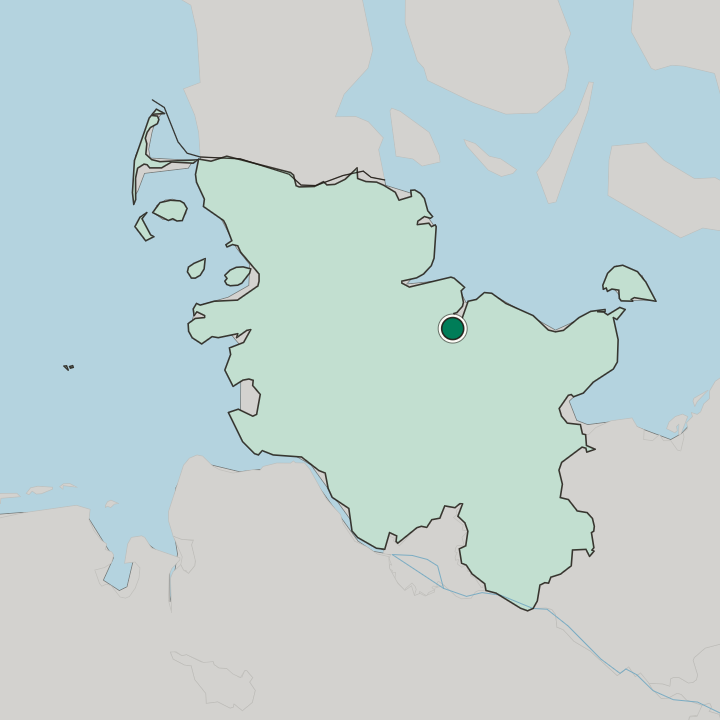
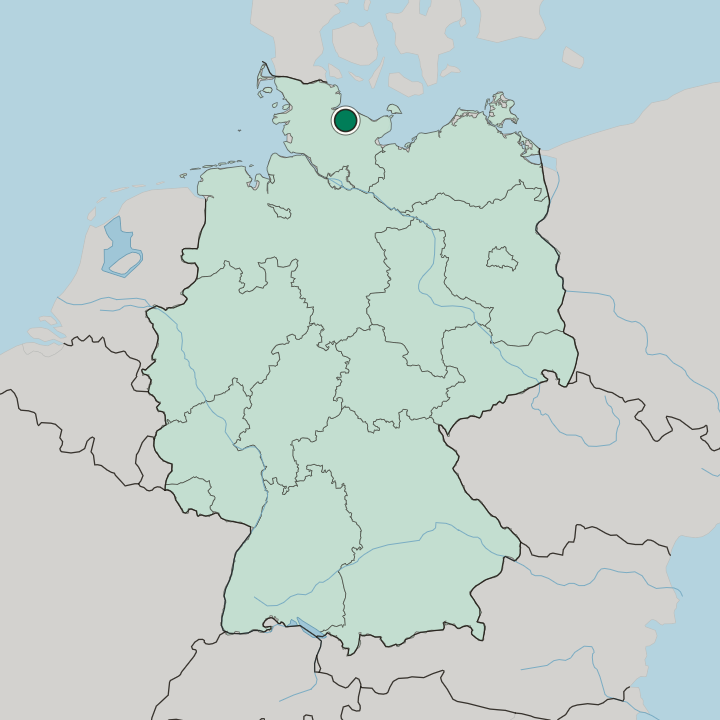
Kiel stands at the head of the Kieler Förde, a long inlet of the Bay of Kiel on the Baltic. The built-up area wraps both shores of that water, with the Schwentine coming in from the east and the Kiel Canal cutting away west across the neck of the Jutland Peninsula at Holtenau. The ground is glacial.
Low moraine ridges, beech woods and small lakes run inland through Holstein, while the shoreline alternates between slipways, beaches and reed.
What is the climate of Kiel?
The Baltic keeps Kiel's weather even and grey. Water on both sides of the Förde holds the frost off in winter and the heat down in summer, so hard cold is short-lived, snow is unreliable and the wind counts for far more here than the thermometer. Autumn gales push water up the inlet.
Summer pays it all back with the long northern evenings that make the sailing season worth the rest of the year.
How do you get to Kiel?
Kiel Hauptbahnhof and the ferry terminals stand a few hundred metres apart at the head of the Förde. Trains reach Hamburg in about an hour, and the overnight boats leave the same quays for Oslo and Gothenburg. Ships dominate.
The Kiel Canal brings coasters and cruise ships in through the Holtenau locks from the North Sea, the motorway from Hamburg ends inside the city, and the small Förde ferries work as buses between the two shores.
Common questions
What is the best area to stay in Kiel?
Altstadt: Ferry piers and St. Nikolai on the doorstep. Düsternbrook: Morning walks along the Kiellinie past the yachts. Gaarden: Cheaper beds within sight of the shipyard cranes. Holtenau: Watching ships drop through the canal locks.
Good for
More cities in Schleswig-Holstein
Updated October 2026