Germany
Schleswig-Holstein, Germany — Towns & Travel Guide
Schleswig-Holstein is Germany's northernmost state, a slim land bridge to Denmark caught between the North Sea and the Baltic.
Hotel links are affiliate links: booking through them may earn us a commission, at no extra cost to you. It never affects how places are ranked. How this works


Towns & cities in Schleswig-Holstein
Pick a town or city — each links to where to stay.

 Germany
Kiel
Ship horns carry up the Kieler Förde to Kiel, capital of Schleswig-Holstein on the Baltic, known for its sailing week and the Kiel Canal.Where to stay →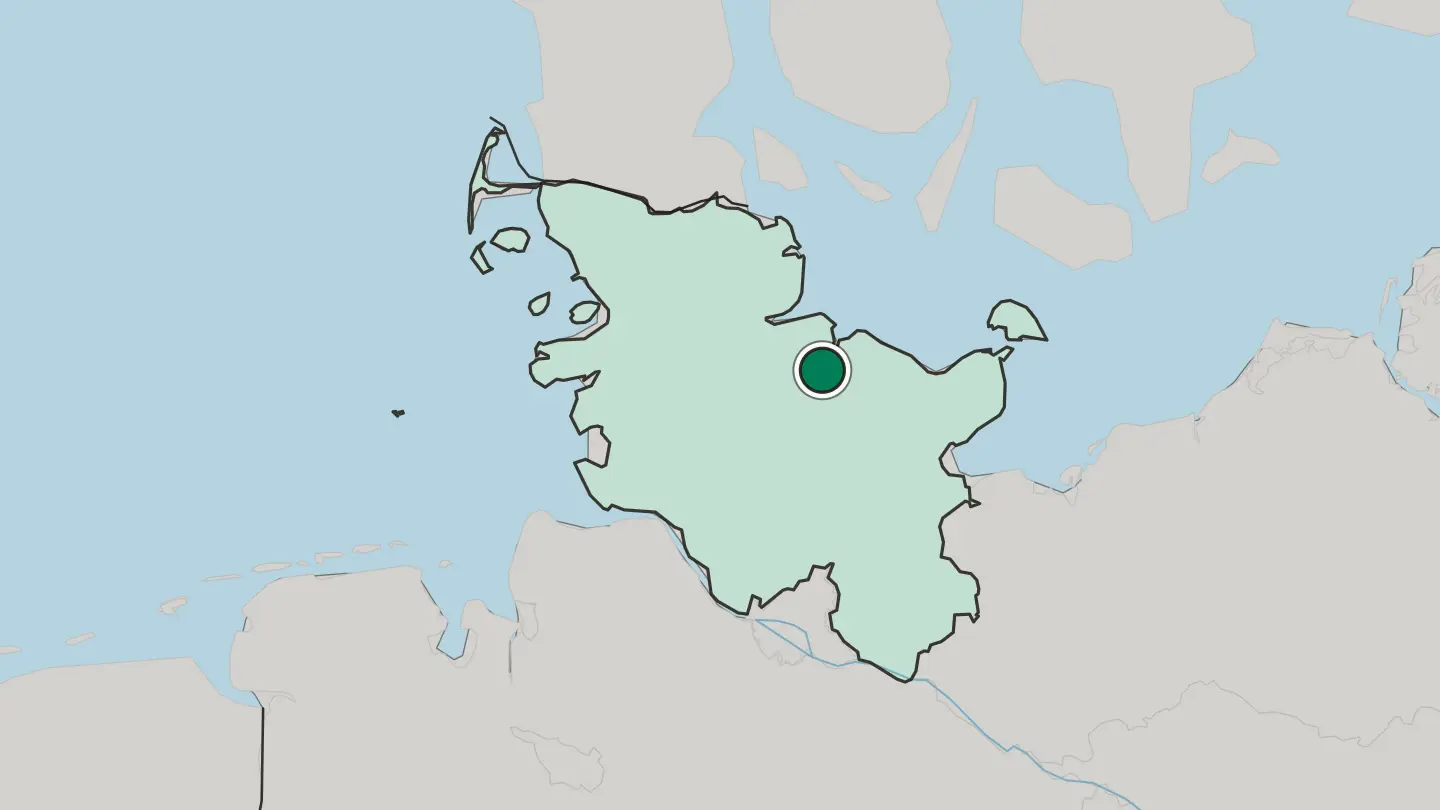
 Germany
Lübeck
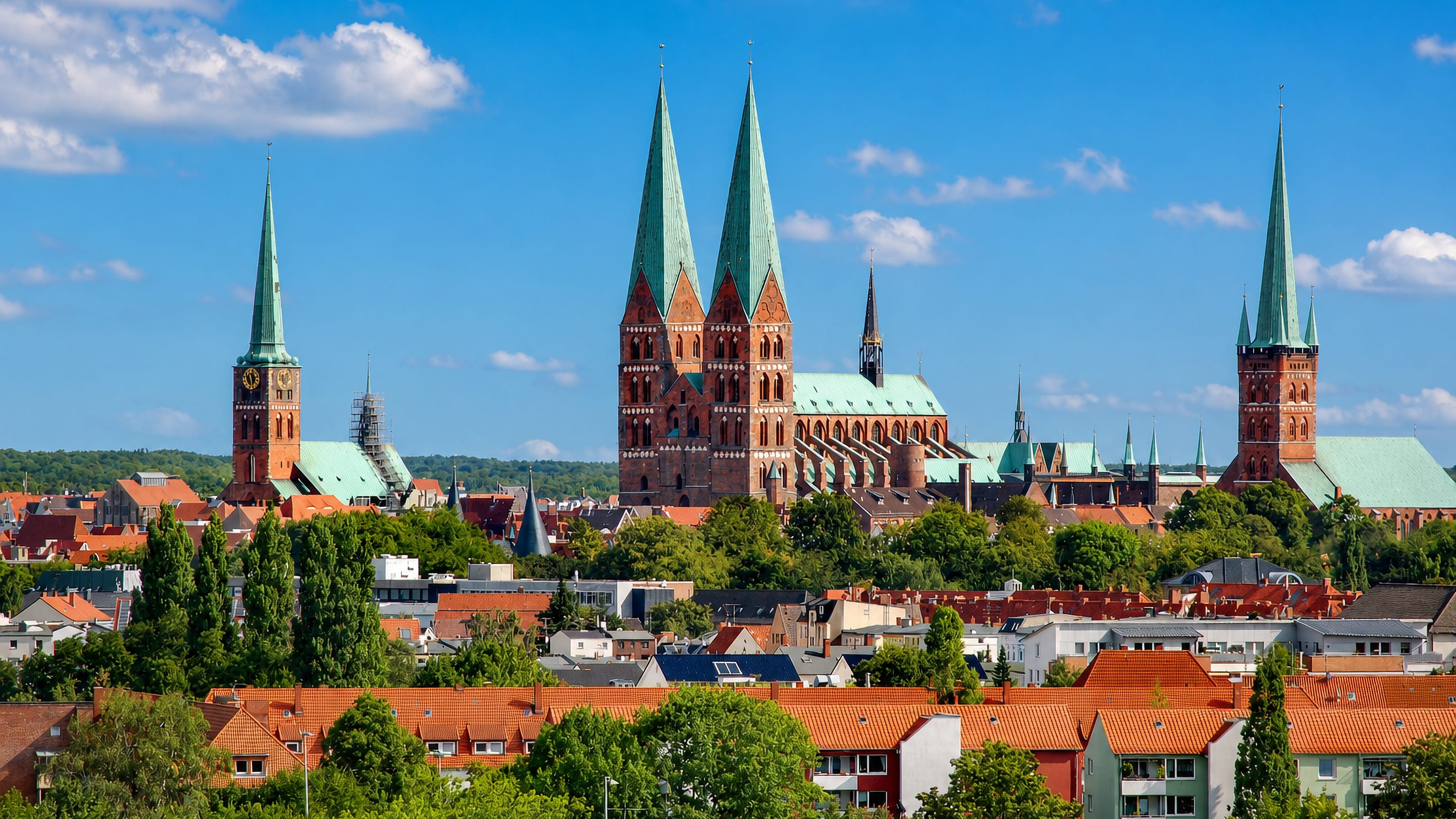
Lübeck stands at the mouth of the Trave on the Baltic Sea, a Hanseatic port whose old town still begins at the Holstentor.Where to stay →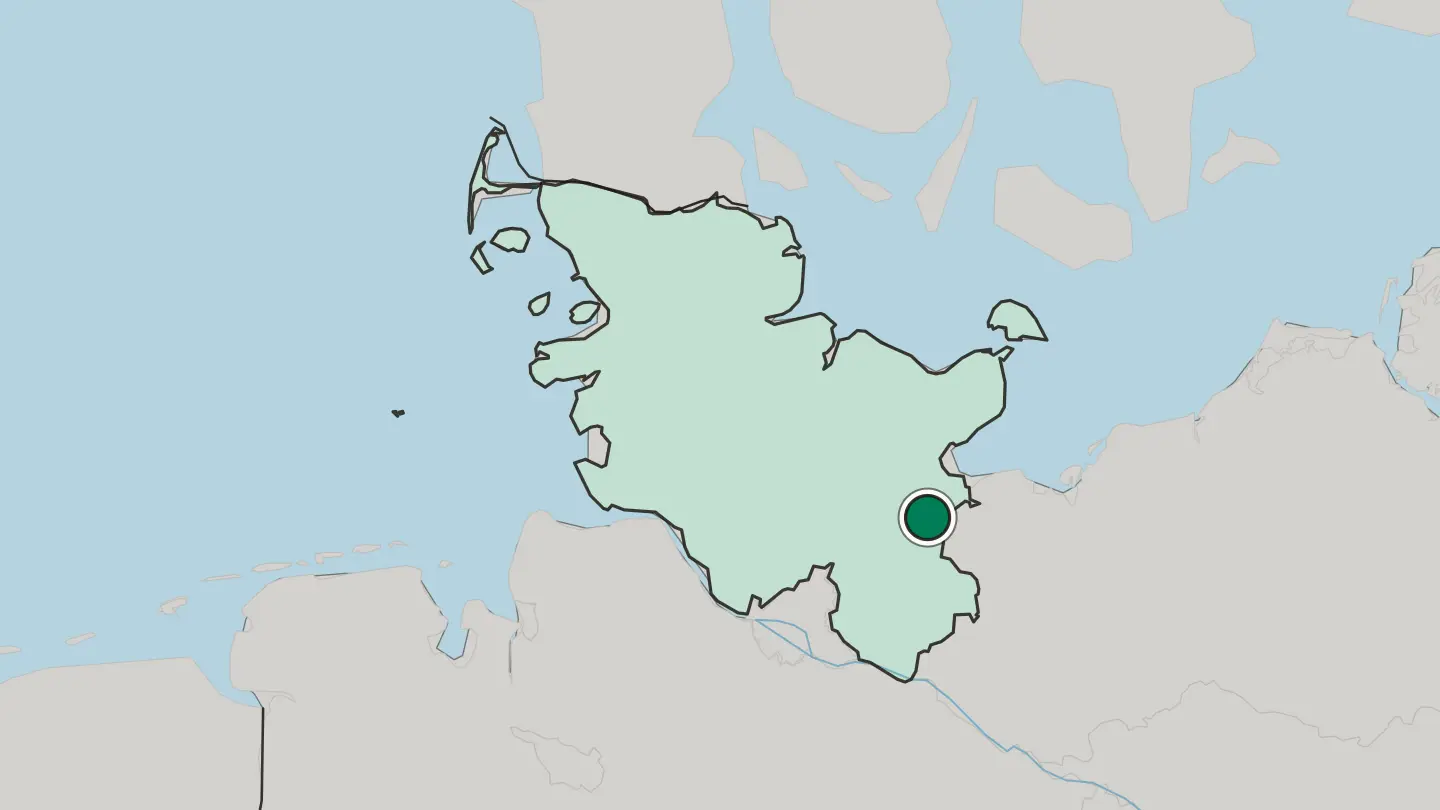
 Germany
Flensburg
Flensburg lines the water of the Flensburger Förde in Schleswig-Holstein, a harbour town whose quays lie minutes from the Danish border.Where to stay →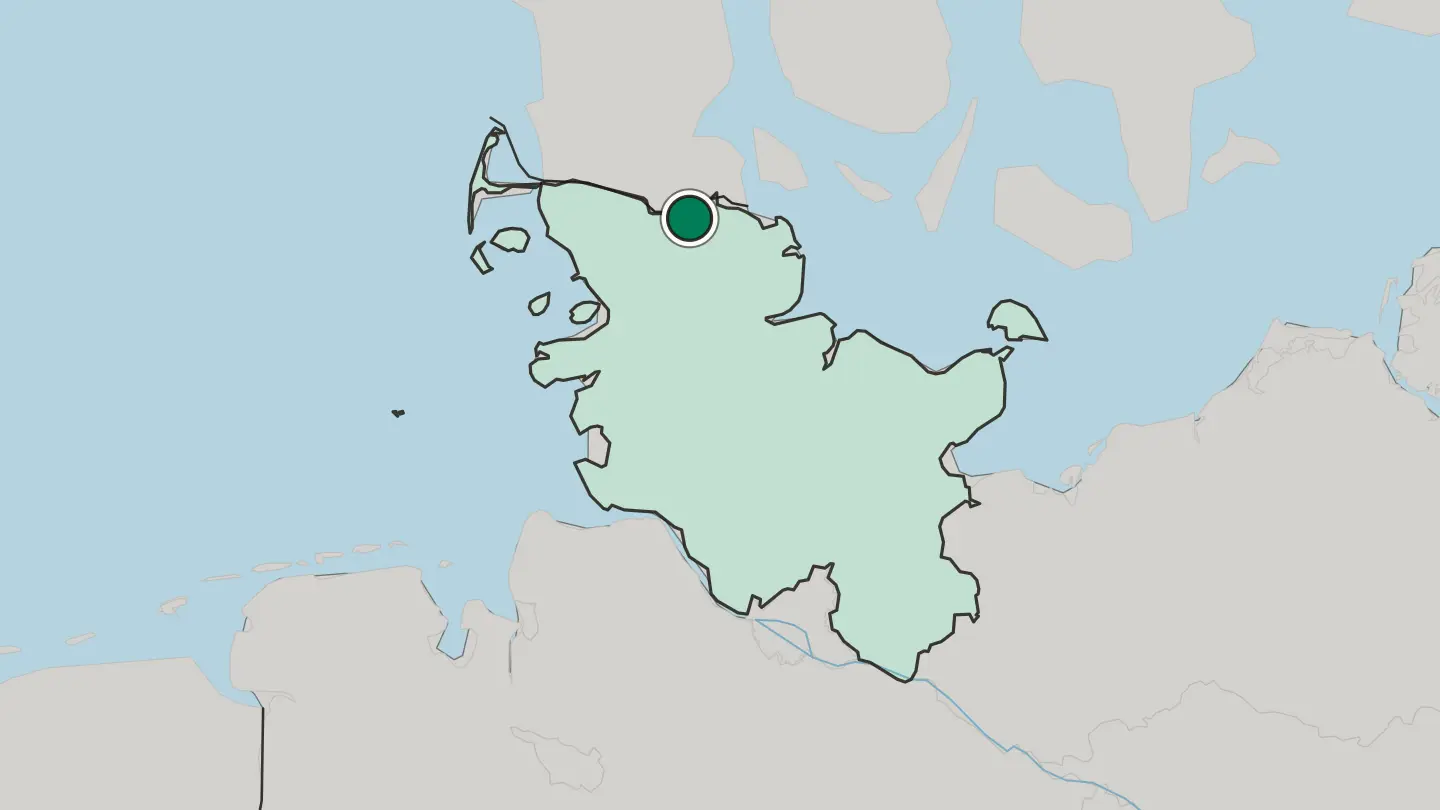 Germany
Norderstedt
Norderstedt is the fourth-largest city of Schleswig-Holstein, a 1970 creation in the Segeberg district inside the Hamburg Metropolitan Region.Where to stay →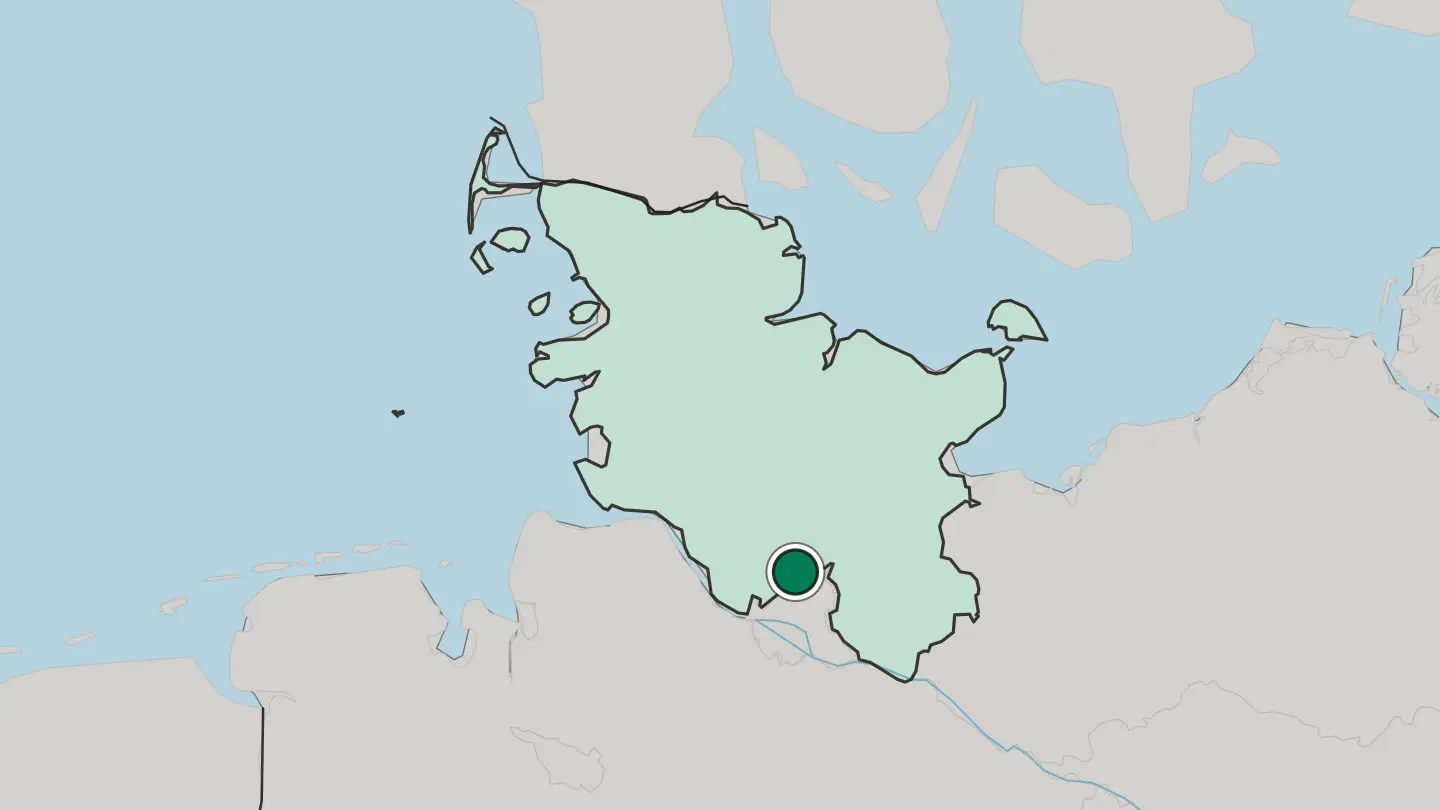
 Germany
Neumünster
Neumünster holds the middle of Schleswig-Holstein between Kiel and Hamburg, a working town whose Holstenhallen draw trade fairs to the region.Where to stay →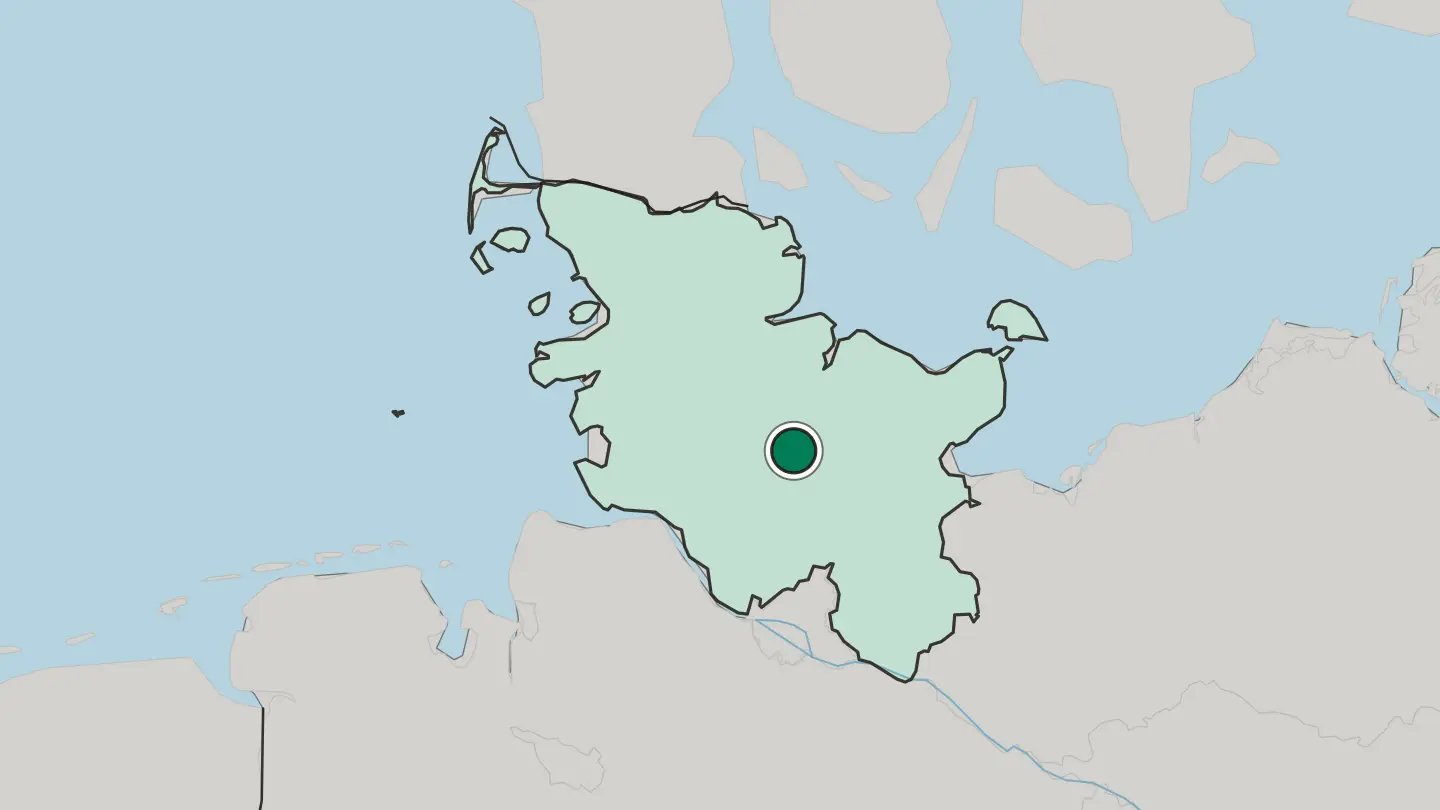 Germany
Kronshagen
Kronshagen is a municipality in the Rendsburg-Eckernförde district of Schleswig-Holstein on the western edge of Kiel, home of the Eichhof Park Cemetery.Where to stay →Hotel links are affiliate links: booking through them may earn us a commission, at no extra cost to you. It never affects how places are ranked. How this works
About Schleswig-Holstein
Two seas define it.
What is Schleswig-Holstein known for?
The North Sea washes the marshes and tidal flats of the west, and the Baltic curls into bays and fjords along the east, so no part of Schleswig-Holstein sits far from salt water. Sylt, Föhr and Amrum draw beachgoers to the North Frisian Islands, while the Kiel Canal cuts across the middle to link the two coasts. Kiel is the capital, Lübeck the old brick-Gothic port on the Baltic, and Flensburg the harbour town on the Danish frontier.
Where is Schleswig-Holstein?
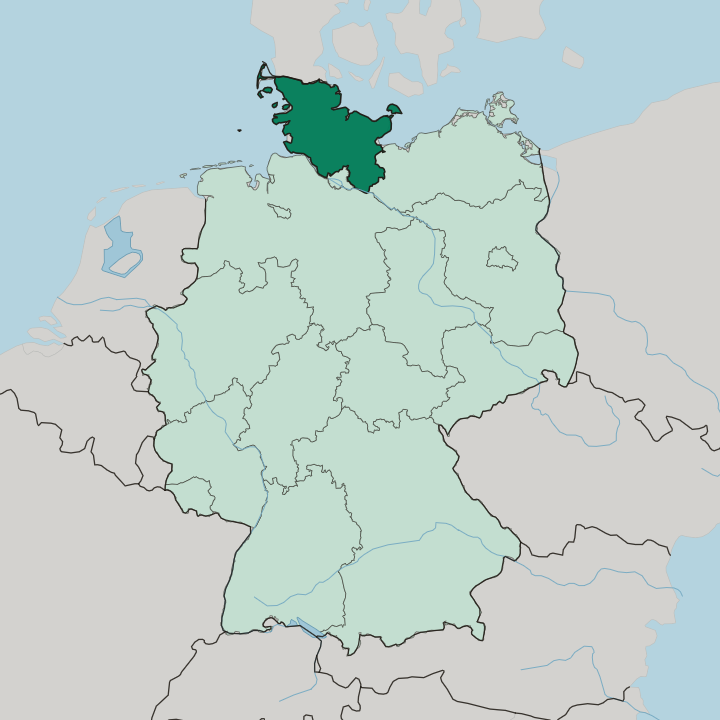
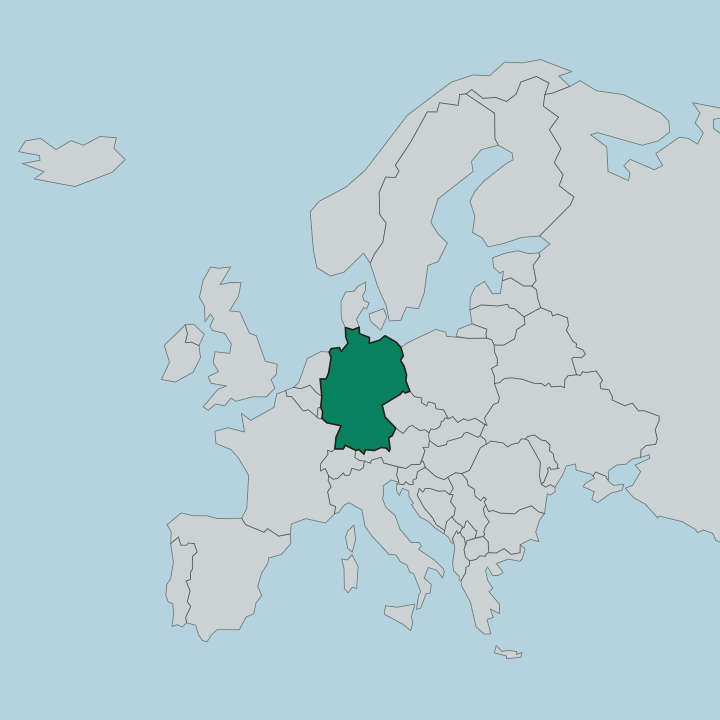
Schleswig-Holstein occupies the base of the Jutland Peninsula, the neck of land that carries northward into Denmark. The North Sea lies to the west and the Baltic Sea to the east, and the state is narrow enough that both are within easy reach of the middle. Denmark closes it off to the north.
To the south sit Lower Saxony, the city-state of Hamburg and Mecklenburg-Vorpommern, the state's only land neighbours inside Germany. The two coasts could hardly be less alike. Along the western shore everything is flat: marshes, dykes and the tidal mudflats of the Wadden Sea, with the North Frisian Islands of Sylt, Föhr and Amrum strung out beyond the low-water line.
To the east the Baltic side is firmer and more folded, cut by bays, cliffs and long fjords such as the Flensburg Firth that reaches up to the Danish border. Inland the land lifts gently eastward into Holstein Switzerland, a moraine country of beech woods and lakes where the Bungsberg tops out at 168 metres, the highest ground in the state. Running clean across the waist of it is the Kiel Canal, joining the North Sea at Brunsbüttel to the Baltic at Kiel and carrying more ships than any other artificial waterway of its kind.
Water is never far away here.
What is Schleswig-Holstein like?
The state carries three cultures in its bones. German is the everyday language, but Low German is still spoken across the countryside, and along the west coast the North Frisians keep their own tongue while a Danish minority lives on either side of the northern border. That mix is the legacy of centuries when the line between Dane and German ran straight through here, and both minorities hold protected status under the state's constitution.
You hear it in place names as much as in speech. The look of the land is Hanseatic and maritime. Lübeck was a leading city of the medieval Hanseatic League, and its stepped brick gables and the twin-towered Holstentor set the architectural note for the whole Baltic coast.
Red brick, white lighthouses and thatched roofs recur from the islands to the fjords. Fish and the sea shape the table, from smoked eel to the herring landed at the harbours. Summers bring the Kieler Woche sailing regatta and the concerts of the Schleswig-Holstein Musik Festival to barns and manor houses across the state.
The wind never fully drops. This is a plain-spoken, weather-tested corner of Germany, far closer in feel to neighbouring Denmark than to the distant Alps of the south.
What is the history of Schleswig-Holstein?
Two duchies made this state. Holstein, in the south, was a fief of the Holy Roman Empire, while Schleswig to the north was held from the Danish crown, and for centuries the pair were governed together yet pulled between Berlin and Copenhagen. War settled it the hard way.
Denmark ceded both duchies after its defeat in 1864, and Prussia annexed the whole territory in 1866, folding it into Germany. Only after the First World War did a plebiscite in 1920 draw the present border, returning North Schleswig to Denmark and leaving the modern state to be constituted in 1946.
What is the climate of Schleswig-Holstein?
The climate is maritime through and through. Wedged between the North Sea and the Baltic, the state never strays far from the moderating pull of salt water, so winters stay mild and rarely bitter while summers turn warm rather than hot. Wind is the constant companion, hardest along the exposed North Sea marshes and the North Frisian Islands, where the weather can shift within an hour.
Rain falls across the year rather than in one season, and the Baltic east lies a touch drier and calmer than the western shore. Grey, breezy days come with the territory.
How do you get to Schleswig-Holstein?
Most visitors come through Hamburg. The city-state on the southern border has the nearest major airport and sits on the main rail spine, from which trains run north to Kiel, Lübeck and Flensburg in about an hour. From the north you can cross overland from Denmark, or take the car ferry from Puttgarden across the Fehmarn Belt.
Kiel and Lübeck-Travemünde are ferry ports for Scandinavia and the Baltic. Inside the state, road and rail thread the coasts together, and a causeway and rail dam carry you out to Sylt.
Common questions
What is the best area to stay in Schleswig-Holstein?
Lübeck: history and a Baltic city base. Kiel: ferries and the eastern fjord coast. The North Frisian Islands: dune beaches and island air. Holstein Switzerland: lakes and green inland walking.
Good for
More regions in Germany
Updated October 2026