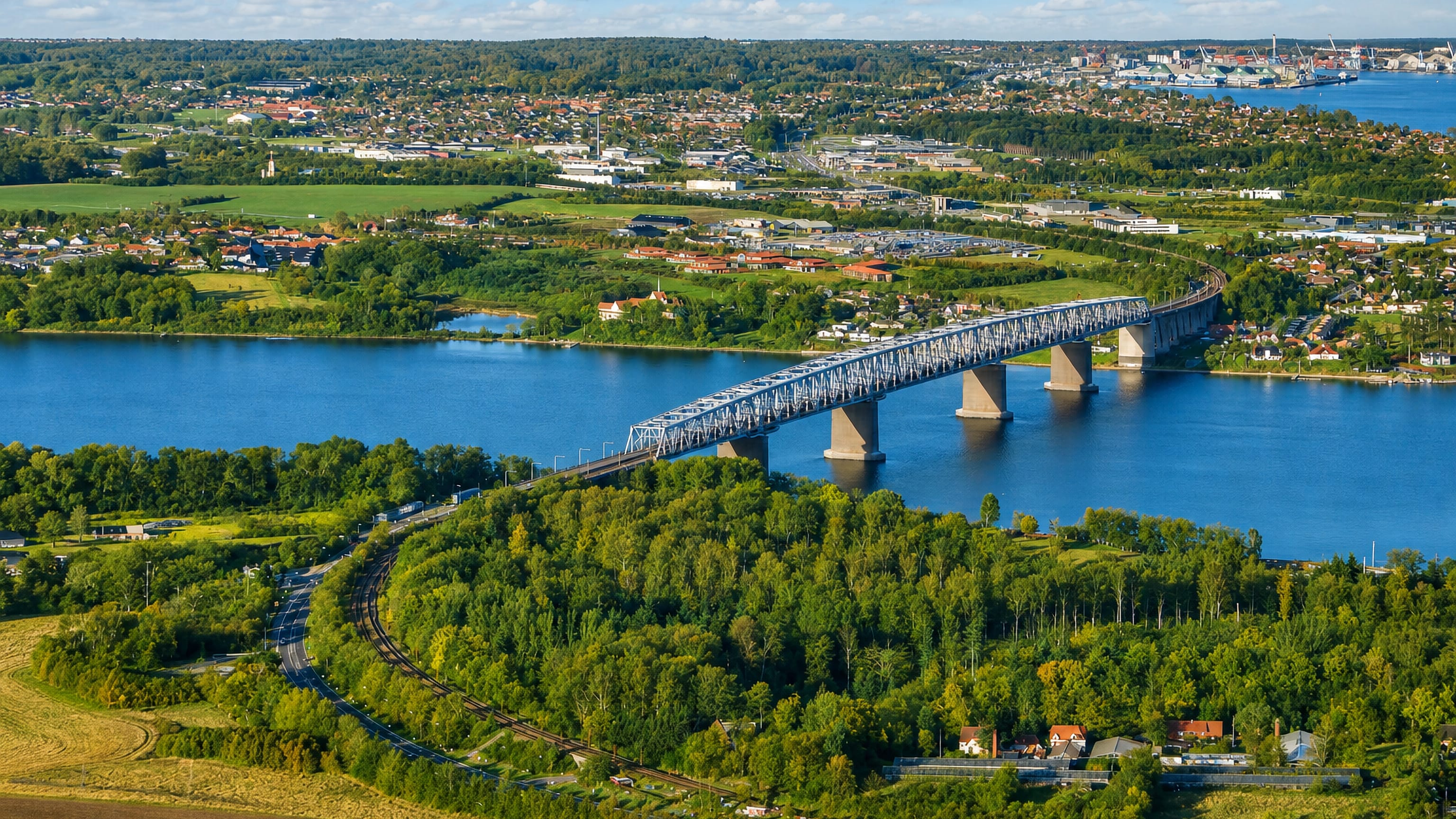
Denmark · Region Syddanmark
Where to Stay in Middelfart, Region Syddanmark
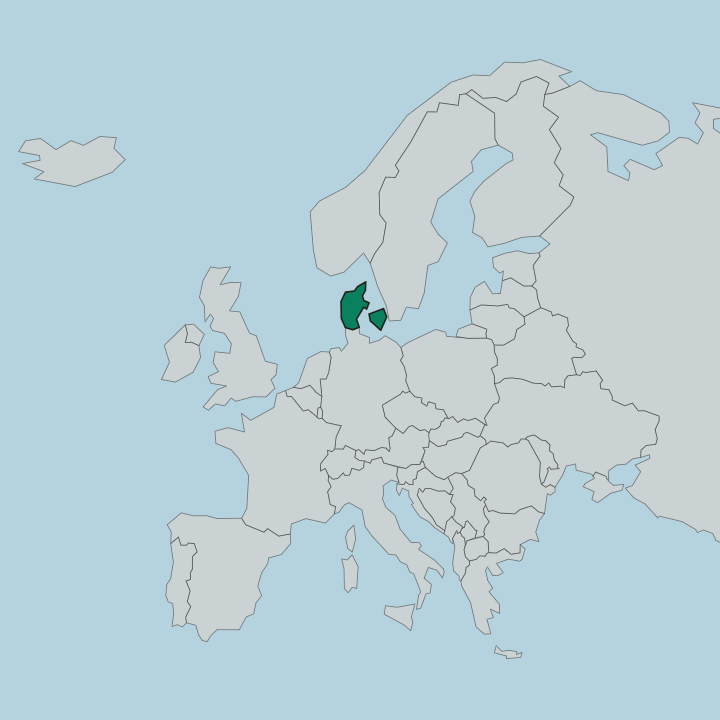
Middelfart is a town in central Denmark, on the island of Funen, and seat of Middelfart Municipality.
Hotel links are affiliate links: booking through them may earn us a commission, at no extra cost to you. It never affects how places are ranked. How this works


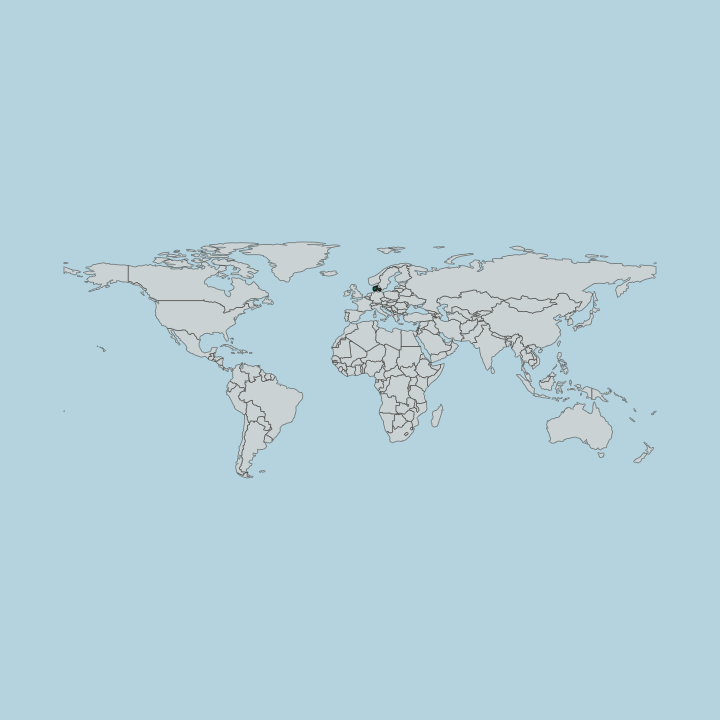
Where to stay in Middelfart
Where visitors usually base themselves, and why.
Middelfart keeps most of its beds in and around the town centre, the chartered core of the municipality it heads on the island of Funen. Stay there and the old town sits within reach: Sankt Nikolaj Kirke and the local-history rooms of Middelfart Museum along Algade are an easy walk, and the streets fill with cafés in the warm months. The centre suits you if you want the harbour and shops close.
Out on the higher ground above the water, CLAY Keramikmuseum Danmark occupies a villa among gardens, a quieter base away from the busier streets and a draw for anyone following Danish ceramics. Families and parish visitors often look to the edges near Lyng Kirke, where the residential streets sit back from the centre. Rooms grow scarce in these outer parishes.
These outer parishes, with their churches and the ancient monument recorded as Middelfart, are largely homes rather than hotels, so most visitors reserve in the centre and travel out across this part of central Denmark.
Find hotels in Middelfart
Direct booking searches for these neighbourhoods.
Town centre
the chartered core within walking reach of Sankt Nikolaj Kirke and Middelfart Museum along AlgadeFind hotels in Town centrea quiet base for the ceramics museumGrimmerhus heights
the villa gardens above the water around CLAY Keramikmuseum Danmark, set back from the busier streets. Few places to stay nearby — book ahead.Find hotels in Grimmerhus heightsa residential stay near the outer parish churchLyng
the streets back from the centre around Lyng Kirke, largely homes rather than hotels. Lodging is scarce in this area; reserve in advance.Find hotels in LyngHotel links are affiliate links: booking through them may earn us a commission, at no extra cost to you. It never affects how places are ranked. How this works
About Middelfart
Middelfart is known for clay.
What is Middelfart known for?
CLAY Keramikmuseum Danmark gathers Danish ceramics in a villa above the town, while the older Middelfart Museum sets out the local story along Algade. History runs deeper still. Sankt Nikolaj Kirke marks the medieval core, the nearby Lyng Kirke serves the parishes around it, and an ancient monument recorded simply as Middelfart points back to the earliest traces of settlement on this corner of Funen.
What are the main landmarks in Middelfart?
Two museums anchor Middelfart. CLAY Keramikmuseum Danmark holds Danish ceramics in its villa, while Middelfart Museum keeps the town's history along Algade. Churches mark the older town.
Sankt Nikolaj Kirke stands at the medieval core and Lyng Kirke serves the parishes nearby, and beyond the buildings an ancient monument recorded as Middelfart preserves the earliest layer of settlement on this part of Funen.
What is the history of Middelfart?
Middelfart grew on the edge of Funen. The settlement traces back through the medieval centuries to the time of Sankt Nikolaj Kirke, the church that still marks the old core in this part of central Denmark, on the island of Funen, where the town faced the water that divides the island from the mainland to the north of Southern Denmark. For long stretches it stayed small.
An ancient monument recorded as Middelfart preserves the layer beneath the later town, the kind of trace that places people on this shore long before any charter, and the parish church of Lyng Kirke marks one of the older communities that grew up around the main settlement. Trade and crossing shaped the rest. The town's position on the narrow water made it a place of passage, and over time the surrounding parishes were folded into the municipality that Middelfart came to head.
Culture arrived later. The villa above the town became CLAY Keramikmuseum Danmark, a home for Danish ceramics, while the story of the town itself was gathered along Algade in Middelfart Museum. From a small crossing town Middelfart became the seat of its municipality in Southern Denmark.
Where is Middelfart?
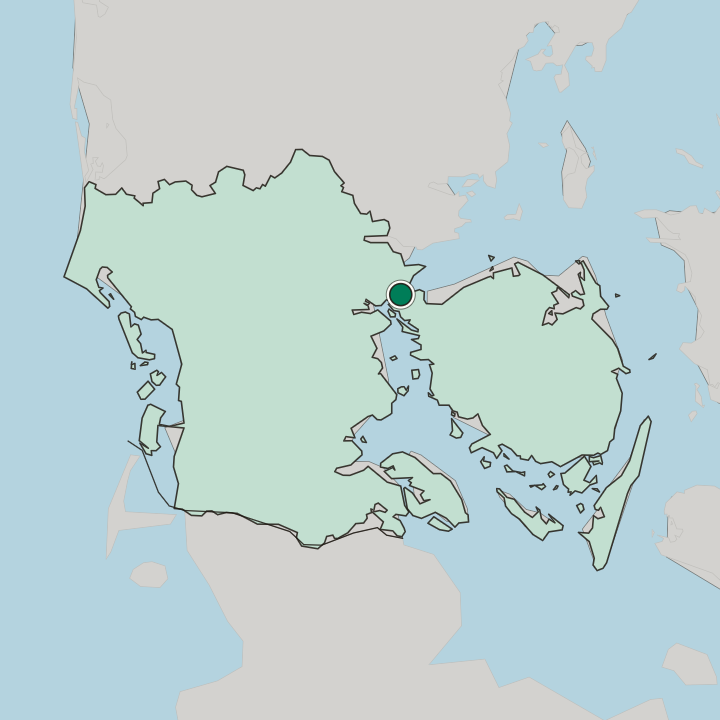
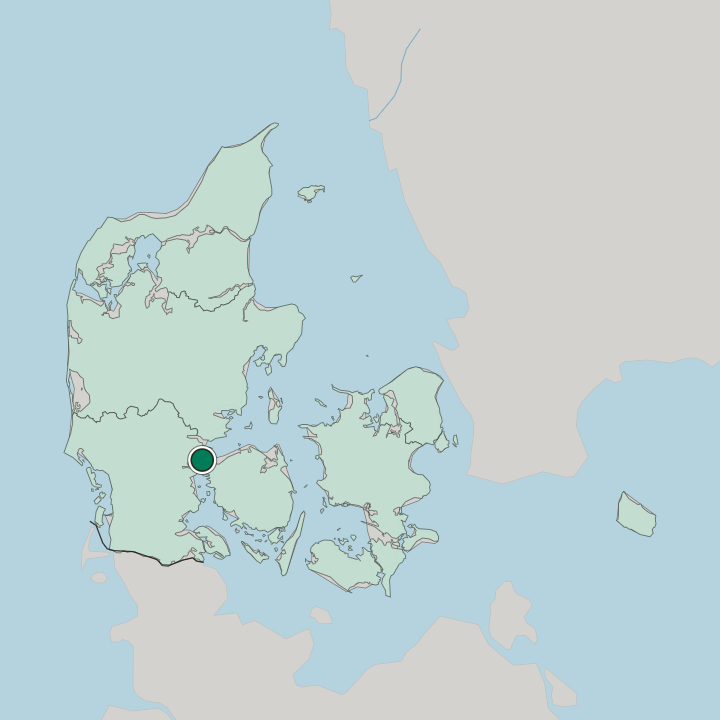
Middelfart sits in central Denmark, on the island of Funen, in the northern part of Southern Denmark. The town faces the narrow water that separates Funen from the mainland and spreads back across a wide municipal area it heads. Its parishes ring the centre.
Sankt Nikolaj Kirke holds the old core while Lyng Kirke and the outer communities sit back from the water, and the villa heights above the town carry CLAY Keramikmuseum Danmark over the surrounding country.
What is the climate of Middelfart?
The narrow water tempers the weather. Middelfart lies on the island of Funen, close to the channel that splits it from the mainland in the northern part of Southern Denmark, so its winters stay milder and its summers cooler than the open Danish interior, in a temperate northern year of changeable skies. Grey, damp spells are common.
The longer days of summer fill the gardens around CLAY Keramikmuseum Danmark and the old streets by Sankt Nikolaj Kirke with visitors, while autumn brings wind off the water before the short, dim days of winter close in over the town.
How do you get to Middelfart?
Road and rail reach Middelfart across the water. Trains run to the town from the wider Southern Denmark region, crossing onto the island of Funen, and the centre lies a short walk from the station for arrivals heading on to Middelfart Museum or the cafés along Algade. Drivers come by the main route.
Roads cross the narrow channel to link Middelfart with the mainland and the larger Funen towns, and signs guide visitors up to CLAY Keramikmuseum Danmark on the heights above the water.
Common questions
What is the best area to stay in Middelfart?
Town centre: the old town and harbour on foot. Grimmerhus heights: a quiet base for the ceramics museum. Lyng: a residential stay near the outer parish church.
Good for
More cities in Region Syddanmark
Updated October 2026