Denmark · Region Syddanmark
Where to Stay in Odense, Region Syddanmark
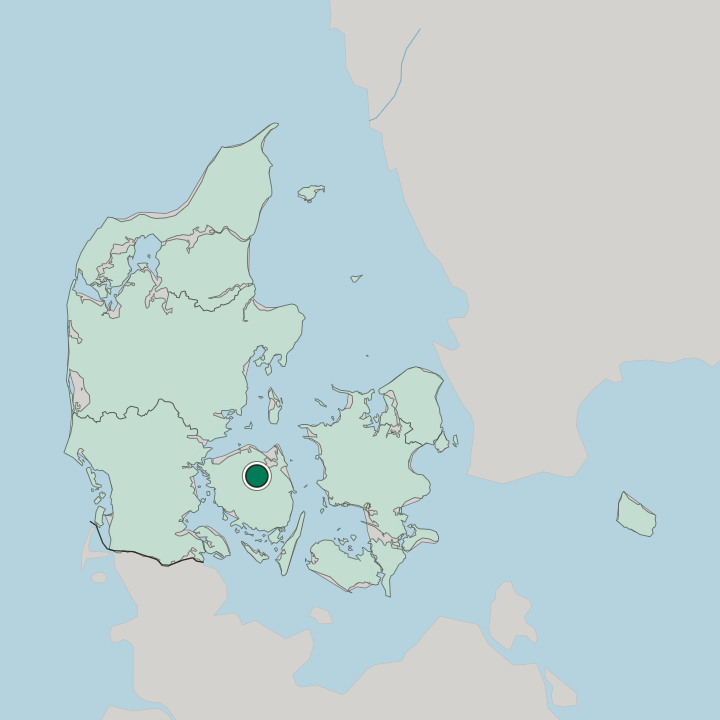
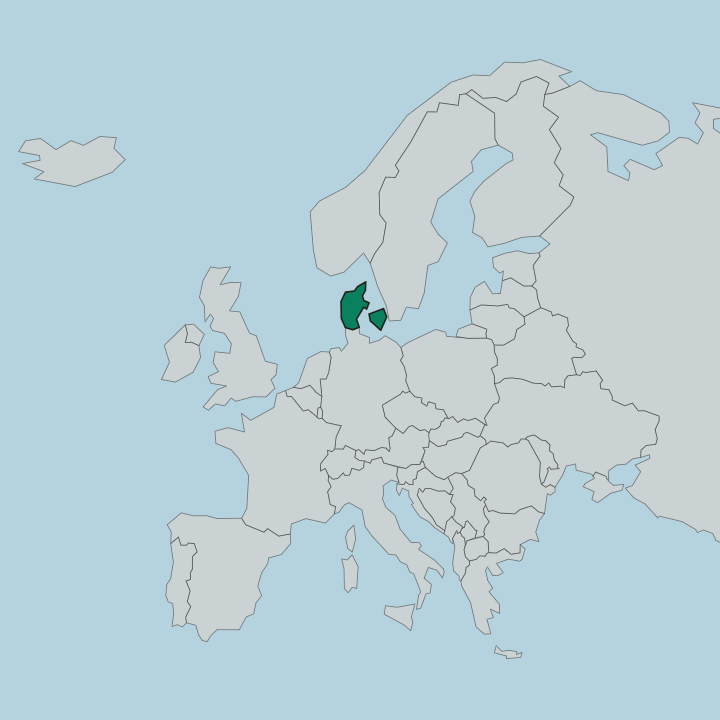
Odense is the old cathedral city of the island of Funen, in central Denmark, birthplace of Hans Christian Andersen.
Hotel links are affiliate links: booking through them may earn us a commission, at no extra cost to you. It never affects how places are ranked. How this works


Where to stay in Odense
Not every neighbourhood fits every trip — here's what each one is good for.

 OdenseDenmark
Odense C
Odense C is the central district of Odense, the largest city on the island of Funen and the heart of the wider postal core.Where to stay →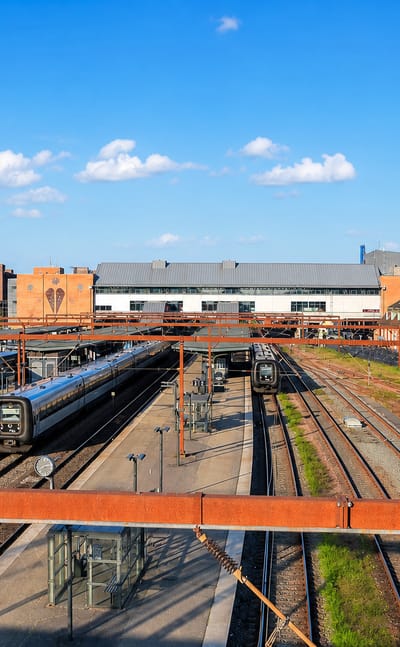 OdenseDenmark
Hunderup
Hunderup is a southern district of Odense, a quiet villa quarter of the Funen city near H.C. Andersens Barndomshjem.Where to stay →OdenseDenmarkTarup
Tarup is a residential district in western Odense, a quiet quarter of the Funen city set out beyond the centre near Næsby Kirke.Where to stay →OdenseDenmarkBolbro
Bolbro is a western district of Odense, the Funen city, known for Odense Idrætspark and the parish church Bolbro Kirke.Where to stay →OdenseDenmarkDalum
Dalum is a southern district of Odense, the Funen city, grouped around Dalum Kirke and the open-air Den Fynske Landsby.Where to stay →Hotel links are affiliate links: booking through them may earn us a commission, at no extra cost to you. It never affects how places are ranked. How this works
Find hotels in Odense
Direct booking searches for these neighbourhoods.
Cathedral core by Sankt Hans Kirke
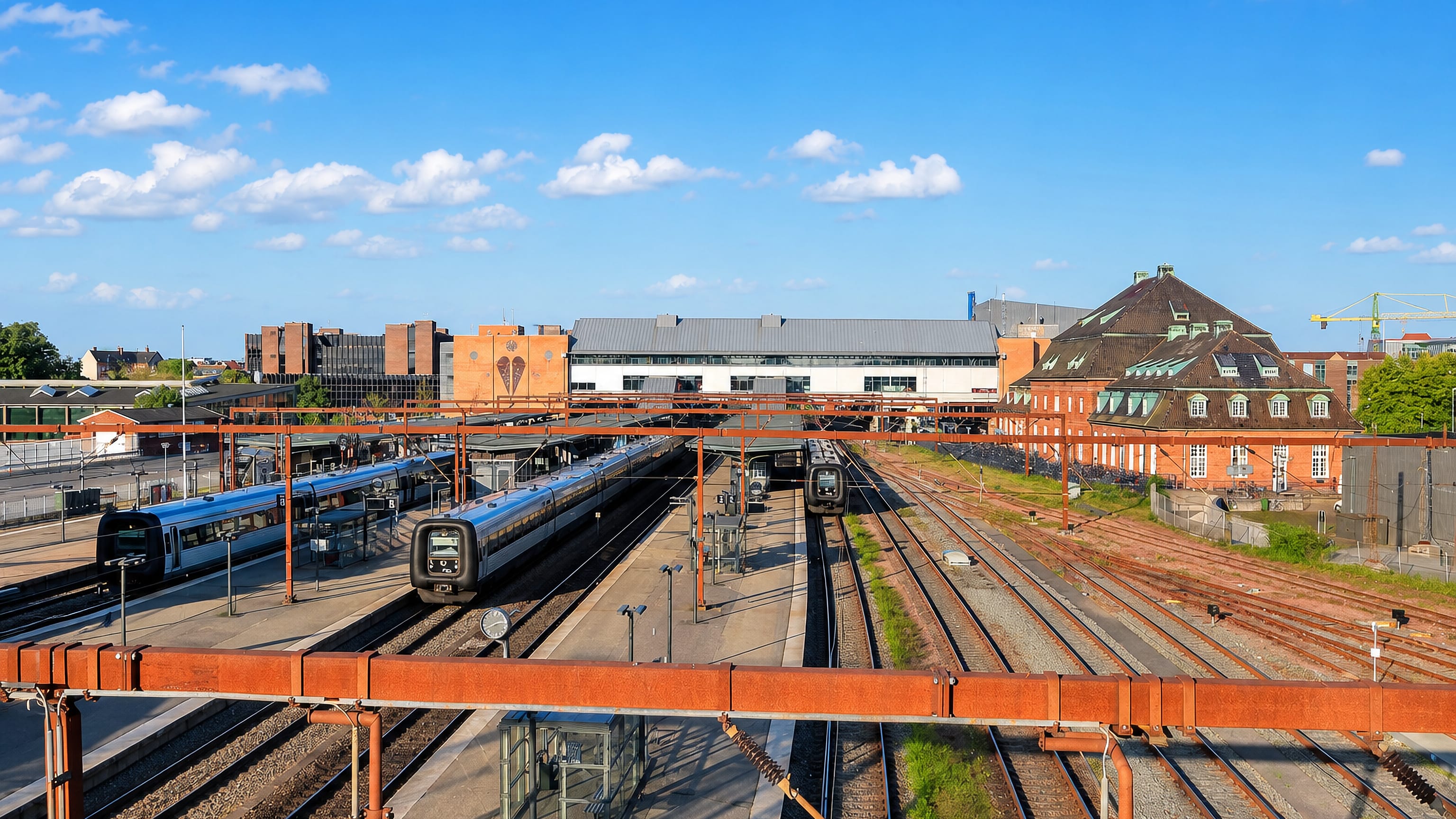
hotels by Sankt Hans Kirke and H.C. Andersens Hus in the medieval lanesFind hotels in Cathedral core by Sankt Hans Kirkerail travellers crossing FunenStation and Danmarks Jernbanemuseum
larger hotels beside the station and Danmarks JernbanemuseumFind hotels in Station and Danmarks Jernbanemuseumthose touring the open-air Funen village quietlyGreen edge by Den Fynske Landsby
guesthouses among the parkland near Den Fynske Landsby. Rooms are few around here — worth securing early.Find hotels in Green edge by Den Fynske LandsbyHotel links are affiliate links: booking through them may earn us a commission, at no extra cost to you. It never affects how places are ranked. How this works
Things to do in Odense
Ranked by global recognition; descriptions from Wikidata (CC0).
Museums & Galleries
3- Hans Christian Andersen Museum Heritage
- Møntergården Heritage cultural history museum
- Danish Railway Museum railway museum
Churches & Religious Sites
3- Gråbrødre Kloster Heritage
- St. Alban's Church
- Saint Hans Church
Stadiums & Sports
3- Odense Sports Park
- Marienlystcentret football stadium
- B1909's anlæg
worth knowingacross 3 categories in Odense
About Odense
What is Odense known for?
Odense is known above all as the birthplace of Hans Christian Andersen, whose story is told at H.C. Andersens Hus and at his childhood home, H.C. Andersens Barndomshjem, in the old centre.
The fairy-tale writer made the city famous. Odense is also the home town of the composer Carl Nielsen, honoured at the Carl Nielsen Museet, and the seat of its municipality in the eastern part of Southern Denmark. Around the cathedral of Sankt Hans Kirke and the church of Sankt Albani Kirke the medieval core gathers, while the open-air Den Fynske Landsby and the art museum Kunstmuseum Brandts spread the city's culture across Funen.
What are the main landmarks in Odense?
H.C. Andersens Hus stands in the old centre of Odense, the museum of the fairy-tale writer Hans Christian Andersen, joined nearby by his childhood home at H.C. Andersens Barndomshjem.
The Andersen sights lead the city. Sankt Hans Kirke and Sankt Albani Kirke mark the medieval core, and the friary of Gråbrødre Kloster and the church of Vor Frue Kirke stand among the old streets close by. The city keeps deep museums.
Bymuseet Møntergården holds its town history, Kunstmuseum Brandts and Fyns Kunstmuseum its art, the Carl Nielsen Museet its composer, and Danmarks Jernbanemuseum and Den Fynske Landsby the railways and rural life of Funen.
What is the history of Odense?
Odense grew as one of the oldest towns of Denmark, the church and market centre of the island of Funen. The friary of Gråbrødre Kloster and the churches of Sankt Hans Kirke and Sankt Albani Kirke rose in the medieval town, the latter linked to the killing of a Danish king whose cult drew pilgrims to the place. Saints and kings shaped it.
Trade, the bishopric and the routes across Funen carried Odense through the centuries, and Møntergården, now Bymuseet Møntergården, keeps the long town story among the old merchant houses of the core. Then came the city's most famous son. Hans Christian Andersen was born here in poverty, his birthplace and his childhood home now the museums of H.C.
Andersens Hus and H.C. Andersens Barndomshjem, and the composer Carl Nielsen followed from the Funen countryside into the city's musical life. Industry and the railway reshaped Odense in the modern age, a story told at Danmarks Jernbanemuseum, while Den Fynske Landsby gathered the old rural buildings of Funen as the city settled into its role as the chief place of the eastern part of Southern Denmark.
Where is Odense?
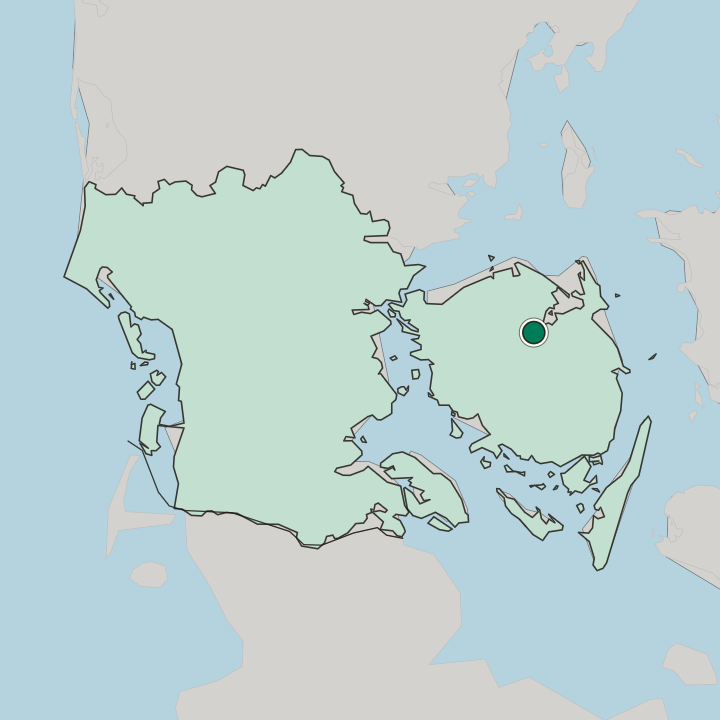
Odense lies near the middle of the island of Funen, in the eastern part of Southern Denmark, in central Denmark. The city spreads inland from a stream and a canal that link it to the fjord and the sea to the north, the medieval core gathered around Sankt Hans Kirke and Sankt Albani Kirke. Funen is gentle, green country.
Beyond the built-up streets the parkland and the open-air Den Fynske Landsby give way to the farms and woods of Odense Municipality, the rolling land that the writer Hans Christian Andersen knew as a boy across this central Danish island.
What is the climate of Odense?
Odense has the mild, damp maritime climate of central Denmark. Winters stay cool and grey rather than harsh, the sea around Funen holding deep frost and lasting snow off the low ground around the city through most of the season. Summer on Funen turns warm but unsettled.
The open water around the island tempers the heat and feeds the wind under the long northern daylight, while cloud and rain off the sea reach this part of Southern Denmark in every month of the year, watering the green farmland that frames Odense.
How do you get to Odense?
Odense sits on the main rail line across Funen, the route between the bridges that link the island to the rest of Denmark. Fast trains stop at the city station, beside Danmarks Jernbanemuseum, on the journey between the capital region and the Jutland mainland. Many arrive by motorway too.
The roads carry the traffic of Odense Municipality across Funen and over the great bridges to either side, while the airports of the wider region handle the longer journeys of travellers reaching this old cathedral city of central Denmark from abroad.
Common questions
What is the best area to stay in Odense?
Cathedral core by Sankt Hans Kirke: visitors who want the Hans Christian Andersen sights on foot. Station and Danmarks Jernbanemuseum: rail travellers crossing Funen. Green edge by Den Fynske Landsby: those touring the open-air Funen village quietly.
Good for
More cities in Region Syddanmark
Updated October 2026